
Development around Fort Mill cemetery raises concerns
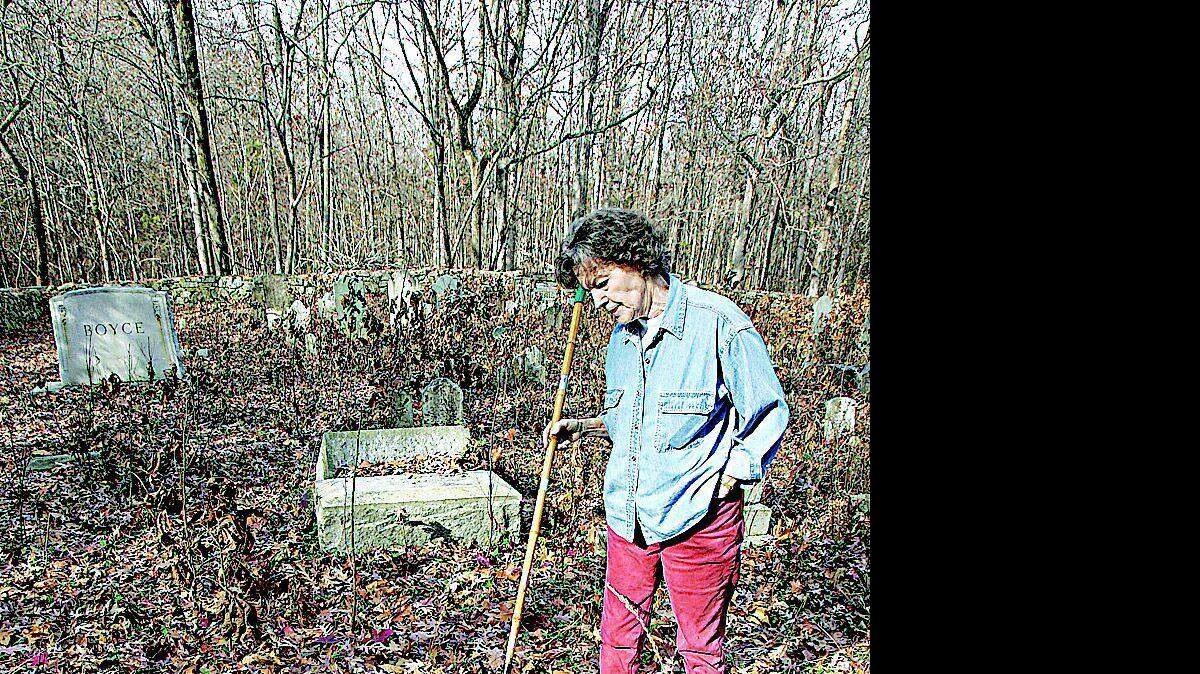
FORT MILL -- Some of York County's earliest ancestors have lain for two centuries in a pastoral, half-acre oasis, now surrounded by strip malls, Interstate 77, U.S. 21 and other commerce near the North Carolina border.
Trees filter traffic whizzing by on two sides, a faint reminder of modern Fort Mill in Blackstock Cemetery's wooded acre. Its old stone fence encloses graves of families such as Kimbrell, Boyce, Roddy, Harris, Miller and others, loving inscriptions ornately carved on gravemarkers by people long since gone. Markerless graves of their slaves run all the way from the cemetery to a creek branch downslope.
A developer purchased about 19 acres around the cemetery for nearly $1.7 million in December, according to York County records, and vows both the slave and fenced cemeteries will be preserved. Developers hope to put a hotel on one side and a restaurant and shops on the other, perhaps designed in historic Fort Mill style.
"The area doesn't have the look of a Baxter or Rock Hill, and we'd like to see that there," said Chad Whitmire, who is part of the group developing the site. The investment group, listed as Carowinds Point Crossing LLC on county records, includes Fort Mill contractor Carl Hawkensen and Fort Mill investor Steve Miller, Whitmire said.
Miller, whose family has a long history in Fort Mill, is aware that there are Millers buried in the historic cemetery.
"I'm going to have tractors back there, and I have to be very careful moving dirt around," Whitmire said.
Whitmire said plans might include restoring the stones and the wall and raising the graveyard's topography 10 to 15 feet because water floods the lower corner during heavy rainfalls.
"That would be if we absolutely have to for storm drainage," he said. "The main thing is, it's in the center, and I could put a business on the I-77 and U.S. 21 sides. I can put a road in back there and preserve the area as a historic site. I've done tremendous research on the graveyard and the land."
Preliminary plans include cemetery visitation during certain hours, and the investors also are negotiating for additional property in the vicinity, he said.
They are hoping to use Carowinds and the nearby Plaza Fiesta in the former Crossroads Mall, condos and recreation facility as "an enticement" for a hotel, he said. Options might include a Marriott-type facility for the business traveler, he added.
"We might have a themed development that would include a Victorian hotel with shops and restaurants south of the cemetery," Whitmire said.
History buried there
The church and cemetery were established around 1793-1794, according to Linda Lawless Blackwelder, who wrote "A History of Central Steele Creek Presbyterian Church." A stone wall, an example of skilled stone masonry, was added in 1869.
The cemetery was named for the church's first pastor, the Rev. William Blackstock, born in Ballynahinch, northern Ireland, and educated for the ministry in Scotland.
"He organized Lower Steele Creek Presbyterian Church, commonly known as Blackstock's Church," said William B. White Jr., a retired local historian now living in Virginia.
The minister married Rock Hill's Sarah Hutchison, White said. His brother, Edward Blackstock, settled in Chester County.
The church experienced some "involved and complicated relationships" with other churches through time as Presbyterians here united and split in their beliefs, White said.
The York County church was sold to the AME Zion church in 1883 and moved on logs pulled by oxen to an area about one mile south of the cemetery, Blackwelder said.
The property remained in the Boyce and Harris families for years through marriage and inheritance. Maj. W.W. Boyce planted azaleas, mountain laurel and other plants on the hillside and built a rock oven and a park near an old spring.
A cemetery association maintained the property in the late 19th and early 20th centuries.
The land passed to the Roddy family through the Harrises. The Roddys sold the property, including the family home across U.S. 21, built around 1800, in the 20th century. Trunks in the attic contained old Civil War uniforms, and a document outlining the home's history was discovered in the wall behind the fireplace when it was sold and torn down in 1980, Blackwelder said.
Steele Creek church volunteers began maintaining it in the 1960s. They clear it in the spring and fall, she added.
"It's always been a concern, because outside that wall is a slave cemetery," Blackwelder said.
Hurricane Hugo and vandals have damaged the cemetery and its wall. The cemetery's wooden gate is gone, but the wrought iron hinges that held it remain. Boulders said to have provided the original church's foundation still rest near the gate.
Historically, Christian burials there were done west-east with the head at the western end of the grave so the deceased could see the sun on Resurrection Day, said Michael Scoggins, a historian with the Culture and Heritage Museums.
Scoggins has been working with Whitmire on the cemetery's preservation and said the developer indicates he wants to protect it.
Moving the cemetery's occupants, as regulations would require, is not a task many developers want to undertake, according to Jean Nichols of the Chester District Genealogy Society. The group has worked with developers who did want to move cemeteries, she said.
"You have to deal with the individual companies and the highway department and the families and the developer," she said. "We all work together to get them relocated where the families want them."
The process takes years, she said.
This story was originally published January 11, 2008 at 12:32 AM.