
Obama: We will rebuild; we will recover
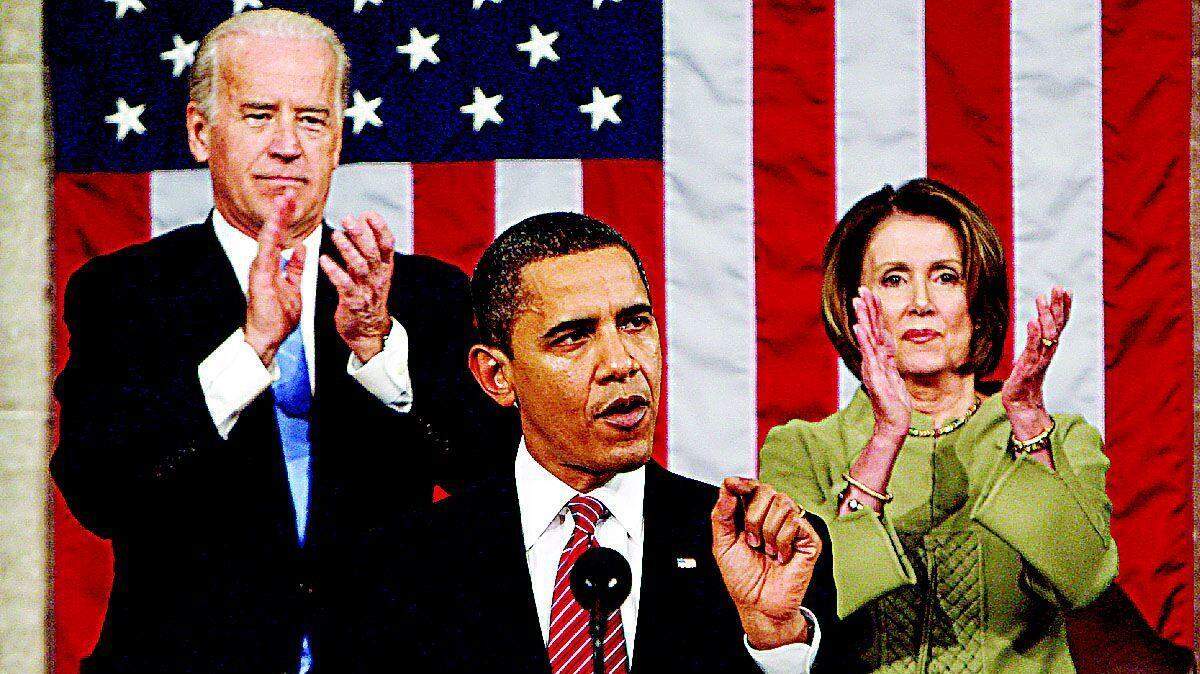
WASHINGTON -- Calling this a "day of reckoning" for years of mistakes, President Barack Obama worked Tuesday night to assure a recession-weary nation that he's charting a new course out of the depths and ultimately to a prosperous future.
"While our economy may be weakened and our confidence shaken, though we are living through difficult and uncertain times, tonight I want every American to know this -- We will rebuild, we will recover and the United States of America will emerge stronger than before," Obama said, according to a text of his speech that the White House released in advance.
Reaching for inspiring rhetoric like the language that lifted his presidential campaign, Obama said that the American people could find prosperity once again with the ready help and firm hand of the government on their side.
"I reject the view that says our problems will simply take care of themselves; that says government has no role in laying the foundation for our common prosperity," he told a joint session of Congress as tens of millions watched on television across the country and around the world.
"Now is the time to act boldly and wisely -- to not only revive this economy, but to build a foundation for lasting prosperity."
Coming little more than a month into his presidency, Obama's first address to a joint session of Congress offered him a grand stage to spell out his vision for how the country can work its way out of a still-worsening economic crisis.
In a striking shift from the Bush era, Obama focused almost entirely on the economy, devoting only about six paragraphs near the end of the address to foreign policy and national security.
In a broad indictment of the Bush era, he said that the nation was now paying the price for easy-but-wrong choices made from Wall Street to Pennsylvania Avenue -- and sometimes on Main Street as well.
"We have lived through an era where too often short-term gains were prized over long-term prosperity, where we failed to look beyond the next payment, the next quarter or the next election," he said.
He criticized the decision in 2001 to use a budget surplus to cut taxes, calling it "an excuse to transfer wealth to the wealthy."
He said that "regulations were gutted for the sake of a quick profit at the expense of a healthy market."
He lambasted those at both ends of the housing boom: "People bought homes they knew they couldn't afford from banks and lenders who pushed those bad loans anyway."
"All the while, critical debates and difficult decisions were put off for some other time on some other day. Well, that day of reckoning has arrived," he said.
He laid out several broad themes:
• He inherited the sinking economy and the budget mess that comes with it, including a one-year budget deficit that's heading toward an eye-popping $1.4 trillion even before he spent a dime as president.
• He and Congress have made big down payments on recovery, with a $787 billion package of spending and tax cuts meant to create or save up to 3.5 million jobs, a $275 billion plan to help struggling homeowners keep their homes and a still-emerging plan to shore up banks.
• He stressed that the government will do everything necessary to shore up the country's banks, suggesting it will spend more than the $700 billion already allocated to rescue the financial system. "This plan will require significant resources," he said, "probably more than we've already set aside."
• Every American will share responsibility for putting the country back on track, from teenagers, who should finish high school, to bankers and financiers, who'll face tough new regulation from Washington. He urged all Americans to commit to at least one year of school or career training beyond high school, and proposed college tuition help for students who devote a year to community service.
• The country must fix long-term problems to ensure sustained growth, including controlling runaway health-care costs, extending health care to the uninsured and boosting efficiency to save energy.
• He plans to roll out a 10-year budget outline Thursday that will cut at least $2 trillion over the next 10 years. He also will propose raising taxes on those making more than $250,000.
The address -- akin to a State of the Union but not called that because it came so early in his presidency -- came at an opportune time as Obama works to frame his agenda and build backing for what still could be a rocky road ahead.
Obama has broad political support, but he might be starting to pay a price for the continued anxiety about the economy.
A new Gallup Poll on Tuesday found that 59 percent of Americans approve of the way he's doing his job, down from 69 percent a month earlier. At the same time, the Conference Board said Tuesday that consumer confidence plummeted in February, reaching an all-time low.
Attorney General Eric Holder did not attend the address, a reminder of security concerns beyond the economy. Just in case of an attack on the Capitol while much of the government's leadership is there, one member of the president's Cabinet traditionally stays away.
This story was originally published February 25, 2009 at 1:18 AM.