Food supply, online access are paramount in a pandemic. How Catawbas make it work.
As the coronavirus pandemic rocked South Carolina, the Catawba Indian Nation mobilized to support its vulnerable citizens — and turned to the land for help.
According to the U.S. Center for Rural Affairs, “This global pandemic is disrupting Tribal communities’ food systems and is disproportionately deadly for Indigenous communities and for people of color.”
Many tribes in America, it says, have exercised “unique problem solving abilities,” to face this battle.
The Catawbas received their own supply of coronavirus vaccinations and have been distributing them throughout the tribe.
As well, the Catawba Tribal Government, Chief Bill Harris said, has provided support to its citizens in the form of food, technology and funds.
All of the funding for these projects came from Coronavirus Aid, Relief, and Economic Security (CARES) Act, a tribe representative said.
The Catawbas, whose reservation is just outside the Rock Hill city limits, are the state’s only federally recognized Native American tribe.
Catawbas’ food sovereignty
One of the tribe’s biggest initiatives has been purchasing farmland and working toward independently growing its own food — the way Catawbas once did.
The U.S. Center for Rural Affairs recognizes tribal food sovereignty initiatives as beneficial to Native Americans in many ways. The Catawbas already had started some projects to move towards food sovereignty, such as community gardens, but the pandemic brought urgency to the need.
Harris said when he was young his grandmother told him how the tribe weathered the great depression.
“She said it really didn’t have that much of an impact on (the Catawbas), Harris said. “We were living off the land. She said the only two items that we could not (get) for food purposes was sugar, and flour. And she said, those were rationed. But we were able to get by.”
Harris said his grandmother told him how the Catawbas raised their own chickens, cattle and hogs. While grocery store shelves were empty 12 miles up the road in Rock Hill, the Catawbas had their own food.
“But as those communities have grown and gotten more into technology, we sold or walked away from the land,” he said.
The Chief calls the depression an “economical pandemic.” Harris said when the coronavirus came it was a second pandemic, and the tribal government looked to their past.
The Catawbas used CARES Act funds to purchase farmland near the reservation.
The tribe in recent year already had implemented elements of this project, said Catawba Nation representative Elizabeth Harris. There are community gardens at several of its buildings. The idea to expand food sovereignty developed at tribal government meetings.
She said the tribe currently has 1,000 chickens and has planted some winter crops. The project is still in its early days, she said.
“I think it’s just very natural for us as a people,” she said. “It kind of harkens to the past for us.”
Distributing stimulus payments
While the country waited on the second round of stimulus checks, the Catawba Tribal Government stepped in to provide money for its citizens.
“We all have seen the news, and it was a long, long wait for citizens of the U.S. between, you know, that first payment of $1,200,” Elizabeth Harris told the Herald. “I think everybody knows that. That doesn’t cover the need of people, especially those who have lost their jobs, and had healthcare bills and things like that. So we were able to do a project to provide an additional relief payment.”
The tribal government provided eligible citizens with an additional $1,200 relief payment. Small business owners were also given aid.
Many tribal citizens are artists and potters, whose small businesses might not qualify for government aid.
“A lot of our artisans go to different festivals and pow wows, and they count on that money on a yearly basis,” she said. “But in 2020, those were all canceled.”
The tribal government stepped in, launching its own program to give relief payments in support of small business owners. “We wanted to be able to fill in that gap for people,” she said.
Connecting tribe members online
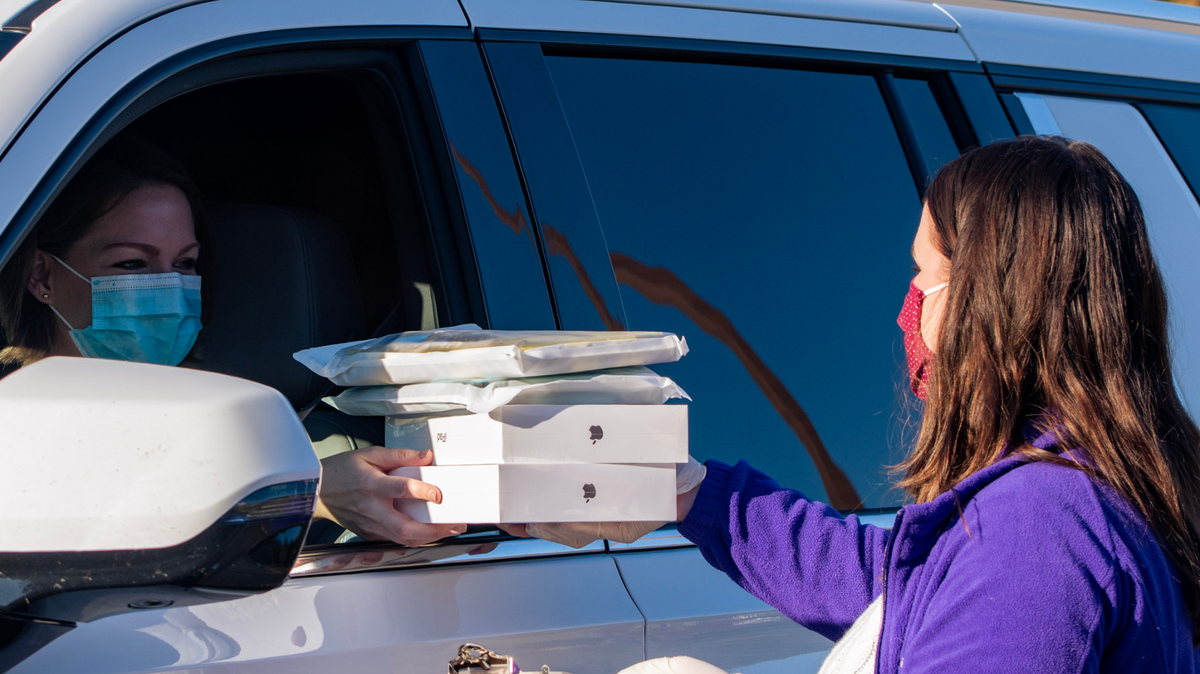
The Catawba Nation also distributed technology to two of the groups who need it the most: children who are going to school online and seniors (age 55 and older) who might not have their own computers.
Tribal members in these two groups can fill out a form, Elizabeth Harris said, and choose between a laptop, an iPad or a credit towards their internet bill. If you are Catawba and qualify for this program, you can email Harris at elizabeth.harris@catawba.com
This program is ongoing but has been successful so far, she said.
This story was originally published February 9, 2021 at 1:55 PM with the headline "Food supply, online access are paramount in a pandemic. How Catawbas make it work.."