
NC high school football coaches paid thousands less than Southern state peers
New Chambers High School football coach Captain Munnerlyn knew how much money he was going to be making when he took the job in January.
But when he got into the job, and got to see everything that it entails, he’s come to the same conclusion that a lot of his peers have.
“Honestly,” he said, “it just doesn’t make sense.”
North Carolina coaches are paid far less than counterparts in neighboring states like South Carolina or Georgia, a Charlotte Observer study found last spring, and often coaches in systems like Charlotte-Mecklenburg Schools can work for weeks in the postseason without any compensation at all.
“You put so much work into it,” Munnerlyn said, “and the amount of money they pay you to coach football and to coach other sports, it just doesn’t add up. When I was an assistant coach at Myers Park, it was easy for me then. All I would do is show up and coach, and then leave and go home.”
Munnerlyn, like other football coaches in Charlotte-Mecklenburg Schools, will receive just over $5,000 to coach this fall as a stipend. The money is paid as a bonus, in addition to teaching salary, and taxed at nearly 50 percent.
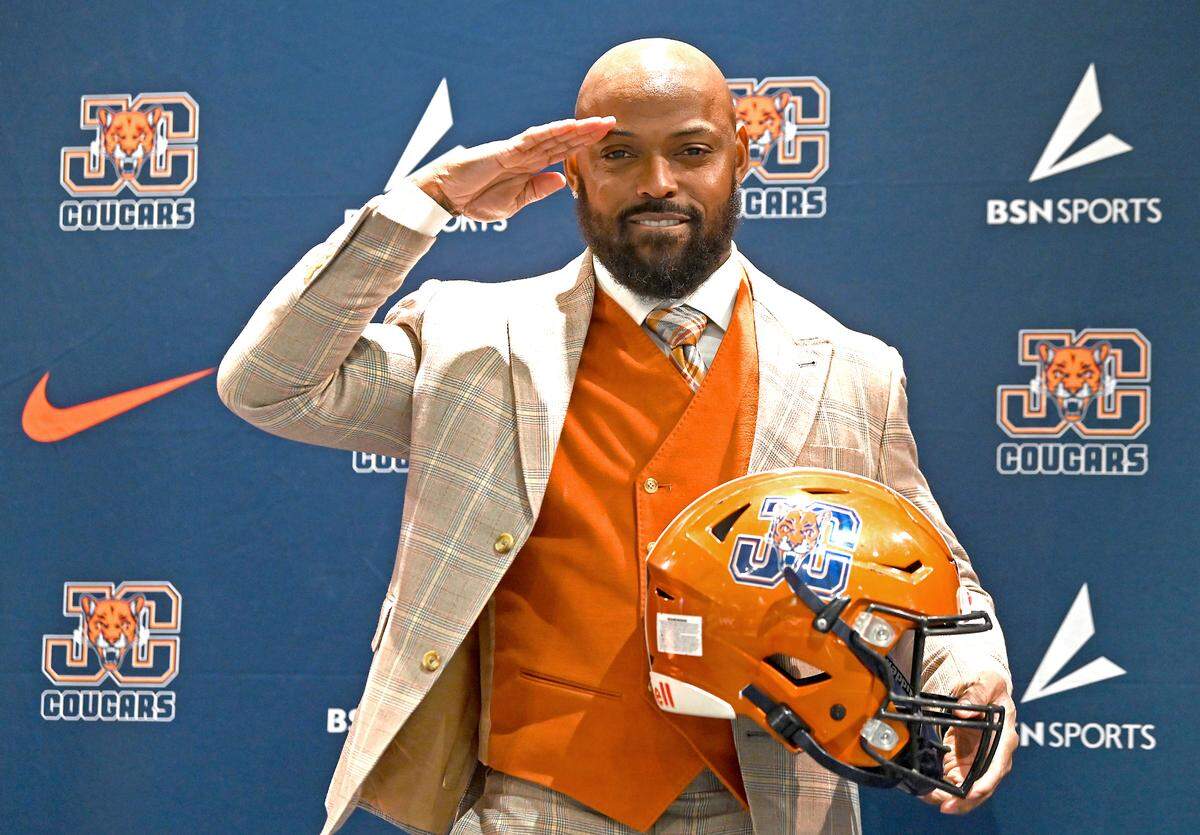
CMS coaches last got a stipend increase in 2018, when the amount was increased $4,172 to $5,006.40. And before 2018, coaches had gone 14 years without an increase.
Another thing that surprised Munnerlyn was that CMS doesn’t pay for experience. A first-year coach like him makes the same stipend that a 20-year coach gets.
And even with the stipends paid over top of the salaries, Munnerlyn said that most Charlotte-Mecklenburg and N.C. coaches cannot compare with the peers in other nearby states. The statistics back him up.
“As a head coach,” Munnerlyn said, “I’ve got to make sure kids get home safely, make sure the locker room is clean and wash the clothes. The amount of time you miss from your family and kids, it doesn’t add up with the pay. You look at other states, like South Carolina, and the pay is different. You look at a place like Georgia and the pay is totally different. Even in my home state of Alabama it’s so much better, and to see guys coaching here a long time (in CMS) and getting the same pay I get as a first-year coach, I think it’s ridiculous.”
In May, The Observer did a deep dive into the issue and found exactly how large the pay disparity is for N.C. coaches, like Munnerlyn, and those in neighboring states.
That story is below (also read: NC is losing its best coaches to neighboring states for one reason)
NC coaches pay may not be what you think
The highest-paid public school football coach in North Carolina, with an asterisk we’ll explain later, started his second season this fall.
It’s also Richmond Senior’s Brad Denson — once a two-time state champion as the school’s quarterback — first head coaching job.
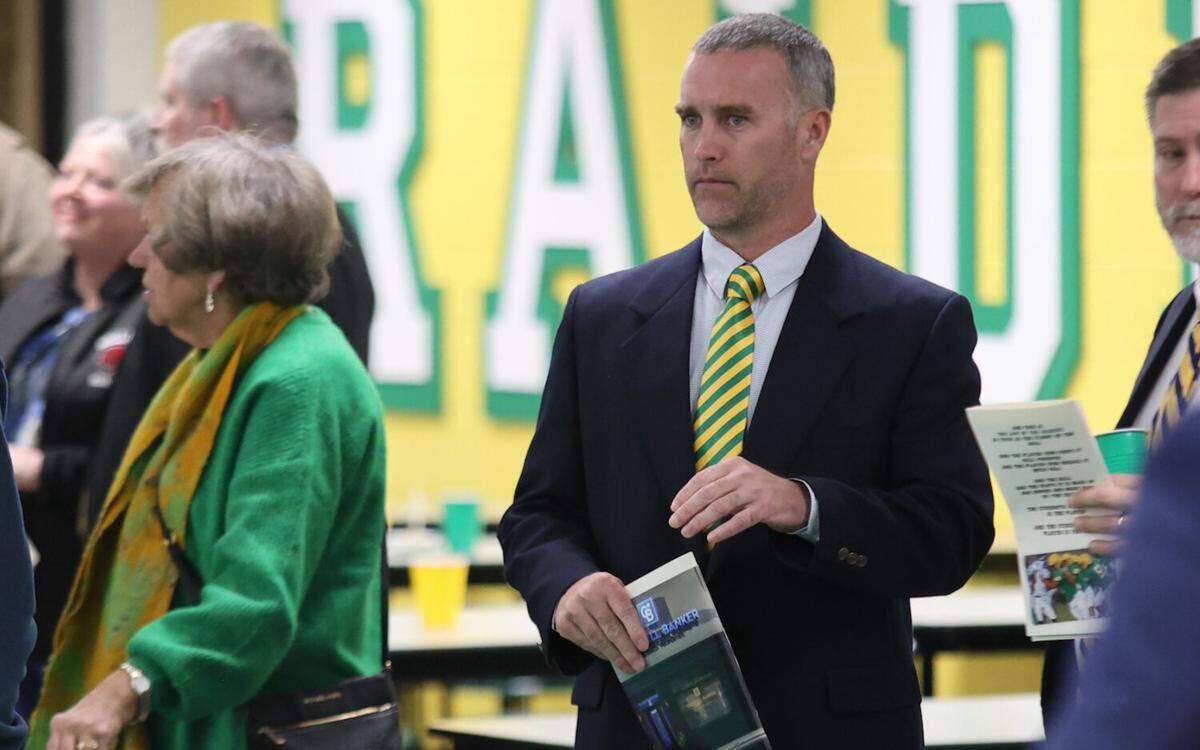
If it surprises you that Denson, fresh off his rookie year, sits atop the pay tree from a state as rich in football as North Carolina — which produced three first-round NFL Draft picks and eight total earlier this year — consider this:
▪ North Carolina has more than 400 public high schools, but a Charlotte Observer study reveals that only four N.C. football coaches make more than $100,000: Hoke County’s George Small ($114,298), Princeton’s Travis Gaster ($108,053), Denson ($106,274) and Shelby’s Mike Wilbanks ($100,063).
▪ According to a study done three years ago by The Observer’s sister paper, The State in Columbia, 34 coaches in South Carolina earned more than $100,000 annually. North Carolina is more than twice the size of its sister state.
▪ Coaches in states like Alabama and Georgia far outpace South Carolina in six-figure salaried coaches. According to a recent Sports Illustrated report, six coaches in Georgia currently make more than $148,000, topped by Carrollton’s Joey King, who coached Trevor Lawrence in high school. King earns $225,007.
▪ Alabama has six coaches above the $140,000 mark, topped by Thompson’s Mark Freeman, who makes $162,054.
▪ The Houston Chronicle found 25 coaches in the Houston, Texas, area alone making more than $127,000. And according to reporting from The Star-Telegram in Fort Worth, Texas, the average salary of 142 Dallas-Fort Worth coaches three years ago was $116,287.
The lowest paid coaches in the area earned $90,000.
In North Carolina, $90,000 lands you just outside the top 10.
“It’s kind of crazy when you look at it,” Providence High coach Wes Ward said. “Those states and salaries are so different. But hiring coaches is so important because they’re with your youth all the time, and people always talk about how, ‘We want these good coaches,’ and ‘We want these good guys,’ and ‘We want them to be professional.’
“But you have to pay them, and I think that’s the difference you’re seeing in states like that. It’s why they’re doing so well and why so many kids are going to school on scholarship. It’s kind of sad that this state is so far behind because of the talent I see here, especially in the Charlotte-area. It could be a lot different.”
Ward grew up in Bremen, Georgia, which is about 10 minutes from Carrollton, where King, the $225,000 coach, works. But Ward said nearby rival schools like Bremen, Central and Heard County all have coaches topping the $100,000 mark.
“It’s just the emphasis they put on athletics,” Ward said, “and that has to come from the top down. When a state athletic association decides to make those decisions, I think you’ll blossom. You pay coaches like that, the way they work and the effort they put in, it will only make it a better experience for the kids they coach.”
In many other states, pay scales are set by individual school districts, though Florida — like North Carolina, a state which has lagged behind in pay — has a statewide bill that could be voted on early next year that would give coaches a big salary increase.
In North Carolina, many high level coaches, like Ward, toil along for far less pay but work the long hours because they love the game. Some, however, are leaving, as The Observer explores in an accompanying story.
For now, here’s a look at some of the top earners in North Carolina.
From prep QB to top dog
In high school, Denson was one of the biggest stars in Rockingham.
He was quarterback of back-to-back undefeated state championship teams in 1997 and ‘98 under legendary coach Daryl Barnes. Six years later, after graduating from UNC-Wilmington, Denson took an assistant baseball coaching job at West Carteret High School in Morehead City, about two hours from Wilmington and more than four hours from his hometown.
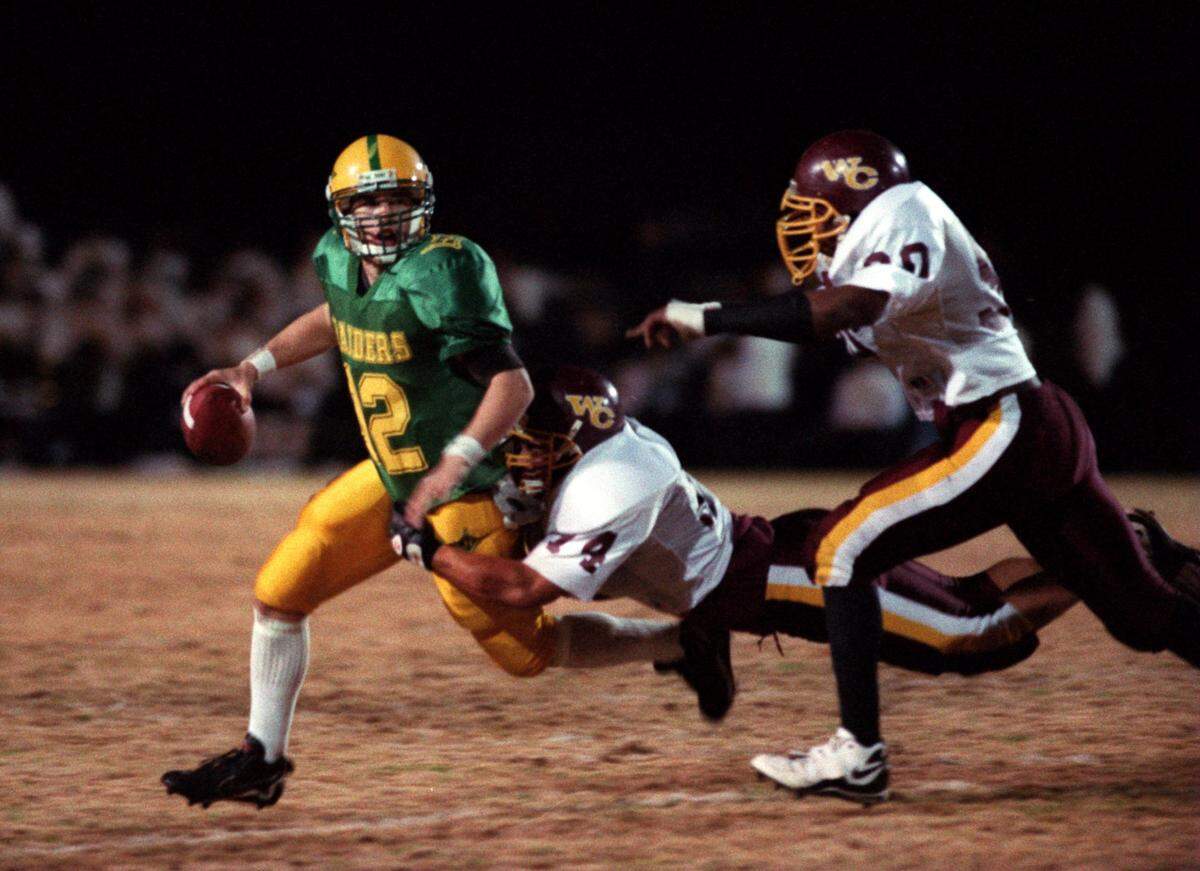
Five years after that, in 2009, Denson came back to Richmond Senior, taking a position as an assistant on the baseball and football teams.
“I enjoyed coaching at the coast,” Denson said in a press release when he was announced as head football coach last year, “but returning to Richmond County, where it all started for me, is when I knew this is what I wanted to be doing — getting that first taste of Friday night on the sidelines — I was hooked.”
From 1995-2015, Richmond never lost more than three games in a season. But the last of the Raiders’ seven state titles came in 2008.
When Mike Castellano left after going 11-3 (2015) and 9-4 (2016), Denson applied for the job before the 2017 season. But he didn’t meet one of the primary job requirements, which called for previous head coaching experience, though a large color ad appeared in the local paper, in Richmond school colors.
“Hire Brad!” it read. “Because it’s the right thing to do.”
Bryan Till got the job and kept it until leaving after the 2023 season, and Denson was hired in January 2024. According to published reports, 14 people applied for the position, six were interviewed. Denson became the first Richmond grad to be named coach in the school’s then 52-year history.
He also was awarded with the highest salary in the state for coaches who only coach football. The three guys ahead of him in salary — Hoke County’s Small, Princeton’s Gaster and Shelby’s Wilbanks — all have additional duties that are factored into their pay.
“This position has been structured and compensated at its current level in Richmond County for many years,” said Dr. Joe Ferrell, Richmond County Schools superintendent, via email. “It remains a consistent part of how the program operates at the high school. The football program plays a much larger role than athletics alone. For some students, it’s the reason they stay in school and stay connected to something positive. Our coach helps provide that consistency by mentoring students and pushing them to grow, not only as athletes but as leaders.”
The Observer asked Ferrell, by email, why he felt other N.C. systems didn’t compensate coaches as well as his district does.
“As for what’s happening elsewhere in the state,” Ferrell wrote, “I’ll leave those discussions to the districts and leaders involved.”
The Observer also spoke with Denson, who declined to be interviewed for this story.
But other coaches who spoke anonymously with The Observer felt that Richmond made the investment because it values football and wants to be a top program again, and that the townsfolk and school administration believe Denson is the guy who can take that step.
Till was 5-6 in both of his final two seasons. Denson was 10-3 in his first.
“At Richmond, they value football,” said Till, now head coach at Union Pines High School in Cameron, about an hour away from Rockingham. Till’s first team at Union Pines was 6-5 last season. The previous three won seven games combined.
“It doesn’t surprise me (about his salary),” Till said of Denson’s pay at Richmond Senior. “But I don’t think other communities in the state of North Carolina value football and it’s possible impact the way (other states, which have better stadiums and pay more) value football. You see that in salaries. You see that in the facilities.”
‘They talk about the White House’
Till is from Georgia. It doesn’t surprise him that the ninth-largest state in the country, North Carolina, trails many of its neighbors in pay.
“You go to Georgia,” he said, “and the average high school will have eight-lane tracks, a separate field house, weight rooms of 5,000 square feet. That affects all athletes honestly, and then they have the stadium and press box to house more students and comfortably accommodate coaches and visiting coaches.”
Till was shocked when he interviewed for his first job in North Carolina, in Fayetteville 17 years ago, and saw a dirt track outside.
“I thought I was in the 1950s,” he said. “My elementary school where I grew up in Georgia had an asphalt two-lane track.”
Till, 47, said one of the biggest things N.C. systems get wrong is how much the football program affects the rest of the school. He worries that poor pay in the state will create a revolving door of coaches, which he said isn’t good for anyone.
“People don’t understand that tradition is not just about a test score,” he said. “Communities want to have a positive effect and feel about your school. But you can lose that community feel of schools being tied to each other and working for a greater purpose. People get divided and let that division stay there. People don’t learn cooperation skills and how to pull ropes in the same direction. So many times, adults talk about why kids these days are different. Maybe what us adults are doing now are not the same things adults back then did for us. And that’s the thing about facilities, too. Kids see what we care about by where we put our money.”
Till has a master’s degree in the teaching of biological science. His father was a school board member and his mother was a teacher. He thinks that football helps large swaths of kids stay in school and can teach them life lessons. A strong football team, Till believes, helps boost school morale, school pride.
“Most school districts prioritize putting money in upper administration,” Till said, “and they could probably trim some of those upper administrative, super associate superintendent positions and put that money someplace else. If you’ve been in the school building, they talk about the White House. I don’t care what district it is. It’s that central office. Every district in the state can look and say, ‘We can trim some fat here.’”
A legacy job in Shelby
Coaching is all Mike Wilbanks has wanted to do.
Now the sixth head football coach in Shelby High School’s storied history, Wilbanks earns just over $100,000 a year, and his job goes beyond game plans and Friday nights. He still cuts the grass on all the Golden Lions’ fields and paints the football field before each home game.
A graduate of Boiling Springs High near Spartanburg, Wilbanks played at Gardner-Webb and started coaching in the late 1990s. Along the way, he taught U.S. history, coached track and JV basketball, eventually earning national board certification for his work in the classroom.
Wilbanks took over as head coach in 2019, continuing Shelby’s proud tradition of winning and deep community connection. The Golden Lions remain one of the premier programs in the Carolinas — with 19 state championships, including two under Wilbanks’ leadership — and are backed by a tight-knit staff that includes former NFL and college players, whom he lets focus solely on football.
Wilbanks also serves as Shelby’s athletic director, a dual role that includes managing facilities, overseeing schedules and supporting athletes in every sport. Around town, he’s much more than a coach — he’s a constant community presence.
“I never had the goal of getting rich,” Wilbanks said. “I’m still not rich, but the goal was never about money. I’ve just always enjoyed coaching. I enjoy being around young guys, and it’s been a rewarding career. I’ve been to weddings, I’ve seen babies being born — all kinds of stuff from former players.
“Shelby was Shelby before I got here, and it’ll be Shelby after I leave. It’s not about me or anything. It’s a program and community deal, and I’m fortunate to be a part of it.”
Two small town coaches near the top
Seeing Travis Gaster’s name on the list of coaches earning $100,000 or more might surprise fans, since Gaster is head football coach at Princeton High, a 2A school in Johnston County near Raleigh.
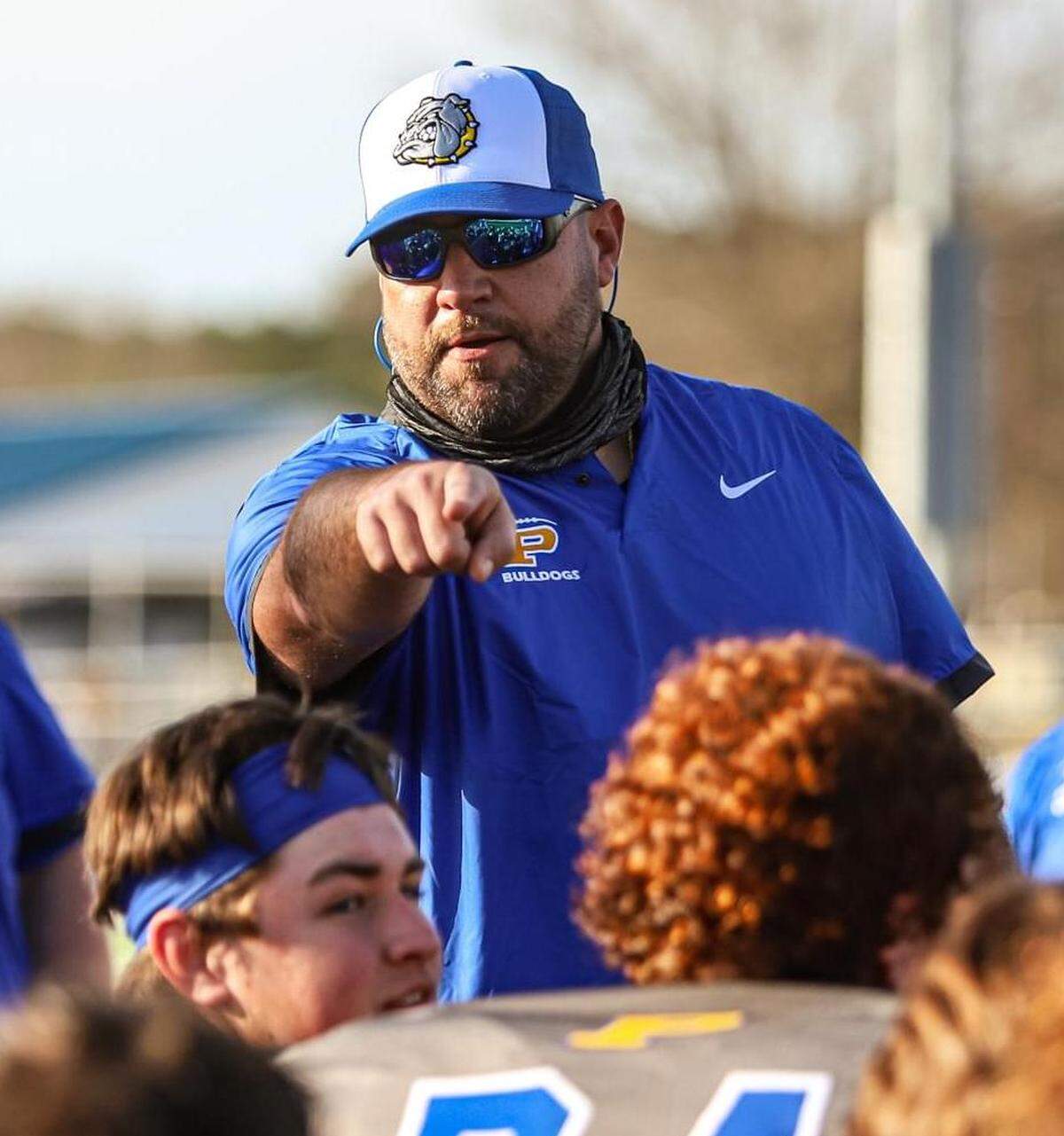
But Gaster works — a lot — for the money.
He holds down eight different positions in the Princeton community.
In addition to serving as head coach of the football team, he is athletics director at both Princeton High and Princeton Middle schools.
He’s also a groundskeeper for athletic programs at the schools and is a first responder in the school district.
Gaster teaches physical education classes and also is coordinator of the Princeton High distance learning program, which provides students with assignments on remote learning days.
Gaster said he appreciates any effort to “shine some light on the current pay situation for high school football coaches in our state.”
Having served as an assistant coach at Carolina Forest High in Myrtle Beach, he has seen the difference in coaching pay between North Carolina and South Carolina.
“We have lost some of our best ones to neighboring states,” he said, referring to coaches in North Carolina.
Another $100,000-plus coach is George Small, who heads the football program at Hoke County High in Raeford.
Small, who did not respond to requests from The Observer for comment, holds two athletic positions at the school — head football coach and director of football operations.
And Small might be unique among North Carolina’s 400-plus high school head football coaches; he’s been a collegiate head coach, at Florida A&M and N.C. A&T.
He also has a doctorate in education and works as a counselor.
This story was originally published August 28, 2025 at 5:00 AM with the headline "NC high school football coaches paid thousands less than Southern state peers."