John Spratt’s legacy: landmark accomplishments and reminders of a more civil time
Democrat John Spratt, a longtime South Carolina congressman who played a key role in the passage of America’s last balanced budget, died Saturday, his daughter said. He was 82.
Over 28 years in the U.S. House, Spratt became an unrivaled authority on budgetary and defense issues, though his interests were as broad as his intellect. With innate curiosity, he could discuss 19th Century German literature or Soviet tritium production as easily as politics.
But many remember his simple decency.
“People respected John Spratt because he respected them,” former Speaker Paul Ryan told The Charlotte Observer. “(He) treated people fairly, whether they agreed with him or not.”
In an era before polarization and hyper-partisanship, Spratt worked across the aisle to help pass measures such as the 1993 Catawba Indian settlement, the 1997 Balanced Budget Act and the 1992 moratorium on U.S. nuclear testing, which is still in effect.
In a building full of inflated egos, Spratt was unpretentious with a wry wit and self-deprecating sense of humor. Measured and soft-spoken, he got things done through intellect and hard work.
“Anybody who dealt with him recognized his decency,” said former aide Thomas Kahn, a longtime congressional staffer. “And the decency was combined with an extraordinary intelligence and extraordinary work ethic. When he went into a meeting, he usually knew more than anyone else about the topic.”
With bushy eyebrows and a receding hairline, Spratt looked more like a professor than power broker — and often sounded like one.
“He’s not a soundbite guy, never has been,” Democratic Rep. Jim Clyburn of South Carolina once told the Davidson Journal. “You go ask him a question about a program, you might get a history of the program. He’s old school. And that’s what made him so good.”
Elected in 1982, Spratt represented South Carolina’s 5th Congressional District. His most prominent roles came as ranking member and then chairman of the House Budget Committee. In 2010 he lost to Republican Mick Mulvaney, who went on to become President Donald Trump’s budget director and interim chief of staff in Trump’s first term.
Former York Mayor Eddie Lee, a Winthrop University professor, was a friend and neighbor of Spratt’s for decades.
“In an era where there are politicians, John Spratt was a statesman,” Lee said Sunday. “He was a champion of the citizenry. He cared about his community and county and state and country.”
Born in Charlotte, Spratt grew up in the town of York, seat of the county in which his family dated its heritage to colonial times. The one-time mill town shaped him and his politics.
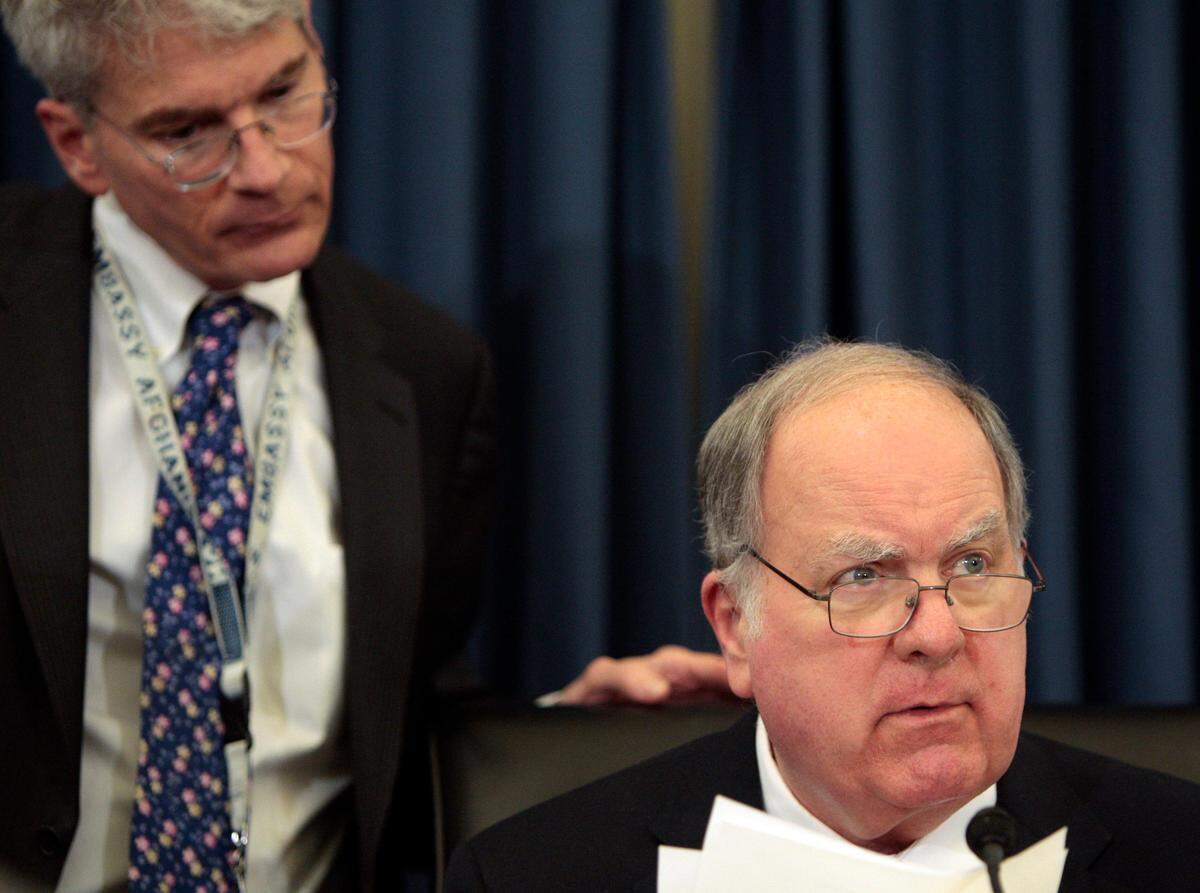
An intellectual feast
Spratt’s father, John Sr., was a prosperous lawyer, bank chairman and active Democrat. The younger Spratt played football at York High and was elected student body president. Many fellow students came from families that worked in the mills.
“He was exposed from the time he was a little boy to people who didn’t have it as well as he did,” said former Bank of America Chairman Hugh McColl Jr., who married Spratt’s older sister. “He was able to observe the gulf between people of means and people without.”
Spratt went to Davidson College, where he graduated in 1964, again as student body president. A Marshall Scholarship took him to Oxford University. There he earned a masters in philosophy, political science and economics. Then it was on to Yale law school.
After three years as an Army captain on staff at the Pentagon, Spratt returned to York where he practiced law at his father’s firm until joining Congress in 1983.
For him, Washington was an intellectual feast. When colleagues adjourned to Capitol Hill restaurants and bars, Spratt sought out lectures at think tanks. A longtime night owl, he would read until one in the morning.
“It doesn’t matter what the subject was, he explored it in depth,” said McColl. “He researched everything.”
One subject was nuclear power.
As head of the Armed Services Committee’s panel on nuclear weapons production, he led the first foreign delegation allowed to tour a nuclear weapons plant in the then-Soviet Union. The 1989 visit came in the waning days of the Cold War.
‘‘It’s difficult to negotiate arms reduction with an adversary when you don’t know what that adversary has in his military nuclear production complex or in his arsenal,” he told the New York Times. “The trip was a step in that direction, but it’s one small step in a long journey.’‘
Landmark legislation
In the 18th century, Thomas Spratt fought alongside the Catawba Indians, who gave him the name Kanawha. Two hundred years later, his descendant helped the tribe gain long-sought federal recognition.
After decades of struggle, the Catawbas sued the federal government in 1980. A 1989 federal court ruling made it possible for the tribe to file claims against thousands of York County land owners, casting a shadow over property deals in the county.
Spratt brought all the sides together. The result was what became the landmark 1993 settlement that gave the Catawbas $50 million, federal recognition and the right to expand their reservation. According to Kahn, Spratt not only drafted the 40-page settlement but typed it out, hunting and pecking it all with two fingers.
Four years later, he was at the center of another landmark measure.
The federal budget had not been balanced since 1969. In 1997 Spratt became the top Democrat on the budget committee. His friend Erskine Bowles of Charlotte had just become chief of staff to President Bill Clinton, who wanted a budget deal.
For weeks the two met in Capitol hideaways with a small number of top officials including GOP Senate Majority Leader Trent Lott and Republican Speaker Newt Gingrich. But they also had to corral reluctant Democrats. Bowles said Spratt’s credibility helped bring his own party on board.
“He was willing to bear the arrows that came at him from the left and the right and his caucus,” Bowles recalled, “because he thought it was the right thing to do.”
The U.S enjoyed budget surpluses for four years after the agreement before returning to annual deficits.
After Democrats took over the House in 2006, Spratt chaired the budget committee. He held the post until Republicans recaptured the House in 2010.
“His fairness in running the budget committee was an attribute I sought to emulate,” said Ryan, who succeeded him on the panel. “I watched John Spratt and thought to myself, ‘That’s how a chairman should act’.”
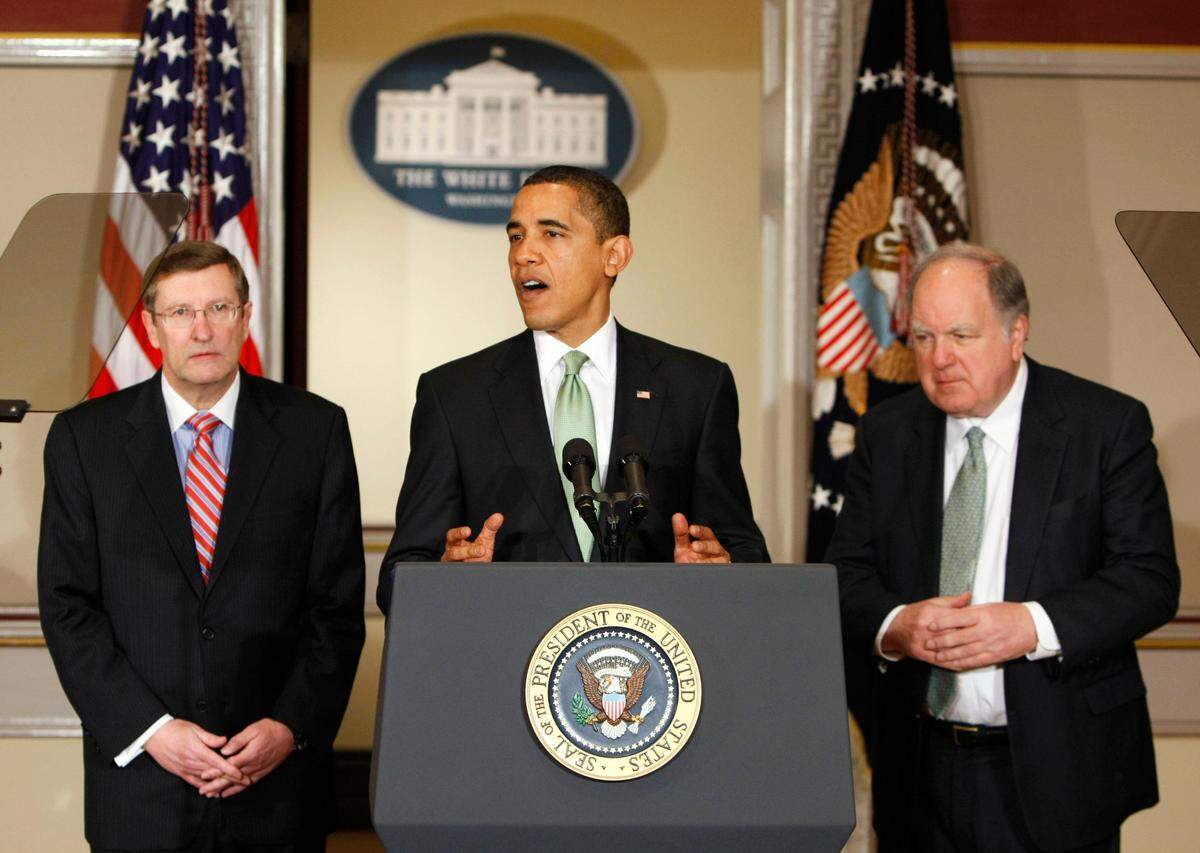
Engendering loyalty
When Spratt returned to his district, he left the budget and other issues behind.
“When I worked with him, all those Washington things were off the table,” said Robert Hopkins, Spratt’s longtime district director. “We were concerned about the people of South Carolina and what we could be doing to help them.”
Spratt also cared about the people who worked for him.
When Kahn’s mother died in 2001, he returned to Boston for her funeral. Walking into the sanctuary of Temple Israel, he was startled to see Spratt in a back pew.
“I don’t think I’ve ever met a man who was kinder, more thoughtful, more generous or more appreciative than John Spratt,” Kahn said. “He engendered such immense loyalty from his staff.”
Nikita Jackson, the first African-American chair of the York County Democratic Party, said Sunday Spratt served with honor and integrity.
“Congressman Spratt’s tireless efforts to improve the lives of South Carolinians and his deep commitment to public service made him a respected leader not only in the Palmetto State but also across the nation,” Jackson said. “Beyond his accomplishments in Washington, Congressman Spratt will be remembered for his humility, his genuine care for the people he served, and his unwavering dedication to the betterment of our communities.”
Colleagues shared in the admiration.
“What’s important is the measure of the man, and I just consider him to be a great man,” former GOP House budget chairman and Ohio Gov. John Kasich told the Observer. “If we had more people like him, the country would be in better shape.”
Not long after leaving Washington in 2011, Spratt reflected on his career.
“Elective politics is a worthy pursuit,” he told the Davidson Journal. “I would like to leave a legacy of assurance that in public office you can make a difference. I hope my experience can be a beacon to others to run for office.”
Reporter Andrew Dys of The (Rock Hill) Herald contributed.
This story was originally published December 15, 2024 at 5:05 PM with the headline "John Spratt’s legacy: landmark accomplishments and reminders of a more civil time."