Homelessness is on the rise in Mecklenburg. The response remains a work in progress
Abdul Wright was many things: a witty jokester and daredevil. A loyal, protective brother.
He was a burly wrestler and a tight end at South Carolina’s Hartsville High who even played soccer once for the former Urban Ministry Center of Charlotte in Edinburgh, Scotland. “He was always a party, always had this magnetic energy,” said Wright’s sister, Samella Wright.
The 52-year-old Abdul also lived with mental illness, his family said. He struggled with drugs and crime. And for the past two decades, he was chronically homeless.
“We would talk often in the beginning. When it got to the point where it had been a couple of months, then I’d get on him,” said Samella Wright. “That was our regular routine for the last 10, 12 years... When he was good, he was good and when he was bad, he was bad.”
Ultimately, it would lead him down a perilous road.

Wright was part of the growing population of people experiencing homelessness in Mecklenburg County.
Between June 2022 and June 2024, the county’s homeless population rose by nearly 15%, according to the data from the county’s housing and homelessness dashboard, increasing from 2,428 people to 2,784.
That number, as of Feb. 28, sits at 2,670, according to the dashboard.
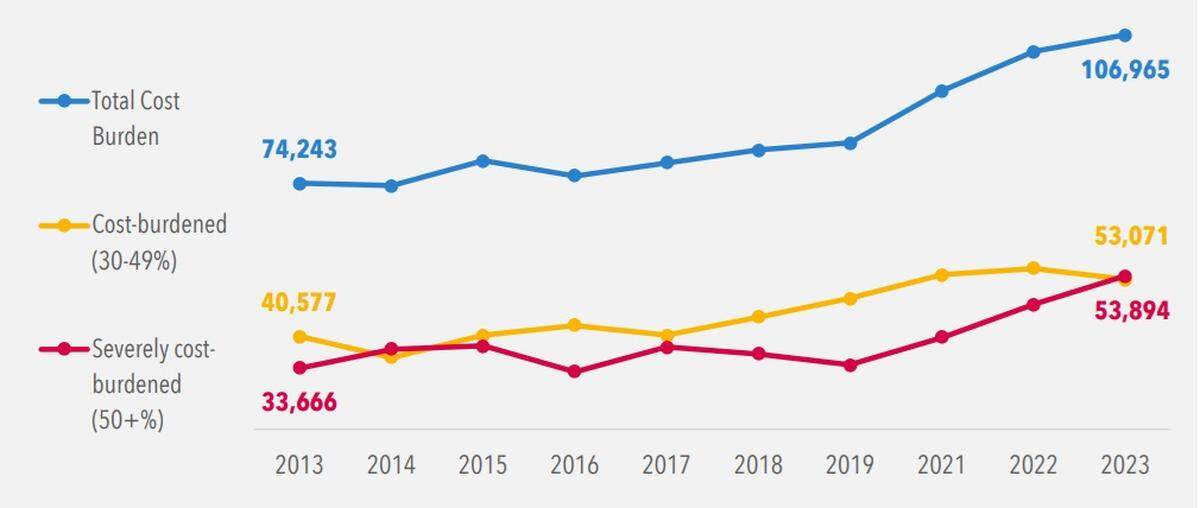
Housing instability — the inability to maintain a home — is the leading cause of homelessness, experts and advocates say. That also increased in the county. Nearly half of Mecklenburg’s renters can’t afford their homes, according to the county’s annual State of Housing Instability and Homelessness report, released in January.
So what’s being done to reduce homelessness and help all people stay in housing?
Since 2021, county leaders and advocates have crafted an updated plan to address both concerns with a project called “A Home for All.” The initiative seeks to look at the issues simultaneously and through increased collaboration between service providers, said Kathryn Firmin-Sellers, president and CEO of United Way of Greater Charlotte, which is spearheading the plan.
The ambitious plan has taken about four years to develop and implement, with the first part of the project officially beginning last October. Meanwhile, homelessness and housing instability worsened.
“People sometimes get frustrated that Home for All hasn’t made more progress than we have,” Firmin-Sellers said. “The (initiative) is trying to change how providers work together and build new infrastructure and new ways of working. And that just takes time.
“Change at the scale of which we’re being asked to make change is slow. And it has to be.”
A history of homelessness
Homelessness is commonly defined as people living in shelters or on the street. People living in hotels or in overcrowded households with family or friends are also considered homeless but not by federal agencies.
In the 2000s, rising housing costs and stagnant wages led to an increase in homelessness in Mecklenburg.
Abdul Wright was part of that mix. In 2004, he was fired from a warehouse job, could no longer pay rent and became homeless, he told Creative Loafing Charlotte, an alternative online news site.
Responding to that growing homeless population, the county launched a plan called “More Than Shelter! — A Ten-Year Implementation Plan to End and Prevent Homelessness.” Did it work? Yes and no.
The local homeless population decreased by 36% between 2010 and 2015, according to the county’s point-in-timecount, The Charlotte Observer previously reported.
However, looking at numbers from the Homeless Management Information System, which counts people in shelters or seeking services, the homeless population increased by 41% between 2005 and 2014, Axios previously reported.
Context is key. Statistics on homelessness are fluid because the population is transient and tends to distrust outreach workers. Those numbers also depend on the type of work being done, whether through street outreach, which could yield lower results, or shelter systems, where service providers can enter data into a coordinated system.
While more people may be homeless, the type of outreach used to connect with them may cause the data to fluctuate, said Karen Pelletier, a division director with the Mecklenburg Housing Innovation and Stabilization Services.
“The outcome of these reports is about really showing how complicated homelessness is, and that you don’t wake up one day and you’re suddenly homeless,” she said. The reports also provide a window into whether the systems in place are working, she added.
A large encampment
Unsheltered homelessness, meaning people living outside, isn’t new to the region.
From 2019 to last year, unsheltered homelessness nearly doubled, going from 196 people to 384, according to Mecklenburg County data. When that type of homelessness is concentrated in one area, it can spark a strong reaction from community members.
That happened in 2021 after an encampment of more than 150 tents sprouted up on the edge of uptown, along 12th, Graham and College Streets. It was possibly the largest encampment the city had seen since the Great Depression, said Liz Clasen-Kelly, CEO of Roof Above, a nonprofit that provides shelter resources.
The North End encampment startled Charlotteans. It also prompted bickering among city leaders and questions from residents wondering what was being done to help the unhoused.
A galvanizing plan
The encampment also triggered a need to find more solutions.
“It really galvanized people because it was shocking to see,” said Firmin-Sellers.
More than 150 public, private and nonprofit organizations came up with ideas to reduce, and ultimately, end homelessness, Firmin-Sellers said.
The plan was to build on past county plans and add initiatives that addressed housing instability. Mecklenburg charged United Way to lead the project in 2022. The goal: make homelessness “rare, brief and nonrecurring.”
After two years of planning, “A Home for All” was complete.
The plan seeks to help people on the cusp of or already experiencing homelessness. That means addressing immediate needs like shelter, and long-term needs such as affordable housing, mental health and workforce development.
The second part of the plan is what makes the initiative ambitious, Firmin-Sellers said, because it broadens the range of people it serves and requires new funding streams.
The initiative has 12 measures divided into four key pillars:
▪ “Unsheltered” focuses on street outreach, and providing health services and emergency shelters.
▪ “People” looks at increasing housing stability through a boost in support funding.
▪ “Prevention” seeks to keep people housed through rental assistance, home repair, eviction legal aid and preserving naturally affordable housing.
▪ And “production would create additional housing opportunities by building more shelters, affordable housing and connecting people with landlords.
The long-awaited launch
One of the key ways a “Home for All” intends to accomplish its goals is through collaboration, Firmin-Sellers said. It’s a way to increase funding streams — as seen in the initiative’s rollout last October.
United Way partnered with Housing Collaborative, a nonprofit, to connect people to housing and recruit property managers to aid in the effort. Housing Collaborative’s mission is to help people get into housing.
Through the initiative, the group was tasked with recruiting and retaining housing providers through financial incentives, creating a broader network of potential homes for people in need.
“We didn’t really have any resources to do what we were doing in terms of marketing or incentives for the property providers to actually work with us,” said Tara Peele, president and CEO of Housing Collaborative.
“There’s perceptions that property providers have about working with people with rental subsidies or working with people with lower incomes,” Peele said. “That’s a risk for them, right? So, what we want to do is take away the risk.”
That can include fear of missed payments, property damage, criminal records or evictions. The financial incentives can quell those concerns.
The incentives can also entice market-rate properties with high vacancy rates to lower rental costs and consider working with the nonprofit because some rent is better than none.
In October, United Way announced that Housing Collaborative would receive $1.5 million with the goal of bringing 400 new units into its property pool. About $600,000 will go toward the incentives.
“Are you worried about the rent not getting paid? We have funds for that,” Peele said. “Are you worried about the units being damaged? We have funds for that. It may not be needed, and in most cases it won’t be. But it’s there, and if we need it, we’ll use it.”
Timing is everything as needs increase
The work laid out in “A Home for All” isn’t new. “(It’s) the latest iteration of a conversation this community has been having for some time,” said Charlotte City Councilwoman Victoria Watlington.
A major part of that conversation has been the collaboration and the effective pilot programs coming from those partnerships, Watlington said. That includes the work between United Way and Housing Collaborative and an upcoming rental assistance program.
But creating those partnerships are delaying the initiative’s rollout.
“Sometimes in our desire to bring everybody under the same tent, we introduce complexities and bureaucracy that doesn’t need to be there,” Watlington said. “I’d love to see us find a balance between trying to get an org structure right and delivering results... without having to create a large system that then just encumbers the delivery.”
There’s no concrete timeline for when other parts of “A Home for All” will officially debut. Not only is homelessness and housing instability increasing but the overall landscape of housing in Mecklenburg and Charlotte is changing.
“We always want to go faster because we know that inflation is moving every year,” Watlington said.
In the past decade, average rent prices in Charlotte increased by 43%, according to data from CoStar, a real estate research firm.
“As we’ve grown as a community and our rents have risen, it’s not surprising that people who aren’t earning much money are finding it hard to participate in the housing market,” Clasen-Kelly said. But it’s not just a poverty issue, she added.
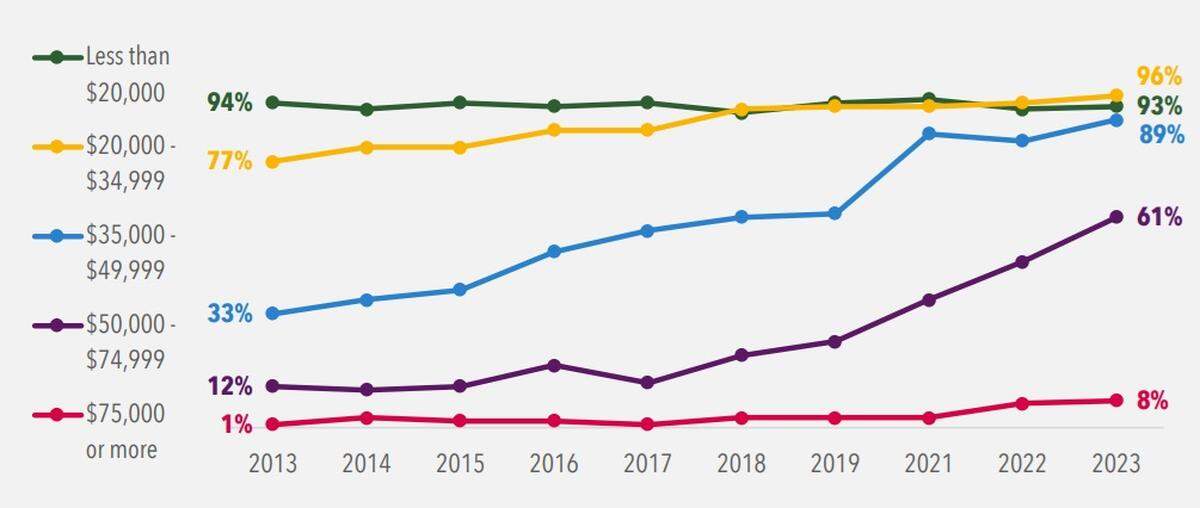
Around 11% of Charlotteans live in poverty. Another 61% of renters earning between $50,000 and $74,999 pay more than a third of their income toward housing costs — meaning they can’t sustainably afford rent.
“The data tell us that you cannot untangle homelessness from the housing market,” Clasen-Kelly said.
Slow, steady... and successful?
Programs assisting the unhoused haven’t stopped while “A Home for All” continues launching its initiatives.
And other parts of “A Home for All” are expected to launch this year, including a pilot rental assistance program for households at risk of eviction or instability. It’ll target renters making 50% to 80% of the area median income. For a family of four, that’s an annual earning of between $53,000 and $84,800.
The goal was to have that running by March. But it was pushed back to May because United Way is still finalizing a community partner agreement and testing the program.
Other plans for the year include:
▪ Launching a street psychiatry program to provide mental health services and substance use care in partnership with Atrium, Roof Above, Hearts for the Invisible and Alliance Health.
▪ Providing additional funding through the initiative to Legal Aid of North Carolina’s Charlotte Housing Unit to help tenants facing evictions.
▪ Expanding access to critical home repair for low-income homeowners
In the past two years, almost $20 million from public and private funding has been invested into “A Home For All,” according to United Way. It’s that mix of funding that may help pave the way to curbing homelessness.
“If we are really going to make a dent in homelessness, it’s going to be through collective impact,” Clasen-Kelly said. “If you look across the nation in some communities, there’s incredible divisiveness around homelessness.
“I feel like we’ve been fortunate in Charlotte-Mecklenburg to still work to find each other’s humanity… What will help us continue to make progress is continuing to seek out each other’s humanity in the midst of this.”
‘Nobody deserves that’
Last year, 20 people in Mecklenburg County died while experiencing homelessness, Pelletier said.
This year, Abdul Wright may have been the first.
He was found dead on North Tryon Street by volunteers during the Jan. 23 PIT count. It’s unclear what caused his death, but that early morning, temperatures dipped to about 18 degrees.

“For him to slip away like that. Cold. Alone… I felt like I wasn’t at my post. I wasn’t where I was supposed to be,” said Samella Wright, Abdul’s sister. “Nobody deserves that… Abdul was loved. He was loved.”
Volunteers and officials had hoped to see fewer people outside during the count as a cold front blanketed the county. Extreme weather protocols were in effect, which allowed shelters to create overflow space.
Two hours into that bitter cold morning, 150 people had been counted outside.
‘He was my protector’
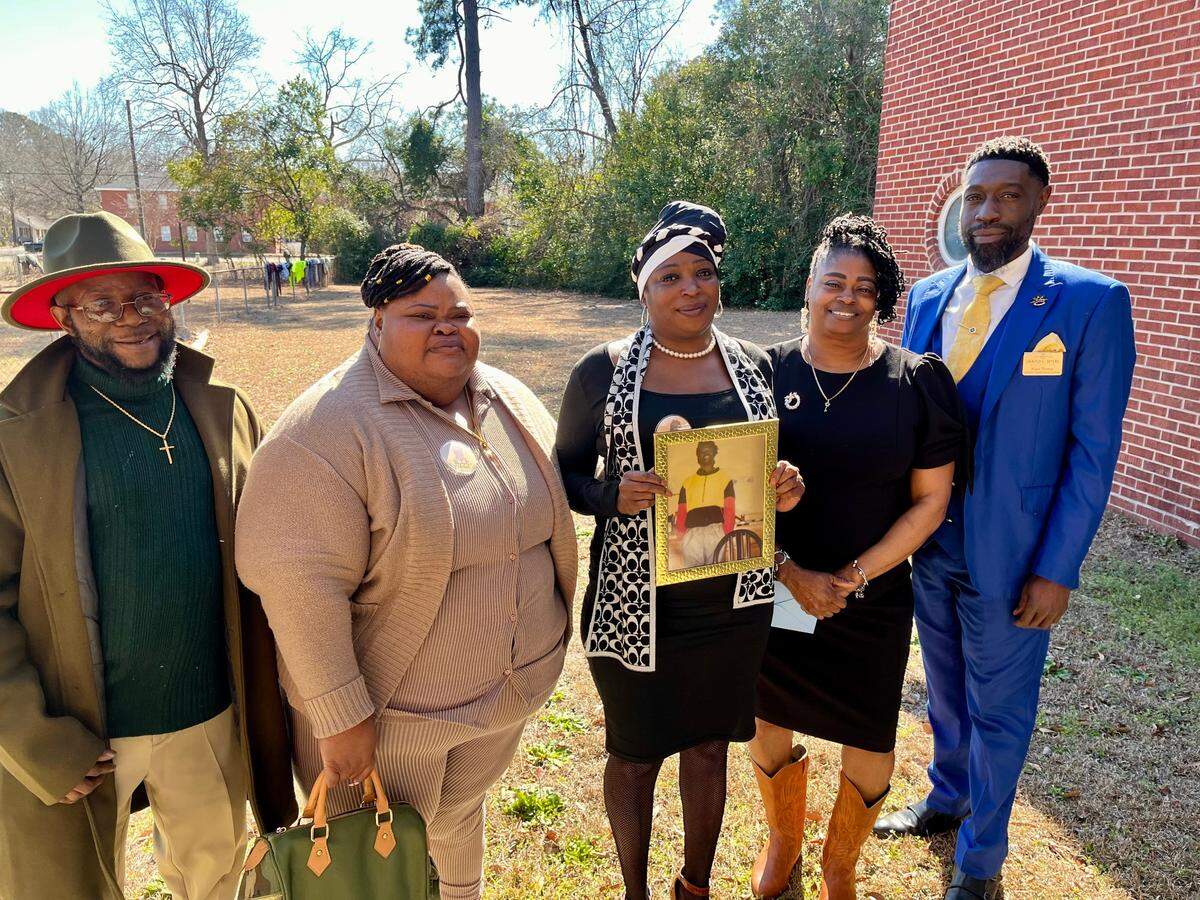
In February, about 35 people gathered in a small church about two hours south of Charlotte. They had come to the House of Refuge in Hartsville, South Carolina, to celebrate Abdul Wright’s life.
Wright was many things.
“He played football with my son,” Omega Jackson said. “And he always remembered me. He’d shout from the street, ‘Hey Ms. Jackson.’ ”
“He was my protector,” said Wright’s little sister, Sharonda Gabriel.
Wright held various jobs. He struggled. Sometimes he was stable, sometimes he was not, his nephew Nigel Thomas said.
The most important fact when talking about homelessness isn’t whether a person is a veteran, poor or has mental health issues, Clasen-Kelly said. It’s that the person is human.
It’s a sentiment Thomas hopes everyone remembers about Wright.
“People go through things in life,” Thomas said. “It doesn’t mean they didn’t have anybody. It doesn’t mean they weren’t loved. People are going to do what they want, and he did the best he could with what he had.
“I want people to know Uncle Dul was a person.”
NC Reality Check reflects the Charlotte Observer’s commitment to holding those in power to account, shining a light on public issues that affect our local readers and illuminating the stories that set the Charlotte area and North Carolina apart. Have a suggestion for a future story? Email realitycheck@charlotteobserver.com
This story was originally published March 31, 2025 at 5:30 AM with the headline "Homelessness is on the rise in Mecklenburg. The response remains a work in progress."