
Deceased bottlenose dolphin washes ashore in Hilton Head, but what killed it? What we know

A deceased adult bottlenose dolphin washed ashore in the Sea Pines area of Hilton Head on Nov. 9, prompting a stranding response authorized under the Marine Mammal Health and Stranding Response Program.
The Lowcountry Marine Mammal Network received the call after the animal was found on shore.
According to responders, the dolphin was an adult female in “good body condition,” meaning she had a healthy blubber layer, but that’s only one indicator of their health.
A partial necropsy was conducted on the beach by Amber Kuehn, executive director of Hilton Head Island’s Sea Turtle Patrol.
Kuehn reported finding “nothing striking” during the examination, according to Lauren Rust, executive director of the Lowcountry Marine Mammal Network.
A small area of what appeared to be minor pneumonia was seen on one lung, but Rust said there was “no way to tell” if it was related to the dolphin’s death. Researchers also noted that there were no obvious underlying conditions that could have contributed to her death.
After documentation and examination, Rust said the dolphin was buried on site, in front of Sea Pines.
Researchers were not able to collect additional samples to rule out factors such as toxins or disease, but Rust said teeth were collected to help determine the dolphin’s age and gain insights into any long-term conditions.
Adult bottlenose dolphins can range anywhere from about 7 to 40 years old, meaning this animal could be identified more precisely once analysis is complete. However, Rust noted that it often takes months – sometimes even years – for those findings to be finalized.
Unusual barnacles offer insight into the dolphin’s habitat
What makes this case even more unique was the presence of Xenobalanus globicipitis – commonly called “Xeno” – a type of barnacle that researchers saw on the fluke blade, pectoral flipper and dorsal fin.
Xeno is a type of barnacle that forms a symbiotic, or long-term, relationship and attachment with aquatic mammals. While they may cause minor drag or skin irritation, they do not harm the animal.
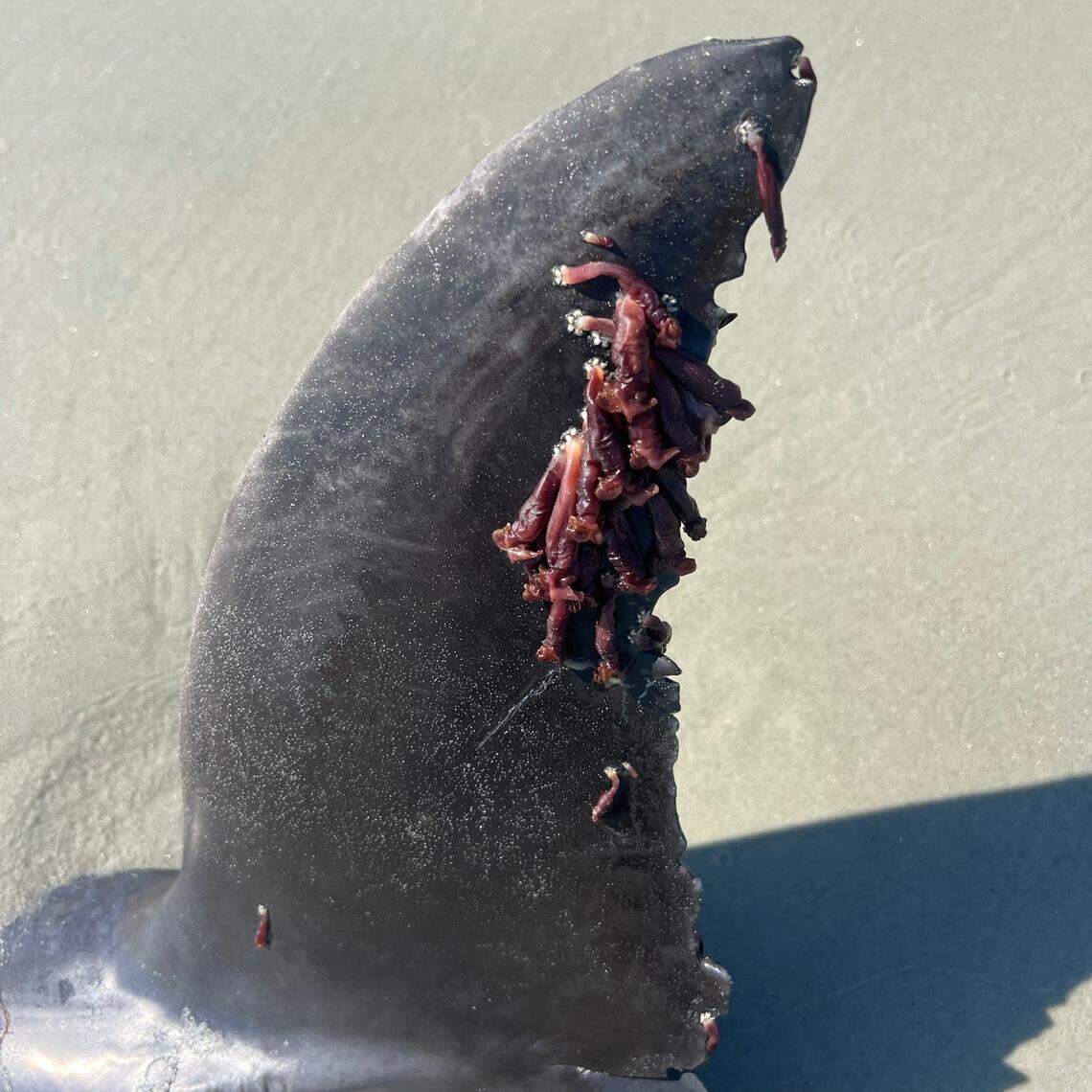
But, their presence can reveal something about where the dolphin lived.
“Xeno typically attaches to coastal dolphins rather than those residing in estuarine environments,” Rust said.
The presence of the barnacle is thought to be influenced by salinity levels, residency patterns and exposure to its larvae. Finding Xeno on the dolphin suggests she spent much of her time in coastal waters.
A mysterious shark bite
A bite mark was also on the dolphin’s back, likely from a shark, Rust said.
Responders believe the wound was most likely inflicted postmortem, before the dolphin floated ashore.
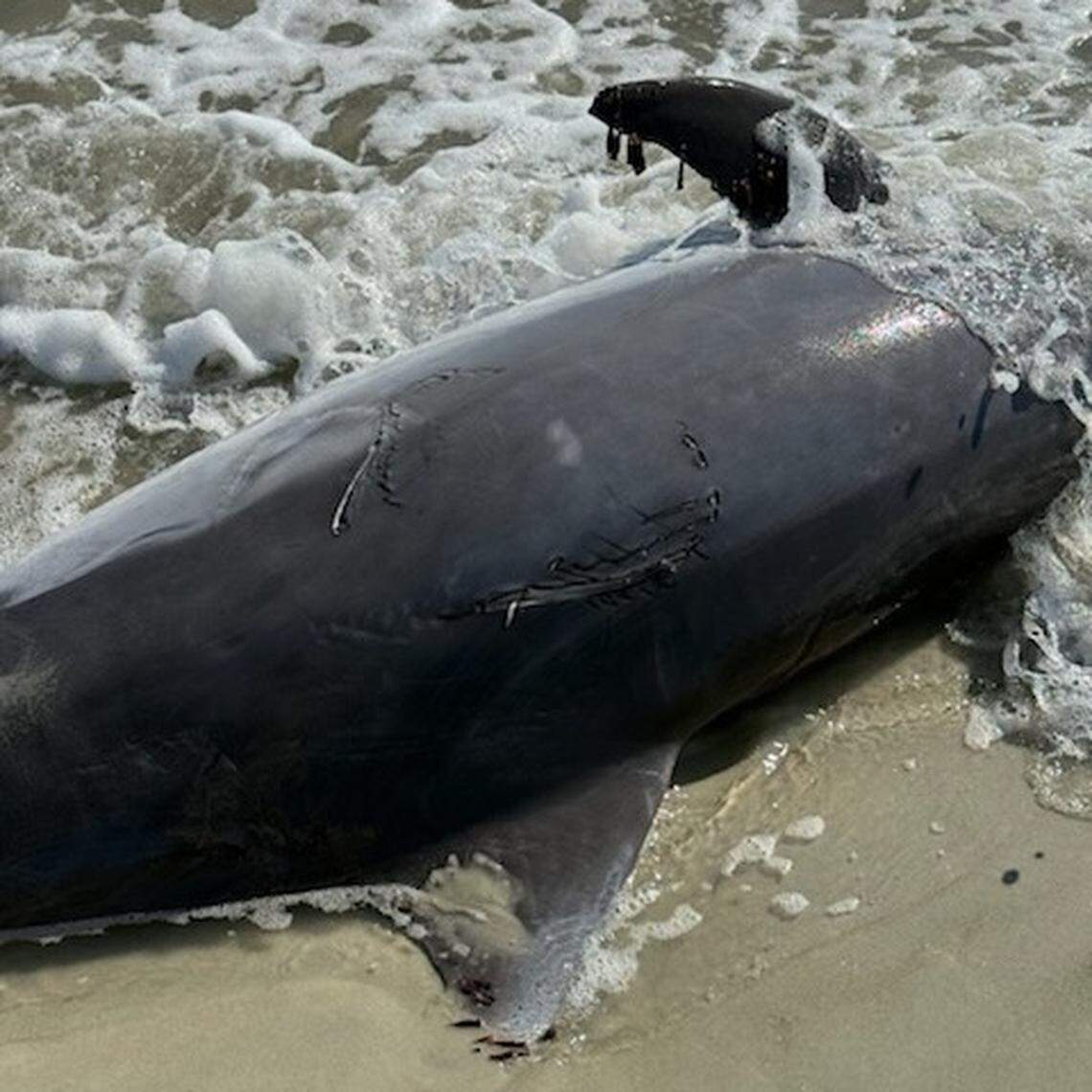
In a post made on Facebook following the response call, the LMMN said that sharks are opportunistic feeders and “love dead sea creatures,” offering more insight as to when the bite likely occurred.
Other local cases
This marks the third major sea creature stranding in the Beaufort and Hilton Head region this year.
Back in July, a dolphin named Lucky was saved from a shallow, Bluffton-area lagoon and returned to the May River to swim free. Local officials and marine experts said the rescue was like nothing they had ever seen.
In early May, a juvenile sperm whale beached itself on South Forest Beach. After months of analysis, scientists confirmed in October that it had died of starvation.
This story was originally published November 14, 2025 at 10:14 AM with the headline "Deceased bottlenose dolphin washes ashore in Hilton Head, but what killed it? What we know."
