Charlotte I-77 toll opponents eye next target to ensure lanes aren’t built
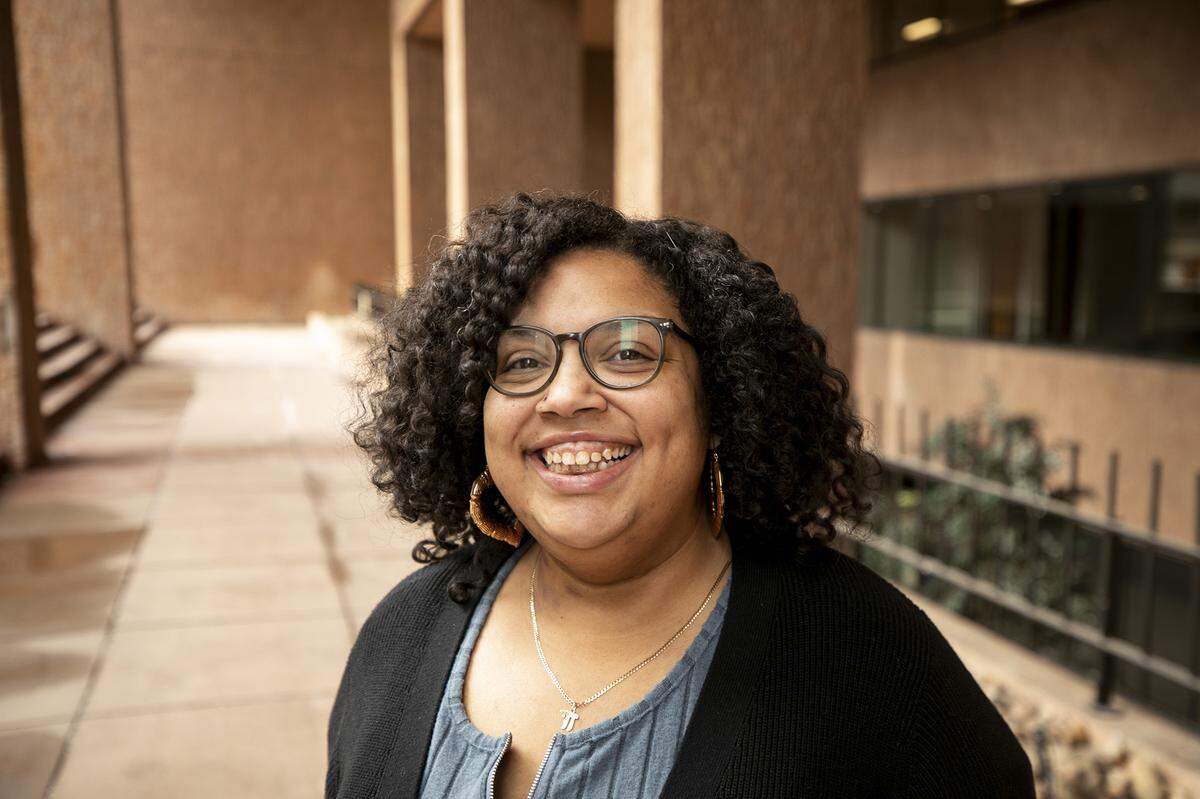
When Shauna Bell heard the Charlotte City Council canceled its support of the funding deal for the Interstate 77 South toll lane project, she was shocked.
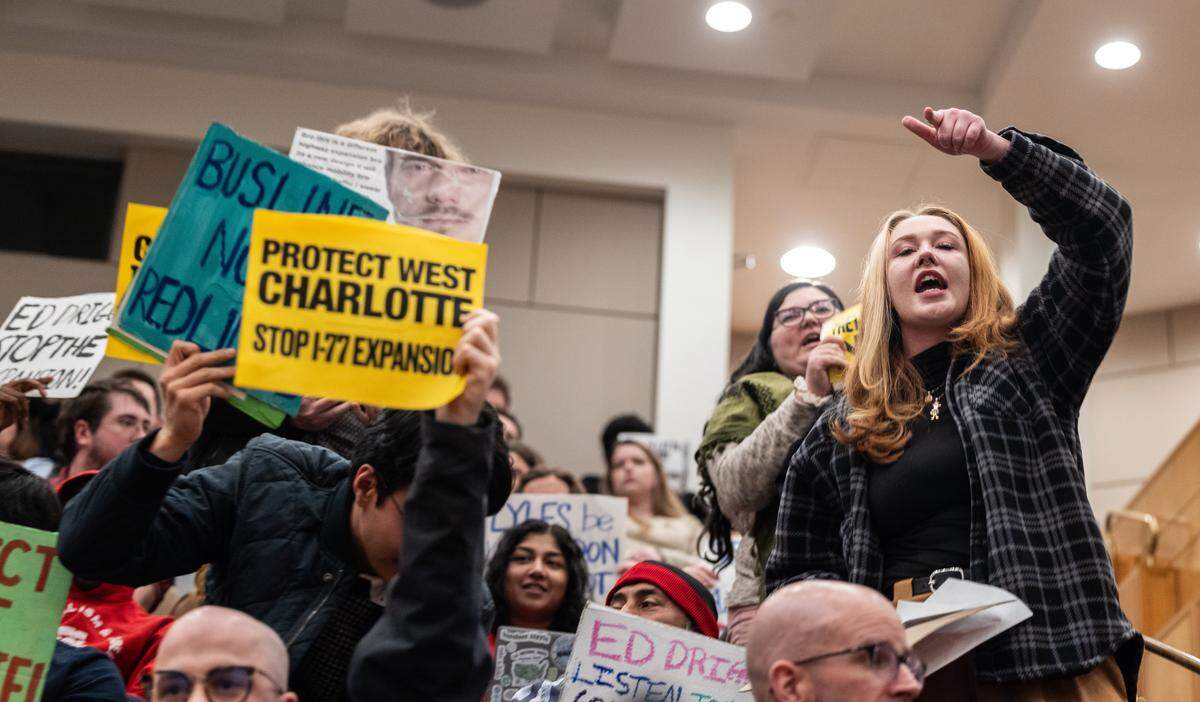
Bell lives in the McCrorey Heights neighborhood. Since October, plans for I-77 South have included a highway going through her home and then above her home. Since then, Bell and other residents along the corridor have asked for the project to be halted.
Some council members finally listened, Bell said.
“The whole time I was (asking council members) who are you actually representing,” Bell said. “It is shocking to me and a little satisfying that at least in this small instance what the community wanted is what was received and heard … I would hope that this is a lesson in how things should be done different. Community input matters, especially for the people who are directly impacted.”
But the controversial I-77 project isn’t dead yet.
Charlotte’s vote on I-77
On Monday, the council voted 6-5 to revoke its approval of the public-private partnership funding for the toll lane project. The body also approved a resolution requesting a deeper analysis into the design of the project and how transportation could be improved in the region.
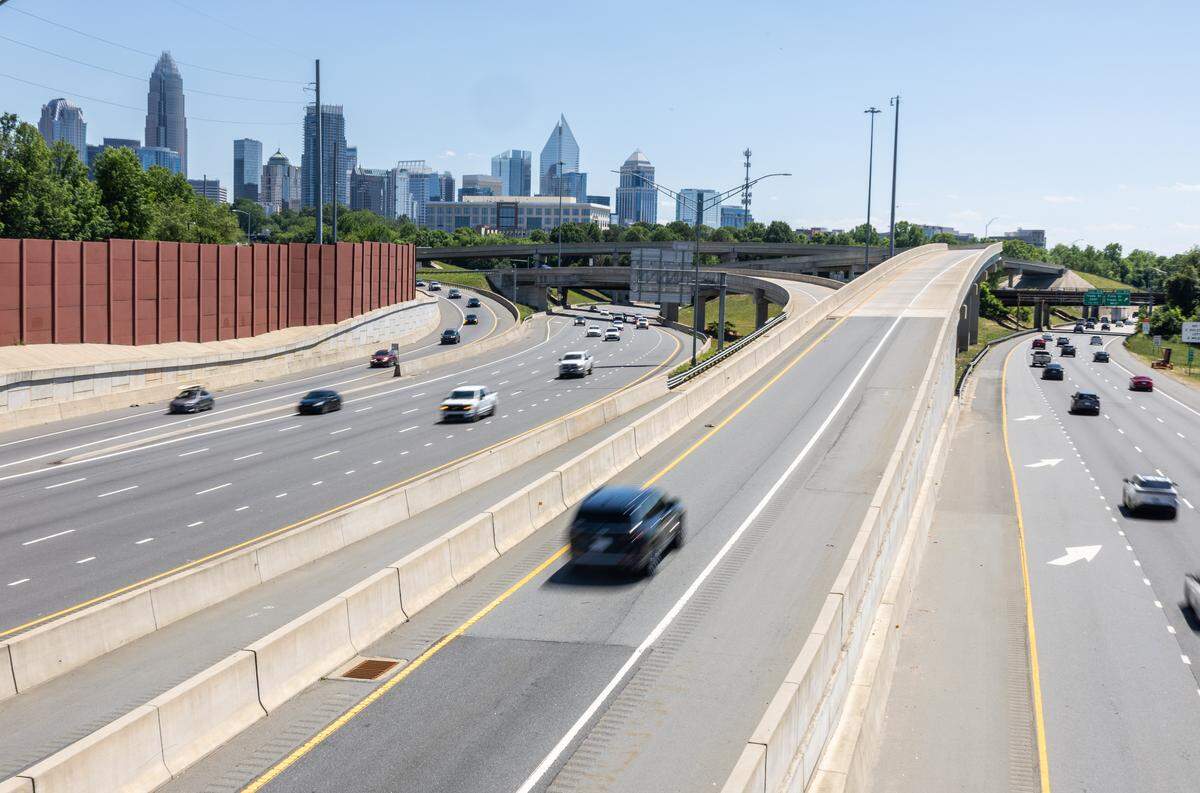
The 6-5 vote will move onto the Charlotte Regional Transportation Planning Organization, which looks at urban transportation improvements in Iredell, Mecklenburg and Union counties.
The organization in 2024 approved the funding mechanism for the project, mainly because Charlotte holds 31 of the 68 available votes, or about 41%.
If the organization chooses to acknowledge Charlotte’s decision to rescind its support, it could revote on the funding agreement as soon as its next meeting on May 20.
Mecklenburg County Commissioner and CRTPO member Leigh Altman is ready to have the conversation. Though, she won’t be in Charlotte for the next meeting.
“I think there’s broad and deep opposition to the plans and we need to seriously evaluate non-managed lane solutions,” Altman said. “We need to do this right and be sure that we’re proceeding with objective information that really has looked at all the options and not one that kind of came in with an outcome in mind.”
Altman also believes that, if CRTPO votes on the funding again, it will not get approved.
And if that’s the case, Altman said, “We need to get about the business of understanding non-managed lane possibilities and getting subject-matter experts that have some independence from NCDOT to help us understand what those are.”
What are the I-77 South toll lane plans?
NCDOT, along with city and county officials, have discussed how to handle the region’s growth and its effects on I-77 for the past two decades.
Managed lanes, or toll lanes, were the solution. In 2014, the I-77 South toll lane project joined a prioritization list, which is where the state considers transportation projects based on need.
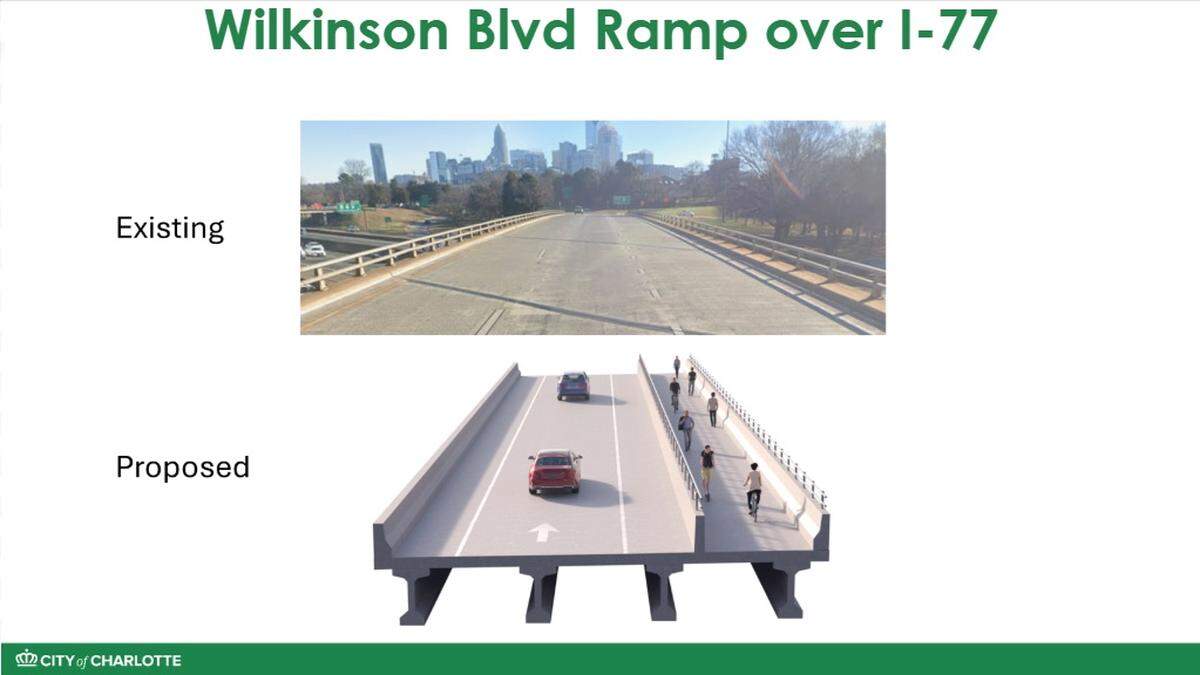
The project would add toll lanes to an 11-mile stretch of I-77 from uptown to the South Carolina border. The reason for the I-77 project is to reduce traffic and crashes.
I-77 South, according to NCDOT, has the state’s highest congestion levels, seeing over 160,000 cars a day. The agency estimates that, with or without the toll lanes, I-77 will see a 25% increase in traffic by 2050, meaning the roadway will see over 200,000 cars a day.
The proposed designs, released in November, alarmed residents along the corridor, particularly in Charlotte’s historically Black neighborhoods of McCrorey Heights, Biddleville and Wesley Heights.
Those neighborhoods already faced displacement in the late 1960s because of Charlotte’s highway system.
Now, NCDOT was back again.
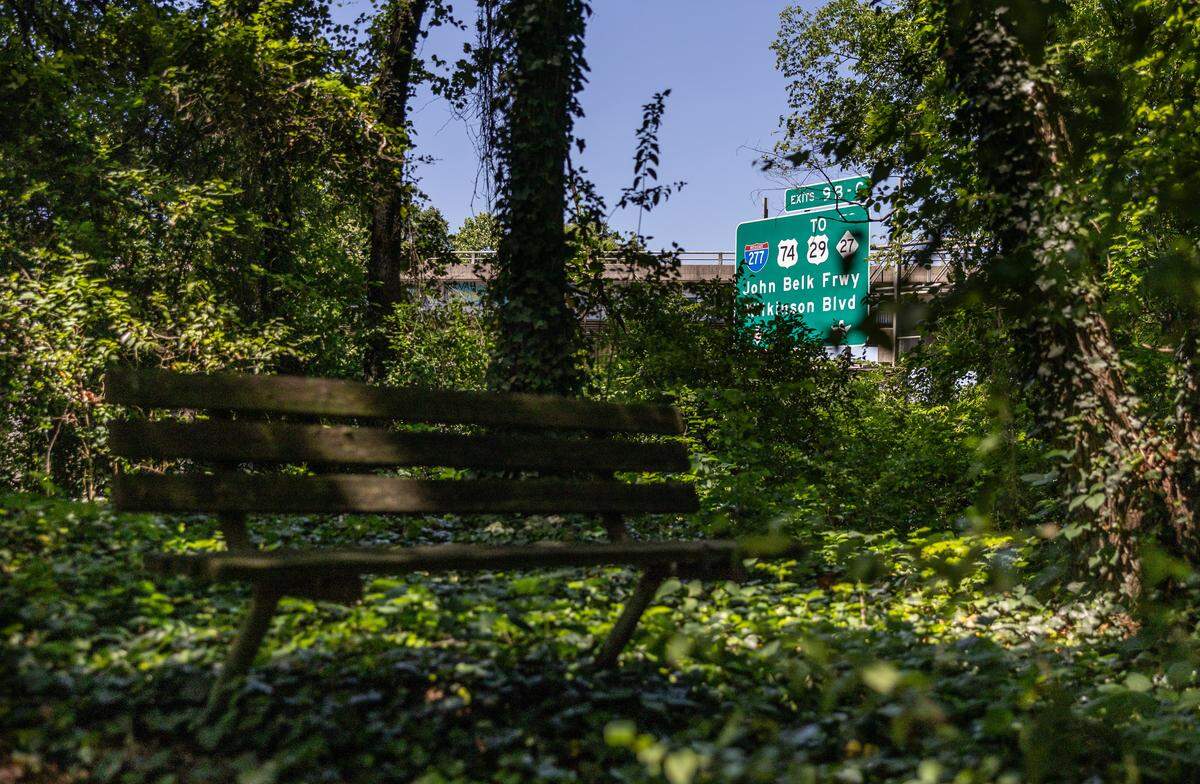
With the proposed elevated design, parks and greenways will be affected, including the complete removal of Wilmore Park. Several homes in the Wilmore neighborhood would also be taken via eminent domain.
Residents against I-77 South
Residents wanted NCDOT to reconsider the design.
Sustain Charlotte, a nonprofit focused on sustainable growth, hosted an event where residents presented new designs that included capped highways covered with green space.
But NCDOT said those options were too expensive without explaining further.
Besides the highway’s history and proposed design, lack of transparency and engagement also angered residents.
It’s something NCDOT has been working on. The agency opened a community center, is holding listening sessions with the proposed developers of the project and are in the process of establishing a community advisory group.
But the actions were too late, councilman Malcolm Graham said during Monday’s meeting.
Bell agreed. Whatever happens with the project moving forward, transparency needs to be elevated by NCDOT and city officials.
“Involve the people who are going to be impacted,” Bell said. “Every group who had a problem with this plan, whether it was tolling, displacement or environmental, there was a recognition that something needs to happen. I would like to see real engagement. Talking to the people who live along the corridor and bringing us in in the beginning to help us understand what is going on and what are options in order to improve in a transparent way.”
What’s next for I-77 South?
NCDOT will continue to host community meetings, the agency said.
And the project isn’t off the table yet. The decision is up to CRTPO, where residents will turn their attention next, said Sean Langley, McCrorey Heights Neighborhood Association president.
“This is what we’ve been advocating for and I’m very happy that some council members supported their constituents,” Langley said. “It’s now in CRTPO’s wheelhouse, and they need to act accordingly … Whatever happens moving forward, we still as a community want to be connected while still solving the challenges of traffic congestion. We can’t win our way out of this by just being solely dependent on cars.”
If funding for the project is revoked by CRTPO, it’s unclear whether NCDOT considers the project any further.
NCDOT allocated $600 million to the project, but told CRTPO the project was too expensive and wouldn’t move forward without a private partnership. The developer would cover the remaining $3.2 billion cost.
Without that agreement, “there is currently no other financially feasible alternative,” said NCDOT spokeswoman Jen Goodwin. She added that, if CRTPO follows Charlotte’s lead, the $600 million would go back to the state and be redistributed to other projects.
N.C. Board of Transportation at-large member Stephen Rosenburgh previously said revoking the funding would have consequences. The state has already spent $50 million on the project, according to Rosenburgh. If officials back out now, he said the NCDOT board will question whether it should support other projects for the Charlotte area in the future.
But Shannon Binns, founder of Sustain Charlotte, said the city shouldn’t fear NCDOT.
“They shouldn’t be dictating to us,” Binns said. “In urban areas, we need the state to be putting funding towards the types of transportation projects that cities need in order to grow and continue being the economic engine of North Carolina that we are…We’re not a state anymore where roads…or highway widenings…are the only answer.
This story was originally published May 13, 2026 at 5:00 AM with the headline "Charlotte I-77 toll opponents eye next target to ensure lanes aren’t built."