
Secrets of the Picasso landscape exhibit: Behind the scenes at the Mint’s landmark show
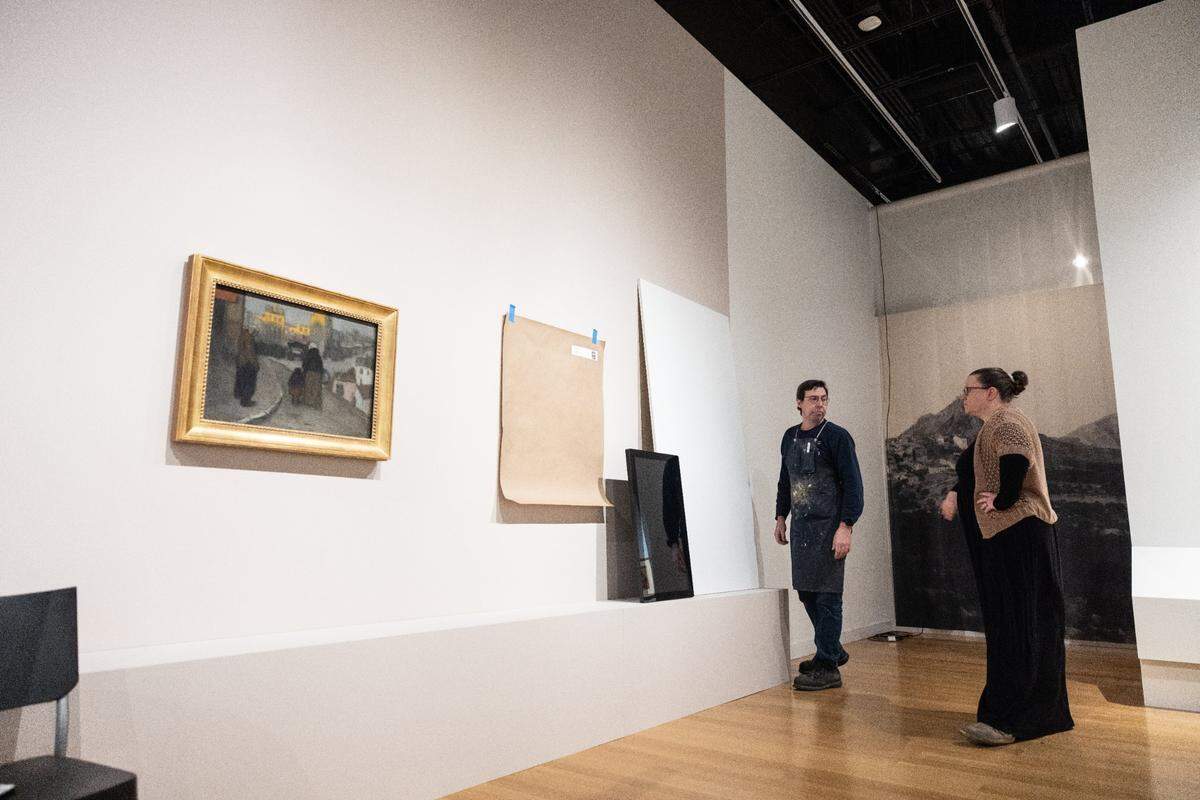
With less than two weeks to go before the launch of The Mint Museum’s most ambitious undertaking — the first ever traveling exhibition of Picasso landscapes — its gallery walls are a mix of peerless paintings and brown craft paper with blue tape covering empty spaces.
Nearby, a trio of white crates wrapped in plastic contain Picassos shipped from Europe. You could fit a child in one of those crates.
Orange metal ladders, plastic floor coverings and a half-constructed sofa also make it challenging to navigate the space occupied by a flurry of staffers and contractors.
Soon, that will all change.
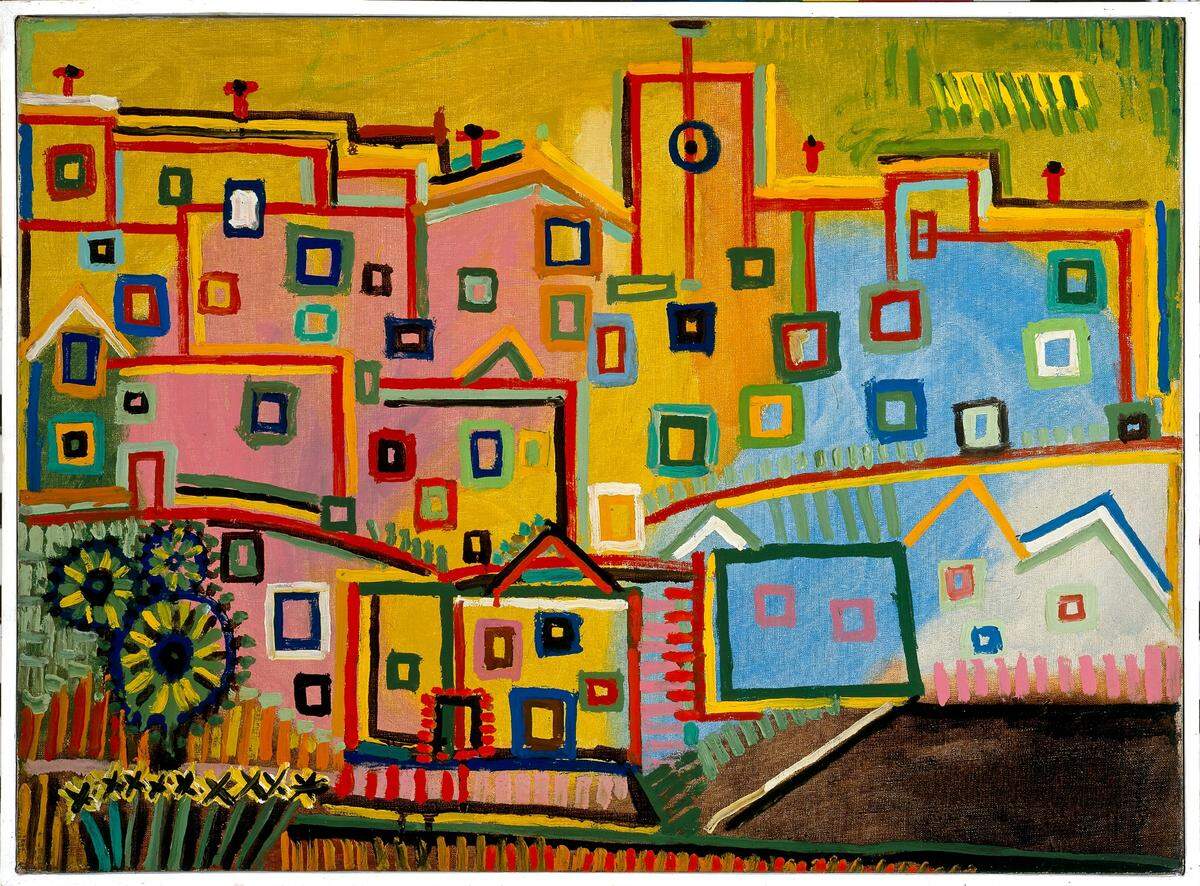
On Feb. 11, the museum unveils dozens of paintings by Pablo Picasso for “Picasso Landscapes: Out of Bounds” at Mint Museum Uptown. The show, which runs through May 21, offers the rare chance to see a local collection of work by a towering figure of 20th century art.
For now, workers continue their jobs at all hours prepping for an event expected to draw more than 100,000 people to one of the biggest cultural events Charlotte has seen in years.
Here’s how precise they need to be with the multimillion-dollar collection of Picassos: An alarm sounds if there’s a more than 5-degree variance in the temperature settings of 68 to 72 degrees. That already happened once.
By the time everything comes together, visitors will get to scope out 45 Picasso paintings and two sculptures in the exhibit organized by the nonprofit American Federation of Arts. The show coincides with the 50th anniversary of the artist’s death at age 91 in April 1973.
A related Mint exhibition explores connections between Picasso and Charlotte native Romare Bearden, another big name in the art world. People will see three more Picassos there and 17 works by Bearden.
The Charlotte Observer spoke with eight people at the Mint and the arts federation about the project, and was granted exclusive access to their behind-the-scenes work and a first look at the exhibition.
Visitors “are going to be blown away by these exhibitions and our permanent collection,” Mint CEO Todd Herman predicted. ”And that we can punch above our weight.”
A phone call in Florida
So how did all this get started? With a phone call by the beach.
In the spring of 2020, at the dawn of the COVID pandemic, Herman was in Jacksonville, Florida, visiting an art collector.
While leaving the apartment, his cell phone rang as he was climbing into his Volvo, alone in a blue suit and tie. The caller had a familiar voice and asked a simple question.
It was Pauline Forlenza, director of American Federation of Arts, a group Herman knew well. She wondered if the Mint would be interested in hosting a Picasso exhibition and take the opening slot for a three-city tour.
Herman’s first thought: What an exciting opportunity.
But then came the next thought: With the museum, the city and the country closed down for COVID, the timing couldn’t be worse.
“They were essentially asking me, would you like to take on one of the most expensive exhibitions the Mint has ever done at a moment when we were all thinking, what’s our next month going to look like,” Herman said.
No matter. This was Picasso, after all. There was just going to be one quick response: “Yes, of course, we’re interested.”
Paying for the Picasso exhibition
Herman quickly received buy-in from his board.
But before the Mint committed to hosting the exhibition, he also needed to secure community support and financial backing for the project. The cost includes tripling the number of gallery security guards, Herman said, as well as supporting community access like free school tours, among many other expenses.
The Mint needed to raise $1.4 million, at least triple what it normally would spend for a single exhibition.
Within two months of answering that call in Florida, $900,000 in funding came from corporate sponsors and private donors, and the remaining $500,000 from the city of Charlotte and Mecklenburg County.
Originally, the exhibition was going to be larger, with 80 paintings. But Forlenza said not all of the pieces that organizers wanted were available during the anniversary year.
A new look at Picasso
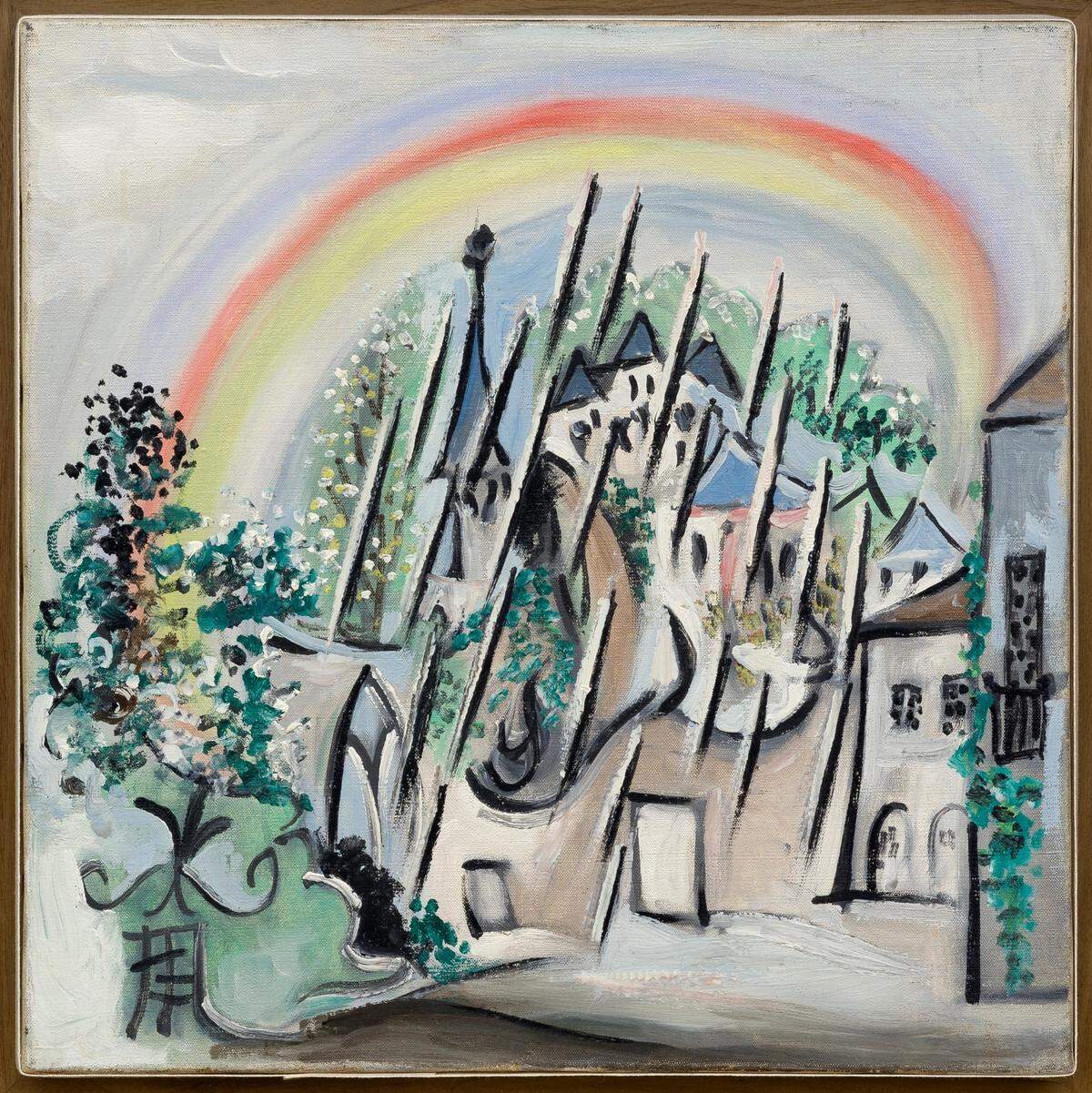
Of Picasso’s impressive output of 13,500 paintings, only 200 to 300 were landscapes, Forlenza said.
He’s better known for his famous Blue Period paintings like “The Old Guitarist,” Cubist Period like “Weeping Woman” and the Cubism and Surrealism of the 1937 anti-war mural “Guernica.”
Federation guest curator Laurence Madeline developed the idea for an exhibit focusing solely on Picasso’s landscapes. “The landscapes are not as well known as his nudes,” Madeline said. “It’s a new way of looking at Picasso.”
The federation organized the exhibit with support from Musée National Picasso-Paris. Charlotte is the first stop of the tour, which will include Cincinnati then a third city that has yet to be named.
It will showcase pieces from private and public collections, including some rarely seen in public. Among the groups loaning out paintings are the Museum of Modern Art in New York, FABA art foundation of Madrid and Luxembourg’s Musée national d’histoire et d’art.
Mint and federation officials declined to discuss the total value of the Picassos.
On average, the cheapest Picasso painting costs about $120,000, according to Artistry Found’s website. Picasso’s 1955 “Les femmes d’Alger (Version ‘O’)“ fetched a record for the painter of $179.4 million at a Christie’s auction in 2015, according to Art News.
Picasso show is ‘in the national interest’
The exhibition even caught the attention of the U.S. State Department.
In a Federal Register notice in November, the agency said it determined that the Picassos being imported for the exhibition are of “cultural significance” and that their display “is in the national interest.” The department signed off on the 27 Picassos being imported from France, Spain, Switzerland, Germany, Luxembourg, Italy and the Czech Republic.
The agency uses “cultural diplomacy” through the arts to increase understanding between Americans and people of other countries, a State Department official told the Observer.
To aid that goal, a 1965 federal law protects art entering the U.S. for temporary display from being seized through court action if, among other things, the State Department determines the objects are of cultural significance and in the national interest to display.
A changing exhibit
In 2018, when Madeline pitched the exhibition idea to the federation, she didn’t realize it would run during the milestone year of Picasso’s death.
“What was a casual project became big competition with over 50 exhibitions” worldwide, she said. Many other groups also wanted to secure paintings for their shows.
And Madeline’s vision for the exhibition changed, too, as she researched why Picasso painted the landscapes.
“Picasso was not an Impressionist, but he could be reactive to what was happening around him,” Madeline said. “Making these little discoveries, I wanted to include them in the show to have a sense of idea, of what was happening.”
Over the last six months, she began contextualizing the paintings with short films and photos. She wants people to understand that the paintings reflected what was happening around Picasso, from World War II to industrialization, and the effects on nature.
Even something as simple as adding a video clip of snow falling in 1920s Paris illuminates his work of a barren tree with branches covered in snow.
“I want people to notice this is not someone who works in his own world ignoring what is going on,” Madeline said. “An artist is someone who is the witness of what’s going on and this is what the show will express.”
‘Entering into that place of inspiration’
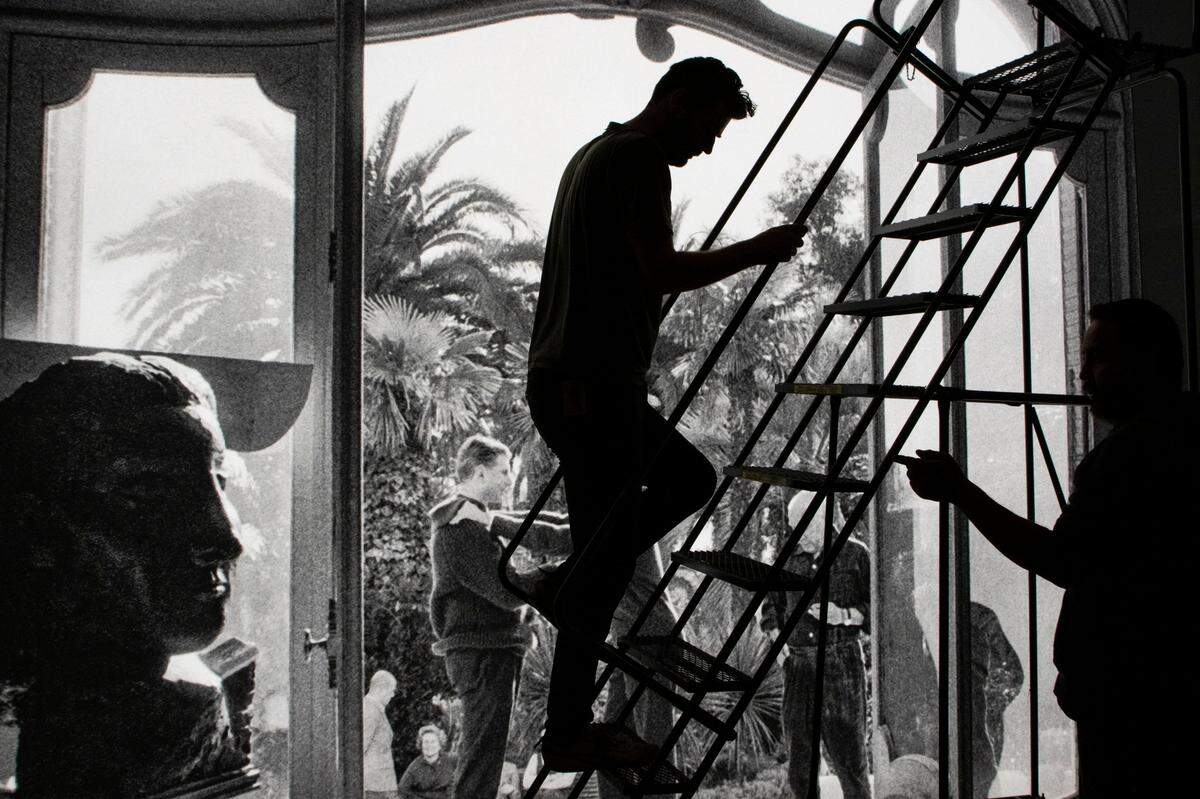
Work on designing the Mint galleries started nearly a year ago. That includes the historical, political and social context through film clips, photos of his studio and homes in France and Spain, and gallery design.
“It was important to us that our visitors also see what those places look like,” Mint curator Jennifer Sudul Edwards said, “so they could understand how that work is very specifically responding to the idea of place.”
Like his paintings, the exhibit is designed in layers to provide context about what inspired Picasso. It’s laid out in chronological order to show when his experimentation was inspired by other artists, different landscapes and historical events.
“This exhibit expands his entire career from some of his earliest paintings to some of his last paintings,” Mint chief exhibition designer Meghann Zekan said. “So when people enter this space, they’re entering into that place of inspiration.”
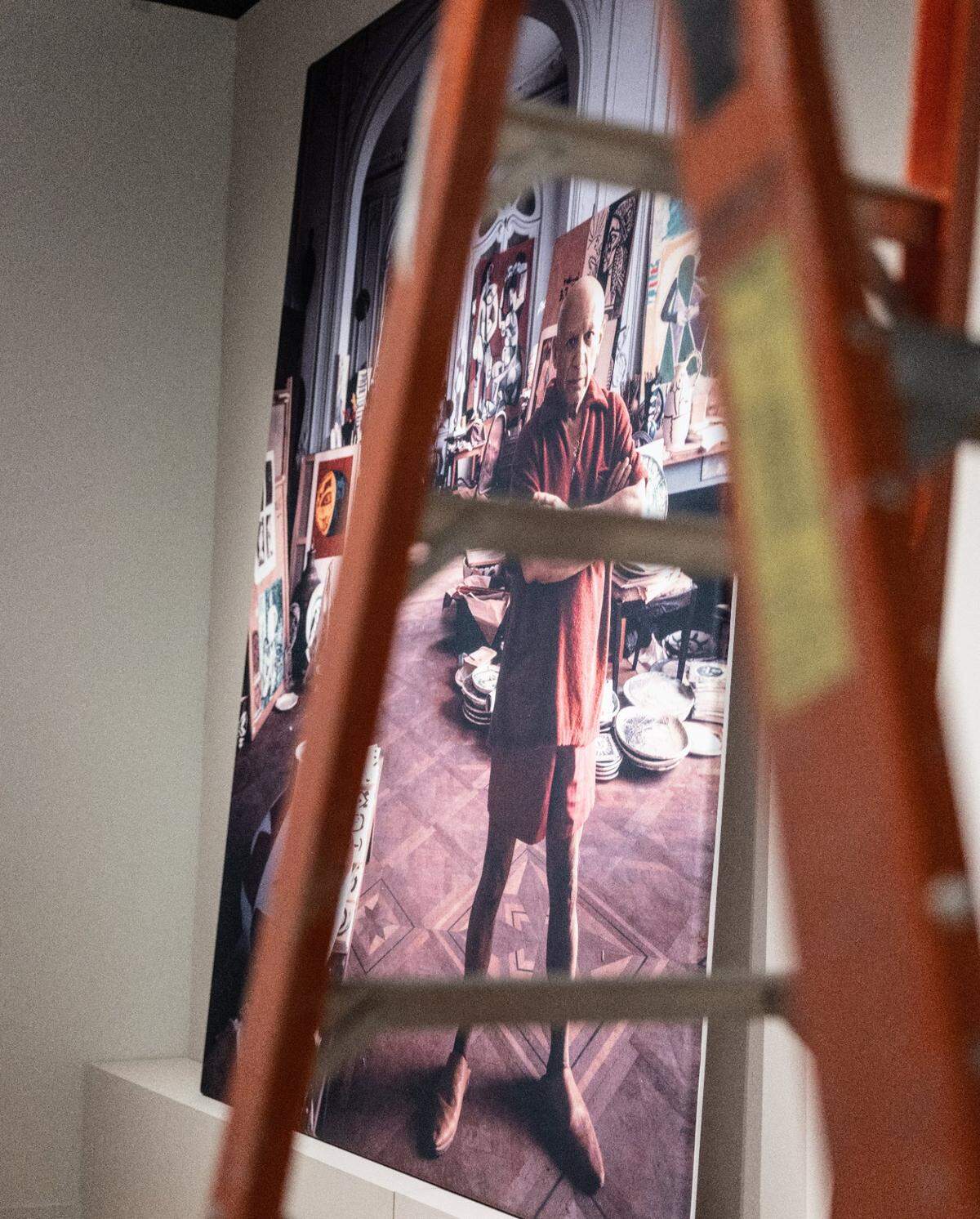
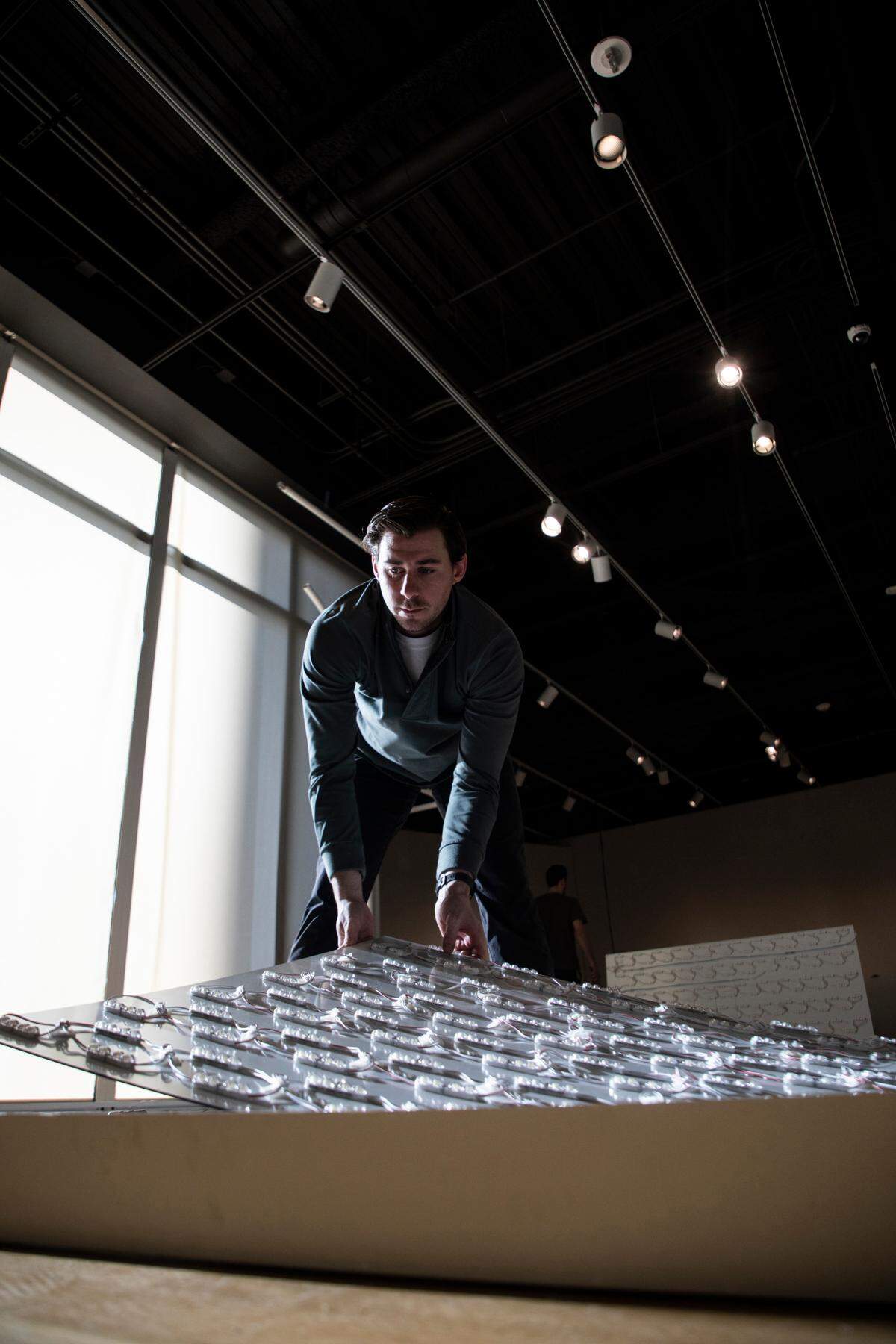
A 14-foot-high white doorway recreates Picasso’s studio doors with a giant light box and his photo in front of it. In the hallway, the scene mirrors his studio with paintings everywhere, some on the floor or leaning against the wall.
There are five 14-foot-high archways throughout the exhibit, another element from Picasso’s studio. Each one showcases a painting.
Zekan drew design inspiration from the views Picasso saw in his paintings of the French Riviera combined with a photo of Picasso with lush green vegetation behind him.
Then there are two round couches with touch screens, although work on them was still ongoing. Once set up, visitors can plop down and watch a 1900 film of a view from a French cafe looking out onto the street. Throughout, Zekan’s goal was to create a space for inspiration, immersion and learning.
Immersed in art
It took Zekan several weeks to imagine and research the design. That was followed by months of planning by the entire curatorial staff at the Mint and the federation.
Zekan and curatorial staff created a 90-page design plan for “Picasso Landscapes,” with every detail in 3D renderings for placement of the paintings. “We know exactly where everything is going down to the quarter-inch.”
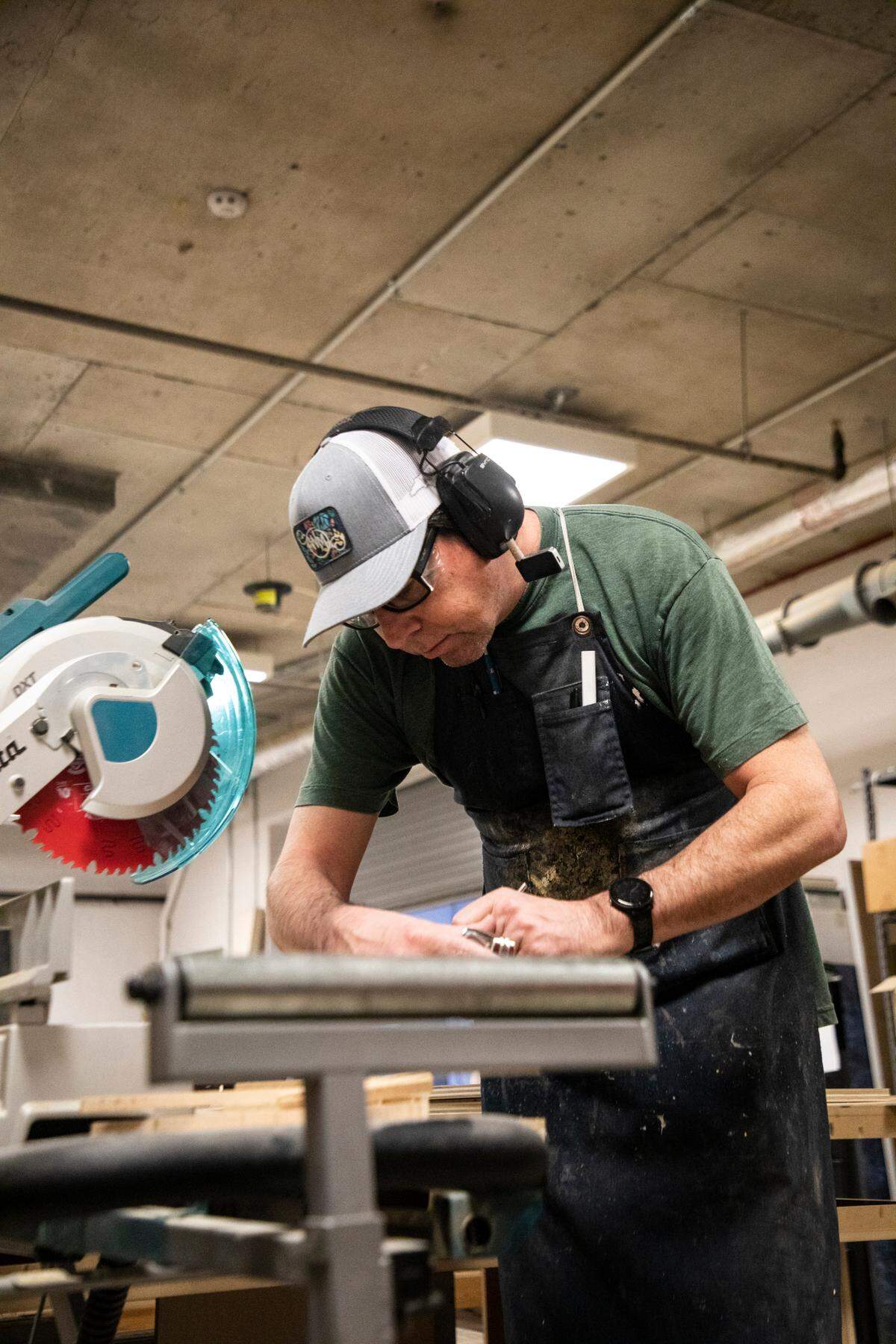
In January, gallery designs were finalized and prepping of the halls began. That involved building platforms, painting the walls, translating labels into Spanish and creating an audio guide. Four crew members took about two months to build out the gallery.
Madeline’s plan to include historical references added a new direction. “I haven’t been to many art exhibitions where you can see movies of where they painted,” Zekan said.
Waiting for the Picassos to arrive
These days, Katherine Steiner works like an international traffic cop at the Mint.
The biggest challenge facing the museum’s chief registrar in the weeks leading up to the exhibition is coordinating schedules for the arrival of paintings in crates from around the world. They typically first go through customs in Atlanta, then arrive via fine arts couriers at all hours of the day or night, said Michele Leopold, senior director of collections and exhibitions.
One shipment recently came to the Mint at 2 a.m., Leopold said.
A dozen couriers are traveling with the paintings to oversee the installations, and a few sessions are being held virtually.
Picassos began arriving in uptown Charlotte the week of Jan. 23. Each comes in unmarked trucks, and will continue to do so until right before opening day. Once at the Mint, paintings remain in their crate for 24 hours to acclimate to new space because they are susceptible to temperature and humidity changes.
And there are just four or five paintings installed at a time. “It takes so long because we very carefully open the crate and unwrap the piece, then we inspect it inch by inch to make sure no changes have occurred,” Steiner said.
Showcasing the Mint and Charlotte too
“Picasso Landscapes” also is an opportunity to tout Charlotte and its own landscape of the arts, Mint officials said.
The museum is partnering with a number of artists and groups for events with ties to Picasso, including the Charlotte Symphony, Bechtler Museum of Modern Art, The Harvey B. Gantt Center for African-American Arts + Culture, Charlotte Mecklenburg Library and Charlotte Ballet.
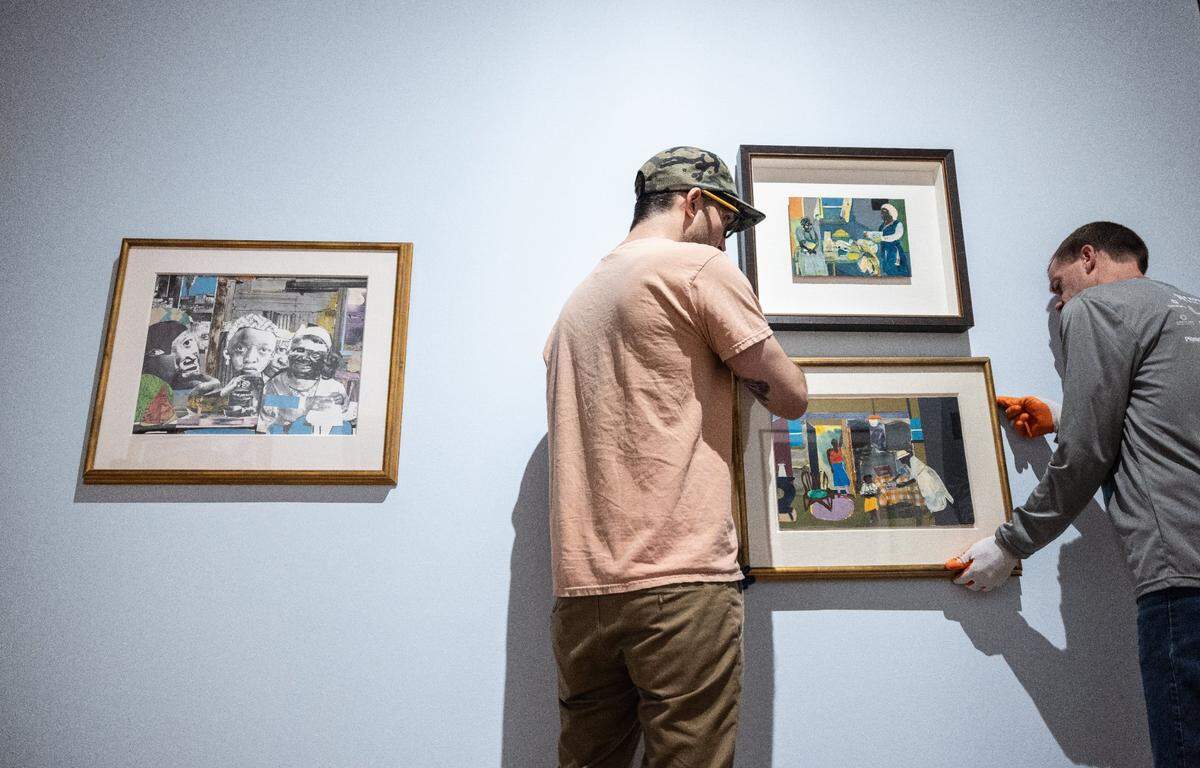
A related exhibition at the Mint, “Bearden/Picasso: Rhythms and Reverberations,” will focus on Charlotte native Romare Bearden. He drew inspiration for his collage style from Picasso when he traveled to Paris in 1950 to learn from him. The Mint holds the largest public collection of Bearden’s work.
With so many people expected to come to Charlotte for the first time for “Picasso Landscapes,” Herman said, “we wanted to introduce them to an an artist that they may not know that much about.”
An exhibition ‘that people remember’
Charlotte has seen its share of big-name art exhibits over the years, including for Picasso.
In 1986, the Jerald Melberg Gallery in Charlotte hosted North Carolina’s first Picasso exhibition. One of the paintings in the show, “Buste de Matador,” sold for $18 million in 2021 at a Sotheby’s auction, the gallery tweeted.
And just last fall, the Bechtler presented “Pop to Now: Warhol and His Legacy,” showcasing the likes of Andy Warhol, Jean-Pierre Basquiat and Keith Haring.
But the Mint has hosted only one exhibition comparable in stature to “Picasso Landscapes,” and that was 35 years ago. “Ramesses The Great: The Pharaoh and His Time” showcased over 70 artifacts and required the Mint to make lighting and other renovations.
“The Picasso exhibition is going to be another moment like that, that people remember,” Herman said.
Kaleidoscopes of color
Color explodes around the Picassos.
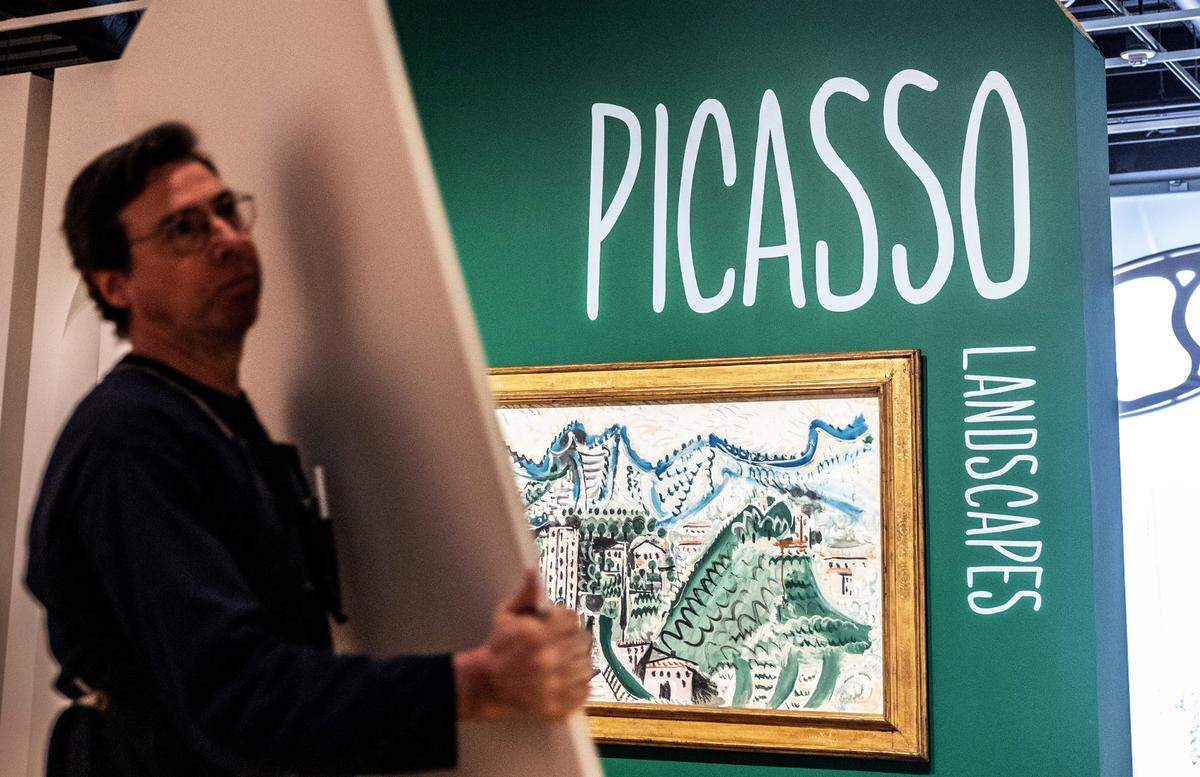
The title wall of “Picasso Landscapes” pops with a vibrant green, while bright white paint covers the gallery walls to showcase the paintings.
Those brown papers taped to the wall represent precise dimensions of the frames for paintings that need to be hung or haven’t yet arrived.
It’ll all get sorted out soon.
Herman’s excitement is palpable. He called the exhibit “one more jewel in the crown for this city. We’re setting a standard for the Mint Museum and Charlotte moving forward.”
Picasso Landscapes: Out of Bounds
Where: Mint Museum Uptown, 500 S. Tryon St., Charlotte
When: Feb. 11-May 21. Entrance with tickets designated for a set time.
Special Hours: Tuesday 9–10 a.m.*; 10 a.m.–6 p.m; Wednesday** 1–9 p.m; Thursday 1–6 p.m; Friday 10 a.m.–9 p.m.; Saturday 9–10 a.m.*; 10 a.m.–6 p.m; Sunday noon–6 p.m.; Closed Monday.
* Members-only access to Picasso Landscapes: Out of Bounds and Bearden/Picasso: Rhythms and Reverberations.
** General admission to the museum is free 5–9 p.m. every Wednesday, and $10 for Picasso Landscapes and Bearden/Picasso exhibitions.
Opening weekend: A limited number of timed entry tickets are available, which the Mint expects will sell out. Each ticket is good for two hours for the Picasso exhibitions. Tickets are good to tour the entire museum throughout the day.
Cost: Exhibition admission for adults is $25 and includes timed entry to “Picasso Landscapes: Out of Bounds” and “Bearden/Picasso: Rhythms and Reverberations.” (Museum admission is normally $15 for adults.) More details: mintmuseum.org/ticketing/
More arts coverage
Want to see more stories like this? Sign up here for our free “Inside Charlotte Arts” newsletter: charlotteobserver.com/newsletters. And you can join our Facebook group, “Inside Charlotte Arts,” by going here: facebook.com/groups/insidecharlottearts.
This story was originally published February 3, 2023 at 5:50 AM with the headline "Secrets of the Picasso landscape exhibit: Behind the scenes at the Mint’s landmark show."