
BOOM Charlotte festival leans on diversity, local artists in return to pre-COVID size
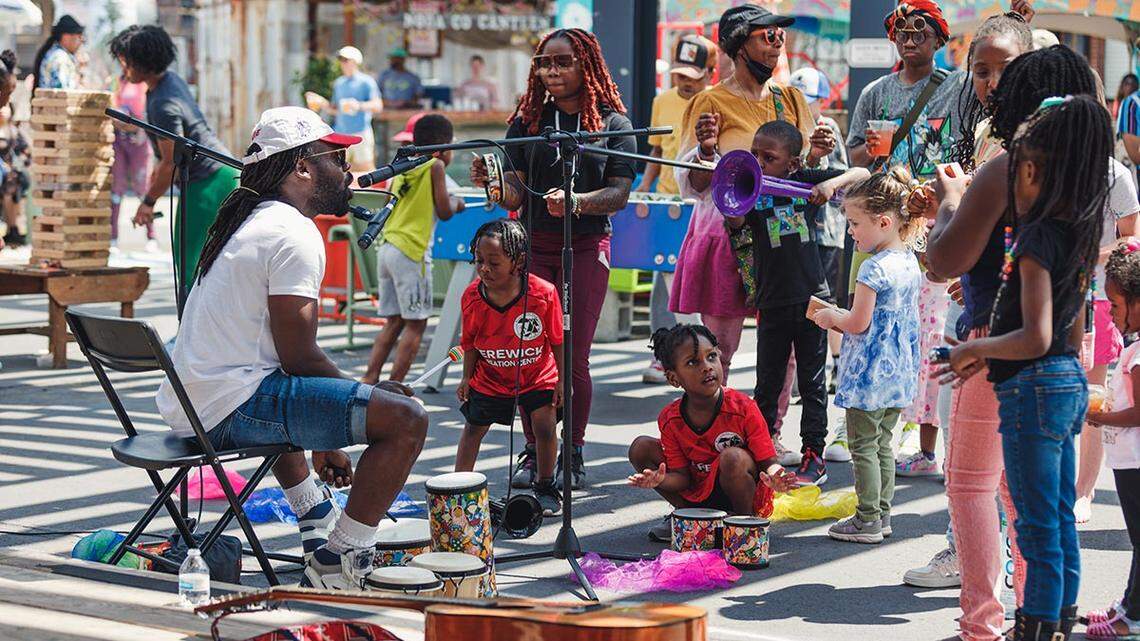
BOOM Charlotte, the festival known for highlighting local artists and cutting edge arts and culture, returns to Camp North End with three days of programming this month. That means for the first time since 2019, BOOM is back to its pre-pandemic size.
The event will showcase creativity by more than 100 artists and groups between April 21 to April 23. Expect the festival to include music, theater, dance, film, spoken word and interactive art installations . Much of the entertainment is free; some events are ticketed.
The festival also will add a new component this year by welcoming about 50 arts and crafts vendors to showcase their wares.
Last year, BOOM Charlotte relocated to Camp North End for a smaller, two-day festival after canceling in-person events in 2020 and 2021, due to the COVID pandemic. Prior to that, the annual event took place in Plaza Midwood. At its height, in 2019, it drew about 20,000 attendees.
For a while, BOOM founder and Executive Director Manoj Kesavan wondered if he’d be able to repeat that success. “The pandemic disrupted everything,” he said.
But things are looking up. For 2023, BOOM Charlotte received a record number of artist applications and has lined up more performers and programs than ever. And that fits nicely with people who are eager to experience things together again, Kesavan said.
Local and diverse artists
BOOM Charlotte grew out of a local arts collective before it organized formally as a nonprofit. It still operates as a collective in many ways, Kesavan said, with a group of core artists who also act as curators for the festival.
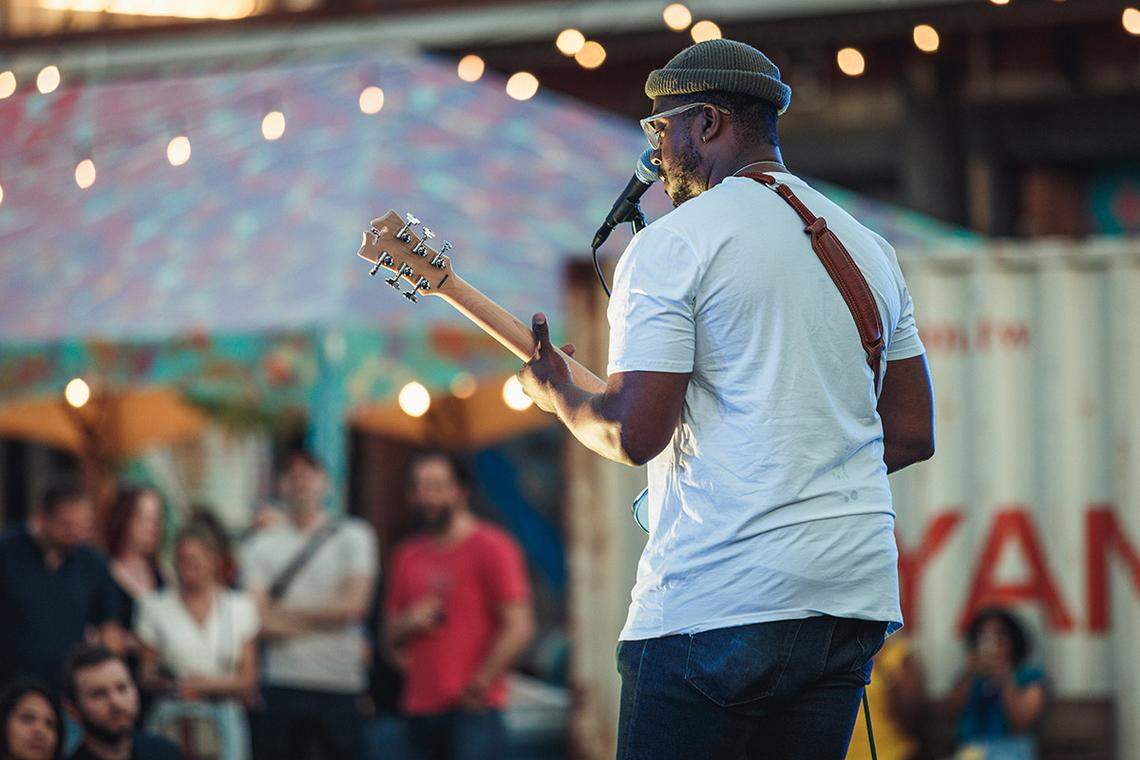
About 95% of the acts at this year’s event come from local or regional artists.
Kesavan spoke with pride about the diversity of BOOM, including both the variety of art and the racial makeup of festival creatives. The majority of participating artists are Black.
That’s also a reflection of American culture, he said, particularly in the South where cutting edge arts have always existed in the Black community.
“Every major American genre of music, whether it’s blues or jazz or rock ‘n’ roll or hip hop, everything comes from the Black community,” Kesavan said. “There is so much of that very innovative cultural creation happening in Charlotte.”
It’s rare to see such a wide range of experimental works in uptown Charlotte venues, Kesavan said. “(BOOM) is where you can experience that… what’s really happening, what’s really new in the cultural realm.”
Appealing to local artists
Part of the appeal for local artists, Kesavan said, is the festival’s affordability. “BOOM is the only place where a lot of these shows will happen,” he said.
That’s because production costs are often too steep for working artists to afford on their own. Typical shows require renting a venue, technical expenses like lights and sound, and ticketing costs.
Unlike other fringe festivals, BOOM Charlotte covers all of these expenses to give artists the freedom to develop new ideas. BOOM fringe artists receive 75% of the proceeds for their shows, which they don’t have to put toward any of those expenses.
The remaining 25% of earned income doesn’t cover those expenses, Kesavan said.
That’s why BOOM depends on grants and local sponsors for support. Funders include the Knight Foundation, the Infusion Fund, the Arts & Science Council, the National Endowment for the Arts and the NC Arts Council, among others.
Small local businesses with roots in Plaza Midwood like The Pizza Peel and Night Swim Coffee (which grew out of a merger between Undercurrent Coffee and Not Just Coffee) have been longtime supporters.
But Kesavan said the festival does not receive direct funding support from Charlotte’s big uptown corporations.
“BOOM has got a huge reach. We estimate at least 10,000 people should be coming through, which is more than the annual attendance of a lot of arts institutions,” he said. “But still we’re kind of invisible to a lot of the big uptown entities.”
Kesavan cited media coverage as part of the problem, which he believes tends to focus on larger arts institutions along Tryon Street. “A lot of the media coverage starts and ends from McColl Center to the Mint” Museum, he said, and sponsorship dollars tend to follow that lead.

“It almost justifies the lack of funding,” Kesavan said. “Because if it’s not worth covering, it’s not worth funding, right? So the apathy from the media often feeds into the huge inequity in funding.”
Big arts organizations play an important role in the community as windows to the larger arts world, he said, bringing events like “Hamilton” and “Picasso Landscapes.” But there’s also tremendous innovation coming directly from Charlotte artists, he said, that deserves attention and financial support.
What to expect at BOOM Charlotte
The festival is split into two types of events: BOOM Intersection and BOOM Fringe. A full schedule can be found at boomcharlotte.org.
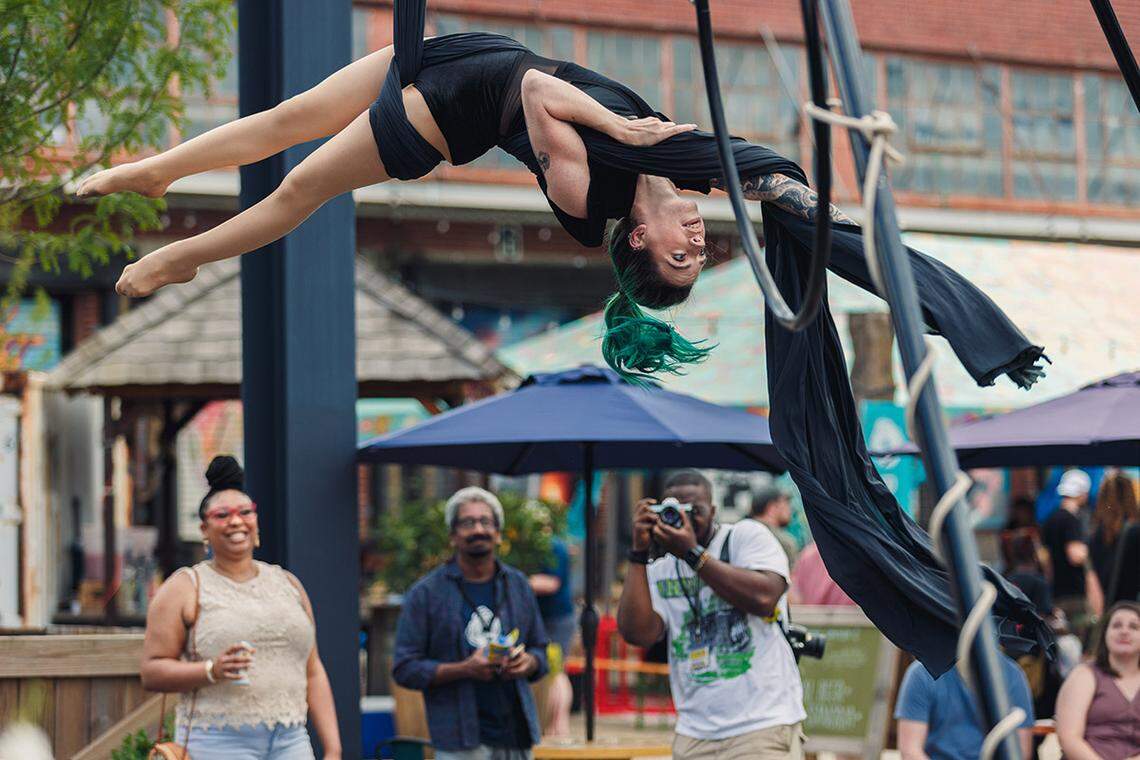
Intersection events are free, non-ticketed performances and arts experiences that take place outside. Several stages will be set up around Camp North End, with some acts happening simultaneously. Live painting, aerial performances and art installations will also pop up around the campus.
But the mainstage for Intersection events will be set up in the Boileryard, located near Camp North End’s iconic water tower.
Fringe events are all ticketed, indoor arts offerings. They will take place inside local businesses including Dupp & Swat, MacFly Fresh and Hex Coffee. BOOM keeps the cost low: $10 per show or $75 for a Festival Pass, which includes up to 13 fringe events. (Additional service fees apply.)
The fringe festival concept comes originally from Edinburgh, Scotland, home to a multi-week festival started in 1947, which remains the world’s biggest event of its kind.
But fringe festivals also have developed in some major cities around the U.S., including several well-established annual events in the Southeast, such as Asheville, Atlanta, and Orlando, Florida.
These festivals showcase live arts events, generally considered too avant garde for mainstream institutions. Performances happen all over the place—typically in small venues like coffee shops and bars.
“Fringe is where we believe art/culture is actually created,” Kesavan said. “Once it goes mainstream, it means that it’s been tried and tested, and it’s safe now. That’s when institutions absorb it... The cutting edge is always the fringe.”
Want to go?
BOOM Charlotte runs April 21-23 at Camp North End, 300 Camp Road, Charlotte.
BOOM Intersection Events: Free
BOOM Fringe Events: $10 (plus service fees) per show or you can see up to 13 Fringe Artist acts with a Festival Pass for $75 (plus service fees).
Tickets, artist information and schedules are available at boomcharlotte.org. Tickets can also be purchased on site at Camp North End during the festival.
More arts coverage
Want to see more stories like this? Sign up here for our free “Inside Charlotte Arts” newsletter: charlotteobserver.com/newsletters. And you can join our Facebook group, “Inside Charlotte Arts,” by going here: facebook.com/groups/insidecharlottearts.
This story was originally published April 11, 2023 at 6:30 AM with the headline "BOOM Charlotte festival leans on diversity, local artists in return to pre-COVID size."