
NC playwright aims to share complex, diverse stories about the Southern experience
Stacey Rose is planting seeds for the future of theater arts in Charlotte.
“We don’t hear a lot of stories about very specific Southern experiences, so you get stories about racism or slavery and its legacy, but not really complex queer Southern Black narratives or queer Southern narratives period,” Rose said. “The immigrant experience in the South, what is that? There is a wider breadth of stories and more to be said.”
The successful playwright and network television writer is getting those stories told through the Queen City New Play Initiative, which she founded last June with a Cultural Renewal Fellowship from the Arts & Science Council.
Her aim is to support playwrights who identify as Southern or are writing Southern stories, with an eye toward expanding the narrative on what it means to be Southern.
Some people assume the Queen City New Play Initiative supports Black playwrights exclusively, which makes Rose laugh. While it is a Black-led organization, those leaders support Southern writers of all stripes.
“I’m like, ‘We never said that.’ I don’t assume an organization supports only white works because a white person is running it, although they often do, while tokenizing the work of Black and POC artists.”
Diversifying the theater landscape
The initiative’s goal to diversify the theater landscape got an unexpected boost from the pandemic.
The push for social distancing and online gatherings helped the new organization, partly thanks to a $100,000 grant from the John S. and James L. Knight Foundation, which Rose won in December.
The money, earmarked to help the organization meet goals in innovative ways as the world continues navigating the uncertainty of COVID-19, was “a huge surprise and amazing show of faith,” she said.
The Queen City New Play Initiative went with the flow, broadcasting artist roundtables and live talks digitally. Theatre Artist Talks, a popular piece of programming, facilitates conversations between local and national artists, bridging connections for creatives who otherwise might not have the chance to build those networks.
“We lift up talent that’s from here because I had to leave here to have a career in playwriting. I want people to feel they can stay here and still write plays,” Rose said. “What’s interesting is people ask, ‘What happened to bring you back?’ I chose to come back. That was always the plan.”
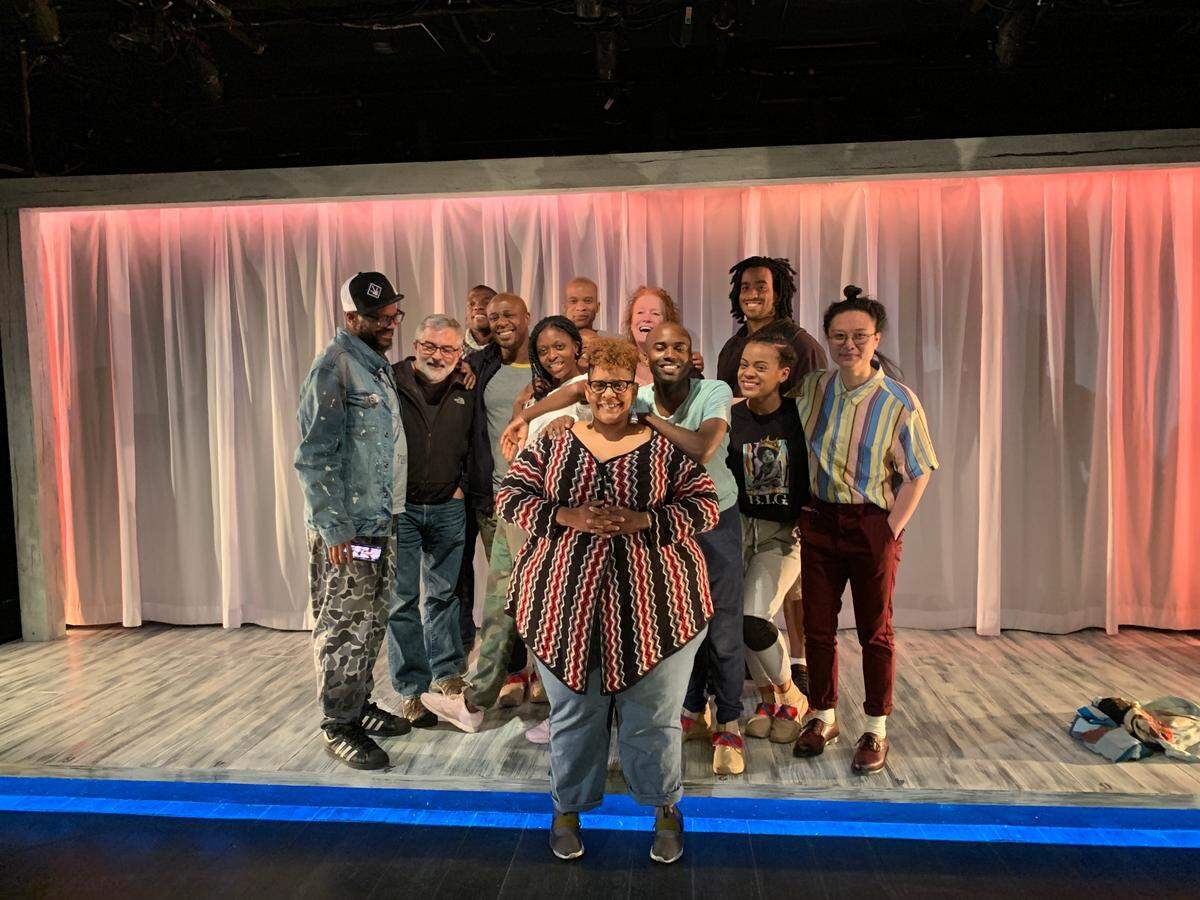
Giving back to the city
Rose envisions the initiative as a way to give back to the city that nurtured her as an artist.
Rose’s family has been part of the region for generations; her grandmother’s grandmother, Sarah Ledbetter, was born into slavery less than 45 minutes away, in Anson County. And although Rose spent most of her childhood in Elizabeth, N.J., she came to Charlotte every summer.
“I would start getting excited around April, because I knew I was going down South in June,” Rose said. “I could be with my cousins, swing on my aunt’s porch and walk around freely because my grandmother didn’t allow me to walk alone anywhere (in New Jersey). It’s definitely a familial connection, then an artist and cultural connection.”
She relocated to Charlotte as a young adult, producing one-woman shows and volunteering in Charlotte’s theater scene. Rose found space and mentorship in the city’s creative institutions, including the original Afro-American Cultural Center and the Black Box Theatre at Spirit Square, now Duke Energy Theater.
Creating interest in new stories to tell
Rose mourns the shuttering of Charlotte theater companies and the gentrification of NoDa, which has priced out artists who made it known as an arts district.
“I was just at the (former) Afro Am today. That building loved me to life,” Rose said. “Candace Jennings, Sidney Horton, Vicky Graham — all of those people took care of me and raised me in the arts. So when I talk about where I want to create that arts home again, it’s here. I want to plant that seed again.
“It’s so painful to see Charlotte go through these changes that seek to erase certain histories that were here, because we had something very special and very, very us. It’s so dumb,” Rose said. “Open a theater in an old bank, open an artist space. Do something of value. But no, all the development seems to be about is pumping beer into people and sending them on their way.”
One of the ways she aims to stem this loss is a new Queen City New Play Initiative program that will commission micro plays about Charlotte neighborhoods that have been overwrought with gentrification.
People from those neighborhoods will be paid to write three one-minute plays or three plays that connect to tell one story about the areas. The playwrights will receive support from a director and other experts, and the plays will premiere on Queen City New Play Initiative’s TikTok and other social media.
“We’re still figuring out the exact logistics,” Rose said. “But it’s a good way to think about what Charlotte was and what it meant to a variety of folks. Charlotte is the ideal place for this because it deems itself a New South city, and it’s a growing and changing Southern city with a blending of cultures.
“My hope,” she added, “is to generate interest in new stories that let us interrogate who we are.”
Success rolled in
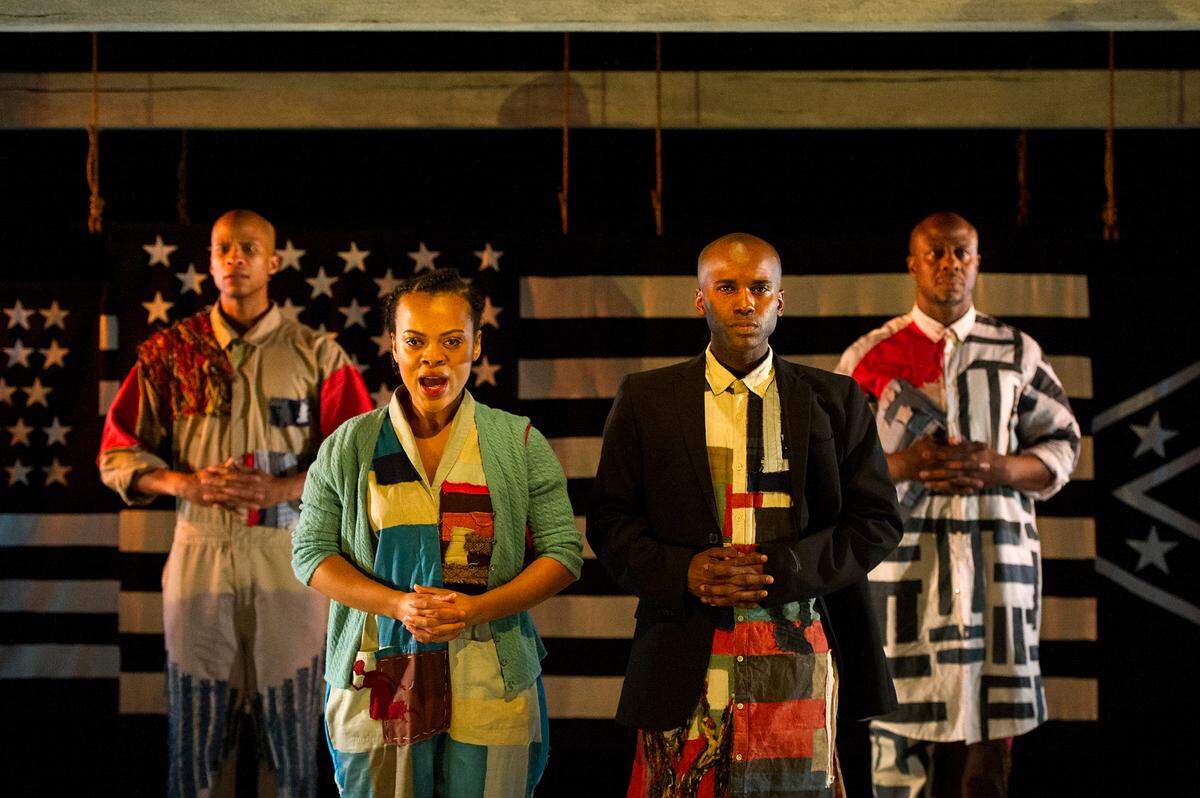
Rose has been penning some of the sharpest social satire to hit the American stage in recent years.
Things really took off when she left in 2014 to attend New York University’s Tisch School of the Arts MFA program. In quick succession, her work was presented at The Fire This Time Festival, The National Black Theatre Festival and Rattlesnake Playwrights Theatre in New York.
She held residencies with The Dramatists Guild and Sundance Theatre Lab, received a McKnight Theater Artist fellowship and won a slew of awards, including the Bonnie and Terry Burman New Play Award.
Rose currently writes for “9-1-1” on FOX starring Angela Bassett. She also has commissions with the Manhattan Theater Club and Rattlesnake Players Club, both in New York. And she only quit her full-time job as a respiratory therapist last summer.
The recognition has been affirming, as Rose used to struggle with the fear of not living up to her own hype.
“Before I was like, am I even talented enough to put myself out there in the world?” she said. “And then I wondered if I could make this what feeds me day to day.”
But as success rolled in, she grew more accepting of her power and her sense of duty to build a way for others to achieve the same.
“If you have a living American playwright currently having success, let her be part of making the theatrical landscape of Charlotte more complex,” Rose said. “But I didn’t expect to be running an organization and damn sure not a successful one in the middle of one of the busiest years of my career.
“It’s been crazy. Everything took off at the same time.”
Creating a legacy
For the upcoming season, Queen City New Play Initiative is exploring a play a month, with a reading and same-day discussion with the playwright, director and people connected with the play who can talk about its production more extensively.
The organization will continue popular initiatives like bake offs, where writers are given a list of “ingredients” with which to complete a play in 24-48 hours.
“QCNPI is my legacy. When I get old and tired of dealing with everyone, I want to just come here and get on someone’s nerves,” Rose said.
“I want a house with a wrap-around porch and have really loud, raucous Juneteenth celebrations every year. I want to create a home base where we have meals together, hear each other’s work, talk about each other’s work,” she said. “Those are the things I dream about for the city. A real creative ecosystem. There’s enough.”
More arts coverage
Want to see more stories like this? You can join our Facebook group, “Inside Charlotte Arts,” at https://www.facebook.com/groups/insidecharlottearts/
This story was originally published June 2, 2021 at 6:30 AM with the headline "NC playwright aims to share complex, diverse stories about the Southern experience."