
How much are grocery prices rising? We shopped at 4 local stores to find out
Inflation remains all around Charlotte these days, and one of the places it’s most apparent is in the supermarket check-out line.
The overall inflation rate rose 8.6% in May compared to a year ago, the fastest increase in over 40 years, according to federal data released Friday.
What’s more, grocery prices increased 11.9% in May, the highest 12-month spike since April 1979. That’s according to Consumer Price Index data by the U.S. Bureau of Labor Statistics.
So just how bad has the pain gotten lately in Charlotte grocery stores? We’ve got your answers.
What’s in our shopping bag?
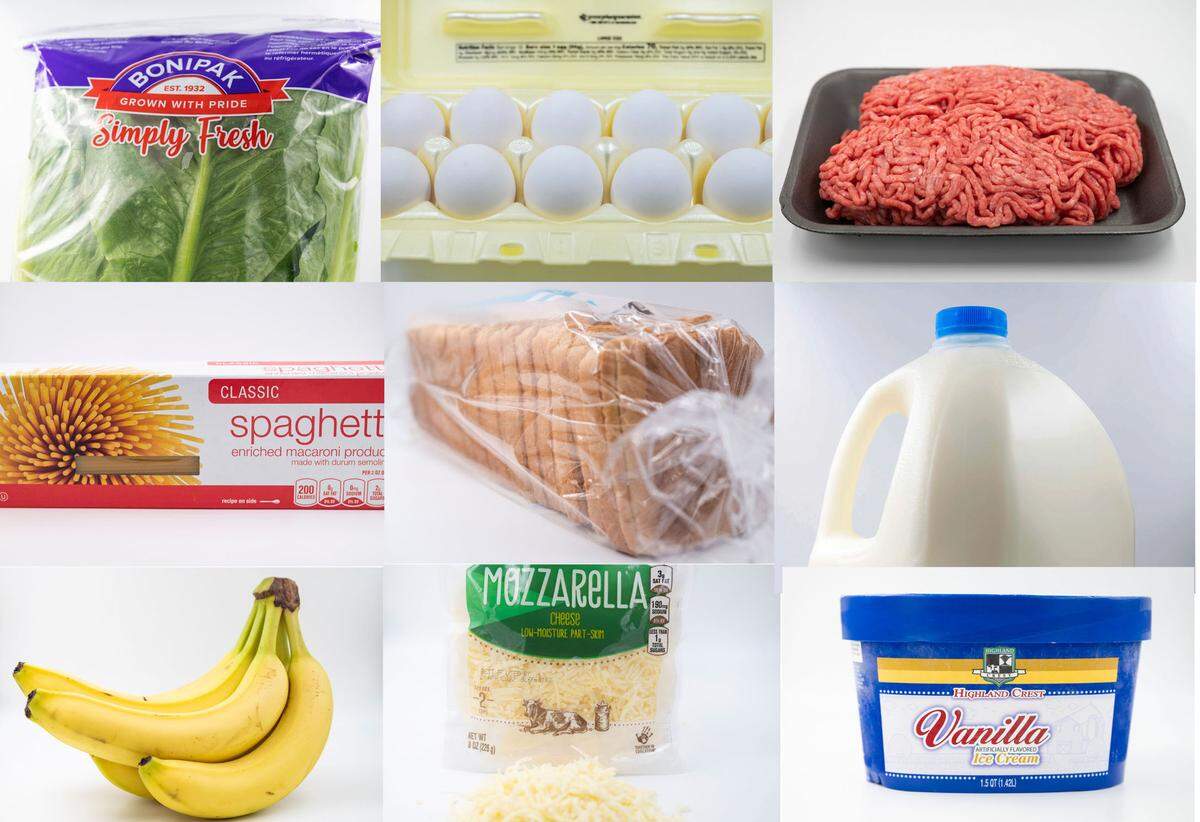
The Charlotte Observer price-checked 10 grocery staples on June 9 at the top grocery stores by market share in the Charlotte area: Walmart, Harris Teeter, Food Lion and Publix. Combined, the supermarkets account for nearly two-thirds of grocery sales in Charlotte’s competitive market.
The items we looked at were the same ones at the same stores we checked in early December 2021 and also in January 2020 — 1 gallon of skim milk; a dozen large eggs; a loaf of white bread; ketchup (20 ounces); 1 pound of ground beef; spaghetti (16 ounces); romaine lettuce hearts; vanilla ice cream (half gallon); shredded mozzarella cheese (16 ounces); and 1 pound of bananas.
We looked at the cost for these items in each of the stores, came up for an average price per staple, then looked at how those costs changed over time.
Comparing our grocery receipts
Here are some key points from the Observer’s analysis of grocery prices over the last few months between December and June:
▪ Prices for nine out of 10 staples increased, with nearly all seeing double-digit increases.
▪ The item with the biggest increase was a dozen large eggs, with an 81% hike, going from $1.60 to $2.90.
▪ The average cost of a pound of bananas, spaghetti, a bottle of 20-ounce ketchup and a gallon of skim milk increased between 18% to nearly 21%.
▪ The only food in our bag that decreased in price was romaine lettuce hearts. The price fell by 11%, from $3.74 to $3.32.
▪ Overall, the total cost for the 10-item grocery bag increased by 12.5%. In the winter, the same groceries cost an average of $24.85. This month, they cost $27.96.
Comparing grocery prices to before COVID
The price increases are even starker when compared to pre-pandemic January 2020 to this month. In that time:
▪ All 10 staples increased in price.
▪ The total cost of our groceries increased by 17%, from $23.82 to $27.96.
▪ Eggs cracked up to the biggest price increase again. They more than doubled in cost, from $1.44 to $2.90.
▪ Spaghetti that used to cost 86 cents in January 2020 now runs $1.12, a 30% increase.
▪ And romaine lettuce hearts inched up in price, from $3.11 to $3.32, a nearly 7% spike.
Comparing prices at our four grocery stores
Finally, the Observer also looked at the grand total of our groceries from each of the four stores. Here’s what we found:
▪ Publix had the most expensive shopping cart this month, with our 10 items costing $35.32. That was followed by Harris Teeter at $28.51, Food Lion at $25.94 and Walmart at $21.88.
▪ Publix also had the biggest price increase between last December and June, at 20%. You would’ve paid $29.61 for those groceries in the winter, instead of $35.32 now.
▪ While Harris Teeter’s grocery bag was second most expensive this month, the Matthews-based grocer saw the smallest price increase of the supermarkets we surveyed between December and June, at 8.6%. The total for groceries went from $26.26 to $28.51.
We also looked at total costs for each of the stores between January 2020 and this month.
▪ During that period, Food Lion saw the largest increase in our bag, a nearly 24% rise in prices, from $20.96 to $25.94.
▪ The other price increases for the total groceries in the past 2 1/2 years were: Publix, 22%, Harris Teeter, 14%, and Walmart, 8.4%.
What can shoppers expect next?
Wayne Winegarden, a senior fellow in business and economics for the Pacific Research Institute, told The Charlotte Observer Friday that several factors are driving inflation. That includes shortages — both material and labor — and other factors that are driving up costs for producers.
“There is a perfect storm that’s making things worse,” Winegarden said.
With the grocery sector being hit hard, “it’s unfortunate because it really hurts people,” he said.
Feed stock is going up in price because of a corn and grain shortage. And, the bird flu outbreak is driving up egg and poultry meat prices, according to the U.S. Department of Agriculture.
“It’s hard to see how within this year, we’ll see any relief,” Winegarden said.
Although he expects prices eventually will begin to taper, it likely will take three to six months or longer.
“Families are struggling with affordability issues,” Winegarden said. “Going to the grocery store still hurts.”
Consumers are likely to skip extras like buying a coffee from a shop and instead make it at home for cheaper.
“Budgeting is back in vogue,” Winegarden said.
This story was originally published June 13, 2022 at 6:00 AM with the headline "How much are grocery prices rising? We shopped at 4 local stores to find out."