
Tax tips for those who wait for the last minute in Rock Hill
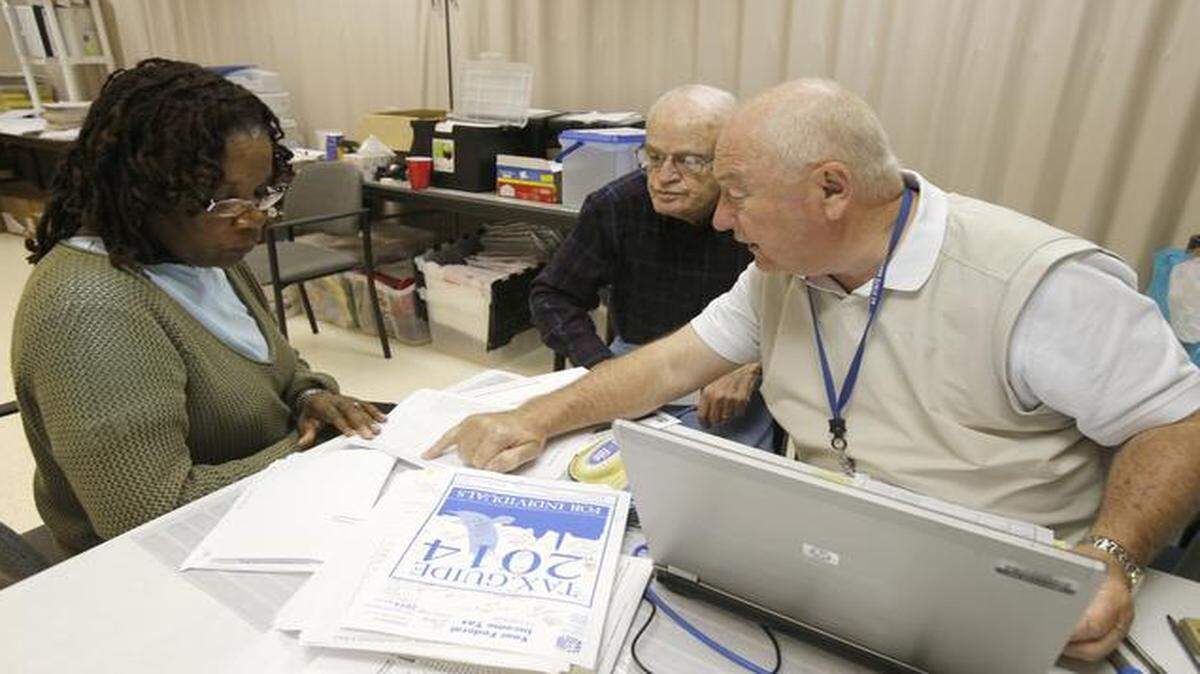
April 15 is just a day away, and the level of tax anxiety is rising, say those who help last-minute income-tax filers.
“You say taxes and it makes people nervous,” says Bill Perry, who has helped people complete their taxes for more than 30 years, working with the Volunteer Income Tax Assistance Program in Rock Hill.
About 28 percent of taxpayers waited until the last few weeks to file, estimates personal-finance websites WalletHub and Card Hub.
Of those who waited, about 60 percent did so because they owe taxes, estimate Rock Hill accountants Bernard and Jason Ackerman.
Those rushed to complete tax forms are prone to make mistakes. Assembling all tax information is essential. Filing online is the best way to avoid errors, according to the Internal Revenue Service; paper filers are 20 times more likely to make a mistake than those who file online.
Those who haven’t filed also are encouraged to seek free advice such as that offered by the Volunteer Income Tax Assistance Program. Certified federal tax preparers are at the center in the basement of Rock Hill’s City Hall to assist. They plan to staff the office Wednesday – the deadline to file – until just after lunchtime for last-minute filers, Perry said. People seeking to use the center’s service will need to bring a Social Security card to file a return.
Tax filers also can call the IRS at 800-829-1040 with questions. The S.C. Department of Revenue will answer questions at 803-898-5000. For state refund information, call 803-898-5300.
Each year, the Volunteer Income Tax Assistance Program at Rock Hill’s City Hall files about 5,000 federal and state returns, with taxpayers receiving between $2 million and $3 million in refunds, Perry said.
Don Worthington • 803-329-4066
5 things to know about filing 2014 tax returns
1. The biggest change this year is the Affordable Care Act. Those filing must be covered by health insurance. For those who get health-care coverage from employers, Medicare and Medicaid, it is as simple as checking a box on the return that everyone in the household had coverage for ALL of 2014.
For those who purchased coverage from the Health Insurance Marketplace, you will need a Form 1095-A, available online. If there were no changes in your employment status during the year, you are OK; but if you didn’t report changes, you may owe taxes, or you could qualify for a larger subsidy, depending on the changed.
For those who don’t have health-care coverage, there are two methods to determine the penalty: 1 percent of gross income, or $95 per adult and $47.50 per child younger than 18. The penalty is the greater of the two.
2. There are a variety of credits to reduce federal and state tax liability. Some credits that were set to expire, such as the home energy credit, are still being offered. Educators are eligible for a $250 credit for supplies purchased but for which they weren’t reimbursed. South Carolina has about 70 eligible credits, including expenses for identify-theft protection.
3. Some education expenses qualify for deductions. Parents of college students will need a Form 1098-T with scholarship and tuition information, which can be downloaded from the student’s school. The maximum deduction for interest on student loans this year is $2,500.
4. Ways to reduce tax liability include making an IRA contribution: $5,500 for most and $6,500 if you are 50 years or older. IRA contributions must be made by April 15. The amount of the deduction depends on whether a taxpayer has an employee-sponsored retirement plan. Those making a contribution should tell their financial institution it is for 2014 tax purposes.
Contributions to South Carolina’s 529 college saving plans can reduce state tax liability. They also must be made by April 15.
5. Be aware of potential tax scams. There have been numerous reports to the York County’s Sheriff’s Office this season from people finding out that someone already has filed a return in their name. There was one claim that someone amended a return, increasing the tax liability for the filer.
The IRS will not contact a taxpayer by phone, email, text or social media to ask for personal or financial information, or call and demand immediate payment. The IRS will not call about taxes owed without first mailing a bill.
If you believe you are a scam victim:
▪ File a report with law enforcement.
▪ File a complaint with the Federal Trade Commission at www.identitytheft.gov or the FTC Identity Theft Hotline at 877-438-4338, or TTY 866-653-4261.
▪ Contact one of the three major credit bureaus to place a fraud alert on your credit record: Equifax, www.Equifax.com, 800-525-6285; Experian, www.Experian.com, 888-397-3742; TransUnion, www.TransUnion.com, 800-680-7289.
▪ Contact your financial institutions and close any accounts opened without your permission or tampered with.
▪ Check your Social Security Administration earnings statement annually. You can create an account online at www.ssa.gov. If your Social Security number is compromised and you know or suspect you are a victim of tax-related identity theft, take these additional steps:
▪ Respond immediately to any IRS notice; call the number provided.
▪ Complete IRS Form 14039, Identity Theft Affidavit. Use a fillable form at IRS.gov, print, then mail or fax according to instructions.
▪ Continue to pay taxes and file a tax return, even if you must do so by paper.
Sources: Bernard and Jason Ackerman, Internal Revenue Service, Volunteer Income Tax Assistance Program.
This story was originally published April 13, 2015 at 9:25 PM with the headline "Tax tips for those who wait for the last minute in Rock Hill."