How tech at CLT helps American Airlines handle delays to your plane due to the weather
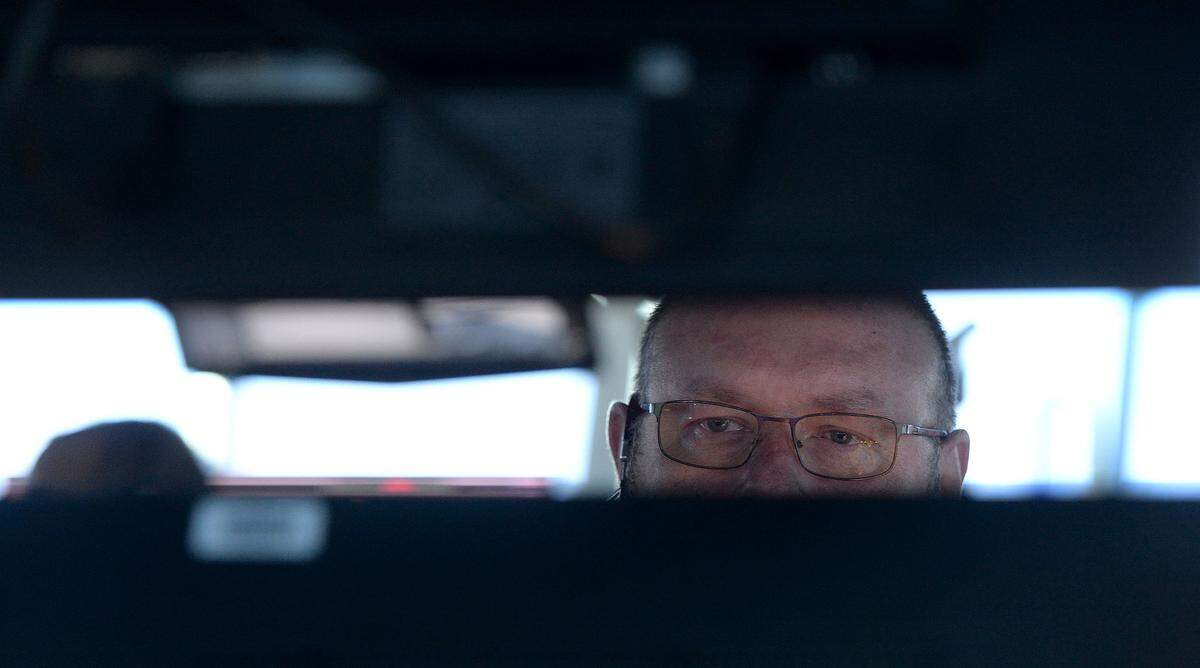
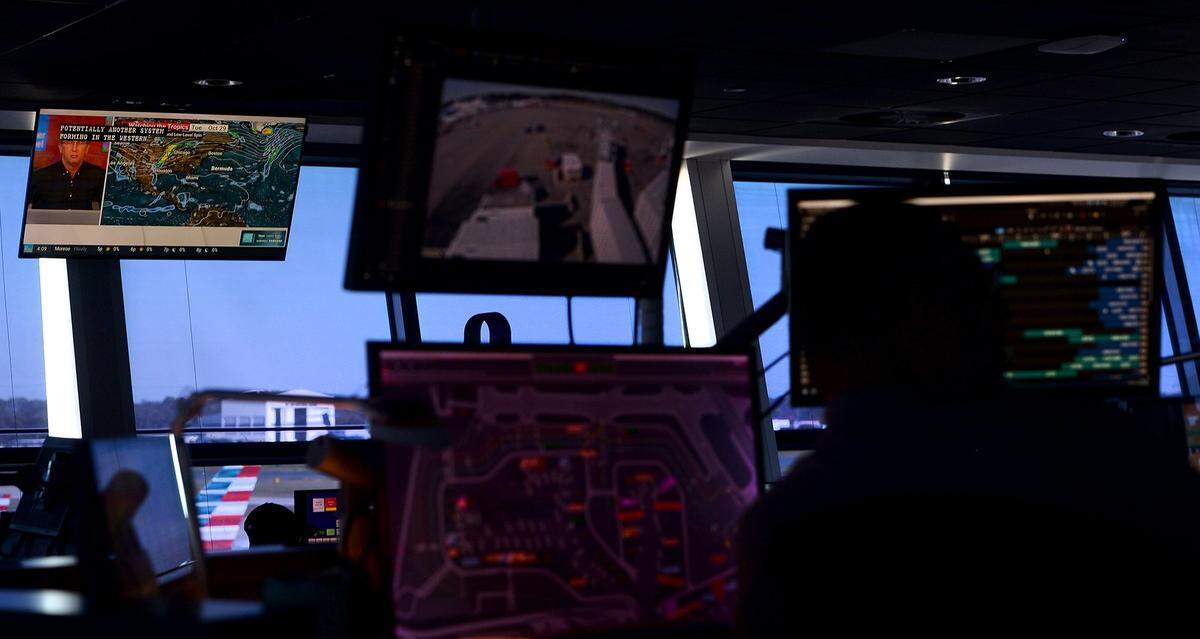
With hundreds of planes from American Airlines coming in and out of Charlotte’s airport each day, airline workers at the Hub Control Center remain focused as they gaze at computer screens, while communicating about ground operations.
To an outsider, some of the data may look like something from “The Matrix,” but it’s critical to getting passengers to their destinations. It’s the brain center for coordinating about 700 flights each day.
The center controls everything going on around the airplanes. This includes fueling, catering, cleaning and maintenance at CLT, which is the second largest hub for the Fort Worth, Texas-based company.
“Anybody in this hub can call up to this team and we can get the people that need to get something,” said Michael Wanner, managing director for the control center. “That’s not just American, that’s Charlotte’s airport, that’s the (Federal Aviation Administration) — there are many things that we are tied to.”
Wanner led The Charlotte Observer on an exclusive tour of the operations this week.
He manages about 70 workers for operations that run 24/7. The average shift has close to 40 people at one time.
Wanner calls them “problem solvers.” And weather is always the biggest problem. They prepare by looking at the forecast for several days out.
“We work really hard not to be surprised by things that come along,” he said.

Turning up the ‘HEAT’
A major asset American uses to make travel less stressful for passengers is its Hub Efficiency Analytics Tool, an arrival management system. When there’s a strong chance for thunderstorms, HEAT uses the expected period of time to make delays for the safety of passengers and employees.
“What we want people to understand is that we really care about their journey,” Wanner said. “And the first thing we look at is safety. There’s no one up here that gets up in the morning to make someone have a bad day. They’re working really hard constantly to get people to their destinations.”
Flights are rescheduled to avoid cancellations. For customers seeing a delay is annoying, but it’s a lot better than the alternative. “We try really hard to not cancel a flight,” Wanner said. “That’s always the last option. Getting people to where they need to go with their bags is our mission.”
HEAT looks at how many planes can operate during inclement weather during a specific time frame.
It also looks at data for how full flights are, customer connections, gate availability and any air traffic control or crew constraints. American uses an algorithm that weighs data and shifts arrivals and departures around Charlotte Douglas and other airports.
The internal technology has been around since 2022. Ralph Lopez, American’s senior Vice President of CLT Hub Operations, was part of a group that developed HEAT.
HEAT is generated out of the Integrated Operations Center in Dallas. American’s Charlotte operations provides input to the center in Texas to help with the data.
Banking on the future
To organize flights, American uses what’s called an airline bank structure — a group of flights that arrive and depart during a period of time. Bank times are about 90 minutes to two hours.
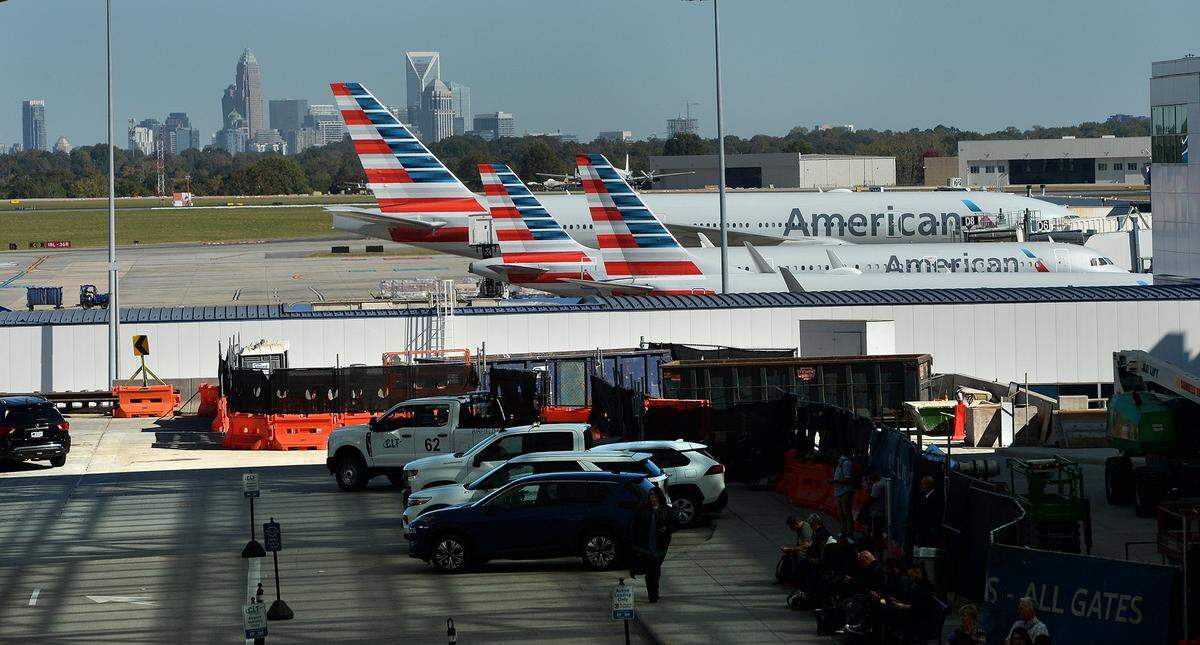
“Airplanes come in, they turn, they go back out,” Wanner said outside on the roof, while looking at parked planes going to U.S. destinations.
In the distance, there was a cloud of brown dust made by construction equipment. When the project is finished in 2027 a new runway costing hundreds of millions of dollars is going to help with flight traffic at the airport.
It’s one of many projects for Charlotte Douglas’ “Destination CLT” — a plan to upgrade the 82-year-old airport. It’s also the only new runway project currently underway in the U.S., according to the airport.
“We’re moving a lot of dirt at the moment,” Wanner said referring to a slew of airport projects.
About 75% of American’s Charlotte customers are passengers catching connecting flights. American is able to accommodate customers for connection problems such as “misconnects,” which happens when an arrival or departure time doesn’t line up properly.
“We’re really good about being able to get somebody there on that same day because we have so much volume here,” Wanner said.
This story was originally published October 23, 2024 at 5:56 AM with the headline "How tech at CLT helps American Airlines handle delays to your plane due to the weather."