
Feds lift Wells Fargo $2T asset cap penalty imposed after fake account scandal
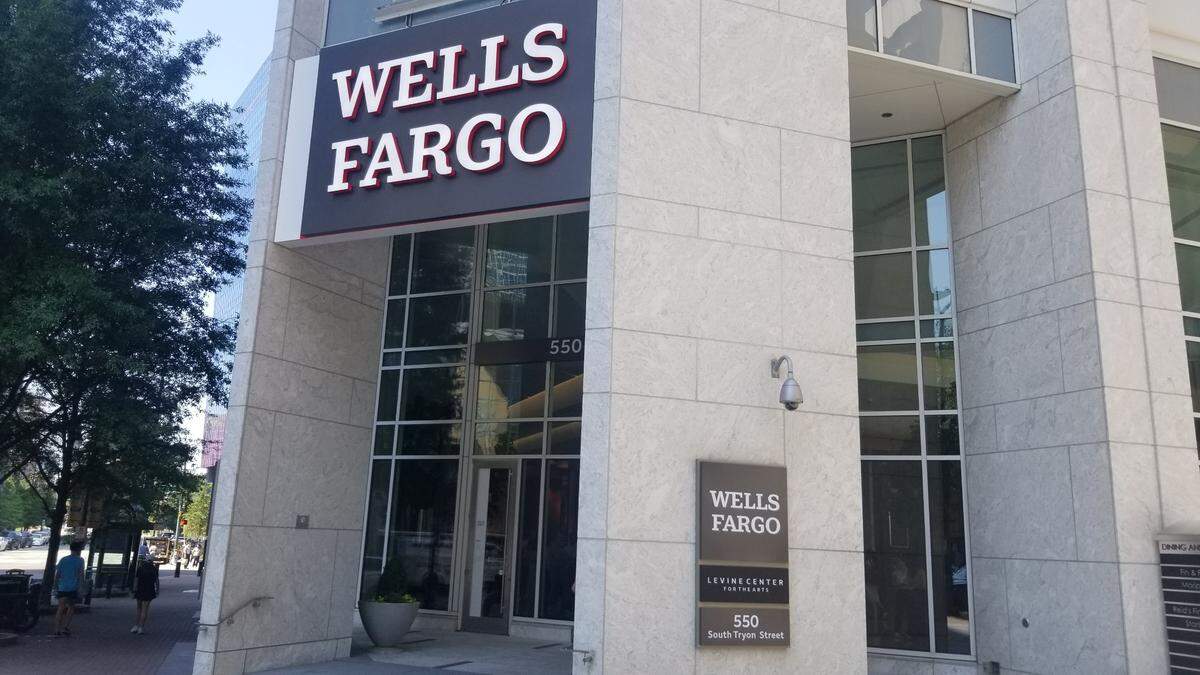
Federal regulators on Tuesday lifted Wells Fargo’s $1.95 trillion asset cap punishment over its fake sales scandal that had prevented it from growing for the past seven years — a major turning point that the bank had long sought.
The asset cap was Wells Fargo’s biggest penalty stemming from the 2016 scandal. From 2002 to 2016, hundreds of thousands of Wells Fargo’s Community Bank employees opened millions of unauthorized or fraudulent accounts and other financial products to meet excessive sales goals.
In 2020, the Office of the Comptroller of the Currency, which regulates the bank, laid out a series of details tied to the scandal, The Charlotte Observer reported at the time. For instance, Wells Fargo management warned workers that if they didn’t meet their goals, they would be “transferred to a store where someone had been shot and killed,” according to the OCC report.
Now, the Federal Reserve determined that Wells Fargo has met all the conditions required by the 2018 enforcement action for removal of the growth restriction, the Board of Governors of the Federal Reserve System said in a news release.
Removal of the asset cap represents successful remediation to the required standard based on management leadership, board oversight and strict supervision holding the bank accountable, member of the Board of Governors Michael Barr said in a statement
Under the 2018 enforcement action, Wells Fargo was required to improve its governance and risk management program and complete a third-party review of these improvements for the limit to be removed, the Federal Reserve said.
“The removal of the growth restriction reflects the substantial progress the bank has made in addressing its deficiencies and that the bank has fulfilled the conditions required for removal of the growth restriction,” the Federal Reserve said. “The other provisions in the 2018 enforcement action will remain in place until the bank satisfies the requirements for their termination.”
Wells Fargo was slapped with several federal agency consent orders, including the 2018 Federal Reserve effectiveness and risk management order that included the asset cap.
Wells Fargo has changed its business processes and transformed its management team, Wells Fargo CEO Charlie Scharf said in a statement.
“The Federal Reserve’s decision to lift the asset cap marks a pivotal milestone in our journey to transform Wells Fargo,” Scharf said. “We are a different and far stronger company today because of the work we’ve done.”
But one longtime Wells Fargo critic lambasted the Fed’s action.
“The entire Federal Reserve Board should be embarrassed by this outrageous giveaway to one of Wall Street’s most derelict banks,” U.S. Sen. Elizabeth Warren, D-Mass., said on X late Tuesday. “The Fed must release Wells Fargo’s exam reports for the last five years to the Senate Banking Committee so that Congress can review them.”
All 215,000 Wells Fargo employees who continued to serve clients “through difficult conditions,” Scharf said, will receive a $2,000 award, for most in the form of a restricted stock grant.
Charlotte is home to the San Francisco-based bank’s largest employment center, with about 27,000 employees.
The award will go to tellers, contact center representatives, administrative assistants, operations staff, bankers, financial advisors and corporate staff, giving them an opportunity to own a part of Wells Fargo, Scharf said.
More details about Wells Fargo fake sales account scandal
The OCC, in 2020, outlined detailed evidence it said it had found in its investigation of the bank and its leadership in the scandal era, the Observer reported at the time. Those details came out as the regulator filed charges against or settled with eight former Wells Fargo executives.
The OCC relied on internal bank documents and sworn testimony from those officials to detail the scope of the problems and the culture of the bank at the time.
Over a 14-year period, the OCC estimated that hundreds of thousands of Wells Fargo employees did some type of phony sale, like issuing an unwanted debit card, the Observer had reported.
According to the OCC:
▪ Even if workers met their goals, they still could be reprimanded for not beating the goals by enough.
▪ Managers ran through rows of their peers and announced their area’s sales performance, ridiculing poor performers. This practice was known as the “gauntlet.”
▪ One Los Angeles executive had managers dress up in costume for this, according to a report produced by Wells Fargo’s board.
All of this led to intense pressure on the bankers. That was exemplified in 2013, according to the OCC report, when a worker wrote to the CEO’s office that “I had less stress in the 1991 Gulf War than working for Wells Fargo.”
Other Wells Fargo consent orders
While Wells Fargo’s regulatory sanctions began after the fake accounts scandal was discovered, regulators had since identified additional problems with how the bank handled mortgages, auto loans and consumer deposit accounts.
Wells Fargo has now closed 14 consent orders since 2019, including eight this year alone.
In January, a 2022 Consumer Financial Protection Bureau consent order was terminated. In that case, Wells Fargo was ordered to pay nearly $4 billion for “widespread mismanagement” of its automobile lending, consumer deposit accounts and mortgage lending.
In February, three consent orders were lifted:
▪ The OCC terminated its 2018 consent order related to the company’s compliance risk management program.
▪ The Federal Reserve Board terminated two 2011 consent orders: one from April 2011 related to residential mortgage loan servicing and foreclosure processing, and the other in July 2011 over mortgage lending practices at a former subsidiary.
In that case, Wells Fargo was fined $85 million for steering prime borrowers into costly subprime loans and falsifying income data on mortgage applications. Wells Fargo was also required to compensate borrowers. Wells Fargo didn’t admit to wrongdoing, but the Fed required the bank to improve oversight of its compensation and performance management policies for mortgage loan officers and underwriters.
In March, the OCC terminated its 2021 consent order related to loss mitigation practices in the company’s Home Lending business.
In April, the Consumer Financial Protection Bureau’s 2018 consent order related to the company’s compliance risk management program was terminated.
In May, the OCC terminated the 2015 consent order related to the Gramm-Leach-Bliley Act requiring financial institutions to explain information-sharing practices to customers and safeguard data. This consent order, related to a financial subsidiary of Wells Fargo, prevented the bank from acquiring or holding interest in new financial subsidiaries without consulting with the OCC first.
New era for Wells Fargo
The end of the asset cap marked the start of a significant new chapter for the bank.
Steven Black, chair of Wells Fargo’s Board of Directors, in a statement thanks fellow board members for their work “in achieving today’s outcome, including the substantial changes we have made to board composition and oversight.”
On behalf of the board, Black also thanked the management team, “and in particular, Charlie for his inspired leadership ...
“He has been instrumental in advancing our goal to make Wells Fargo one of the most well-respected, consistently growing financial institutions in the country,” Black said.
This story was originally published June 3, 2025 at 4:20 PM with the headline "Feds lift Wells Fargo $2T asset cap penalty imposed after fake account scandal."