‘They are pioneers.’ Students, staff hold big dreams for new Charlotte med school
AI-generated summary reviewed by our newsroom.
- Charlotte opens its first four-year medical school with 49 inaugural students.
- Wake Forest's hands-on, problem-based learning anchors its new med curriculum.
- The Pearl campus links students with research firms, clinics and STEM outreach.
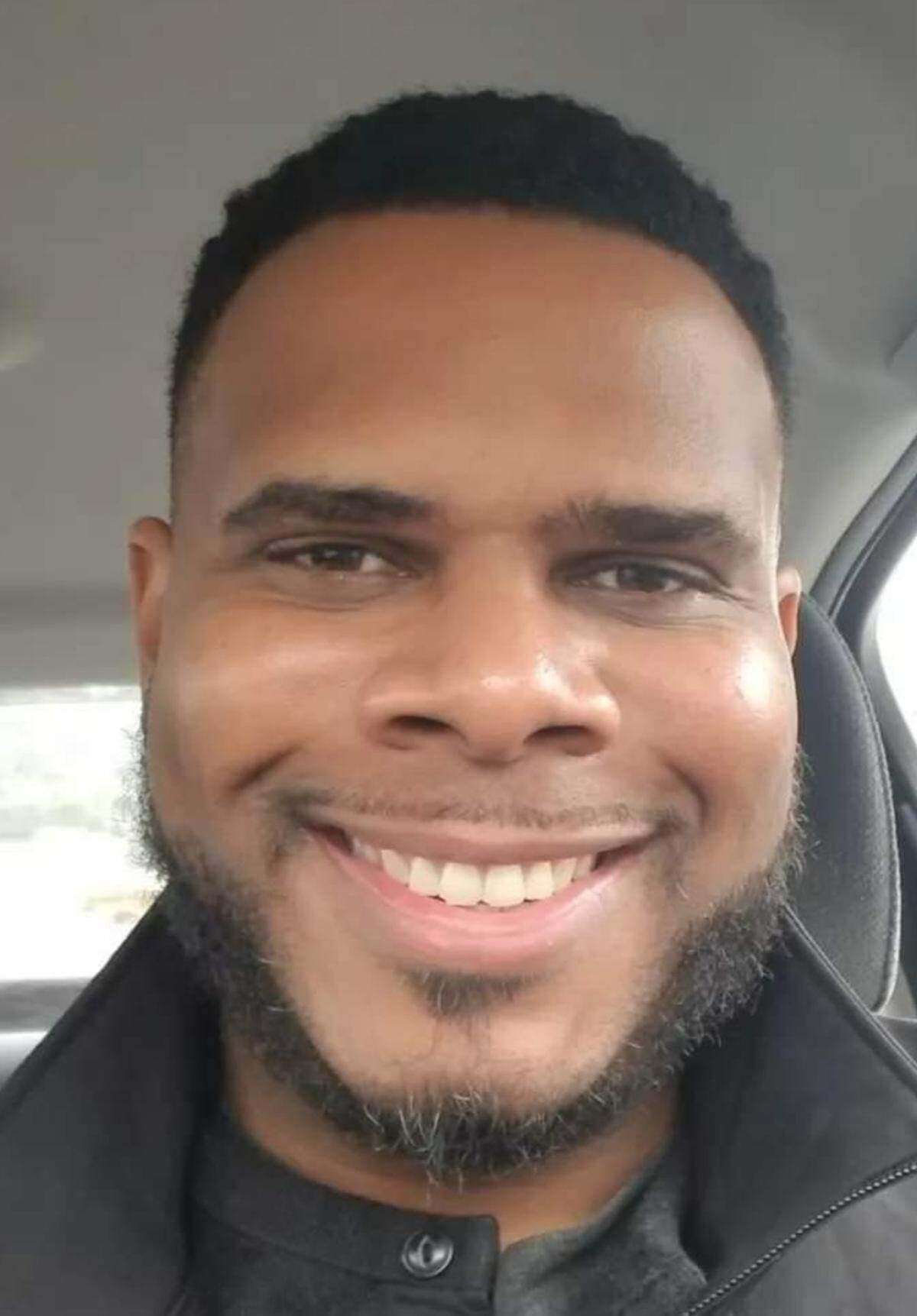
In a few weeks, Lonnie Smith will proudly put on a ceremonial white coat in Charlotte — a symbol of his dedication to becoming a doctor.
That journey for the Moore, Oklahoma, native begins at the new Wake Forest University School of Medicine — Charlotte campus, the city’s first four-year medical school. He’s one of 49 students making history in the days ahead as a member of the school’s inaugural class.
“I don’t know if I could put into words exactly how excited I am,” the 22-year-old said.
The Charlotte Observer recently spoke with 10 incoming students, professors and administrators about their aspirations for the new school.
Until now, Charlotte was the country’s biggest city without a four-year med school.
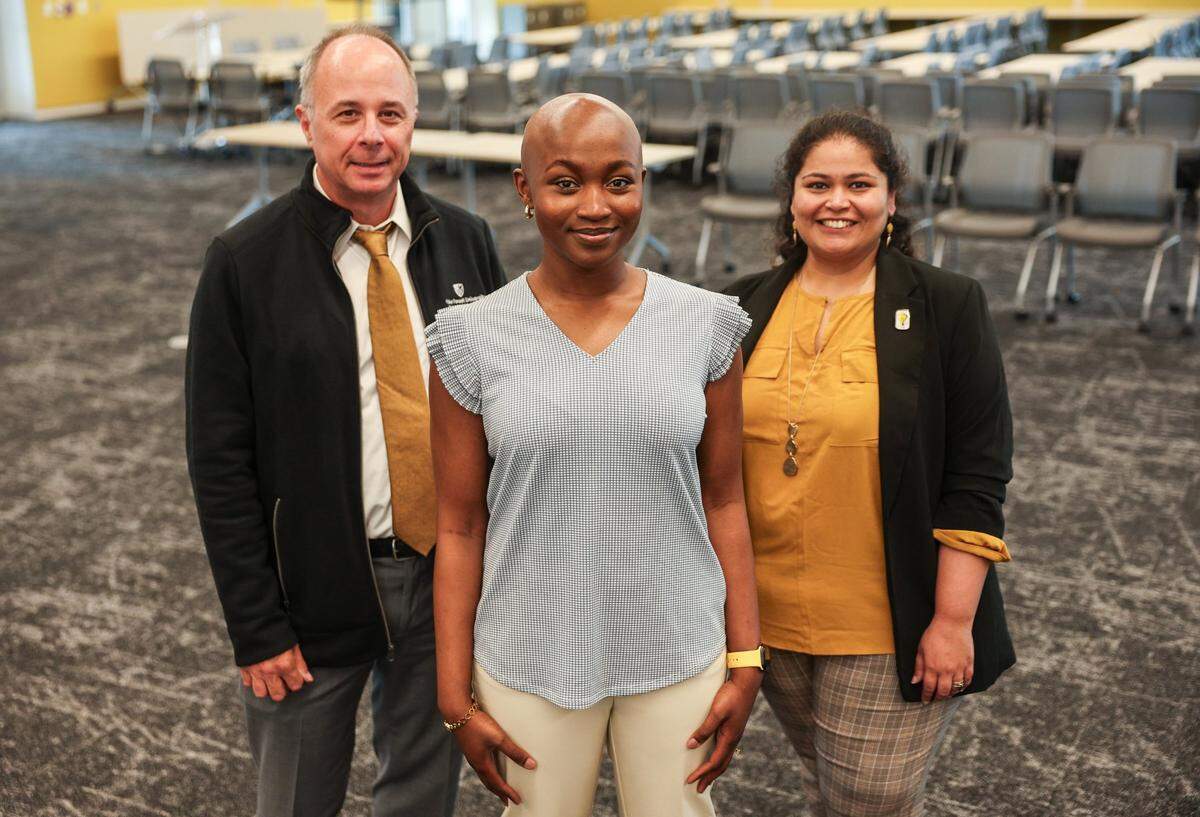
Med school orientation begins July 10-11 followed by the first day of classes on July 14.
Smith can’t wait.
“Medical school is something nobody in my family has ever been to before,” he said. “And being able to start it at a historic university in a historic campus in an amazing place like Charlotte, it’s just been such a blessing.”
The road to a med school
Charlotte has long hungered for a new medical school.
It’s been over a century since it had one, with the long-forgotten North Carolina Medical College in uptown. But it closed in 1914 after facing criticism about its facilities.
Talks over the years for a new school began to take shape in 2019. That’s when Atrium Health, Wake Forest Baptist Health and Wake Forest University joined forces to say they wanted to bring a new medical school to Charlotte.
“Our goal is to really be the Silicon Valley for health care, from Winston to Charlotte,” Atrium CEO Gene Woods said in 2020, when highlighting the first designs for the school. “And really leveraging this in new ways that will bring new discoveries in medicine for decades to come.”
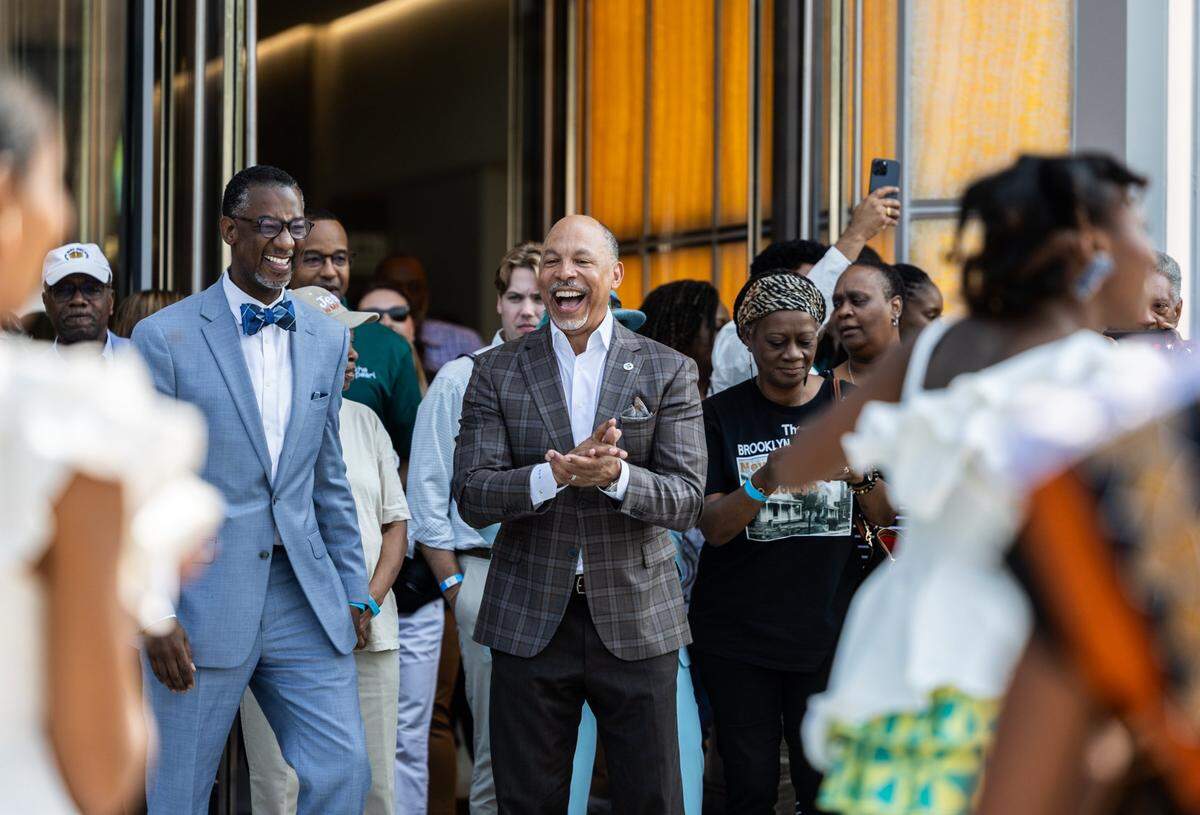
The medical school stands as the centerpiece of The Pearl, a $1.5 billion mixed-use development district with retail, medical offices, apartments and an outdoor plaza. Atrium Health and Wexford Science & Technology partnered to build the project, which opened in early June to much fanfare.
The city of Charlotte and Mecklenburg County approved incentive packages totaling $75 million for The Pearl.
“As The Pearl opens its doors,” Mayor Vi Lyles stated, “it’s not only a symbol of Charlotte’s ambitions — it’s proof that those ambitions are becoming reality.”
Like father, like son
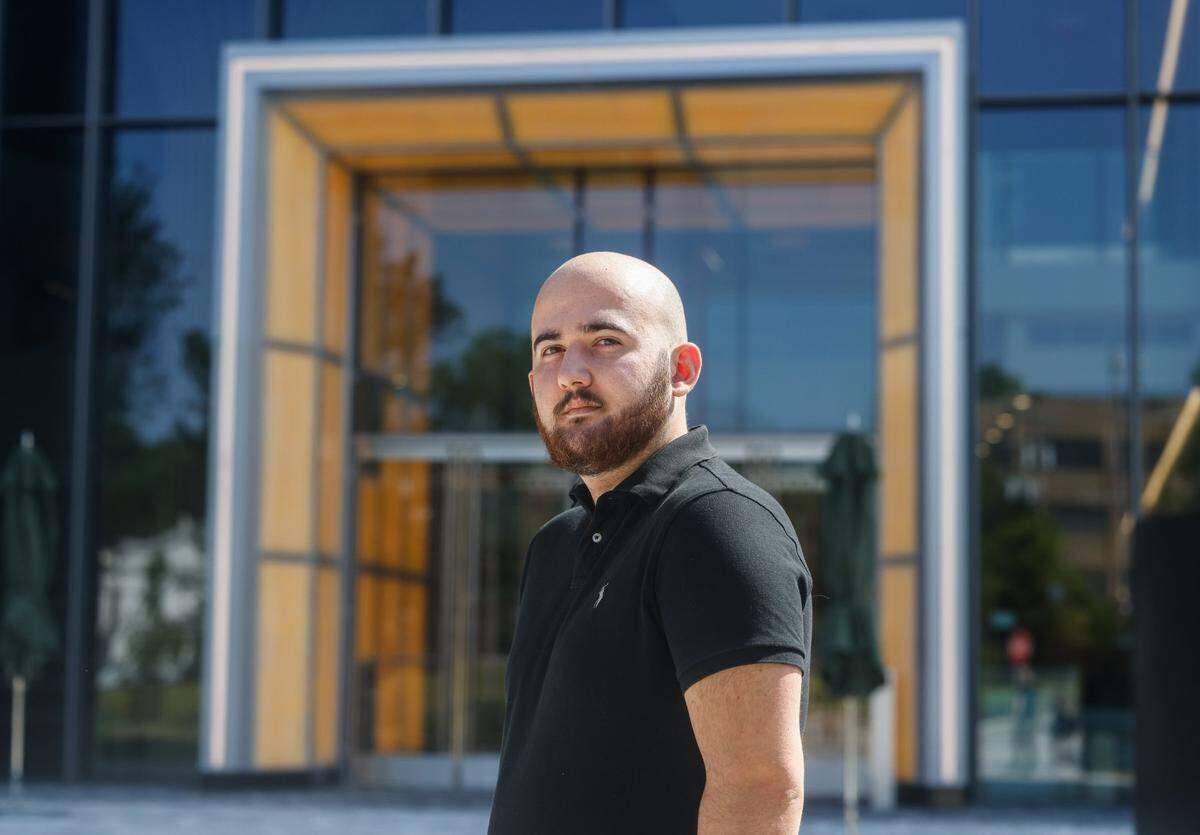
Rei Rama’s journey to Charlotte’s medical school began over 5,100 miles away, growing up in the small Albanian town of Roskovec near the Adriatic Sea.
Ever since he was a child, Rama wanted to pursue a medical career and follow in the footsteps of his father, Dr. Proletar Rama. The family moved to the U.S. in 2015 and has been living in Charlotte for a decade now.
“I had to help my parents a lot in the beginning with becoming an interpreter, translating for them during their doctor appointments,” the 25-year-old said. “I really wanted to learn more about healthcare in the U.S.”
He also wanted to explore patient care, but the pandemic hit during his undergrad years at UNC Charlotte, where he studied malaria and majored in biology.
Later, Rama worked as a medical assistant in an urgent care and primary care clinic.
Like other Wake Forest classmates, he’s interested in the med school’s problem-based learning approach where students work to solve clinical cases. He also was impressed with the development of The Pearl, where students can interact with research companies and STEM programs.
“What led me to the profession was the lifelong learning,” Rama said, “and the opportunity to build a relationship with people through compassion and to help them have a better life.”
Like mother, like daughter
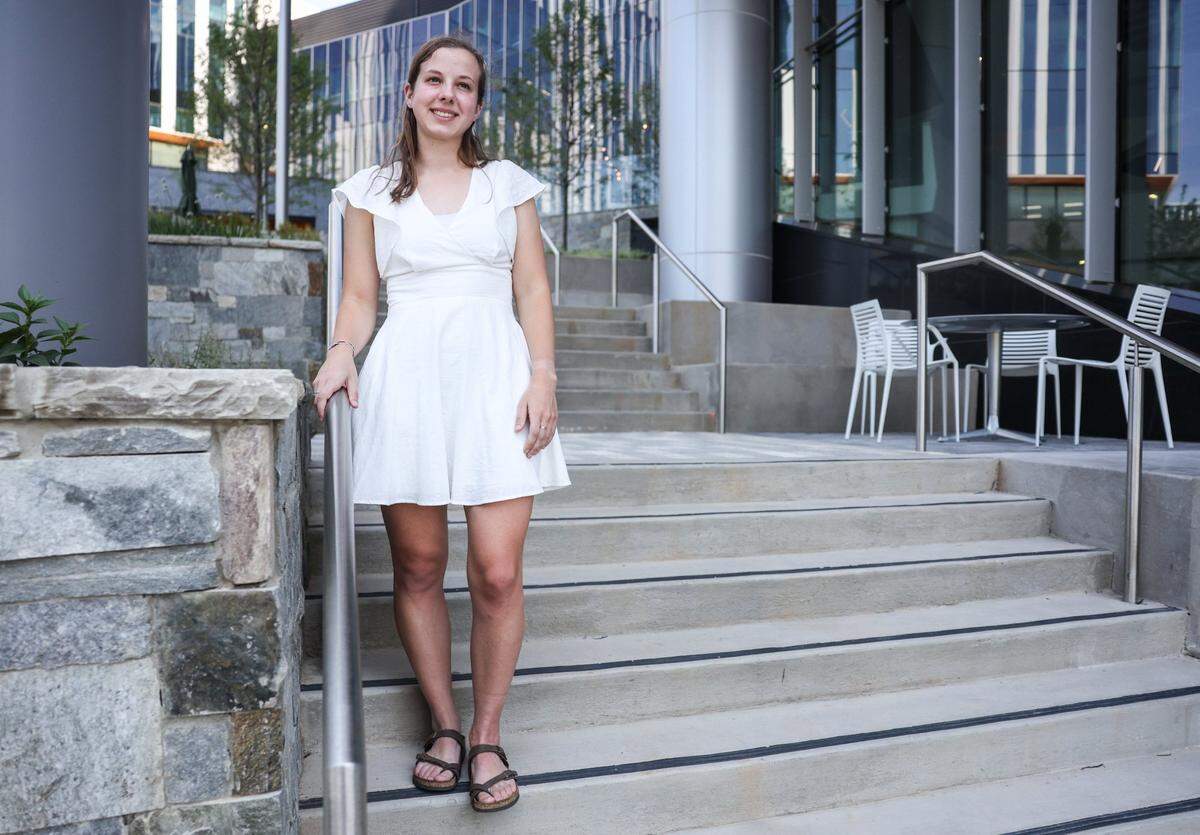
Incoming student Eva Lindner is a Matthews native who looks forward to having a medical school nearby.
“This is something I’ve worked for my whole life,” said Lindner, 23. “To be able to come back to the city where it all started, and be a part of the inaugural class in the city where I want to practice medicine, is really special.”
Before heading off to college, Lindner spent a lot of time at hospitals with her mom, Dr. Leslie Hansen-Lindner, an OB/GYN practitioner for Atrium Health. “I would go around the hospital and see the newborn babies growing up,” she said. “I was always surrounded by medicine growing up. So I always had an interest.”
A lot of her mom’s patients still remember her.
“Her patients have come up to me and said, ‘Your mom saved my life,’ or, ‘Your mom really cares and listens to me as a patient,’ ” Lindner said. “Seeing her be an amazing mom and an incredible doctor has really inspired me, knowing that this is a career that I can do.”
After graduating from Covenant Day School, Lindner attended Bucknell University where she earned a degree last year in biology and minored in Arabic. Her plans to become a doctor were also shaped by shadowing professionals in hospitals, including a research internship with the Cleveland Clinic Abu Dhabi in the United Arab Emirates.
“It’s a really cool full-circle moment being a medical student and learning in the hospital (associated with Atrium) where it all started,” Lindner said.
Working with diverse communities
Smith, the Oklahoman, also wants to make a difference in the world of health care.
He earned a bachelor’s degree from Vanderbilt University in neuroscience and minored in Japanese language and culture. His diverse family was the main motivation for applying to medical school.
His father is half Black and half white, and his mother, stepmother, grandmother and her wife are part of the LGBTQ+ community. He has a younger brother with autism. And Smith’s mother is battling an autoimmune disease.
“Throughout my life, I’ve gotten to see how the medical field approaches people of diverse communities,” Smith said. “Although I do think there are things that are done very well, there are gaps in the current medical system with regards to these communities.”
Smith wants to be part of that change. Wake Forest’s hands-on approach to education influenced his decision to attend the school, as did the challenge of learning through patients’ experiences.
“It’s making sure I’m seeing the patient as not just a set of symptoms,” he said, “but a person who has feelings.”
Setting the tone
When Adunoluwa Akinola was 6, she wore a white blazer from her mom’s closet and a stethoscope around her neck during show-and-tell in first grade.
“I told everybody that I’m going to be a doctor,” said Akinola. “And since then, all of my life experiences have kind of culminated to solidify that for me.”
Sixteen years later, that dream led Akinola to Wake Forest’s Charlotte campus.
Akinola was born in New York and grew up in Kernersville outside Winston-Salem, the child of Nigerian immigrants. Both of her parents, Olayinka and Modupeola Akinola, are doctors.
“Just being in this building has me buzzing,” Akinola said. “I am really looking forward to learning medicine and pursuing this dream of mine. But I’m really excited about doing it in an environment that’s like, the best word I can say, blossoming.
“It really just brings me a lot of joy.”
Another experience that helped with her career goal was being diagnosed with alopecia and receiving medical care during her adolescent and teen years. “Seeing how they advocated for me and helped me to advocate for myself was a huge inspiration,” she said.
Akinola mentioned how people with illnesses are stigmatized and how people can stigmatize health care professionals, and don’t have faith in them.
“Bridging that gap is really important to me... and also seeing how we can continue to improve health care for people of different social standings, especially those who are underserved.”
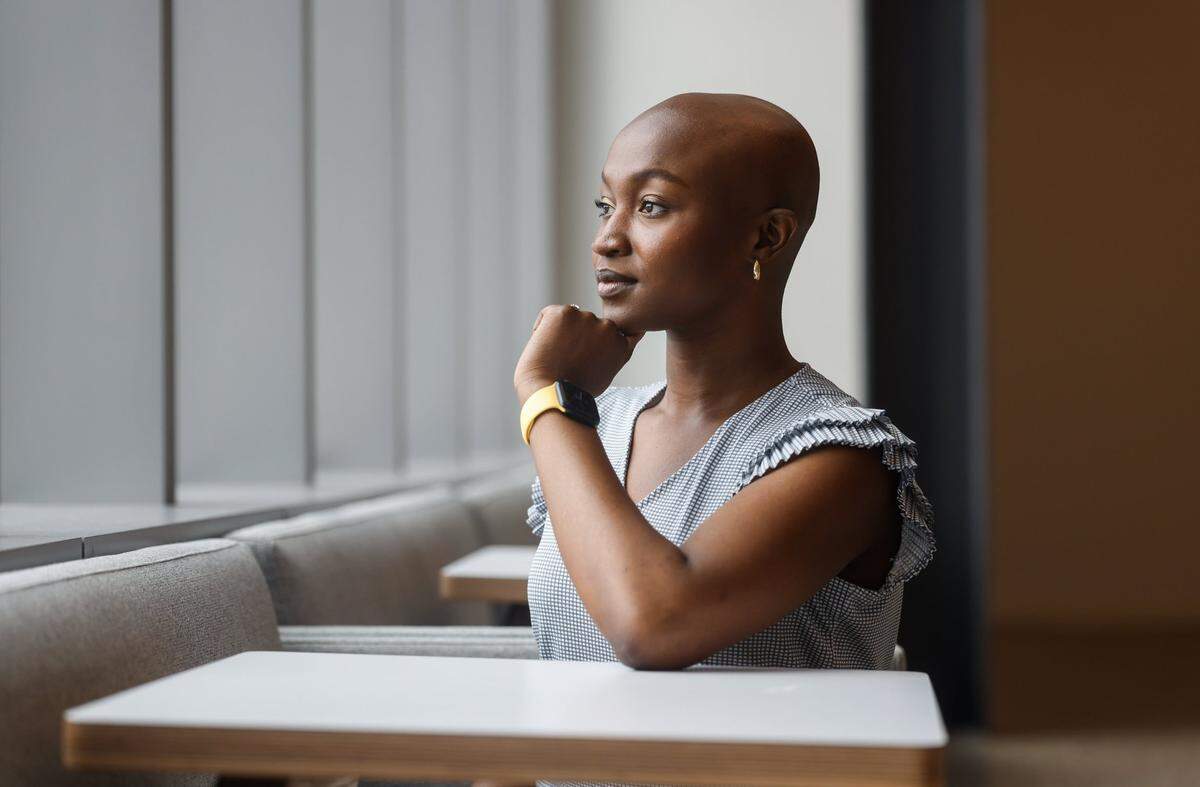
She studied neuroscience at UNC Chapel Hill, and spent a semester investigating connections of word use and the quality of life for patients with stage IV cancer.
“I studied in college in a lab that actually explored some of the effects that social stress can have on your health and your wellness,” she said. “I aspire to combat those issues and holistically take care of people.”
Akinola also spent a year working as a certified nursing assistant in a postpartum care unit before joining the first group of med students in Charlotte.
“I’m really excited to be part of this class that is really trailblazing,” she said. “We could really have the opportunity to set the tone.”
Guiding the way for students
Launching a medical school will be a new journey for the professors too.
Dr. Chris Burns, a faculty development specialist at the medical school, is looking forward to using a hands-on learning approach for students.
That includes small group rooms for problem-based learning and an anatomy lab with high-tech electronic images of the human body.
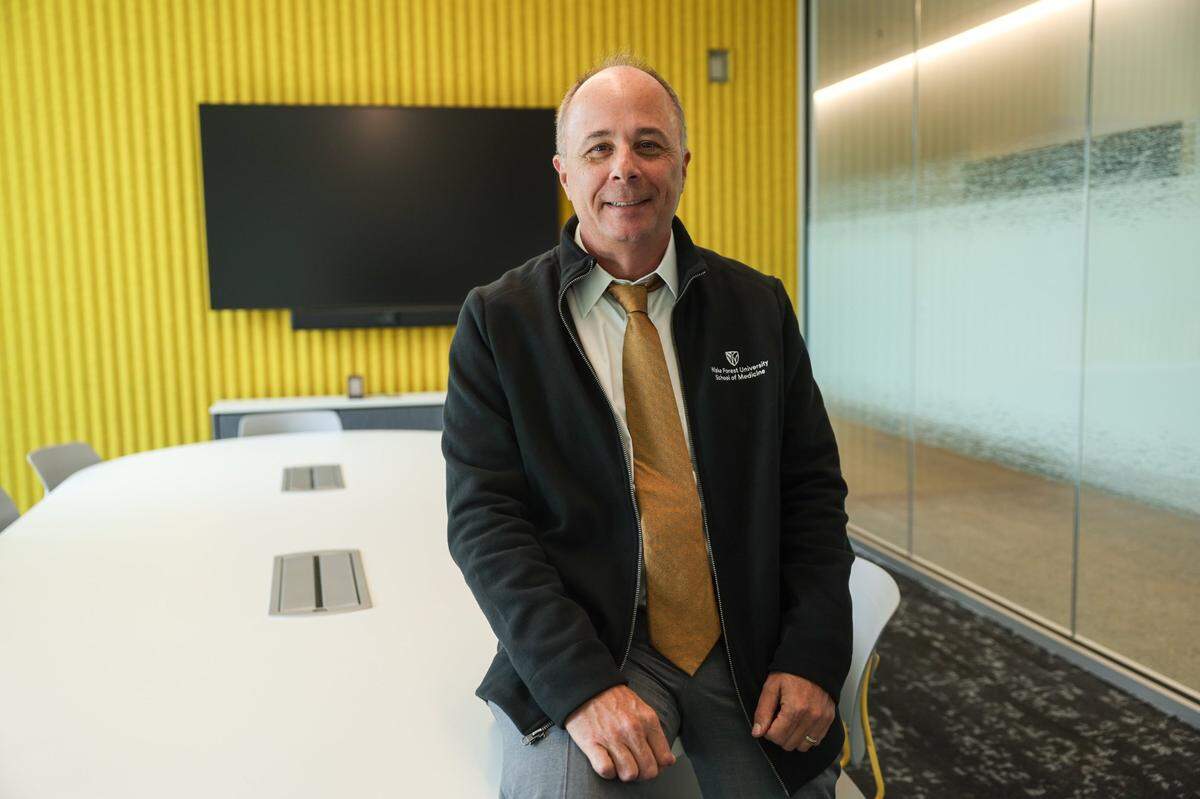
Students will identify their own knowledge gaps and use resources to fill them in, much like practicing physicians do. So, instead of a professor giving a lecture on the flu, students will focus on real-life situations.
They also will have “paper patients” — real scenarios to guide them in their study of medicine and underlying biomedical sciences. This may include their symptoms, medical history and test results. And they will interact with actors who simulate patient conditions and also real patients.
Burns has taught at nine medical schools across the country.
He was excited about Charlotte finally getting one. Establishing a medical school here is expected to increase the likelihood of graduates practicing in the area, while addressing a national shortage of physicians.
“Some of the main factors that determine where physicians practice medicine is where they’re born, where they went to medical school and where they do their residence,” Burns said.
As for the inaugural class, Burns said they will play a special role in the development of the school.
“They are pioneers,” he said. “They are excited. They’re risk-takers. They know what they’re getting into, and they’re kind of partners with us.”
Helping new med students thrive
Dr. Deeksha Sikri is pathology discipline director for the foundational sciences team. Her work includes developing classes for weekly problem-based learning sessions.
“Honestly, it is equal parts humbling and exhilarating,” Sikri said. “We are building something Charlotte has never seen before, an interactive curriculum in a brand-new facility. And every milestone feels like we are etching footprints and handprints in fresh concrete.”
Like other professors, Sikri expects challenges.
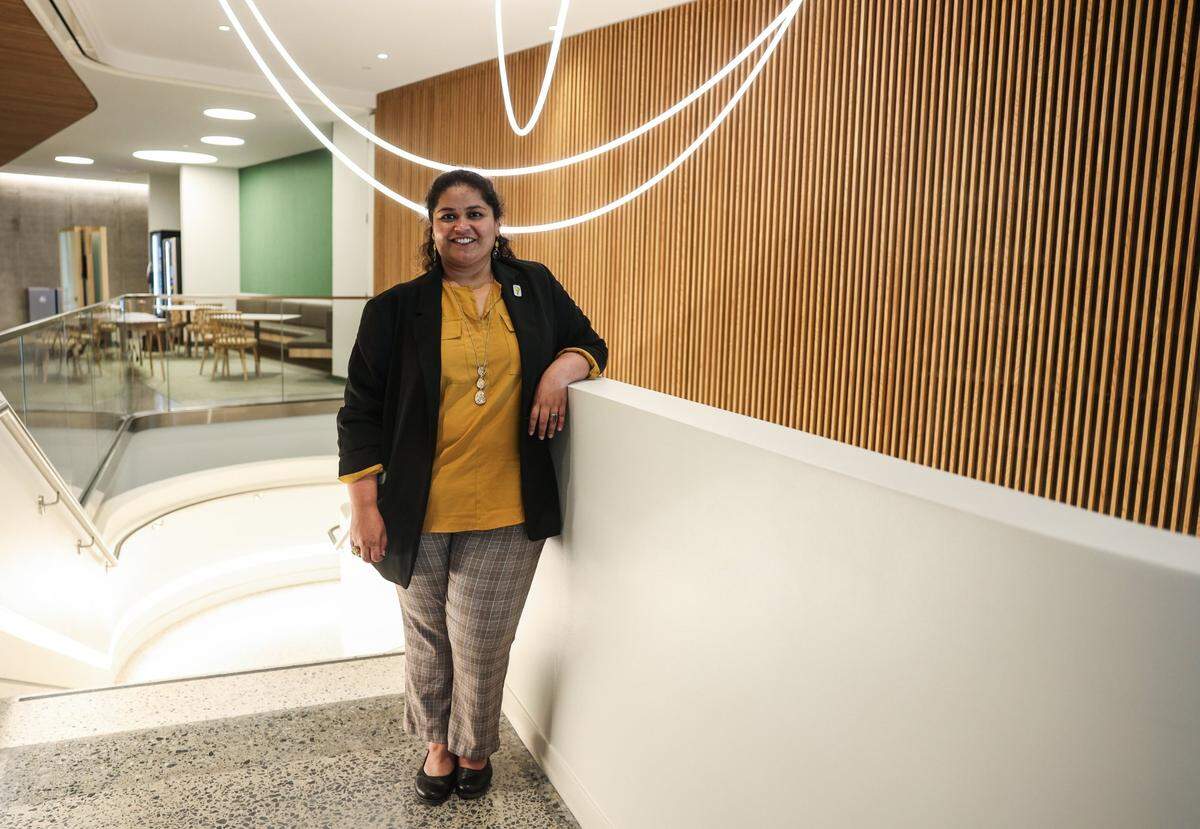
“With our collective experience in medical education, we have anticipated the obvious, tight timelines, a just-finished building, and built buffers for the rest,” Sikri said. “Our mindset is simple: stay agile and flexible, keep students’ learning first and turn every bump into a teaching moment.”
Behind the scenes, Wake Forest has spent years crafting a doctor of medicine program where students own their learning, become life-long learners and deliver patient-centered care.
“From Day One, they will gain the insight and the mindset to thrive, not just survive, while helping us deliver the proof-of-concept and pioneer what modern medical education can look like,” Sikri said.
Colleague Dr. Tafline Arbor agreed. She’s serving as anatomy discipline director.
“I see our first class of students as pioneers and partners, helping to shape the culture and trajectory of this campus for years to come,” Arbor said.
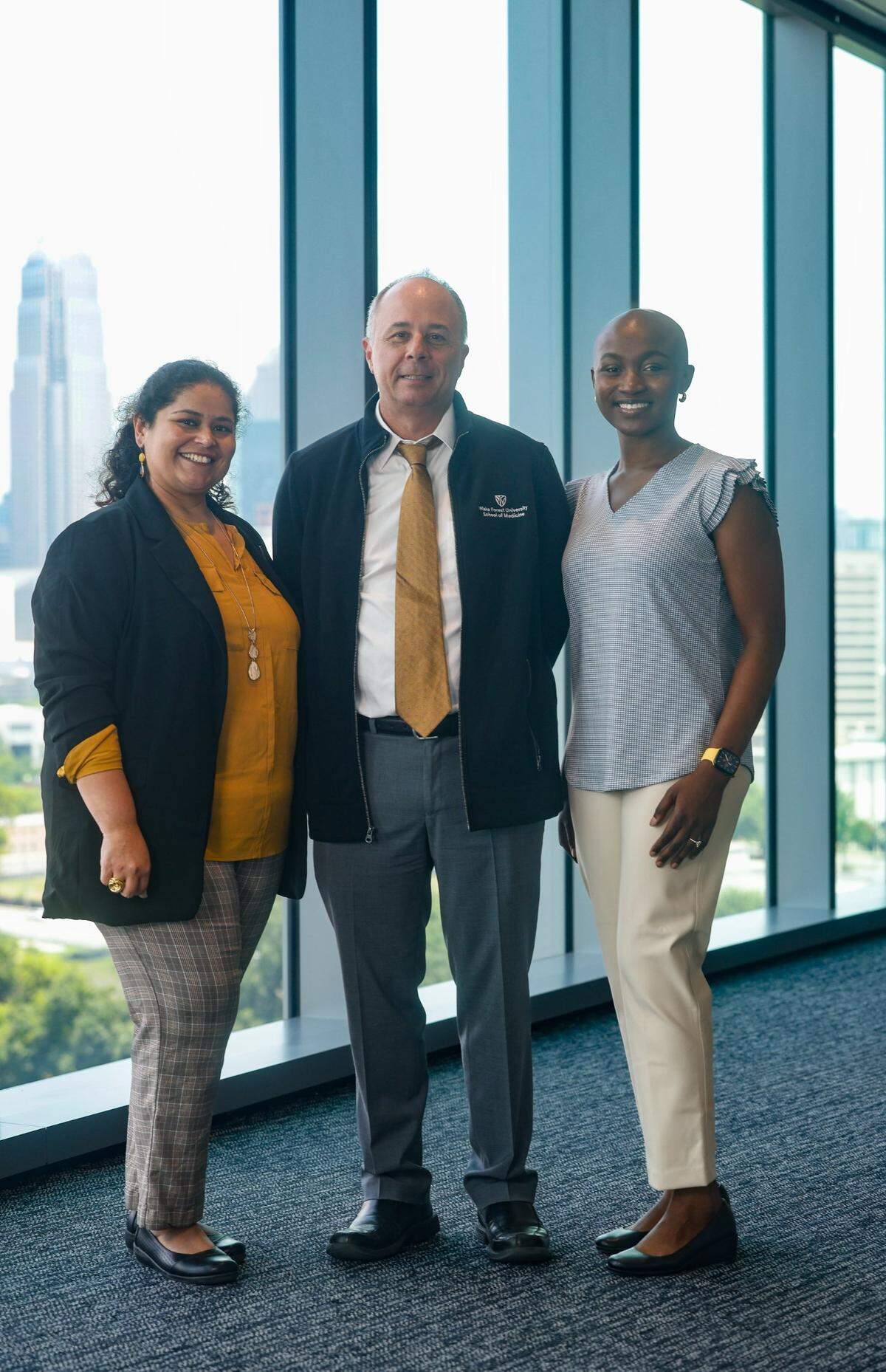
Bridging gaps with the new med school
That partnership is expected to continue to grow.
Over the next five years, Wake Forest will gradually increase each incoming class of students at the Charlotte campus to around 100. The university is planning to train close to 1,000 students across both campuses during that time.
Enrollment for medical schools nationally reached a new high last year, with about 100,000 students, according to the Association of American Medical Colleges. The expansion of slots at existing medical schools and the opening of a medical school in Nashville, Tennessee, helped drive that change.
But applications for the 2024-25 academic year declined by 1.2% to the lowest level since 2017-18, according to the AAMC. This was the third year in a row of declines. Applications rose during the pandemic, reaching all-time highs, but now those application numbers are returning to pre-COVID levels, the association said.
Total applications to Wake Forest’s med schools were close to 13,000 this year. Students are assigned to either the Charlotte or Winston-Salem campus after acceptance.
The Winston-Salem campus is bringing in 159 students. So between that group and the 49 headed to Charlotte, Wake Forest is enrolling 1.5% of its total med school applicants this year.
About a third of the university’s medical students end up staying in North Carolina, especially in the western area of the state, said Dr. Roy Strowd, Wake Forest’s vice dean for undergraduate medical education.
“There’s always been an interest in being in medicine,” he said. “But I think since the pandemic, that has just grown as young students see the value that they can provide to public health, to personal health and those sorts of things.”
Strowd emphasized that high-quality education will continue at both campuses. “We want strong, humanistic physicians that can take care of a patient, just as you or I want someone to take care of our family members,” he said.
Role models and relationships
Rama, the native of Albania, is eager to get involved with some of The Pearl’s STEM programs.
“I’m looking forward to building relationships and mentoring youth, whether middle school or high school, and showing them that they are capable of achieving their dreams,” he said. “It’s important to have role models.”
Rama cares deeply about mentoring, and co-founded a nonprofit called Shoqata Akademike dhe Profesionale Shqiptare (Albanian Academic and Professional Association). Its mission is to mentor high school students from Albania and other underrepresented communities, and provide support with the college application process.
“That desire to make a lasting impact is one of the main reasons I’m drawn to medicine,” he said.
“I hope to continue that same kind of service — uplifting others, especially those who might feel overlooked, through a career in health care.”
It’s a journey that he and 48 other “pioneers” are looking forward to launching in Charlotte.

This story was originally published July 1, 2025 at 5:00 AM with the headline "‘They are pioneers.’ Students, staff hold big dreams for new Charlotte med school."