
Lake Wylie data center details come into focus for $1B project
Despite hearing answers directly from data center company QTS on its $1 billion project in Lake Wylie, many neighbors say their concerns have only grown as the data center project seems bigger than ever.
“We saw one beautiful building, glass walls and an American flag,” said former York County Council member Allison Love, who sat on Council when the project was approved for construction three years ago.
Renderings on Tuesday showed nine buildings. The scale is larger than what Love thought it would be when voting for it.
“I’m all for economic development,” she said. “I’m not for economic development that impacts people (negatively).”
The data center is expected to add 200 QTS on-site jobs, at a median income of about $80,000 per year. That’s in addition to an estimated dozen jobs from companies that use the site for data storage.
“The transparency is a big problem for me,” said neighbor Julie Ferraro.
She’s also concerned with strain on the power grid. Along with QTS, ongoing construction in the area includes a new high school, new elementary school and more homes.
“I don’t get it, when we already have a strain right now with what we have,” Ferraro said.
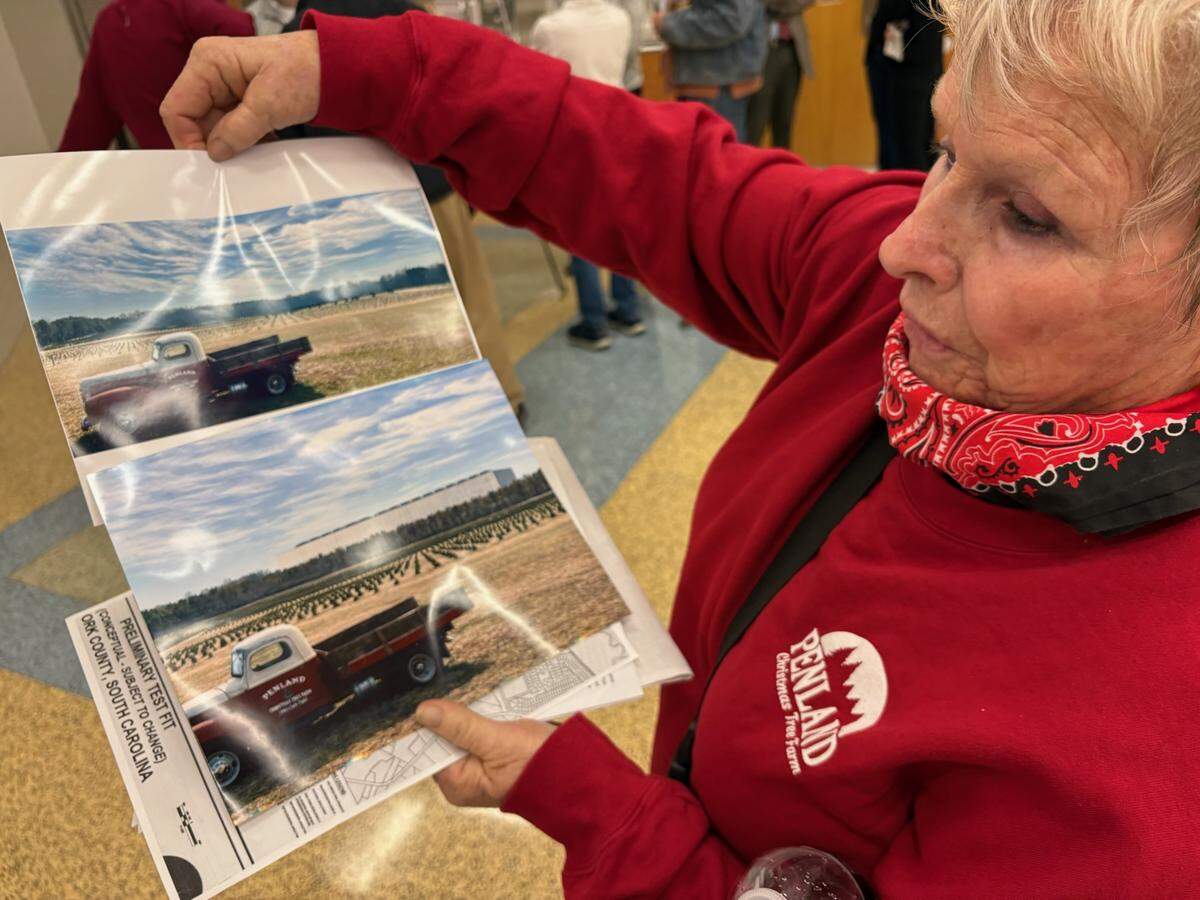
Steve and Judy Penland, longtime owners of the well-known Penland Christmas Tree Farm that borders the QTS property, brought renderings showing how an 80-foot-tall data center overlooking their farm would look. York County approved a code change last year to allow taller data centers, at the request of QTS.
Issues from lighting to the building height would be dramatic for customers at the farm, Steve Penland said.
“They want the farm experience, going out to the country to cut a Christmas tree,” he said.
From school funding to job creation to the work done at the site, there are significant benefits to the QTS project, said company Vice President of Community Engagement Karen DiMaggio.
“Everything in our lives is connected to the internet,” she said. “Every day, you’re using your phones, your tablets, your computers. We run the systems that post the information.”
QTS plans in York County
Three years ago, QTS spent more than $10 million to buy hundreds of acres off Hands Mill Highway and Campbell Road. The company also negotiated a tax incentive deal with York County.
Data centers are a growing industry nationwide, fueled largely by the growth of artificial intelligence platforms. Details about specific projects, from costs to environmental impacts, are often difficult to find.
QTS touted a $1 billion investment with its data center project in Lake Wylie. The company would be allowed to pay the county a fee instead of property taxes for 40 years.
Last spring, York County changed its development rules to allow taller data centers — up to 80 feet — in line with QTS’ plans for a 5.3 million-square-foot facility. In late December, QTS bought more than 400 acres of Paraham Road property for $26.1 million.
The company now owns nearly 800 acres in the area.
QTS doesn’t have plans for the property purchased in December, but it could be used as a buffer or for future growth, DiMaggio said.
Water and power concerns
Based in Virginia, QTS has more than 20 years experience building data centers. The company has more than 2,000 employees and more than 90 buildings in the U.S. and Europe.
A primary public concern with a new data center, DiMaggio said, is water.
“There is a lot of misinformation out in the community about water usage and data centers,” she said. “Old practices had an evaporative cooling system. Water was pumped in on a daily basis, using thousands and thousands of gallons every day.”
Now, she said, water is pumped into the facility only once and operates on a closed-loop system. The initial fill is about the amount of water in four Olympic-size swimming pools. The daily water usage is about 18,000 gallons, DiMaggio said, or less than what two typical households would use.
“It’s office water use,” she said. “It’s kitchens, because we have offices in there. So people use the restroom, wash their hands, they drink out of the water fountains. That is our use of water. That’s it.”
Another concern is power. York Electric Cooperative will serve the site, but it’s actually power provided by Duke Energy that will be used. Duke will sell power to York Electric partner Central Electric Power Cooperative, and York Electric will sell it back to QTS with a markup.
Increased need for power will be treated the same way it would for large industrial additions, population growth and other needs tied to the electric system, experts said Tuesday. York Electric customers shouldn’t notice a difference, said President and CEO Craig Spencer.
“If anything, it should help minimize future rate increases because we will have this revenue that will be coming in that we don’t have to make infrastructure investments for, paybacks for,” he said. “We will be able to use those margins to help offset our fixed costs.”
QTS to build over several years
The 1,000 construction jobs could last five to seven years, DiMaggio said. Four building are under construction, with the first expected to be ready by 2028. In 2027, the company expects to start the next round of construction on five more buildings.
For some, there’s excitement with that activity. Sheila Quinn, superintendent of the Clover School District, compares QTS to Catawba Nuclear Station, which has for decades provided a significant tax base to support schools. The Clover area doesn’t get large manufacturers the way other parts of York County do, Quinn said.
Numbers change over time in the tax incentive deal, but Clover schools expect to get several million dollars per year based on current QTS plans.
“It’s like another power plant,” Quinn said. “It will help tremendously.”
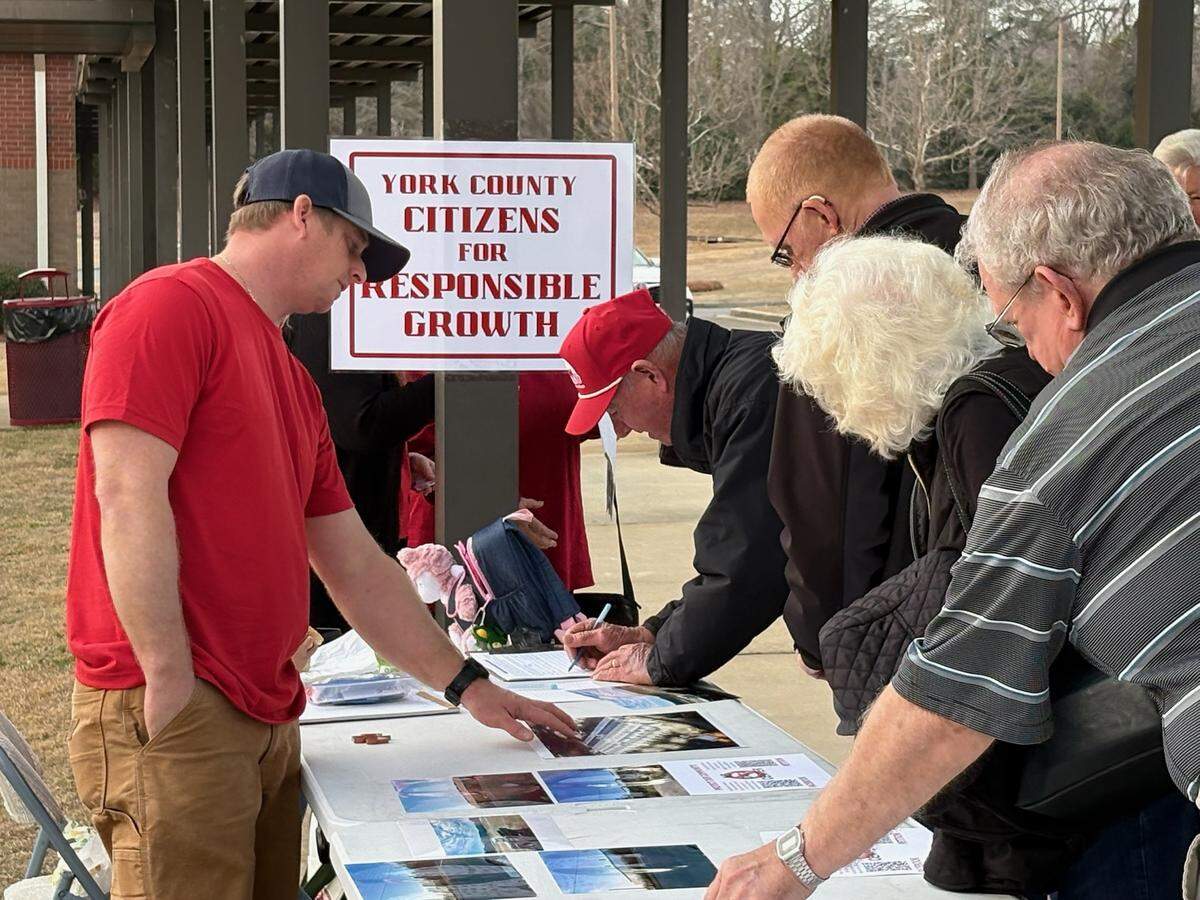
Some neighbors of the property, though, are in the York School District, which doesn’t get that same benefit. For many, the issue is whether QTS fits in the community. They can’t do much about ongoing construction, but there’s concerned if more is proposed.
“It’s a small town,” Ferraro said. “I understand we have to grow. The fact that it’s grown exponentially is beyond what this town can accommodate.”