
Could the SC state budget stop Silfab Solar in Fort Mill? Here’s the plan
S.C. Sen. Michael Johnson intends to use the state budget to limit what Silfab Solar can do at its Fort Mill site.
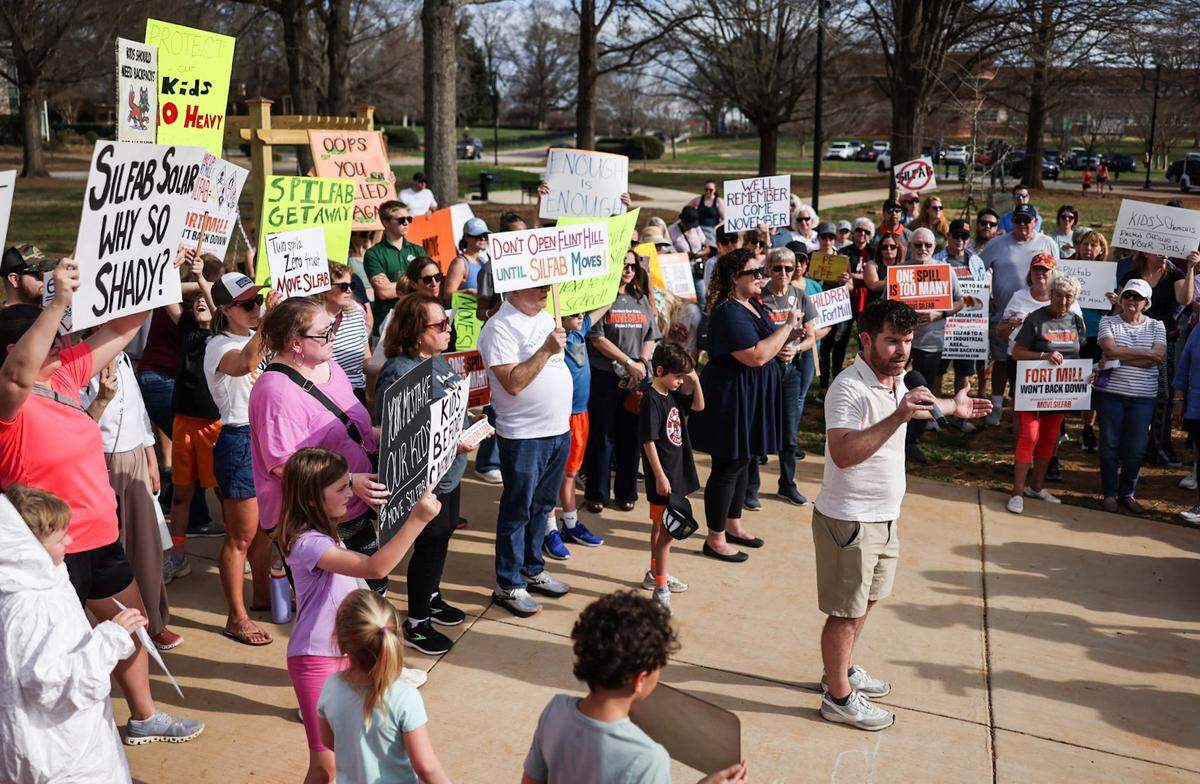
Silfab is a Canadian solar panel manufacturer whose production facility on Logistics Lane has been at the center of contentious public debate for three years. Last month, two chemical release incidents prompted new public outcry, renewed interest from regulators and led nearby Flint Hill Elementary School to close for two days.
Silfab restarted solar panel assembly since the spills, but not manufacturing work that involves industrial chemicals.
State legislators including Johnson called for changes or limits at the Silfab site in the weeks following the incidents.
Johnson, a Republican who represents Fort Mill, sponsored and passed a budget proviso on Tuesday that would stop the South Carolina Department of Environmental Services from entering into agreements with Silfab, according to a post on his Facebook page. His stated goal is to stop the state from letting Silfab resume manufacturing.
The proviso doesn’t mention Silfab by name. It instead states that no funds from the state budget to the environmental services department could be used to “issue permits, approvals, or enter into any consent orders or compliance agreements” that would allow for solar panel manufacturing on properties adjacent to a public school.
“This proviso will go to the House,” Johnson said in his post. “Hopefully they keep it in the budget.”
What is a budget proviso?
Provisos are added to the state budget annually, making funding for that given year contingent upon whatever is included in the proviso. They essentially are temporary laws that last one year, or the life of the budget.
They’re often used by legislators as temporary fixes for issues while the legislature hammers out law changes.
The state fiscal year starts July 1. Gov. Henry McMaster released his executive budget in January. The state House and Senate debate the budget each spring, combining versions by early summer to meet the fiscal year deadline.
Silfab assembly and manufacturing
Silfab’s work in Fort Mill includes two parts, solar cell assembly and manufacturing. The assembly piece doesn’t use the same industrial chemicals that the manufacturing part does.
Those chemicals have been at the heart of public debate.
On March 3, an estimated 300 gallons of potassium hydroxide spilled. That’s an industrial base used to make items like soap, fertilizer and batteries. Two days later, reports came out about a chemical leak that began in February. That time it was hydrofluoric acid, a corrosive cleaning agent.
The state environmental agency told Silfab to stop work, including taking any additional chemicals.
The company and agency reached an agreement prior to Silfab resuming its assembly operations, outlining what it would take to restart manufacturing. That agreement included approvals from the environmental agency.
SC legislators push for changes at Silfab
Several state legislators have called for significant changes at Silfab.
S.C. Rep. David Martin, who like Johnson represents the Fort Mill area, called for a state investigation after the initial Silfab spill. Martin since introduced several measures in Columbia, from looking into reports of Silfab employee illnesses to asking the state Education Department to forgive school days lost at Flint Hill Elementary.
Constant public debate on the Silfab site the past few years was largely seen as an issue between the company, residents and York County. Johnson couldn’t do much more than ask state agencies to make sure operations were safe, he said in a March 3 post after the initial spill. That spill was a turning point, according to that post.
“All of that changed,” Johnson said.