‘Unacceptable’: State officials working to fix COVID testing delays
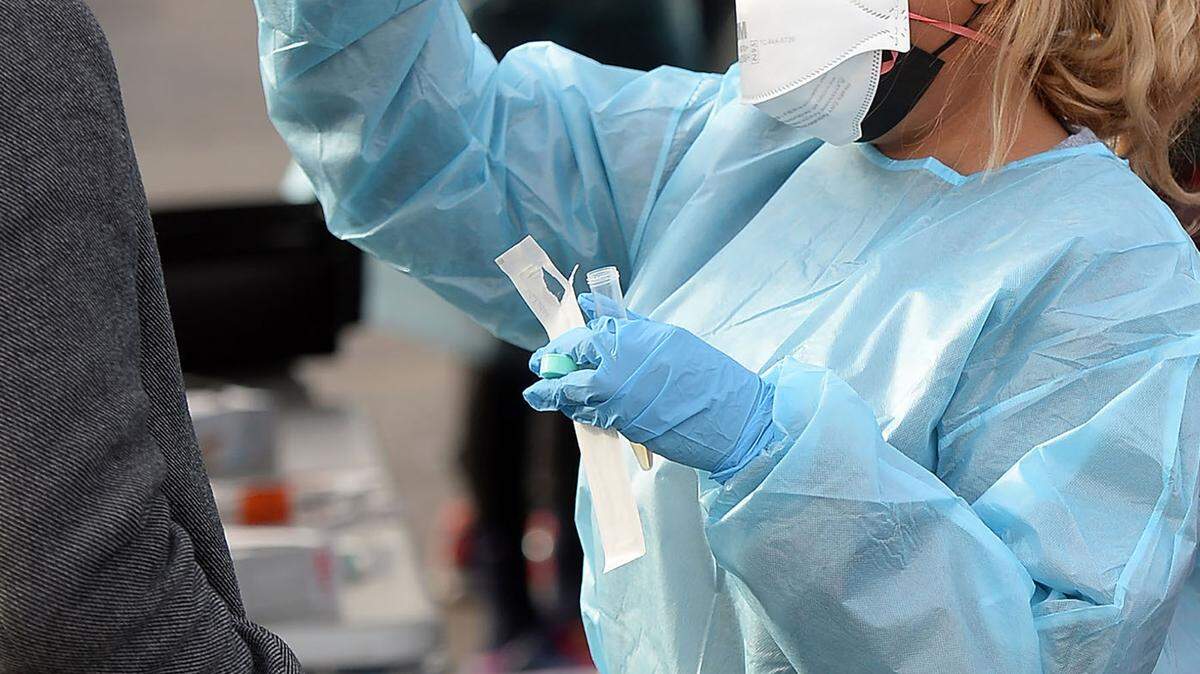
Since the omicron surge, beginning in late December, laboratories across the state have failed to process tests and report results and case counts, the South Carolina Department of Health said in a press release earlier this week.
“Extreme delays in testing results are unacceptable for the people of South Carolina,” Dr. Brannon Traxler, DHEC Public Health Director, told reporters Wednesday.
This problem has pushed the state agency to advise that some people give up on awaiting test results.
“Some private testing vendors have fallen so far behind in reporting results that DHEC had to take the unprecedented step of recommending those individuals finish what would have been their isolation time or return to work if it has been more than five days,” the press release said.
Finding a solution
Traxler recommends that if you have symptoms of illness, you should presume it is COVID-19 and isolate accordingly.
It might simply take too long to wait for a test.
Also, if an individual does not have symptoms within five days of their positive test, they should not pursue a second test to ensure a negative result, and they no longer has to self-isolate, Traxler said.
Individuals also can end their quarantine if they have not received their test back after five days.
DHEC is working to remedy the issue, with the goal of reducing turnaround time for tests to 48 hours, Traxler said.
The state agency is working to redirect tests to quicker labs and away from those that cannot quickly test samples, she said. One possible solution is a new federal initiative to ship at-home tests. These tests can be kept on-hand in the case of COVID exposure or symptoms.
By visiting covidtests.gov, anyone can receive up to four tests, which will arrive within in 7 to 12 business days.
There also are ongoing discussions about ramifications for DHEC-affiliated labs that are not meeting expectations.
Premier Medical Laboratory Services, a large private lab contracted through DHEC to administer tests, has posed the biggest concern, Traxler said.
A press release said Premier is “significantly behind,” in processing tests and has not met contractual obligations to catch up.
Cases in the tri-counties
These delays come at a time when case numbers seem to be dropping off, but they still are high, especially when compared to late December, DHEC data shows.
The omicron variant has quickly surpassed its predecessor delta as the main variant in the United States, accounting for roughly 98% of new infections in the country, according to estimates from the Centers for Disease Control and Prevention.
It also is unknown how many “at home” tests are being used that are not reported to the state, or how many tests have not been processed and reported due to delays. The only data at this time comes from state-reported tests.
The most recent data for York County, reported Jan. 18, shows 784 confirmed and probable COVID cases. Last week, on Jan. 14, the state reported York County’s record high: 933. It’s important to remember that while cases have dropped in the past week, these numbers still are staggering compared to cases at the end of December, which were in the 200 range.
Chester County reported a peak 127 cases (confirmed and probable) on Jan. 13, with a very slight drop to 124 on Jan. 14, the most recent daily data available. Chester saw cases as low as 9 in the month of December.
Lancaster County reported a record-breaking 276 cases on Jan. 12. The most recent case numbers reported for the county show 246 confirmed and probable cases on Jan. 14. Lancaster was averaging cases in the 20s before omicron exploded in January.
Is the Omicron spread slowing down?
Trexler said experts see the beginning of plateauing cases in the Northeastern states, but “we need to focus on South Carolina,” which is still seeing increases.
“Most current models are projecting cases and hospitalizations drop by the end of January in most states,” she said.
At this time, DHEC predicts that cases will start to drop by the end of January and by mid-March deaths and hospitalizations should subsequently decrease.
This story was originally published January 20, 2022 at 3:23 PM.