
A risk to vaccinate?
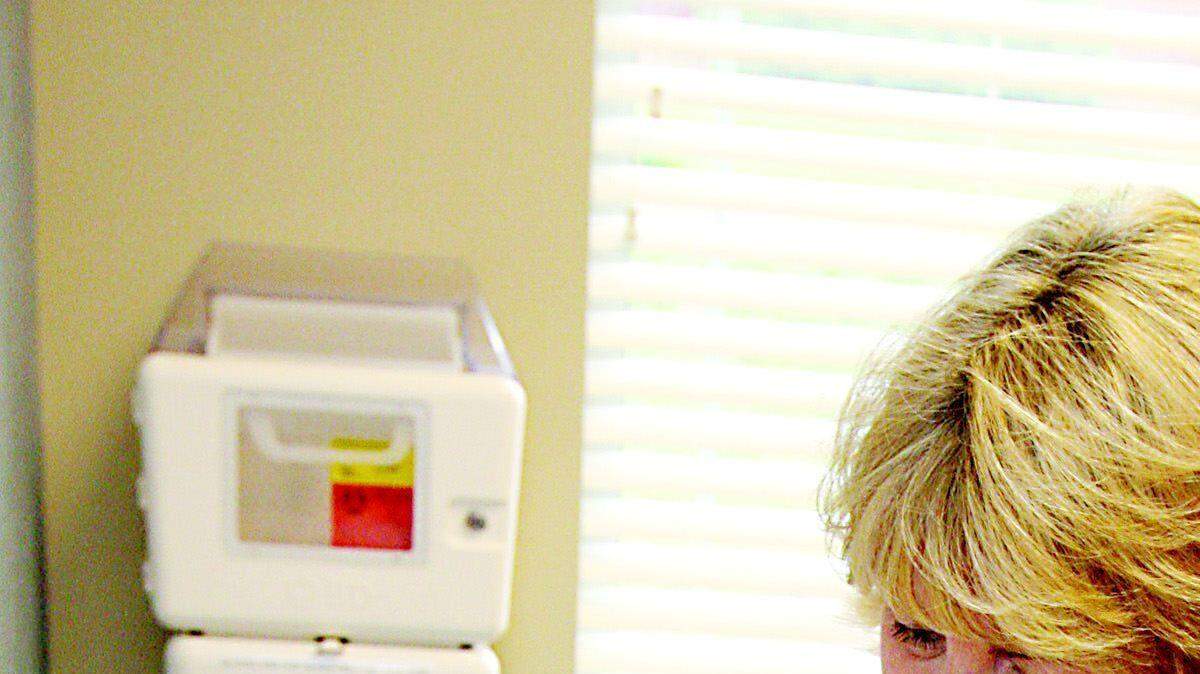
Pam Wilder, 34, gave birth to her second child last week. After doing some research, she has decided to forgo standard childhood vaccinations for her daughter until she's 2 years old.
Although her pediatrician recommends them, the Fort Mill woman said she believes the number and frequency of shots advocated by the U.S. Centers for Disease Control and Prevention is too many and too soon.
"It is their recommendation that I vaccinate, but they are willing to work with me," said Wilder, who said she believes vaccines contain chemicals that may overload a baby's immune system and could lead to disorders such as autism.
It used to be uncommon for a parent to refuse vaccinations, intended to protect children and adults from coming down with nearly eradicated diseases such as measles, mumps, whooping cough and others. But in the last two months, Rock Hill area pediatricians said they've seen an abrupt increase in the number of parents who are either declining to have vaccinations given to their children or asking for a change in the schedule to eliminate or delay some shots.
One of the most common reasons: Their fear about the possibility of a highly publicized but scientifically unproven link between childhood vaccines and autism, a complex early childhood brain development disorder.
Parents questioning doctors
Rock Hill pediatrican Dr. Hal Copple with Palmetto Pediatrics said that in the last two months, about a third of the parents in his practice who have children of vaccination age have declined shots or asked for changes in the schedule.
Copple, who said he typically sees more questions from more educated, affluent parents, said they often ask him why is it necessary to give vaccines for diseases that are no longer around. "The diseases we vaccinate children against can be serious and can cause brain damage and death," Copple said.
Pediatrician Dr. Deanna Threatt with Rock Hill Pediatric Associates said in the last two months, about one in 30 of parents in her practice whose children are of immunization age refuse vaccines or ask for a change. Threatt said the number is higher in the practice's Fort Mill office, where most patients are private pay or have insurance.
Threatt said many parents have become concerned about autism after watching celebrities such as Jenny McCarthy speak against immunizations on "The Oprah Winfrey Show" and hearing about lawsuits involving vaccine-injured children. Some have read "The Vaccine Book" by Dr. Bob Sears, she said.
Dr. Carlos Paxtor, a pediatrician at Sunshine Pediatrics in Rock Hill, said the practice sees two to three parents each week who decline shots for their child or want a change.
Paxtor said his office began seeing the trend about a year ago. "Parents see television programs that refer them to Internet sites that advocate the refusal of shots," said Paxtor.
Mooresville, N.C., family physician Dr. Anthony Castiglia said most of the parents with vaccination-age children who visit his practice opt not to immunize their children.
Castiglia, who is with Advanced Integrative Medicine and specializes in alternative medicine, said today's parents are more educated. "People are not just believing doctors anymore, they are researching information and challenging doctors," he said.
Outbreak of serious diseases
Rock Hill pediatricians say they are concerned that if parents don't vaccinate their children, they could see a return of once-eradicated diseases, possibly in epidemic proportions. Paxtor said at least 80 percent of people must be immunized to prevent a resurgence.
But Castiglia, who challenges the vaccine stance, said children don't need vaccines to protect them against these diseases. "The most important thing is to have a good immune system and do it naturally, not to do it with vaccines," he said.
A recent nine-state outbreak of measles and a national increase in the number of whooping cough cases has been blamed on a drop in vaccine coverage, said Adam Myrick, a spokesman for the S.C. Department of Health and Environmental Control.
Myrick said there have been no reports of disease outbreaks in York County.
In South Carolina, vaccinations are required for a child to be admitted to schools or day care centers. The only vaccine exemption recognized in the state is for religious beliefs, and it must be approved by DHEC, Myrick said.
Fewer than 1 percent of students in South Carolina schools have been granted a religious exemption and there has been no recent rise in exemption requests, said Myrick.
Many states offer philosophical exemptions for people who object to immunizations because of a personal, moral or other belief.
Beyond the pediatrics
Some parents look beyond pediatricians for answers because they are concerned about repercussions like being kicked out of a doctor's practice, said Rena Henson of Fort Mill. Henson is a board member of the non-profit People Advocating Vaccine Education, a Charlotte vaccine awareness group.
"Most people who choose not to vaccinate lay low because it's not popular with the authority figures," Henson said. She said the most popular question the group fields is how to get a vaccine exemption so an unvaccinated child can attend school.
"A lot of people say, 'If I didn't have to send them to school, I wouldn't vaccinate," she said.
Several local parents who chose not to immunize their children declined to be interviewed about the decision, saying they fear discrimination against themselves or their children.
Megan Ratcliff, 23, of Rock Hill, said she understands why. Ratcliff said that after she refused to continue to vaccinate her child, her pediatrician reported her to the S.C. Department of Social Services. No action was taken again Ratcliff.
"People out there have an attitude of, 'What are these crazy people doing?' I don't want to be that crazy person that doesn't vaccinate," said Ratcliff.
Ratcliff said she decided not to continue the vaccinations for her son, now 16 months, after he had a high fever and a personality change soon after his four-month shots.
"One day, he was laid back; the next day, he was extremely clingy," Ratcliff said. "But, the pediatrician said it had nothing to do with the shots."
Following his six-month vaccinations, Ratcliff said her son again developed a high fever. "He's not getting any more," she said.
Ratcliff said she is not worried about her son catching the diseases that vaccines are intended to prevent. "I don't think the risk of disease coming back is that high," she said.
Diseases that no longer kill
Copple said the reason parents aren't worried about diseases such as rubella and measles -- which once plagued the nation -- is that they've never seen anyone die from such diseases.
"In 1900, the death rate for children under the age of 5 was 50 percent," Copple said. "Diptheria used to wipe out a whole family of children in two days. You can walk through the old cemeteries and see all of the little headstones."
Copple said vaccines, along with advances in sanitation and medicine, are the reasons children don't die from diseases as in the past. But Castigilia disagreed, saying better living conditions are the reason for improved survival, not vaccines.
Rock Hill pediatricians recently met to devise a community-wide plan to alleviate parents' vaccination concerns. "Pediatricians and family physicians need to do a better job in decreasing parents' fears of immunizing and helping them sort through the maze of information that's out there," said Threatt.
Despite the arguments surrounding vaccines, many parents say they still believe their children are better off being vaccinated.
Christian Reynolds, 32, of McConnells decided to immunize her children even though she has a family history of autism. Reynold's 40-year-old cousin has autism, and she said her family wonders if vaccines played a role.
Reynolds said that with her first child, she didn't worry about autism and had her child vaccinated. After she had her second child, she wasn't sure, so she asked her pediatrician.
"He said he would vaccinate because he'd seen what measles, mumps and rubella can do to a child." she said.
Brandi Comer, 26, of York has three girls, including a 4-month-old baby, and all have had shots. "It is a 50/50 thing," she said. "If I don't do them and something happens, I will feel horrible."
This story was originally published May 31, 2008 at 11:36 PM with the headline "A risk to vaccinate?."