
It's a holiday week, it's hot. When's the worst time to travel in Carolinas?
Don’t look for anything different from your traditional Independence Day weather in the Rock Hill area. It will be hot and humid, and a few spots could get a late-afternoon or evening thunderstorm.
In other words, it’ll be a classic Carolinas Fourth of July.
And no major travel problems are likely for South Carolina residents who AAA Carolinas says will travel 50 or more miles for the day. With gasoline prices dropping and generally good weather, it shapes up as a good time to hit the road.
AAA Carolinas says it expects a record number of S.C. residents – 609,580 – to travel. Gasoline prices, which averaged $2.50 a gallon last weekend in the Palmetto State, are down about 15 cents over the past month. Similar drops are being reported in other states.
Still, the Carolinas will see the highest gas prices in four years for Independence Day, reports AAA Carolinas. As of Monday, the average for S.C. was $2.52 a gallon and the average for N.C. was $2.65 a gallon. That's a 62-cent increase from July 4, 2017 in S.C. and a 58-cent increase for N.C. The last prices that high were seen on July 4, 2014 when prices surpassed $3 a gallon.
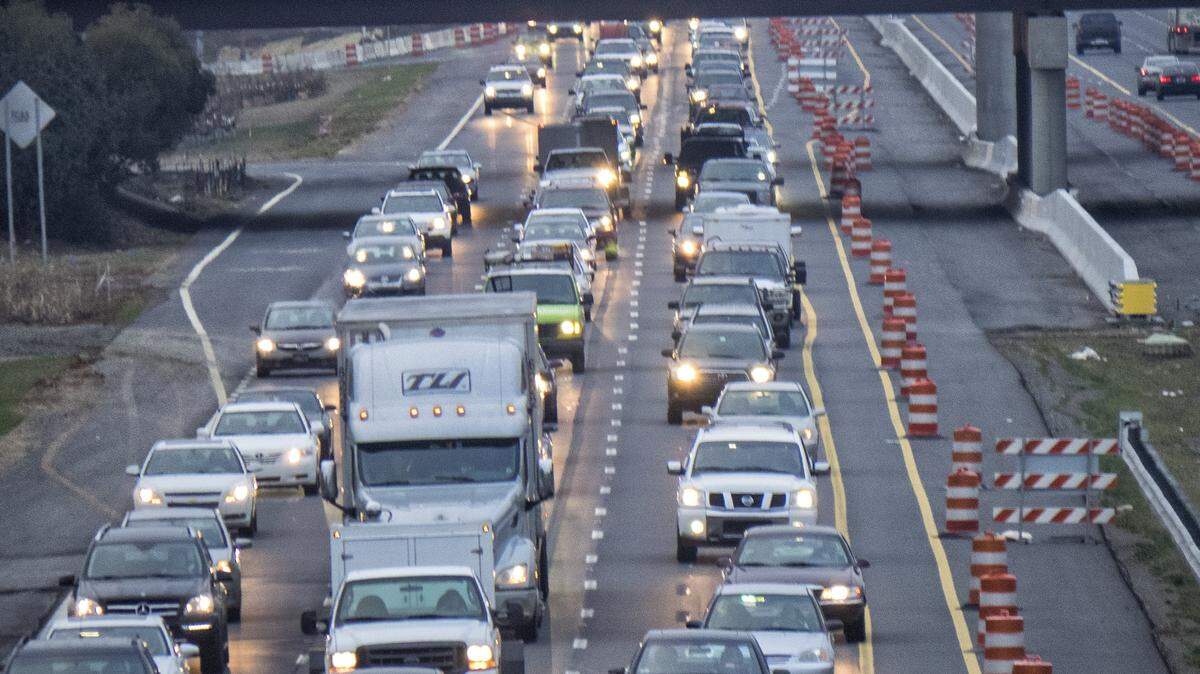
Travel officials warn that congestion is expected to be at its worst Tuesday afternoon and evening, when many people get off work and hit the road.
“Tuesday afternoon will hands-down be the worst time to be on the road,” said Scott Sedlik, general manager and vice president of INRIX, a travel consulting firm. “Our advice to drivers is to avoid peak commuting hours altogether, or consider alternative routes."
Two systems are expected to control weather in the Rock Hill area and the rest of the Southeast this week – high pressure centered along the East Coast, and a weak wave of low pressure forecast to drift westward from the Atlantic into Florida by midweek.
National Weather Service meteorologist William Martin said the wave of low pressure will bring a flow of moist air off the Atlantic, especially later Tuesday and Wednesday. That moisture, combined with the daytime heat, will trigger a few afternoon and evening storms.
The good news is that the Rock Hill area will escape the torrid heat and humidity affecting New England and the Mid-Atlantic.
Temperatures were in the mid and upper 80s Monday morning in northern Vermont and New York and across the border in Quebec and Ontario. The heat index, which measures the combined impact of heat and humidity, was forecast to soar well above 100 degrees Monday afternoon in southern Canada.
Locally, highs are expected to be in the low 90s through Wednesday, although rising humidity levels could push the heat index to around 100 on Tuesday and Wednesday.
Shower and thunderstorm chances, which Martin rates at 30 percent for Tuesday and Wednesday, are predicted to climb later in the week as a cold front approaches from the northwest. Martin said some computer projections indicate that cooler temperatures – highs in the upper 80s and lower humidity – could arrive by late weekend or early next week.
For the Independence Day travelers, conditions should be much the same at the beaches and in the mountains. There will be daily chances of showers and thunderstorms, although those areas will be rain-free most of the time.
Steve Lyttle on Twitter: @slyttle