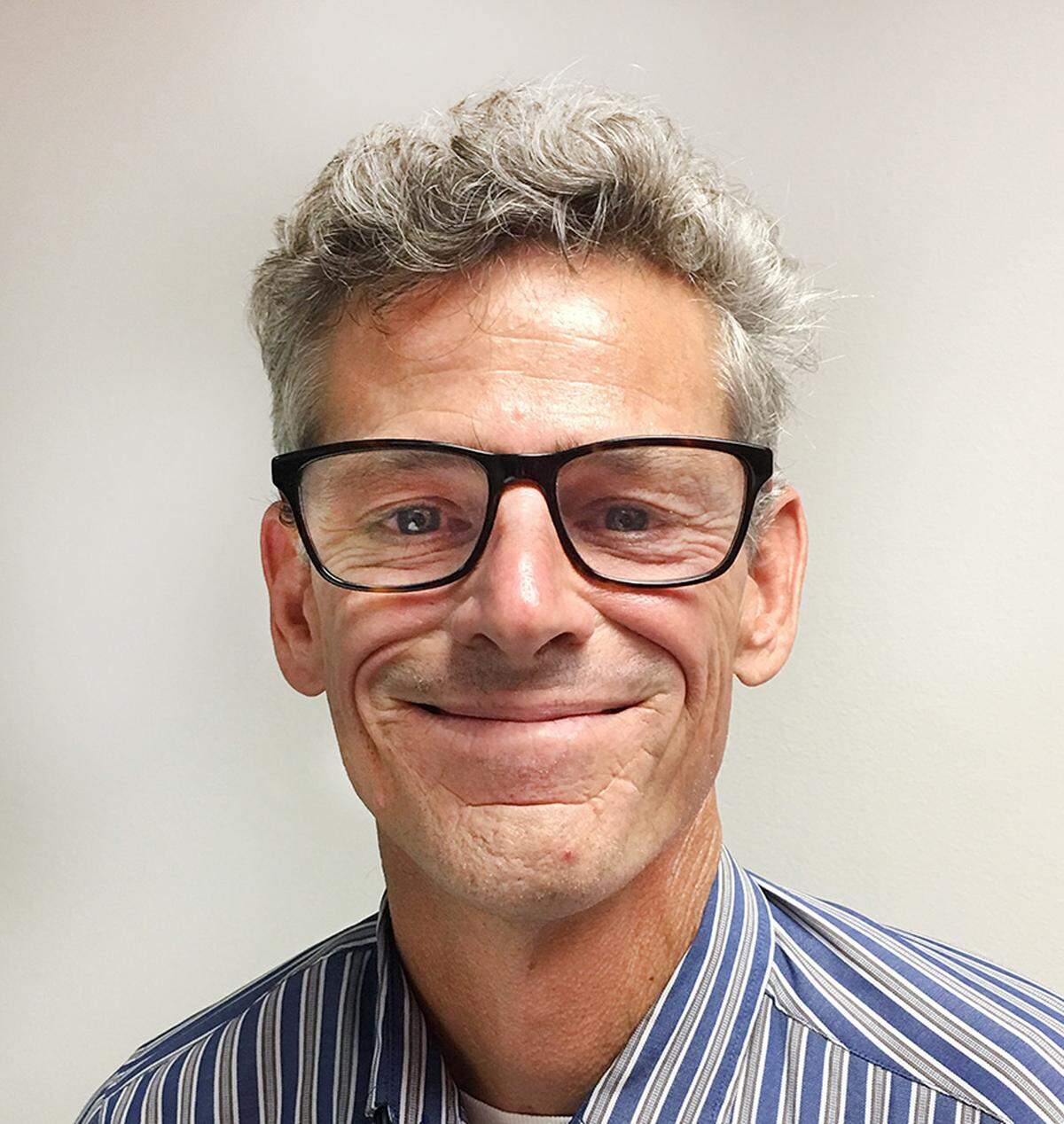
Civil rights ‘hero’ Charles Jones, who led Charlotte lunch counter sit-ins, dies at 82
Charles Jones, a Charlotte civil rights icon who helped lead protests at segregated lunch counters and once spent a month on a South Carolina chain gang for his activism, has died at 82, WBTV reported.
Jones was a campus leader at Charlotte’s Johnson C. Smith University in 1960 when four North Carolina A&T State University students sat down at a Woolworth’s lunch counter in Greensboro. They refused to leave until they were served.
Within a week, Jones and two other Smith students, Heyward Davenport and B.B. De Laine, were ready to start organizing sit-ins in uptown Charlotte. They expected a few others to join them the first morning. Instead, more than 200 students showed up ready to emulate the Greensboro Four.
“We were obligated to do it,” Jones told The Charlotte Observer in a 2010 interview. “The movement had caught fire.”
Jones’ march through history included being jailed for supporting lunch counter protests in York County, S.C., by a group known as the Friendship Nine. He was on a first-name basis with Martin Luther King Jr. and present for King’s haunting “I Have a Dream” speech in Washington, D.C., in 1963.
For decades, Jones, then a lawyer, remained an advocate for the black Biddleville neighborhood where he lived near Johnson C. Smith, and urged its community association to join the white Smallwood group.
Justin Harlow, a dentist, said Jones urged him to join the Biddleville-Smallwood Community Organization soon after Harlow moved to Biddleville in 2014. Harlow did, became the group’s president, and in 2017 was elected to Charlotte City Council. He left council this month after one term.
“This is a loss not just for Biddleville, but for Charlotte,” Harlow said Friday. “We are losing a true stalwart in advocacy here.” Harlow called Jones a “godfather” to the continuing protests in Charlotte over affordable housing and other issues.
The personable Jones regularly attended community meetings and events as a kind of senior adviser, telling jokes and funny stories, until recent years. “He was just everybody’s guy,” Harlow said.
Jones’ family had moved from Chester County, S.C., to Charlotte when he was 10, The Observer has reported. His father was a Presbyterian minister and his mother an English teacher at Johnson C. Smith.
The 1960 lunch counter sit-ins in Charlotte managed to avoid the violence that broke out in other Southern cities at the time.
“I have no malice, no jealousy, no hatred, no envy,” Jones told reporters on the first day of protests. “All I want is to come in and place my order and be served and leave a tip if I feel like it.”
Determined to avoid trouble, city leaders formed a biracial committee on race relations and urged business owners to open their lunch counters to African Americans. When whites began avoiding uptown, and sales began sliding, the counters opened to all that July.
Jones was one of the first served: A tuna salad sandwich washed down by a Coke.
Over the next two years, The Observer has reported, Jones plunged into the civil rights movement. As a Freedom Rider, he witnessed friends being beaten, jailed and killed. Jones told The Observer he was arrested eight times, including twice with King.
Already a civil rights veteran by 1961, he and three other black students went to York County to support the Friendship Nine protesters. The group had been jailed for a month for sitting at an all-white lunch counter in Rock Hill. Jones was convicted of trespassing, then spent a month of hard labor at the York County prison farm.
At the 50th anniversary of the events, Jones told The (Rock Hill) Herald that he had no choice but to support the South Carolina protesters. “Right was right. We had to show support,” Jones said in 2011.
Friendship Nine members Willie McCleod and David Williamson Jr. of Rock Hill said Jones’ decision to come to York County helped the civil rights movement.
“Charles was a little older than we were, and when he came he supported us,” McCleod said. “We were thankful that others believed in the same quality that we did, and were willing to go to jail for it.”
The convictions were vacated in 2015.
In a court hearing, York County prosecutor Kevin Brackett apologized for the imprisonment of “heroes.” He and Circuit Court Judge John Hayes said Jones and the others were charged and jailed solely based on their race during a time of legal segregation.
This story was originally published December 27, 2019 at 12:27 PM.