‘Easter will still go on’: Faith leaders use new outreach tactics amid coronavirus.
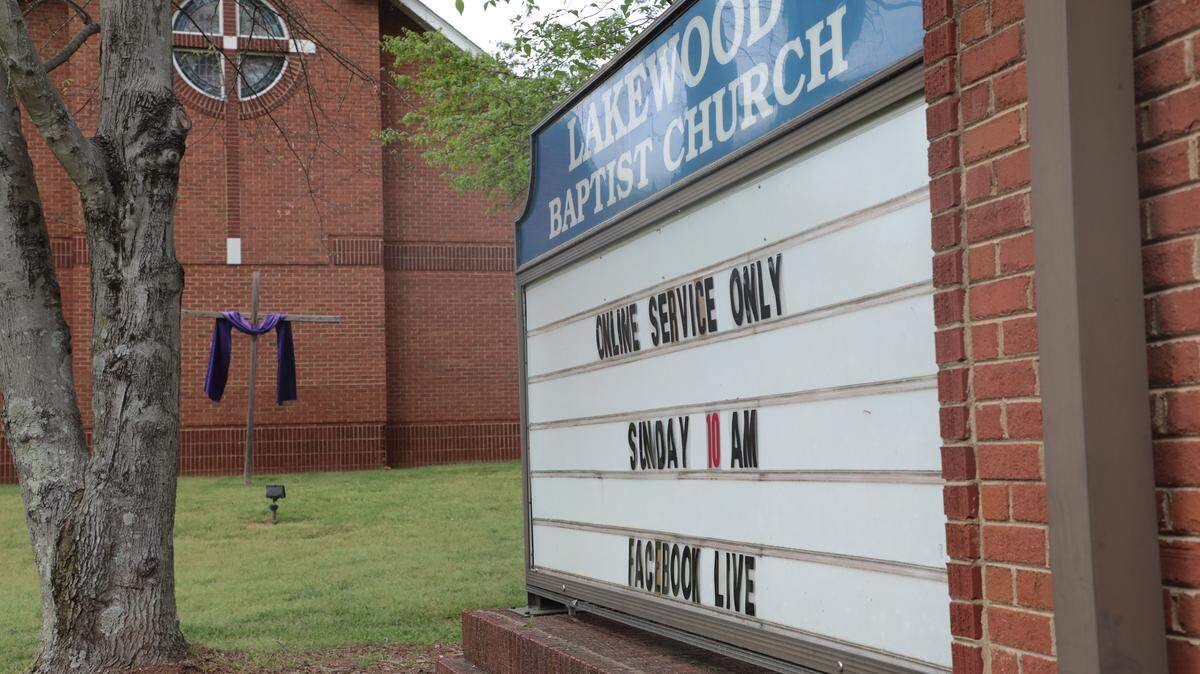
Easter traditionally is about an empty tomb. This year the sun will rise on empty sanctuaries, auditoriums, worship centers and other places where people of faith typically gather.
“It’s a new day,” said Mike O’Dell, director of missions with the York Baptist Association.
That new day brings financial and spiritual effects, focused on present need and hope for a new, more connected future. The new day has dawned on places of worship, large and small, rural and urban. All because of a virus no one can see, but whose impacts are obvious.
“It’s affected a lot of us,” Joe Long Jr., Rock Hill District superintendent for the United Methodist Church, said of COVID-19. “Hopefully this isolation that we are imposing now will help slow this thing down, and save lives.”
Christianity isn’t the only faith with upcoming major religious services.
Passover comes April 8-16. Ramadan runs April 23 to May 23. Along with Easter April 12 and holy week services that lead to it, major faiths would expect some of their highest turnout services of the year.
Logging on
Sam McGregor Jr. has many years of experience as pastor at Allison Creek Presbyterian Church in Lake Wylie, and two weeks experience livestreaming sermons on Youtube. His church, like many in the area, is online now.
“It’s been a challenge to now preach into an smartphone each Sunday morning but I have to remember that there are real people on the other side,” McGregor said.
The York Baptist Association represents 80 churches, all but a handful in York County. O’Dell said he and other staff spoke with pastors at about half of them since coronavirus halted public gatherings in mid-March.
“They’re becoming much more tech savvy,” O’Dell said. “They’re staying connected with their folks as best they can.”
The same is true for many of the 69 churches in the UMC district Long serves. Pastors use Facebook Live, Youtube, email. Some preach into phones and send out videos that way.
“That has been a hard thing,” Long said. “We are people people, and we connect with one another. It’s not natural for us to not gather on Sundays.”
Plus, church officials often fill roles you can’t just livestream online.
They visit shut-ins. They visit hospitals. They feed people or shelter them. All activities where need could grow as COVID-19 makes people sick or troubles the economy, even as the virus limits church leaders’ ability to do their work.
“There are people that still turn to the church for help,” Long said.
Some denominations, like Southern Baptists, may be affiliated with larger bodies but have autonomous churches. Others like United Methodists have larger governing bodies, in its case conferences, to make decisions.
O’Dell said there isn’t a standard approach to coronavirus among Baptists, whose churches vary widely in size and service, even compared to when he began ministry decades ago.
“The bulletins would pretty much look the same,” he said. “It’s not that way now.”
Catholics have a statewide approach.
On March 24, the Roman Catholic Diocese of Charleston announced masses across South Carolina are suspended until further notice. Plans formed to live stream Holy Week events from Charleston, spanning from Palm Sunday April 5 to Easter on April 12.
Bishop Robert E. Guglielmone asked people of all faith traditions to pray for an end to the coronavirus.
“COVID-19 is a serious virus that continues to spread across our state,” Guglielmone said. “By continuing our efforts to bring the faith into people’s homes, we can safeguard everyone’s health while giving members of our flock the opportunity to participate in Mass and other devotions.”
Faith boundaries
For a virus known to keep people apart, COVID-19 has an interfaith quality that brings churches together.
“Everybody’s pretty much in the same boat,” O’Dell said.
The virus isn’t Christian. The Islamic Community Center of South Charlotte in the Fort Mill area serves hundreds of people, but hasn’t served them in person since a March 21 notice that all Masjid (mosque) activities are on hold due to social distancing measures.
“This decision was made with full consideration for the health and safety of our entire community, since this is out of basic Islamic Fiqh (understanding) that preserving life is paramount.”
Temple Kol Ami in Fort Mill has its own online notice.
“It is with an abundance of caution and the utmost concern for the welfare of our congregation that the Executive Board of TKA has made the difficult decision to cancel all Temple events through the end of March as well as the Passover seder on April 9.”
Financial impact
McGregor said he is thankful for members who continue to support the church, but there is a financial impact. It doesn’t stop on Sunday morning.
“Financial giving has certainly been impacted,” he said. “We encourage online giving but it is never the same. We rent out our gym to several local teams but they have had to suspend all of their practices and games which has impacted us obviously.”
Long said giving obviously will be less if churches can’t meet in person, even with options like online giving.
“Sure,” he said. “It’s having a tremendous impact. When we’re not able to worship or be present, people have to either mail in their gifts or some have set up direct deposit. But we’re mainly dependent on people bringing their gifts in person.”
There is concern not only for pastors, but other salaried positions at churches.
“Everything that we do is supported by the freewill offering of the people,” Long said. “This is going to be a big challenge for us.”
O’Dell said churches in his association see a downturn even in the first couple of weeks, even before Easter services. At worst perhaps a 25% drop in giving, he said. Yet as with pastoral care — from hospital visits at sites no longer allowing guests to funerals or weddings without crowds — churches do what they can, the best they can.
“It’s important at a time when we cannot be together in person, that we try to make the most of our connections that we have of other means,” Long said.
Test of faith
Faith leaders say a positive for pastors is this largely new online reach, which puts their message in front of more people than their physical location ever could. Coronavirus also gives non-members a chance to see how churches will react to crisis.
“Theologically, I think this experience challenges those Christian leaders who so quickly link natural events with unrelated political causes,” McGregor said. “For those pastors and church leaders this moment has created for them somewhat of a crisis.”
McGregor focuses on his community. The congregation may not gather and the ball teams may not come to the gym, but the church has walking trails, prayer stations, a prayer chapel and an historic cemetery. The church encourages people to use trails when they need to get outside, but keep distance from others.
“We have witnessed several people coming out and using our outside facilities,” McGregor said.
Coronavirus challenges pastors in new ways too, he said.
“Lament Psalms like Psalm 88 become more relevant now,” McGregor said. “Words written by people facing real crisis in their lives and wondering where God was during their challenges and loneliness.”
Sunday coming
Pastors tend to end sermons with a story. Long recalls one his bishop shared of late, about a distant country where communism cut out Christians’ ability to gather and worship for a decade. When they reconnected, there were more believers. Some brought a decade-worth of offering.
“The work of God continued, even when the church was unable to meet,” Long said. “I think that’s a word of encouragement for us today. We can find ways to continue to serve our God.”
Pastors will. In unison they insist Easter isn’t canceled.
“Palm Sunday and Easter will still go on,” McGregor said. “We will still celebrate an empty tomb. But we are being pushed into being more creative in how we worship.”
O’Dell said many churches still are figuring things out.
“The great majority of them are planning something special online,” he said. “A couple have talked about having a drive-in service in the parking lot.”
Long, who already saw a two-week pause on services extend to through the end of April, said Easter is too important to miss with or without coronavirus.
“Easter is a big day for us,” he said. “Our Lord Jesus Christ died on the cross for all people. His resurrection is hope, a symbol, a reminder of the victory that God has for us. We’re going to be celebrating it whether we’re together or not.”
Easter is about an empty tomb. It’s a faith story of an awful and unsettling scene that ended three days later, and a new day forever after. A message many in area churches will cling to in the coming week.
“We may come out of this stronger than we were before,” O’Dell said. “God has a way of doing that.”