‘Too much, too fast, too soon?’ Why Lancaster County home growth can’t be stopped
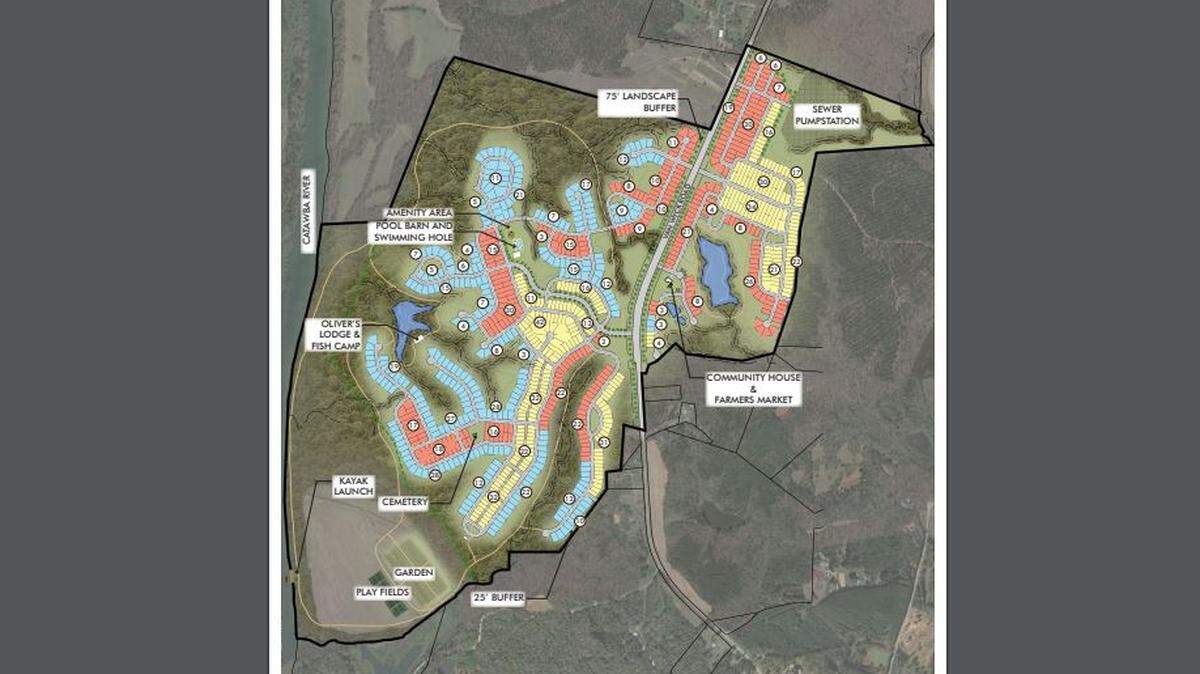
Even if Lancaster County officials didn’t accept or approve another request to build more homes or apartments, it would have about five years of coming residential growth to absorb. When will it be too much?
The Lancaster County Council held a committee meeting earlier this month where county administrator Dennis Marstall outlined concerns he’s heard from council and community of late.
“Is the growth that we have overburdening our infrastructure?” Marstall said. “Is the growth that we have too much, too fast, too soon? And some of the comments have been, yes, it’s already over-washed the panhandle area.”
From 2010 to 2020, Lancaster County grew by almost 20,000 residents. That growth rate is 25%. By mid-2021, Lancaster County topped the 100,000-resident mark, the U.S. Census Bureau estimates. The county had more than 4,300 new residents in mid-2021 — up 4% — than the 2020 Census.
Rox Burhans, development services director for the county, said there are more than 5,500 homes and townhomes that are permitted in Lancaster County but haven’t been built. For comparison, last year the county permitted about 1,250 new homes for construction.
“It’s almost five years worth of growth,” Burhans said.
Multifamily units, largely apartments, also have a pipeline. More than 2,700 units are permitted but not yet built.
Combined, more than 8,000 new homes, townhomes and apartments can be built without any further say-so by county council.
“They have legal rights to built based on decisions that the county has made in issuing them approvals,” Burhans said.
That has county officials asking what they can do to lessen growth pressures.
“What we’re facing right now is significant,” Marstall said. “What’s been approved and what’s in the hopper, and what’s still to come.”
More homes, apartments proposed
Projects on the agenda for the county planning commission just this month, combined, have more than 1,700 new homes. Other projects are a little further in the future. Burhans pointed to a plan for 1,100 homes just south of Van Wyck and more than 1,000 lots at Nisbet. Plus there’s about 200 lots at Possum Hollow and Old Bailes roads.
Last month, the council approved two new apartment projects for about 600 combined units. New home construction continues at Sugar Creek, Patterson Preserve, Wilson Creek and Roselyn.
The county and the Indian Land panhandle in particular continue to face growth pressure from recently built residences along with planned ones. When Burhans arrived fewer than four years ago, there were two apartment communities in the panhandle with one just starting to rent.
What’s been built since Burhans arrived and what’s approved but not yet built, comes out to about 5,100 apartment units.
“Most of this multifamily that’s been built has been built really in the past three to five years,” Burhans said.
Burhans also looked at undeveloped sites in the area that would allow for cluster subdivisions, a land use that’s contributed to large neighborhoods on the panhandle. Sites have to be 30 acres or more, and Burhans found 31 eligible land parcels across a total 1,700 acres. Combining properties could make close to 40 sites eligible for cluster subdivisions.
How and whether to slow growth
Lancaster, like other area counties, has a development ordinance. In conjunction with zoning rules, it outlines which developments can go where and what builders are required to include. A development ordinance can encourage or discourage types of growth based on what it allows or prohibits.
The county intends to rewrite its development ordinance, but that process will take almost two years. Marstall said requirements on building setbacks, lot sizes, architectural features and rules specific to homes or apartments could impact growth trends.
The county could repeal an ordinance that allows a mixed-use zoning district officials say is an easy tool for developers who want to build apartments. That move would eliminate rezonings to that mixed-use zoning district, one designed to combine residential and commercial development, but wouldn’t impact ones already zoned that way.
Council members also say a lack of communication between the county, municipalities like Lancaster and the county school district on growth issues needs to be addressed. Marstall intends to revisit the conversation at a Nov. 4 intergovernmental luncheon that includes those stakeholders.
Moratorium, development slow down
County Council member Charlene McGriff sees the numbers from proposed new developments, often 100 or so at a time. But McGriff said she was surprised by the total number of new residences already approved.
“Every time we make a decision it’s going to affect the schools, it’s going to affect traffic, it’s going to affect our budget and everything,” McGriff said.
Indian Land is busting at the seams with growth McGriff expects to move south.
“Ten years ago, 12 years ago, we made a terrible mistake,” McGriff said. “At this point, how can we stop the growth?”
Councilman Larry Honeycutt, who soon will rotate off council and won’t seek re-election, brought up one possibility.
“Moratorium is a dirty word,” Honeycutt said. “We know that. You see it. You read it in the paper. You hear it.”
But something has to happen, Honeycutt said.
“We’re in a position now that if we don’t do something, we’re going to create a complete monster north of Hwy. 5,” Honeycutt said. “We’re already heading toward that right now. But if we continue to approve all these different developments, it’s going to be a mad house.”
Wasn’t what they envisioned
Part of the issue in Lancaster County is growth that wasn’t what council members envisioned within current rules. Councilman Terry Graham, who represents part of the panhandle, said cluster subdivisions were intended to blend into the natural surroundings but have become a way for developers to get more lots on a property.
“They’re not supposed to be a big blob of houses,” Graham said.
Councilman Brian Carnes, who also represents Indian Land, said the mixed-used zoning that allows for so many apartments was intended to get more commercial growth alongside it, that hasn’t always happened. Chairman Steve Harper said there is nuance to growth numbers, like the idea of apartment impacts on the school system. Many new units, like half those at Roselyn, wouldn’t add students.
“We do have a lot of age-restricted stuff coming in,” Harper said.
Councilman Billy Mosteller looks at growth impacts based on how long they would take to fix. The county could fund or assign more sheriff’s office cars or ambulances to the panhandle with relative speed.
“Roads and schools is years and years down the road,” Mosteller said. “Years and years. And we can’t recover on those two things.”
The exact steps the county will take, if any, to stop growth aren’t yet clear. The consensus was, that council members want staff to find ways to slow residential growth that isn’t already approved.
“We need to tap the break, maybe slam on the break, a little bit,” Carnes said.
This story was originally published October 28, 2022 at 6:00 AM.