‘Still moving forward’: Federal NEA cuts won’t impact $35M Rock Hill arts center
Federal funding cuts for the arts aren’t an immediate threat for Rock Hill art groups, including one aiming to open a $35 million downtown performing arts center. State funding cuts, though, could become a problem.
“We’re not feeling them yet,” Arts Council of York County executive director Melanie Cooper said of cuts threatening National Endowment for the Arts funding. “I know at the state level they’re starting to feel it, which may trickle down to us.”
Grants through the federal arts agency have been cut and President Donald Trump has proposed cutting the agency entirely, according to news reports. A review of National Endowment for the Arts grants by The Herald found there aren’t any active allocations for groups in York County.
For the largest ongoing arts project in the region, state funding is a more pressing concern.
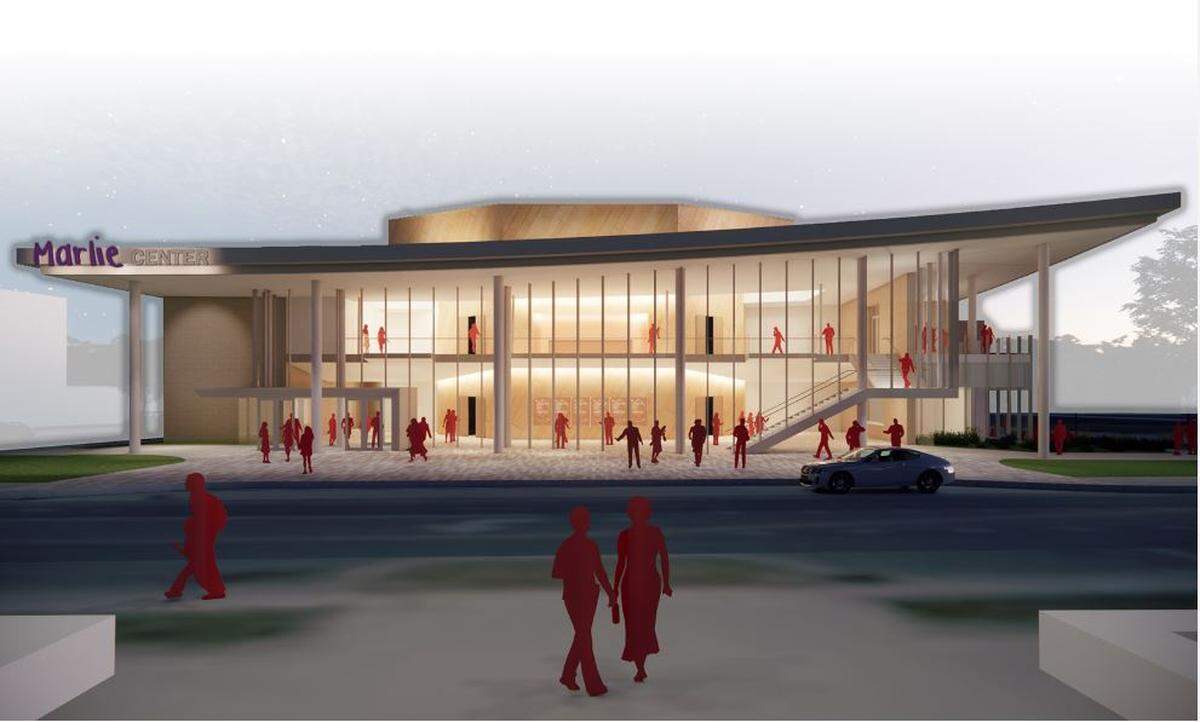
Marlie Center in Rock Hill
Two years ago, organizers began public discussion on a new performing arts center in Rock Hill. They dubbed it The Arts Center at Fountain Park.
It would have more than 500 seats and bring events similar to what the Peace Center in Greenville or the Chapman Cultural Center in Spartanburg offer.
There have been several changes since then. Now the center is planned for the Main Street side of Fountain Park, rather than the Black Street side. And it’ll be called the Marlie Center, in a partnership with The Marlie Dru Sullivan Foundation that formed after the death last year of a local teen by that name.
Marlie Center organizers have raised about $10 million of what could cost up to $35 million. They applied for $4 million in state funding, but paused to regroup last summer after learning all South Carolina budget earmarks would be eliminated.
It was the third straight year missing out on state funds organizers believe are warranted.
“We’re still moving forward,” said Marlie Center board chairman Justin Smith. “It wasn’t the linchpin of the project to get money from the state. However, we view our project as an economic development driver in downtown Rock Hill.”
Fundraising has focused so far on large corporations or individual gifts. The group hasn’t gone after federal grants.
Fundraising is expected to increase starting this fall, and organizers want to break ground by fall 2026 for a two-year build.
Smith anticipates the Marlie Center will overtake Miracle Park as the city’s largest privately-funded civic space. Part of the relocation was to fit the center into an entire city block that’s being redeveloped.
The 530-seat plan that dates to a study from 2017 still fits on the new site, Smith said, or there could be changes before construction starts.
“The vision of the center hasn’t changed,” he said. “It’s still meant to be a community performing arts center for York County, Chester, Lancaster — everyone.”
The project likely will apply for state funding again. But so too, likely, will other projects from across the state that also missed out on recent funding opportunities. “There are a lot of people clamoring for what they had hoped to come through,” Smith said. “It’s a speed bump. It’s not derailing our project at all.”
Rock Hill community arts programs
Cooper’s arts council has three art galleries with about 40 exhibits each year.
There’s an annual student art show where teachers pick the top pieces from across the Rock Hill School District. Studios at the arts council building at the Gettys Center downtown offer studios for about 20 working artists.
A fall blues and jazz festival, a film festival in the spring and a summer agricultural art tour that’s become a template for statewide events happen each year. The council sponsors up to 70 events in a typical year.
The arts council operates on a $400,000 annual budget.
Such groups come up in three-year cycles for grant funding from the South Carolina Arts Commission. The York County group had its funding renewed last year, for nearly 14,000 for four years. State-level funding has been stable, Cooper said.
“Local donor giving has started to diminish, as well as other grant opportunities,” she said. “We’ve seen some of those go away as well.”
Like Marlie Center organizers, Cooper’s main funding concern is the health of the local economy. Most of her funding comes through community donations.
There have been challenges, like the city terminating its lease with the arts council for the Gettys Center in order to sell the building. The arts council informed artists in late February they’d need to vacate by the end of August.
How much federal arts funding for Rock Hill region?
NEA money hasn’t come recently, but it’s been significant in York County.
Rock Hill groups received 25 grants since 1998, totaling nearly $820,000, a review of federal data by The Herald found. The city, Winthrop University, Rock Hill Arts Council and the Catawba Nation are among the groups to receive multiple grants.
The most recent grants came from 2020 to 2023.
Rock Hill and the Rock Hill Economic Development Corp. each got $10,000 for downtown murals. Then, in the most recent grant two years ago, the Catawba Nation got about $150,000 in COVID relief funding.
Fort Mill was part of a $3,000 theater grant in 2000. No other York County cities or towns have received grants.
The only active NEA grant in the Rock Hill region is a $25,000 allocation for this year and next to the Lancaster County Council of the Arts. The money is meant to create metal structures along the Lindsay Pettus Greenway.
Calls on Tuesday to the arts council for comment weren’t returned.
There have been two other Lancaster County grants for a total of $40,000. The most recent of them came in 2007.