‘They passed on a legacy’: The long, ongoing story of Juneteenth in Rock Hill

In an instant message era, the origins of Juneteenth seem foreign. Enslaved people in Galveston, Texas, learned they were free on June 19, 1865, more than two years after the Emancipation Proclamation took effect. So, how did people who lived in York County learn about the end of slavery?
And why is Juneteenth still important here, 160 years later?
“We don’t celebrate the fact that there was slavery, but we recognize the fact that our people are resilient,” said former Rock Hill City Councilwoman Sandra Oborokumo. ”They passed on a legacy to people who are still here.”
Juneteenth only became a federal holiday four years ago. It still isn’t listed among state holidays in South Carolina. At a time when diversity, equity and inclusion programs are debated at the highest political levels, Juneteenth still has a message to convey, Oborokumo said.
“There’s quite a bit of work to do,” she said. ”I hope that’s not going to be overturned by people who don’t think it’s important.”
Thursday’s celebration will last through the weekend, with several public events in Rock Hill. They continue a long history of area gatherings that date back to the earliest days of emancipation.
How did York County learn about emancipation?
The Galveston account is well-known. But how long would it have taken people in York County to learn slavery was finished?
“People here would’ve known pretty soon,” said former York mayor and long-time Winthrop University history professor Eddie Lee. “Galveston was more of an outpost, way out west.”
Before social media, television or even radio, there was the Yorkville Enquirer. The independent family newspaper began publishing in York County in 1855.
It would later come under the same ownership group as The Herald. Today’s Herald, operating under a few similar names, dates back to 1877 — more than a dozen years after the Emancipation Proclamation.
The Yorkville Enquirer promoted the “political, social, agricultural and commercial interests of the South” during the Civil War era. It’s pages are the product of another time, sometimes using language that would be considered discriminatory or offensive today. Yet it offers insight into social happenings of that day.
From 1855 to 1922, the word “emancipation” appears on at least 620 pages of the weekly Yorkville Enquirer, a Herald review of the paper found. It’s in articles on slavery in Europe, Africa and the Americas. It’s in social columns and business accounts. It’s used several times to describe Southern states leaving the United States.
President Abraham Lincoln issued a preliminary Emancipation Proclamation on Sept. 22, 1862. The document detailed Lincoln’s plans to ask Congress for financial aid for slave states that weren’t in rebellion, or ones with plans for “immediate or gradual abolishment of slavery.”
It also mentioned efforts to colonize “persons of African descent” in this country or elsewhere, only with their consent.
The preliminary proclamation stated that “all persons held as slaves” in a rebellious state would be recognized by the United States as “then, thenceforward, and forever free” starting Jan. 1, 1863.
The Oct. 8, 1862, front page of the Yorkville Enquirer named the Emancipation Proclamation for the first time in that publication, archives show.
The Emancipation Proclamation would appear on at least 10 pages in the Yorkville Enquirer before the end of the war three years later, and on 73 pages through 1921. Initial references debated whether it would have any impact, with publications describing it as a war measure rather than a social justice one.
As the war turned in favor of the North though, largely after the battle at Antietam, proclamation references grew.
There were accounts in the Yorkville Enquirer of Union soldiers marching into areas and informing people of emancipation, similar to the Galveston account years later. The earliest story came from Key West, Florida, in October 1862 — months before the Emancipation Proclamation took effect.
On May 10, 1865, the Yorkville Enquirer stated that it would discontinue publication (that lasted two months). That same issue, written a month after the surrender of Confederate troops at Appomattox Court House in Virginia, offered a report from Greensboro, North Carolina. It stated military governors had been appointed for the Carolinas, Georgia and Virginia.
The Emancipation Proclamation was published for North Carolina, according to that paper. It stated a regiment of Union soldiers had been sent to Charlotte, and another to Chester, presumably to give similar notices there.
Emancipation Day celebrations in York County
Initial public celebrations in the Rock Hill region surrounding the end of slavery weren’t held in June, but in January. They recognized the Jan. 1, 1863, effective date of Lincoln’s proclamation.
Emancipation celebrations were held “in most of the Southern cities” in 1870, according to the Yorkville Enquirer. There were processions in Columbia and Charleston with speeches and military displays. A York parade in 1894 included a procession with riders on horseback and muleback, oxen, buggies, wagons and a band.
The paper advertised an Emancipation Day celebration planned for Jan. 1, 1896. The procession on the streets of York was promoted in Black communities “in every nook and corner of the county.” The event included a reading of the Emancipation Proclamation, speeches, a mounted procession and extra police to keep order.
It would be “the biggest thing of the kind that has ever been held” in York County, according to the paper. A follow-up article noted about 1,000 people attended.
“Good feeling prevailed throughout the day,” the Jan. 3, 1896, paper said, “and there was no untoward disturbance of any kind.”
The Dec. 16, 1913, issue noted Black communities across York County were planning a “monster celebration of emancipation day in Yorkville” the following month, on the 50th anniversary of Lincoln’s proclamation. It had grown to become custom “for many years to celebrate this anniversary” in local Black communities, according to the paper.
Half a dozen more references to Emancipation Day are listed in the paper for other years, through 1920.
Juneteenth grows as a Rock Hill tradition
Family traditions may vary, but public gatherings shifted in time from January to June.
A little more than 30 years ago, Mt. Prospect Baptist Church in Rock Hill began celebrating Juneteenth. Oborokumo, a Rock Hill native, only learned about the church celebrations after discovering Juneteenth while working in Atlanta.
“I didn’t know anything about Juneteenth until about 1998,” Oborokumo said. “Once I found out about it I realized it’s important to know our history. Not only the negative things, but also the good things as well.”
In 2015, when Oborokumo served on city council, Rock Hill added Juneteenth to its lineup of city celebrations. Oborokumo is one of several board members with Juneteenth Rock Hill.
That group sponsors a food truck event Friday night at Fountain Park, a Freedom Fest on Saturday at Clinton College and Sunday morning service at Mt. Prospect.
Lee has another event on Friday. It’s his fourth year giving a Juneteenth lecture alongside fellow Winthrop professor O. Jennifer Dixon-McKnight, at Church of the Good Shepherd in York. Lee intends to focus on the more than 480 graves of formerly enslaved people recently discovered at Brattonsville.
“What we need to do is not forget them,” Lee said, “and not ignore them.”
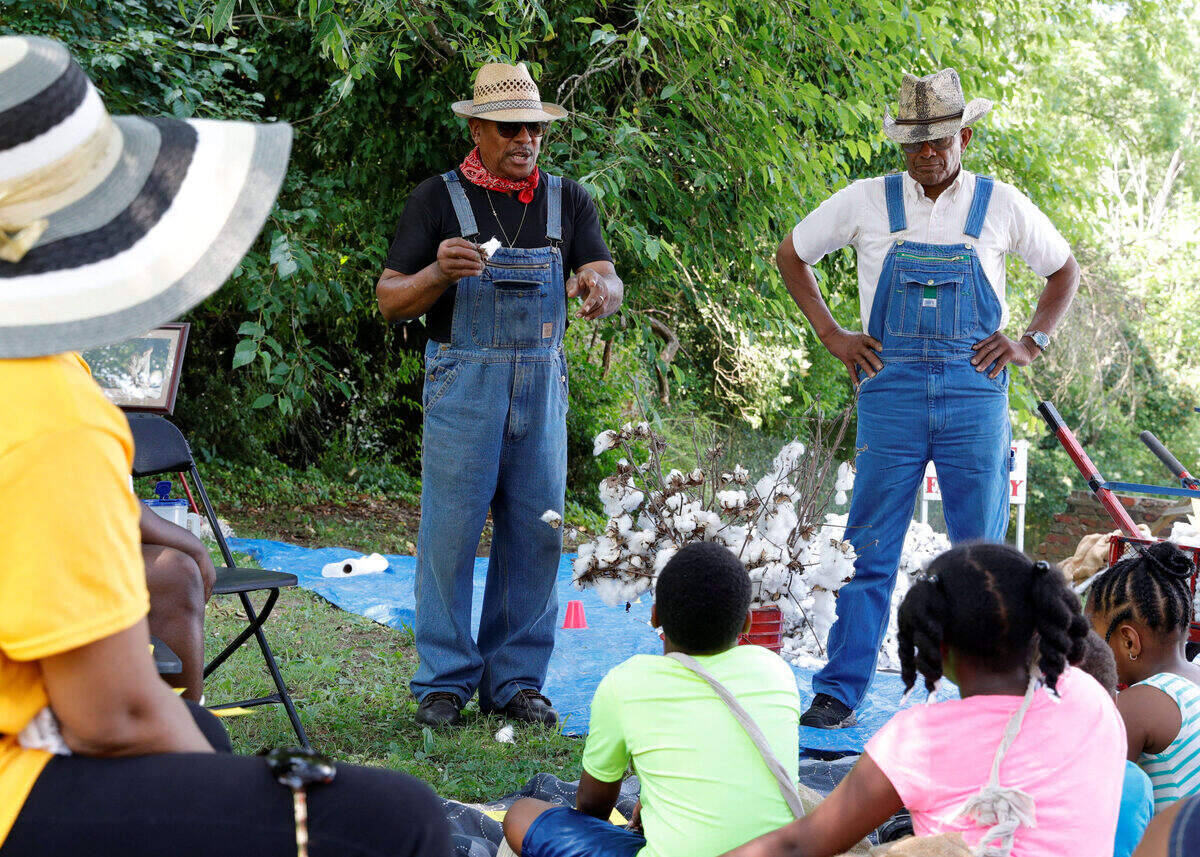
The legacy of Juneteenth
Slavery didn’t officially end nationwide until Congress passed the 13th Amendment to the U.S. Constitution in late 1865. Still, the events in Galveston earlier that year marked a turning point in the march toward freedom.
“It’s more than just a day in June in 1865,” Lee said. “It’s not really about 1865 anymore.”
Many people emancipated back then wouldn’t fully have understood what freedom meant, he said, having never lived it. Formerly enslaved people would’ve had families to reunite and uncertain futures to plan, he said.
Regardless of race, Lee said, people should be able to see the humanity in what Juneteenth represents. “We need to know that we’re trying to honor each other,” he said.
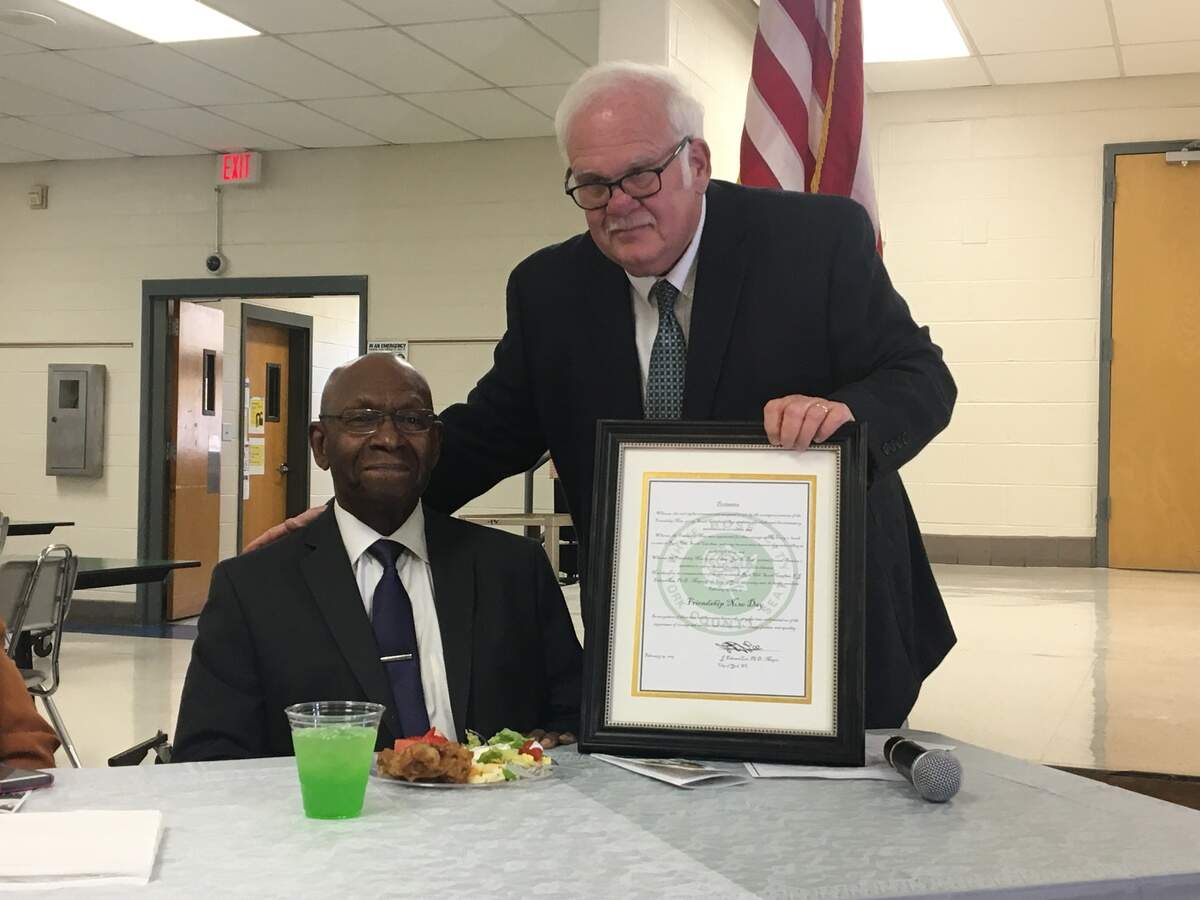
Celebrations with food and music are fitting now, Oborokumo said, because that’s how formerly enslaved people greeted the news of their freedom back then.
“It was then, and we want to continue to do that now, and pass it on to the next generation,” she said. “I can just imagine what it was like, with the history of this nation.”
The former councilwoman sees Juneteenth as a critical lesson within the Black community.
“For other people, if they really want to know the history of this country and the things that happened, this is a way for them to be informed,” Oborokumo said.
Slavery was an awful practice, she said, but there is pride in knowing Black communities came here to help build the nation. What people on either side of the first Juneteenth went through created resilience, strength and pride, she said.
“They made it through, and now here we are,” Oborokumo said. “It is a part of our history that we don’t want to let let go by the wayside.”
This story was originally published June 18, 2025 at 5:00 AM.