Rock Hill region, and all of SC, moves into severe drought as conditions worsen
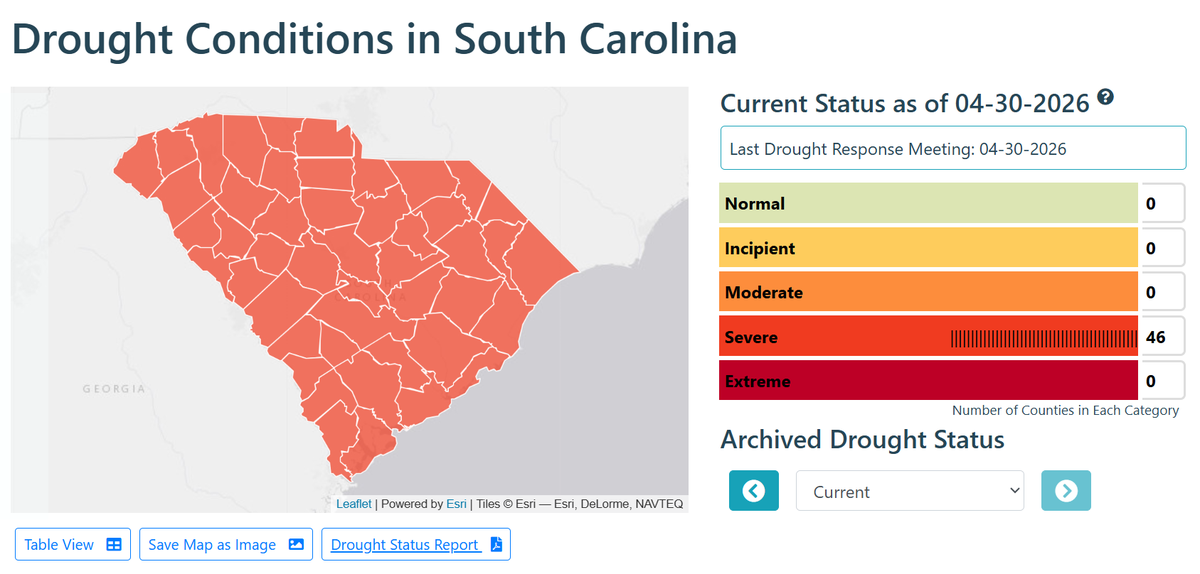
The Rock Hill region and the entire state of South Carolina is now in severe drought, following an upgrade on Thursday from the South Carolina Drought Response Committee.
South Carolina lists drought in order of severity from incipient to moderate, severe and extreme. The drought response group listed all 46 counties in the state as having moderate drought on April 9. Every county was upgraded when the committee reconvened Thursday.
Drought listings are based on stream flow, farming impact, wildfire conditions and of course most noticeably, recent rainfall. From September to March the state got less than half the rain it typically does, making it the driest span between those months on the 131-year record, the South Carolina State Climatology Office announced this month. Rain has remained sparse since.
The statewide listing is one of several indicators showing drought conditions in South Carolina. The U.S. Drought Monitor uses a five-stage listing of drought conditions. It shows a spot near the southern tip of the state, covering parts of five counties, in the most severe category on that scale — exceptional drought.
York, Lancaster and Chester counties are one rank lower, in extreme drought.
Drought conditions in Rock Hill area
Yet another drought monitoring group has a more direct impact on water users throughout the Rock Hill Region.
Duke Energy and municipal water providers partner for a low inflow protocol system to conserve water during dry seasons. As ratings become more severe there, mandatory water use restrictions can be instituted by cities or counties that provide water.
Duke Energy moved to Stage 1 of its protocol on April 16. That listing asks people to voluntarily reduce water usage like watering lawns.
Some of the region’s largest lakes are dipping as a result of drought.
Duke Energy typically aims to maintain lakes at about three feet below their full pond, or point at which lakes would flood if they continued to rise. Lake Wylie and Lake Norman are more than five feet below full pond on Thursday afternoon.
Both lakes are less than two feet above their critical minimum levels. If lakes drop below that point, there can be threats from public drinking water intake exposure to lake access points closed for boaters.
The drought is widespread and doesn’t follow county or state lines.
Charlotte is facing some of the driest conditions across North Carolina too, according to the Charlotte Observer.