Did all that rain help extreme drought in Charlotte region? Only a little
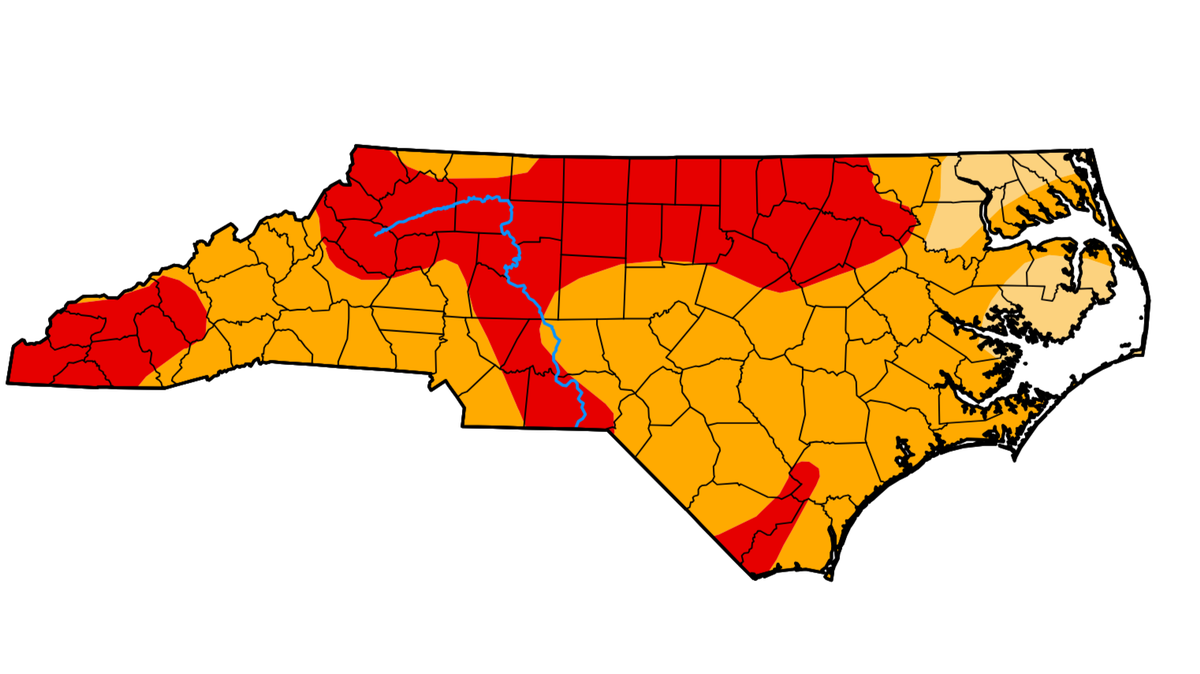
A week of rainy weather across the Charlotte region has brought the first meaningful improvement to drought conditions in months, according to new federal data released Thursday.
Still, much of the area remains in severe drought after an unusually dry stretch dating back to last year. The latest U.S. Drought Monitor map showed Mecklenburg, Cabarrus, Union and Gaston counties improving from mostly “extreme drought” to “severe drought” over the past week. Areas of “exceptional drought,” the worst category on the monitor’s five-level scale, also disappeared from North Carolina entirely after widespread rainfall across the state.
Still, forecasters say the recent rain has only begun to chip away at a much larger long-term rainfall deficit, which at its worst was about 17 inches for the region.
“When you get these several days of rain in a row like that, it does make a difference,” said Rodney Hinson, a meteorologist with the National Weather Service in Greenville-Spartanburg.
Charlotte recorded about 4.9 inches of rain during May, above the city’s typical monthly rainfall total, Hinson said, and there’s more rain to come this week. But the Charlotte area still remains well below normal for the year overall.
The drought intensified steadily across North Carolina throughout the spring after months of abnormally dry weather. Earlier this month, portions of the Charlotte region had reached “extreme drought,” while parts of Cabarrus County and central North Carolina briefly entered “exceptional drought.”
The drought led some local governments and utilities to implement mandatory water conservation measures including in Charlotte, Cabarrus, and Gaston County as reservoirs, streamflows and soil moisture declined.
The restrictions generally target nonessential outdoor water use, including lawn irrigation, home car washing and pressure washing. In many communities, residents may only water lawns during limited overnight hours on specific days, while some activities like filling decorative water features or washing driveways are prohibited entirely.
Hinson said stretches of rainy weather help improve some drought indicators relatively quickly, particularly streamflows. The next step, he said, would be returning groundwater levels to normal.
Drought recovery is often slower than drought development. A few days of heavy rain can quickly green up vegetation, refill creeks and reduce wildfire danger, but it can take much longer for deeper groundwater supplies and overall rainfall deficits to recover, Patrick Moore, another meteorologist with the National Weather Service in Greenville-Spartanburg, previously told the Observer.
The current drought developed through a combination of missed tropical rainfall last fall and a relatively dry winter influenced by La Niña weather patterns, Moore said. Spring and summer rainfall can also be inconsistent because thunderstorms tend to be scattered and uneven.
“In that kind of situation, there are winners and losers,” Moore said. “Some people will get a lot of rain because they might get more than their share of thunderstorms, and some people won’t get very much rain because, for whatever reason, the showers and thunderstorms happen somewhere else.”
Even so, forecasters say the weather pattern now appears more favorable for continued improvement than it did earlier this spring. Hinson said he expects daily chances for showers and thunderstorms to continue over the coming days into early next week, which could help gradually improve conditions further.
“We’re certainly looking at a wetter period for the next several days,” Hinson said. “Hopefully those trends continue.”
This story was originally published May 28, 2026 at 12:03 PM with the headline "Did all that rain help extreme drought in Charlotte region? Only a little."