
Ambulance calls in Rock Hill region can lead to long ER waits, no guaranteed destination
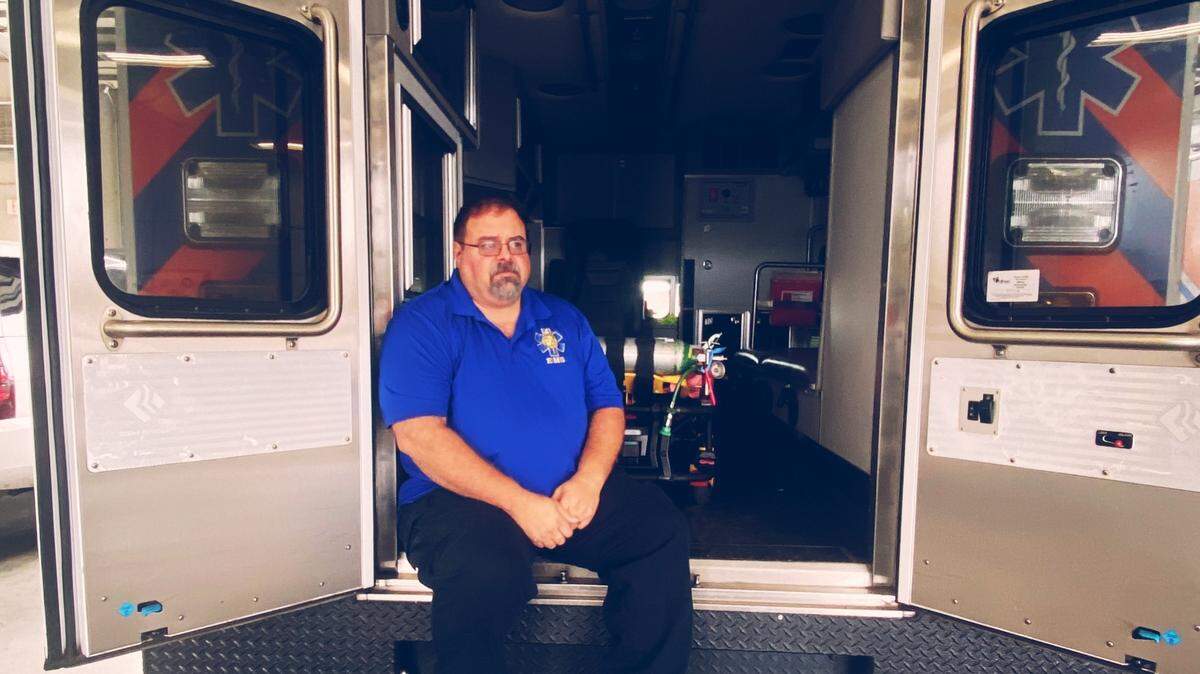
If you call for ambulance service in the Rock Hill region, you’ll probably get a quick response, then face delays getting hospital care.
A recent joint statement from South Carolina Department of Health and Environmental Control (DHEC), the S.C. Hospital Association and the S.C. Emergency Medical Services Association addressed the problem of ambulances taking patients to already-crowded hospitals.
“There is no one-size-fits-all response to this dynamically complex issue,” the statement said. “We are exploring options that include patient education on appropriate (emergency medical services) and (emergency department) utilization, alternate transport options, as well as treatment in place, but these situations are not an immediate fix.”
The three organizations say they will continue to communicate and work to find solutions.
Officials who work with the emergency vehicles say people in the Rock Hill region can be assured an ambulance will arrive quickly when called. If ambulances in one county or township are in use, emergency management services from nearby areas will step in.
But most patients will end up waiting in the ambulance for 45 minutes to an hour. And that time could stretch up to two hours. Least serious cases will be directed to the waiting room before being moved into a treatment room.
“Turnaround time” is the period it takes an ambulance to pick someone up, drive to a hospital, and get the patient into an emergency room.
In Chester, the current ‘turnaround’ time for an ambulance is 45 minutes. Before the pandemic last summer, Britt Lineberger, director of Chester Emergency Medical Services, said turnaround time was about 15 minutes.
Lineberger’s job includes coordinating Chester’s ambulances, which run 24-hours, out of three stations -- in the city of Chester, Great Falls and Richburg. He also manages equipment, funding and personnel.
Chief of Fort Mill Emergency Medical Services Tim McMichael estimates that, as of Oct. 5, it took 15 minutes for ambulances to pick up patients in Fort Mill. (There is no formal data collection on this time estimate.)
At a briefing earlier this month, DHEC said the new Delta variant is causing the majority of hospitalizations in the South Carolina. Hospitals in this region have quickly filled.
That has led to another problem: There’s no guarantee you’ll land at the hospital you request.
As emergency rooms reach capacity, patients picked up in York, Lancaster or Chester counties can end up anywhere in the tri-counties. Emergency rooms in surrounding counties like Union, Richland and Mecklenburg (across the border in North Carolina) also are experiencing unusually-long wait times, officials say.
Staff manning the ambulance -- first responders who are either EMTs or paramedics -- will wait with the patient until they are taken in the hospital.
One caveat: Serious cases, like cardiac emergencies, strokes or trauma, are treated upon arrival, Lineberger said.
When should I call for ambulance help?
Lineberger says patients with cold or flu-like symptoms, who are not having trouble breathing, should not to call an ambulance.
“I would say don’t go (to the emergency room),” he said. “Go to your family doctor. Don’t take up resources. That’s where the problem comes into play. The emergency room is not a family doctor. It is not supposed to be. Please leave those resources because we’re so limited.”
However, people with more serious medical problems, even if the situation does not seem life-threatening, still should call, Lineburger said.
“Although we’re going to be with the patient longer, we’re trained to help ... We’re providing medication. Even for something like, let’s say, a hip fracture, a femur fracture, any kind of fracture. We can provide pain management, as opposed to waiting for 45 minutes to three hours before you get in (the emergency room),” he said.
Little flexibility for ambulance workers
Traditionally, a hospital that is crowded would let emergency service workers know the hospital is on “diversion.” That means ambulances are urged to seek a different hospital.
Lineberger said it’s not uncommon for all of the region’s hospitals in Chester, Lancaster, York, Union, Richland and Mecklenburg counties to be on diversion.
Ambulance services try to honor a patient’s request for a specific hospital. If the hospital were in “diversion” category, medics once would encourage patients to avoid that hospital.
“We can’t do that anymore,” McMichael said.
McMichael said the S.C. Department of Health and Environmental Control Bureau of EMS sent out a memo about three months ago, reminding first responders that diversion is “just a notification,” not a requirement.
When all the hospitals are in diversion status, first responders must pick the best option. That has led to situations where ambulances with patients are lined up outside the emergency room entrance.
The recent joint statement from South Carolina Department of Health and Environmental Control (DHEC), the SC Hospital Association and the SC Emergency Medical Services Association said: “EMS recognizes the need to decompress hospital capacity as well as the role EMS plays in delivering patients to hospitals that are already at or near capacity. EMS systems are encouraged to honor hospital diversion requests when possible; however, there are situations in which EMS flexibility is not possible.”
As of last Tuesday, DHEC data reported that acute hospitals -- hospitals prepared to take critical patients, some coming by ambulance -- are at 80.5% capacity.
“If there’s more patients that are taking up those beds, for a longer period of time, that kind of backlogs everybody else,” Lineberger said. “If they don’t have any place for them to go ... that kind of back fills. Everything backs up into the ER, which is our entry point. That is going to create the bottleneck right there.”
Data gathered in a recent report done by The New York times shows that Piedmont Medical Center in Rock Hill is at 86% ICU capacity. MUSC Lancaster is currently also at 86% ICU capacity. There is no current data available for MUSC Chester.
Ambulances in the Fort Mill and Rock Hill area also take patients to hospitals in Charlotte. Atrium Health Pineville has an overfull ICU at 108% capacity. The ICU at Novant Health Mint Hill Medical Center in Charlotte is at 94% capacity. And Carolinas Medical Center ICU in Charlotte is at 90% capacity.
It’s important to remember that even if ICUs are not completely full, there usually is a shortage of ventilators, and there is not always enough staff to handle every patient, officials say.
A shortage of hospital staff, emergency medical service employees, and delays in training new employees due to the pandemic also contribute to delayed treatment.
The problem is complicated, and it’s not just specific to the area, or the state, McMichael says. “This is an industry wide problem.”