Rock Hill native embodies region’s Black History in life, legacy and daily activities
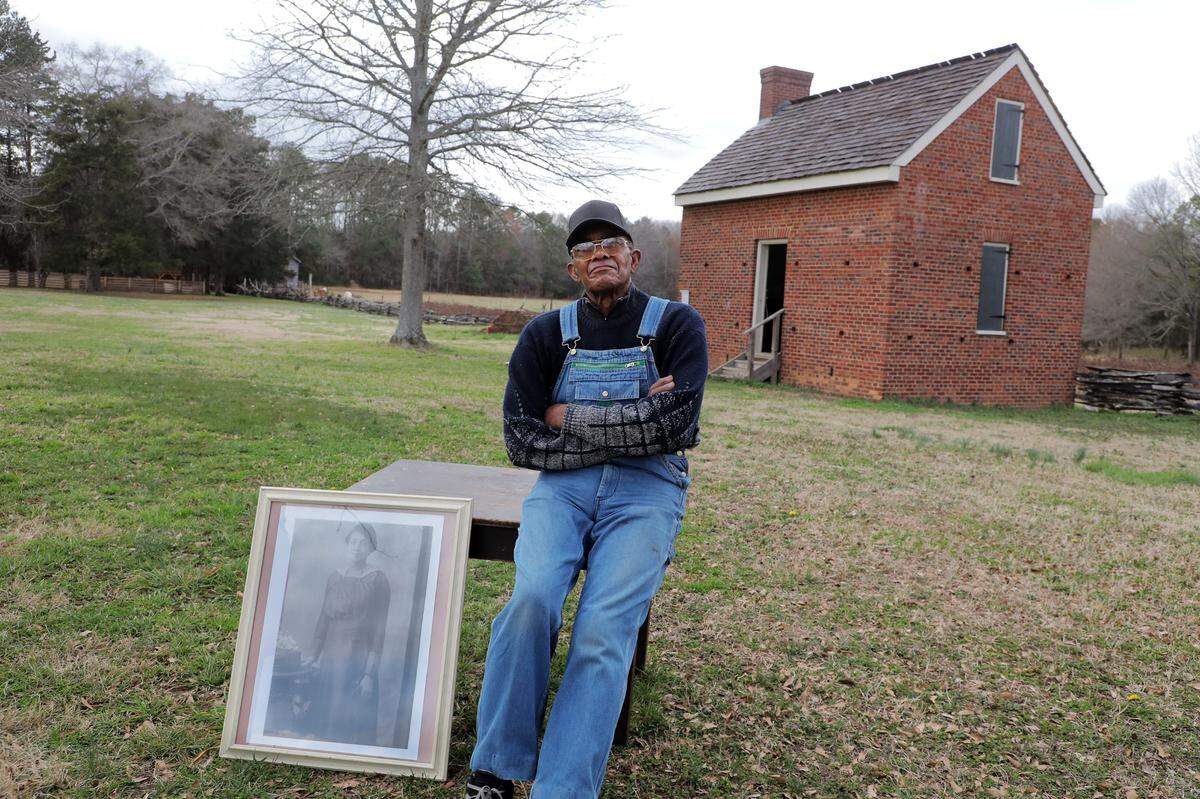
Wali Cathcart recently sat just outside the door of what once was a small brick slave house at Historic Brattonsville. On this warm February afternoon, he described how living on a plantation affected his great-grandparents -- both slaves.
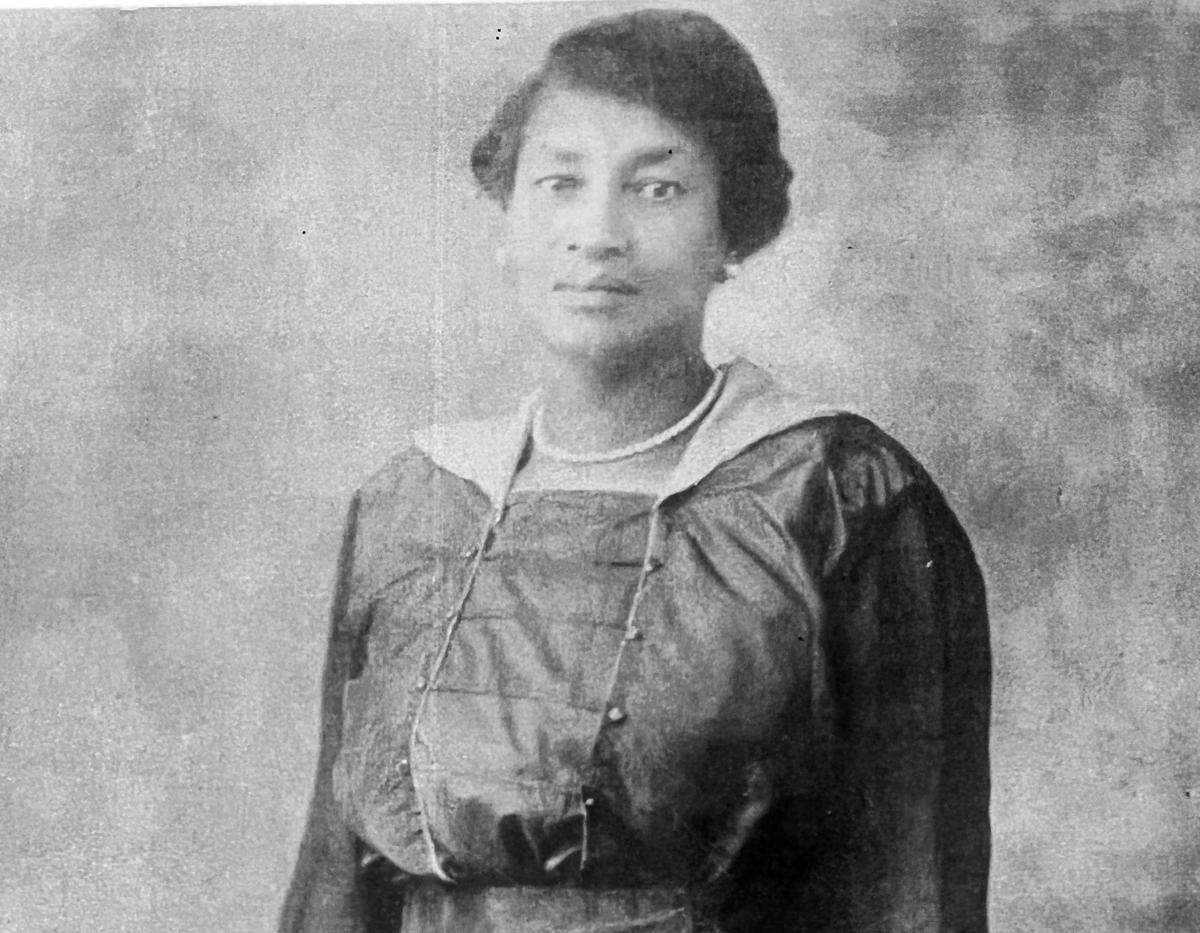
A large antique portrait of a young Black woman wearing an elegant dress was propped against a table. The woman is Cathcart’s grandmother, Fannie. She was born shortly after slavery ended. Fannie is the daughter of Lila, a slave on the Brattonsville Plantation.
Cathcart’s presentation was part of Brattonsville’s “By Way of the Back Door” living history program -- part of Black History Month.
Historic Brattonsville, not far from Rock Hill, S.C., was a plantation owned by the Bratton family from the 1760s to the late 19th century.
Cathcart’s role is to share the history of the people who were enslaved there, namely his great grandmother. An 84-year-old Rock Hill native, his knowledge is vast. He heard authentic history from his grandmother and others.
Cathcart has a passion for storytelling. He talks about his own family’s history, Black American history, the history of Brattonsville and the grade school he attended. He also has real-life experience, and history, with his other passion -- baseball. He played with a historically famous professional baseball player, Joe Black, in the 1950s, during the time of what now is known as the “Negro Leagues.”
Roots traced to Brattonsville Plantation
Cathcart said he doesn’t know much about his great-grandmother Lila.
Her family was tight-lipped about the woman who was 23 when the slaves were freed and who gave birth to two children, Daniel and Matilda, both fathered by the white Bratton men, Cathcart said.
Both children were born into slavery.
“Many people didn’t want to talk about the issue of slavery,” Cathcart said.
He said he could not remember his father ever mentioning Lila.
“Was she being blamed for having children by the white Bratton masters?” Cathcart asked. “It was not her fault … she could not be held responsible.”
Cathcart said he and other descendants of people enslaved at Brattonsville have identified eight families who trace their roots to the plantation.
“It’s been hard to get enough participation from each family because of the issue of slavery. Many of our people don’t want to deal with the subject. There are those who don’t want to come because of the word plantation and slavery is you know, a phobia — it turns them off,” Cathcart said. “But we’re working around that trying to get them to understand that there is so much here that they could learn from, and help the future generation and the children understand.”
Cathcart’s son Christopher Cathcart, 58, lives in Los Angeles. He says his father always made sure he and his sister, Mitzie Allen, knew history in general, and the family’s history.
“As an African American, you often know you have a history,” Christopher Cathcart said. “You very seldom know names…very seldom can you say ‘OK, I can trace part of my lineage to that very specific place.’”
Knowing Lila’s name “makes it a bit more real,” he said. “That is different, that’s just unique.”
Christoper said knowing the details of his family history empowers him.
“It doesn’t get emotional,” he said. “It’s more like enlightenment.”
After the Emancipation Proclamation, Lila and her husband, Larkin Crawford, had a family and stayed nine years at Brattonsville where they worked as sharecroppers. Then they moved to York and Tirzah.
Wali Cathcart’s grandfather Lawson Cathcart, Fannie’s husband, told him when the slaves were freed, chaos erupted. Larkin told him stories about Union soldiers occupying the area.
“They continued to live here after a bit of freedom... What else was there to do?” Cathcart said. “Now what? What do they do? No education. Where are they going? It was chaos.”
Cathcart called sharecropping a graded-down version of slavery, because if you study it closely, it was a “perpetual situation,” he said.
Based on Census records, Lila lived through the 1870s, Cathcart said. But he does not know when she died. Great-uncle Daniel died when Cathcart was 13. His great-aunt Matilda died in 1937 when he was an infant.
Both lived in Rock Hill until they died.
Growing up in Rock Hill
Cathcart lived at the York County farm his grandparents and uncle Larkin Cathcart bought 1924.
His grandparents, Fannie and Larkin, received insurance money after one of their sons died in World War I and his uncle had money saved from his job working for a railroad company.
Cathcart attended the Carroll Rosenwald School in rural York County — a school for Black children that went up to seventh grade.
The school was one of nearly 5,000 Rosenwald schools built in 15 states through a collaboration between Booker T. Washington and Julius Rosenwald, president of Sears, Roebuck and Co., according to the National Trust for Historic Preservation’s website.
The Carroll Rosenwald School now serves as a field-trip destination for fifth-graders in the Rock Hill school district. Students learn about life during the Great Depression.
Cathcart graduated from Emmett Scott High School, a segregated school for Black teenagers, in 1955. During summers, his cousin from New Jersey would visit the farm.
That’s where Cathcart’s passion for baseball emerged.
Cathcart first played at Carroll Rosenwald School and then later for an agricultural team because Emmett Scott did not have a baseball team.
Like many baseball fans, Cathcart says he was ecstatic when Jackie Robinson was recruited by the Brooklyn Dodgers, a formerly whites-only baseball team.
In 1955 when Cathcart was planning to leave rural York County, baseball teams were segregated. Major League Baseball was only for white people. Black men played for what was then-called the “Negro Leagues.”
When the Major Leagues started to desegregate, the Negro Leagues began to fold, Cathcart said.
“When Jackie Robinson signed, African Americans throughout this country, well, I guess you would say, were euphoric about that — a black man playing in the Major Leagues,” he said.
Cathcart said he, like many Black people, was a huge fan of the Brooklyn Dodgers.
Cathcart and his cousin Lindward wanted to play for their favorite team. They decided they would take over the left side of the infield because Jackie Robinson, sooner-than-later, would be too old to play.
In 1956, Cathcart moved to Plainfield, New Jersey, to become a professional baseball player. He said he got to play semi-pro for a couple of years.
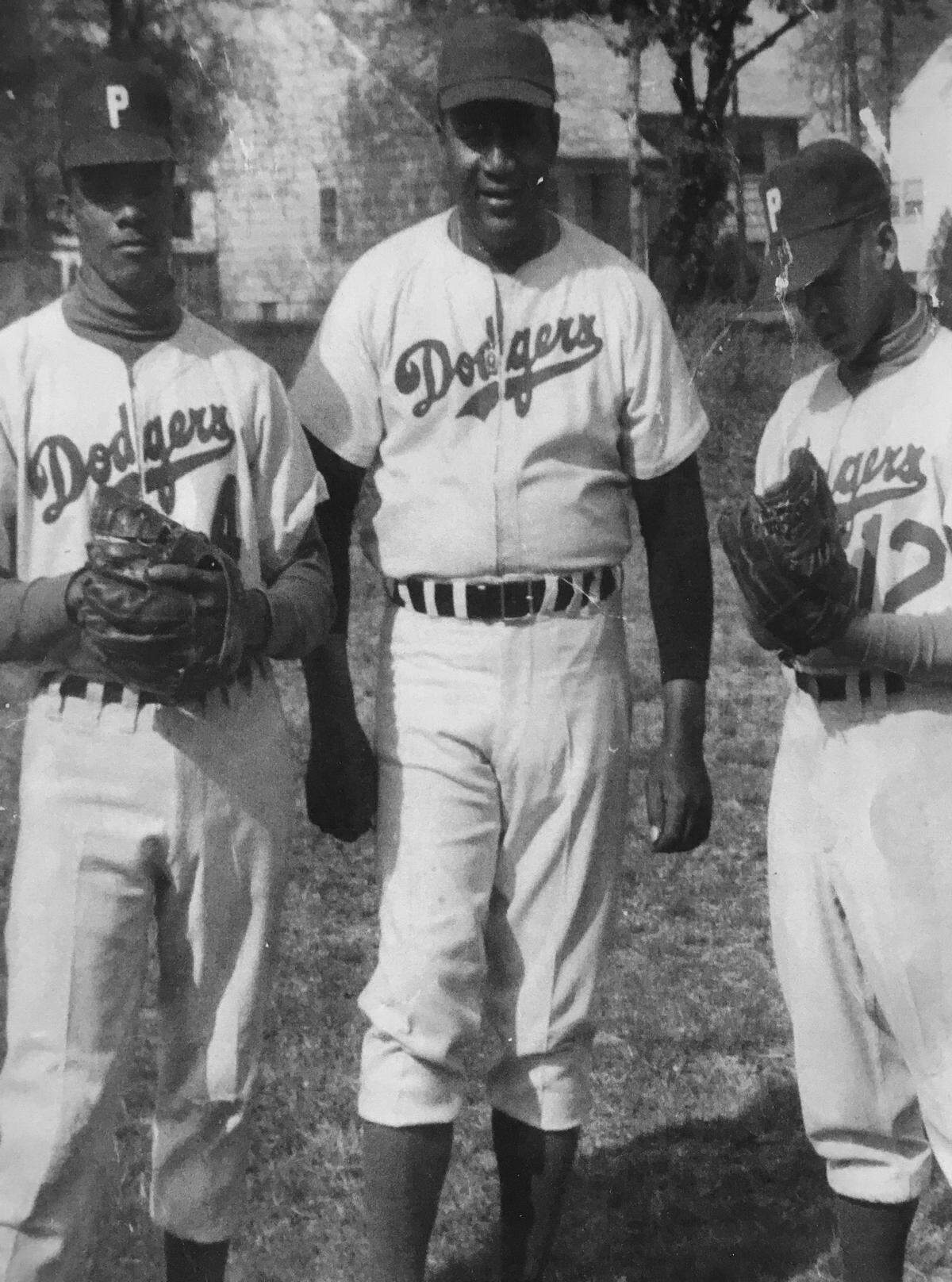
One day at the ballpark, one of his heroes walked by. That hero was Joe Black, another Brooklyn Dodgers player.
“That was Joe Black!” Lindward said. “And I said, what?!” Cathcart said.
Black in 1952 became the first African American pitcher to win a World Series game.
Cathcart and his cousin asked Black to work out with them and manage their team. Black formed the Joe Black National League All Stars in 1959. He invited Cathcart and Lindward to be on the team, which played teams in what was left of the Negro Leagues.
“People wanted to come out to see the great Joe Black and his team,” Cathcart said.
One of his best memories playing baseball was during an afternoon game in Chester, Penn. Joe Black was going to pitch the first few innings and be relieved by Cathcart.
“Well, this particular game, I had a terrible headache,” he said. “I couldn’t shake that for nothing.”
Cathcart said he warmed up in the batting pin and after a few throws, the headache disappeared. That night, no one could touch him, he said. His aim was near-perfect.
“And when I came out, I had to fight my way to the dugout,” he said. Children were holding up autograph books to get his signature. “I didn’t have time to sign all of those autographs, there were too many.”
Doing what he truly loves
Cathcart and his wife Elizabeth lived in New Jersey and had Christopher and Mitzie. Then came tragedy. Elizabeth developed a brain tumor and died when she was 31 years old, making Cathcart a single dad.
Christopher was eight years old.
“He made sure that while we understood that it was a terrible loss, he didn’t allow for that to be a crutch for us,” Christopher said.
Cathcart moved back to his family farm in York County in the 1990s, where he now cultivates vegetable gardens and hosts children in church and community groups to teach them about gardening.
He has volumes of family archives, documents and photos on display.
He has census records, birth certificates, death records, charts, programs and photographs.
“If we don’t learn anything, it’s not because of him, it’s because we don’t apply ourselves,” Christopher said. “But he does all he can to expose us all to that history.”
Christopher Cathcart said his father has become a leader, taking on the responsibility to teach his family history.
“And I hope that, you know, myself and the rest of my cousins, my sister, we can help further build it,” he said.
Wali, a grandfather of two children and great grandfather of three, spends twice-a-week teaching children at the old Carroll Rosenwald school. He talks to groups taking tours at Historic Brattonsville. He has always been involved with the community, Christopher said.
“He has the opportunity to spend a great majority of his time doing the things that truly define him, and that he truly loves,” Christopher said.
This story was originally published February 25, 2022 at 4:06 PM.