‘So glad the day is here’: Alums honor the memory of Fort Mill’s segregation-era school
John Sanders III still recalls the classrooms on the outer edge of the school, the large windows where passers by on Steele Street could see the early-grade students at George Fish School.
“Where the sun is rising,” Sanders said, “you get all the light.”
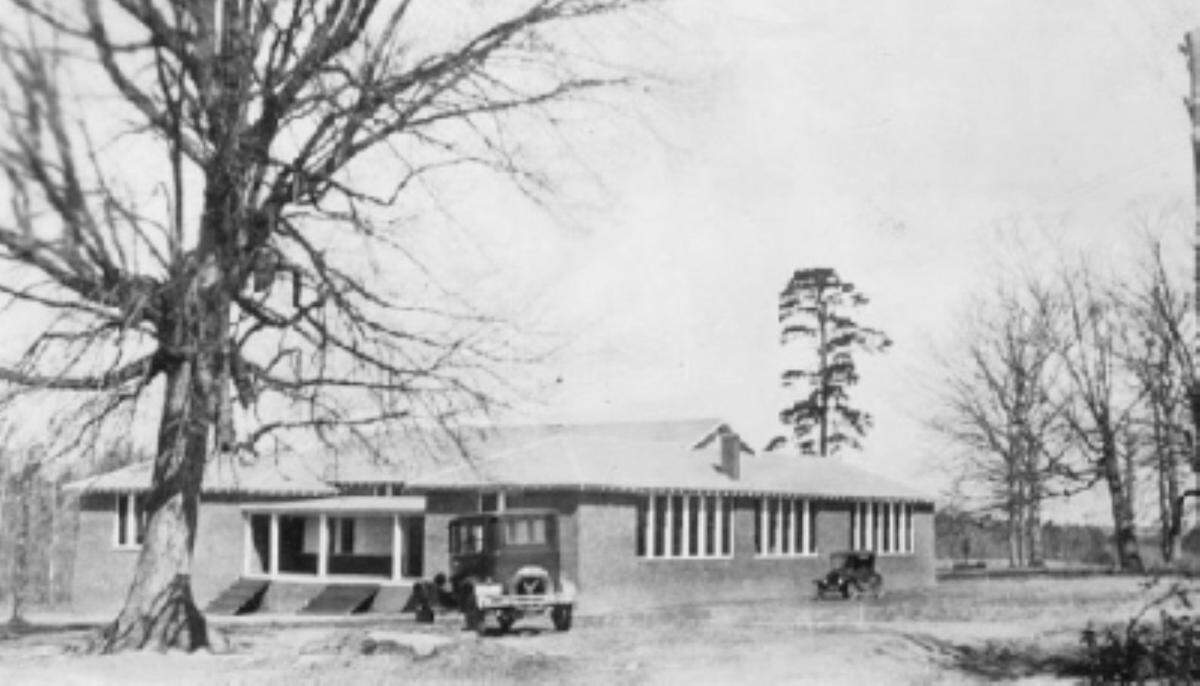
A new light shone on the school Monday, thanks largely to alumni like Sanders. A new historical marker shows where the school stood and for decades educated Black students in Fort Mill. George Fish School opened in 1926. Students attended until 1968, after which the school was integrated and converted to Fort Mill Junior High.
Sanders, former George Fish Alumni Association president who graduated in 1964, joined a panel on Sunday as part of a two-day celebration of the former school, its faculty and students. So did Cora Dunlap Lyles, who attended the school from 1965 to 1967, then again as an integrated school for junior high.
Lyles, also part of the committee that helped install the new marker, told the panel discussion audience Sunday there was a difficult transition leaving George Fish for an integrated school. Not only for having been the only Black student in class for a couple of years, but because of the community and connection Lyles experienced at George Fish.
“I got a good education (after leaving),” Lyles said. “I made As. I did well. But I did not get that sense of someone truly interested in me as a person.”
Twins Doris Boulware Edwards and Dorothy Boulware Barrett, 1959 George Fish graduates, describe a similar sense of community.
“We’ve been looking forward to this day for a long time,” Barrett said at the marker unveiling Monday. “We’re just so glad the day is here.”
The sisters read names of former teachers from another marker on the site. They recalled people who taught sewing and how to lay patterns, a choir instructor, the junior play when students performed in old-fashioned clothes. They recall their time in the band color guard.
“We were so happy when we came to George Fish,” Edwards said. “The children were so nice to us. We couldn’t believe how happy we were.”
Edwards still exudes the personality of someone who won the title of Ms. George Fish her freshman and first year there, in 1959.
“That was a great year for me,” she said. “I rode in the Christmas parade. I enjoyed it.”
Edwards wasn’t the only one enjoying Monday’s event. Both sisters wore their school colors blue and gold. One man wore his sister’s George Fish basketball team jersey to the unveiling, in hopes she wouldn’t find out he acquired it from her at some point. After the Fort Mill High School band played the George Fish alma mater listed in its yearbook, alumni belted another one many of them still sang by heart all these years later.
For many over the two-day celebration, the memory of George Fish is both pleasant and difficult to reconcile. The property was sold in the 1980s and the building demolished. A Duke Energy office was later built on the site.
“I said if I could get one brick for a memory, just a brick,” Sanders said on Sunday. “When they cleaned it up, they cleaned it up. It was nothing. No bricks, no mortar, anything that gave a sign that it was a school there.”
Sanders said he was away when the school was sold and torn down.
“I have a feeling that there are a few people in here right now, feel like they have a hole in their heart because of what was snatched away and how it was quietly set up to disappear,” Sanders said.
Sanders said one of the great assets missed out on in Fort Mill are George Fish graduates who went on to successful careers in education or other ventures. In times of segregation, there weren’t the same options for successful students there are today.
“After they graduated, after they left Fort Mill, there was nothing in Fort Mill for them to come back to,” Sanders said.
The idea that many of the more successful graduates may have gone other places for at least large portions of their lives is part, alumni say, of how a school could be torn down and much of its history lost.
“There’s so many names,” Lyles said on Sunday. “So many families that this community will never know. They will never know that these people lived here, that they went to school, they had families. They will never know anything about them. And know that they did contribute to this town, to help build this town.”
Sanders said in his time at George Fish, it’s hard to compare the education he received to what a white student at Fort Mill High School would receive.
“I don’t know what the white schools had, but I know that the books that they used were passed down to us,” Sanders said. “During the time I was there one thing we didn’t have, we didn’t have typing. We didn’t have foreign language. So that was a disadvantage. Going off to school, those things were important at that time.”
Even the school colors were hand-me-down. The Dolphin mascot was unique, but blue and gold were the colors because George Fish got the old band uniforms from Fort Mill High.
What students did have, even from the beginning, were involved parents.
Ann Evans, archivist and curator for the Springs Close family, said the Black community contributed $240 toward the new building a century ago. White contributions were $100. The town put in $10,360 and another $1,500 came from Sears and Roebuck president Julius Rosenwald.
“Our parents, the community, they felt involved,” Sanders said.
Choirs, May Day programs, acting in plays — the community rallied around George Fish events, Sanders said.
“It was a festival fun for the whole community, and the community showed up,” Sanders said.
On Monday, the community showed up again. Black alums who graduated well before integration, Black students who bridged that period, Black and white students who attended junior high in the same building.
“This is just a memory that we will never forget,” Edwards said. “It will be cherished for the rest of our life.”
During the panel event Sunday, Sanders took a question on what photos he has of the school many in Fort Mill never saw before it was demolished.
“We were students,” Sanders said. “We didn’t have cameras. We didn’t have phones with cameras on it at that time. But I remember.”
For two days, so did the rest of Fort Mill. Through scarce photographs, scans from old yearbooks and in the descriptions from students who attended, George Fish School came alive again.
“It was amazing how it brought memories back,” Sanders said.
This story was originally published October 11, 2022 at 7:38 AM.