Pilot says plane lost power before landing in Catawba River in SC, NTSB report says
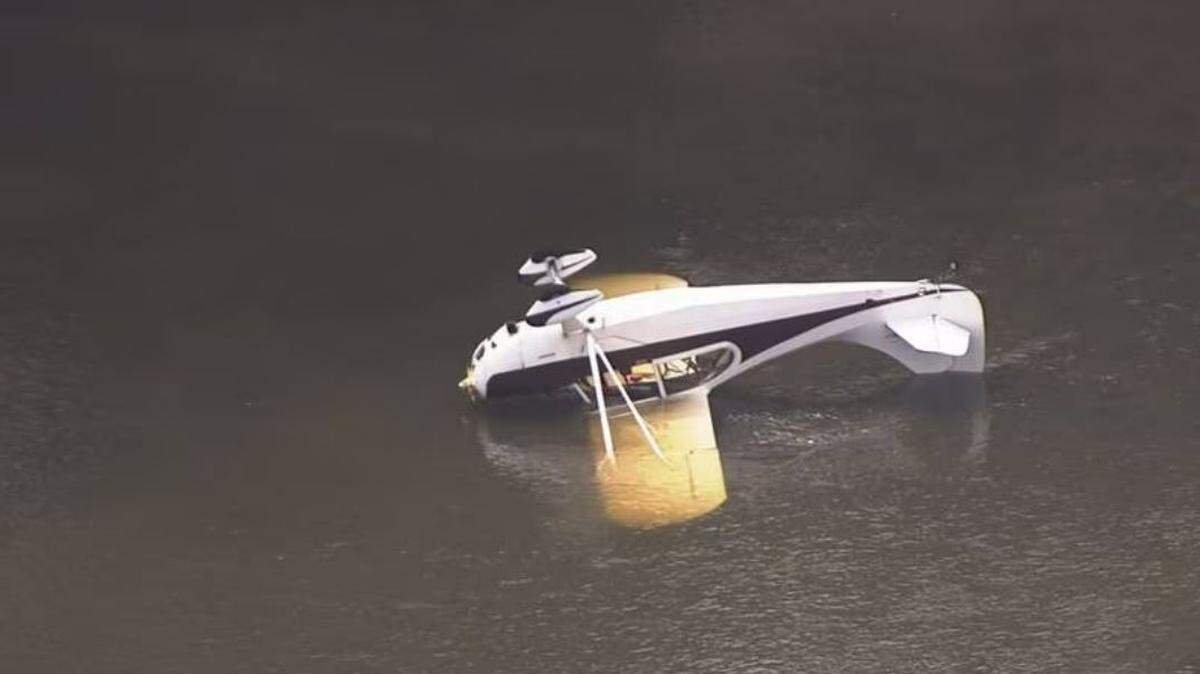
The pilot of a small plane that landed in the Catawba River in South Carolina in early May reported that the flight was “normal” until the aircraft lost power, a National Transportation Safety Board preliminary report says.
The pilot landed the plane in the water after initially considering landing in an open field or on a nearby golf course, the report states.
Peter Knudson, an NTSB spokesman, told The Herald Thursday that the term “no thrust” in the report means a loss of power.
The preliminary report does not include analysis or cause for what happened, Knudson said. A preliminary report lays out the known facts and circumstances, Knudson said.
The area of the river landing is close to Fort Mill, where the river separates York and Lancaster counties. It is south of the North Carolina state line.
The NTSB reported that neither the pilot nor passenger were hurt when the plane, identified as a Aeronca 7DC-CONV, landed on the water and overturned. The report did not identify the passengers.
However, the pilot has been identified as Kyle Anderson Stubbs, 29, of Georgia, and the passenger was Matthew Kyle McFaden, 38, of Charlotte, according to a Lancaster County Sheriff’s Office incident report.
Stubbs had a private pilot certificate, the NTSB report stated.
Efforts to reach McFaden, the Charlotte passenger, in the days after the incident were unsuccessful.
The small plane, which took off from Monroe, N.C., had been rented for the trip, the Lancaster sheriff’s office said in a May 5 written statement.
In the Lancaster sheriff’s incident report, the pilot told deputies he glided the plane to land in the river after engine failure.
“Kyle stated that they took off from Monroe and were headed to Lancaster when the engine failed for a yet undetermined reason,” the sheriff’s office incident report stated. “Kyle glided the aircraft without power as best he could and determined the river to be the safest place to ground the aircraft.”
Normal until no thrust
The pilot later was interviewed by a Federal Aviation Administration (FAA) inspector, the NTSB preliminary report states.
“The pilot described a normal’ preflight inspection, engine start, run-up, taxi, departure, and climb to about 2,000 ft mean sea level, where he established a heading toward his planned destination,” the report states. “Because of radio and airplane traffic at the destination airport, he amended his destination, and decided to descend and ‘follow the Catawba River.’ Once at his desired altitude, the pilot leveled the airplane, ‘…applied power and there was no thrust.’ “
The pilot originally selected an open area of fields and golf courses for the forced landing, but chose the river when he determined that the open area could not be reached, the report states.
“The airplane touched down in shallow water, nosed over, and came to rest inverted,” the report states. “The pilot and his passenger each egressed the airplane without injury.”
The FAA examined the plane and engine after the crash, the NTSB report states.
First of two Charlotte-area water landings
The Catawba River landing on May 5 was the first of two water landings for small planes in the Charlotte area in that month. The second was Wednesday.
The Charlotte Observer reported that two people in a small plane escaped injury Wednesday when a plane landed in Lake Norman, north of Charlotte.
What happens now?
The investigation into the plane landing in the Catawba River in South Carolina continues. A final report could be done in three to nine months, said Knudson the NTSB spokesman.
The report states that the information is preliminary and subject to change.
This story was originally published June 1, 2023 at 1:28 PM.