‘Soldier for justice’: Legendary Rock Hill civil rights hero Phyllis Hyatt dies
During the early 1960s, when young Black men marched for equality and pushed for an end to segregation in downtown Rock Hill, there were always young Black women protesting and marching, too.
They marched and were called racial epithets.
They did not yield.
They protested and carried signs and were spit on.
They did not quit.
Dubbed the “City Girls,” those women marched on their high heels and carried signs and were undaunted by the slurs because they wanted everyone to be equal.
One of those women, Phyllis Thompson Hyatt told The Herald she marched and protested for the betterment of all people and her hometown of Rock Hill.
“I marched not for myself, but for everyone to be able to eat together, live together and be friends,” Hyatt said in 2018. “It was not that we did not have lives, or joy, or families. We had that. We just wanted it to be together with everybody else.”
Hyatt died Tuesday at age 82. Robinson Funeral Home in Rock Hill, and Hyatt’s cousin and fellow City Girl, Elsie White Springs confirmed her passing.
But the legacy of what she accomplished in helping to demolish Jim Crow in her hometown and America, combined with her grace in forgiving those who taunted her will last forever.
Springs said Hyatt was proud to march among other young men and women for the rights of all people at a time when their actions were fraught with peril for their safety and futures. The two first cousins grew up together and remained close the rest of their lives.
“We felt even as young people that we had to do something,” Springs said. “Phyllis wanted so much to be a part of changing the world. And she did.”
The young men who marched in those days said the women marchers endured because they believed the world had the capacity to be better — for all people.
“Phyllis was a soldier,” said Rock Hill’s David Williamson Jr., one of the “Friendship Nine” male protesters who spent a month in jail in 1961 for protesting. “A soldier for justice, truth, and equality.”
The City Girls: Marchers for freedom
Hyatt and the other City Girls grew up in Rock Hill where they attended segregated Emmett Scott High School. They started marching in 1960.
At Friendship Junior College in 1961, those women marched alongside the young men from the school who became known as the “Friendship Nine.” The young men were arrested and convicted for sitting at a whites-only McCrory’s lunch counter on Main Street. The men spent a month at hard labor in the York County prison camp.
The women were kept away from the sit-in during that era because organizers were fearful of jail conditions for Black women Yet, these women were undaunted in their resolve to find equality for all people.
Hyatt told The Herald previously, how her mother worked in a Main Street store at the time she protested. So she knew some of the white teens her age at the store, but because of her race she was not allowed to sit and have a Coke at the soda fountain with the white people.
“We all knew that was wrong,” Hyatt said of segregation.
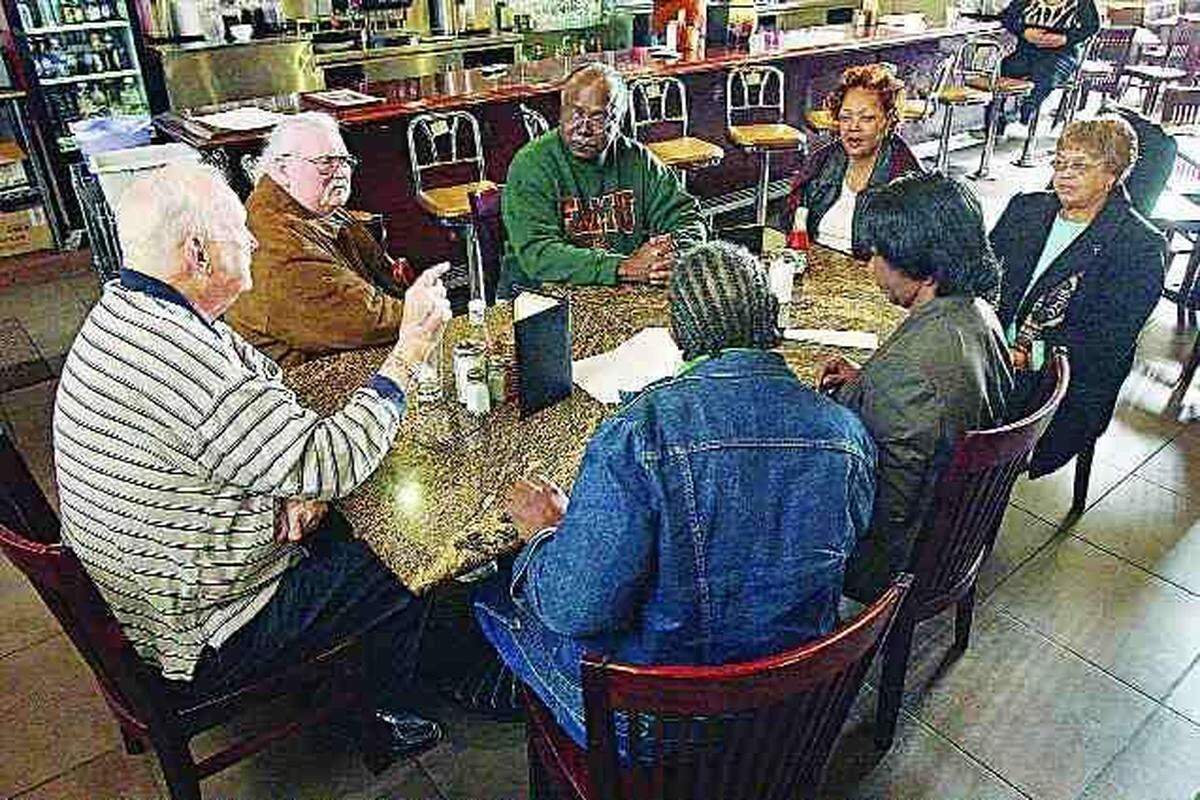
The strength and courage of Hyatt and others led to the end of segregation in Rock Hill and around the South.
The City Girls were Hyatt, Peggy Archie Long, Olivette McClurkin, Essie Porter Ramseur, Lucille Wallace Reese, Patricia Hinton Sims and Elsie White Springs. Rock Hill enshrined the City Girls on its downtown Freedom Walkway in 2018.
Hyatt’s grace reaches across America
Her story of forgiveness to those who refused to accept AfricanAmericans as equals became part of the national discussion on race after Barack Obama was sworn in as America’s first Black president in 2009.
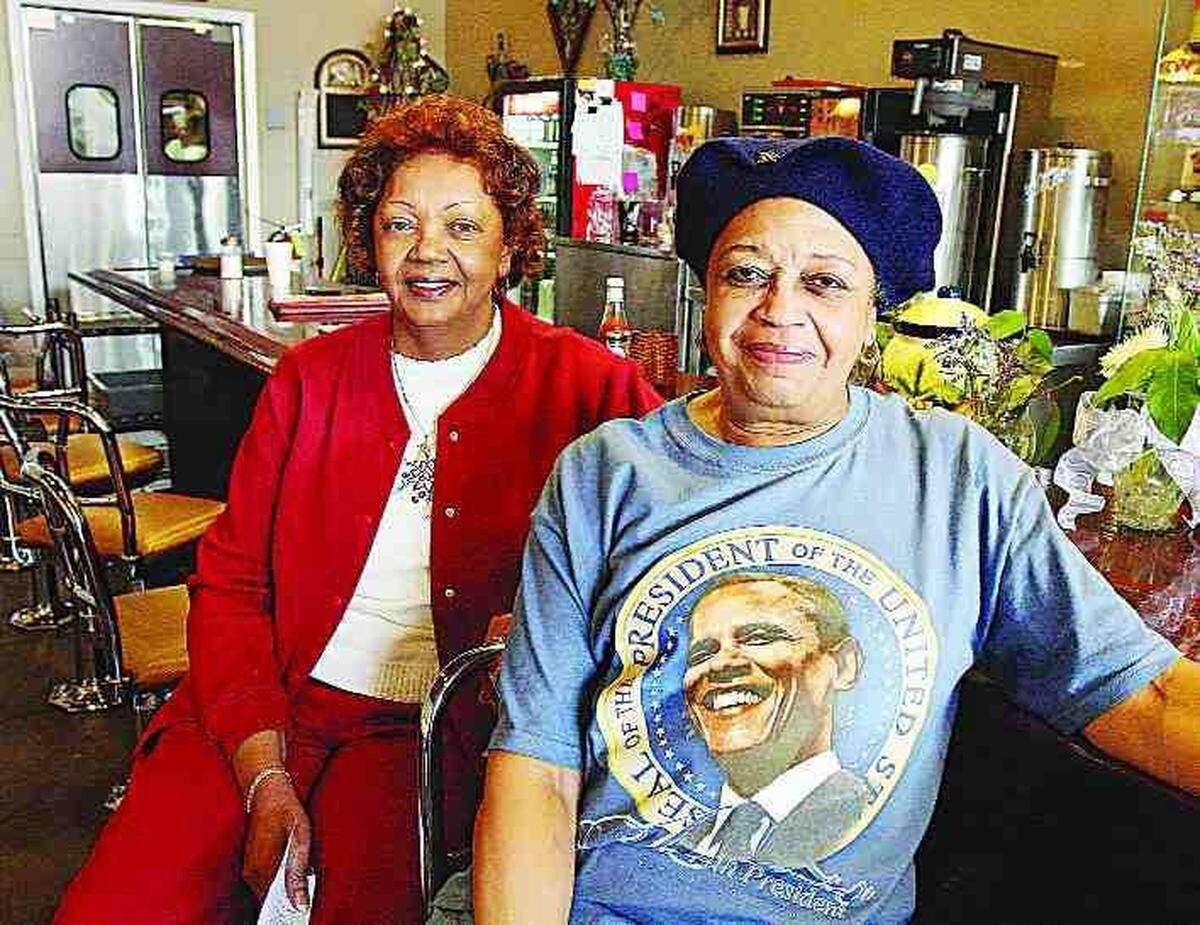
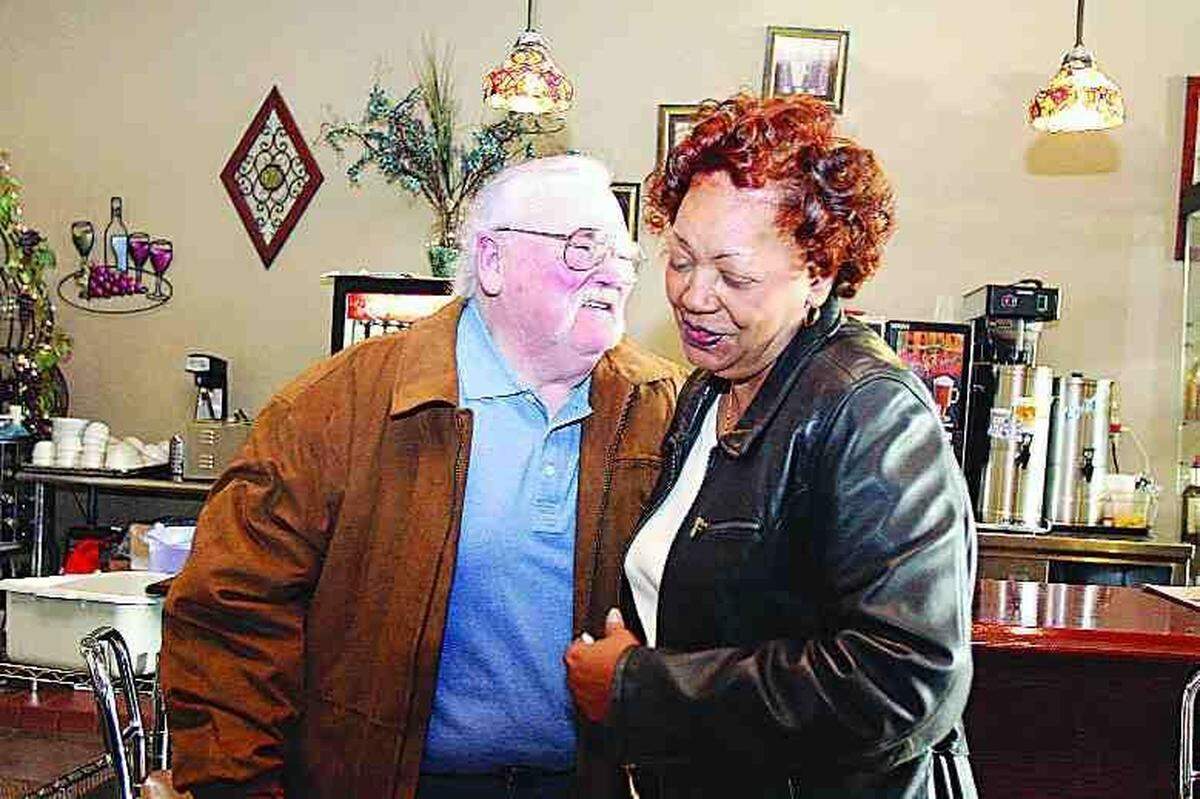
After a front-page story and picture in The Herald about Hyatt and Springs ran the day after Obama’s inauguration, two of the people who jeered and taunted her in the 1960s protests apologized in person to them and other African-Americans for their deeds and words.
“I thank you for coming forward,” Hyatt said that day in late January 2009 to those men, Elwin Wilson and Steve Coleman. “You are here. It makes a difference.”
And she not only accepted, she hugged those men.
Wilson also apologized to the late Rep. John Lewis of Georgia, who was a Freedom Rider in 1961 that Wilson punched in downtown Rock Hill. Lewis also accepted the apology.
After The Herald’s coverage of the apologies that were offered and accepted, the stories of redemption and forgiveness were picked up globally by ABC, the Oprah Winfrey show, the Associated Press and other outlets.
Afterward, Hyatt was invited to speak over the years at Winthrop University and many other places about her role in history.
Funeral arrangements for Phyllis Thompson Hyatt are incomplete and will be announced by Robinson Funeral Home.