
They’ve been spraying for mosquitoes on Lake Wylie almost a century. But not anymore.
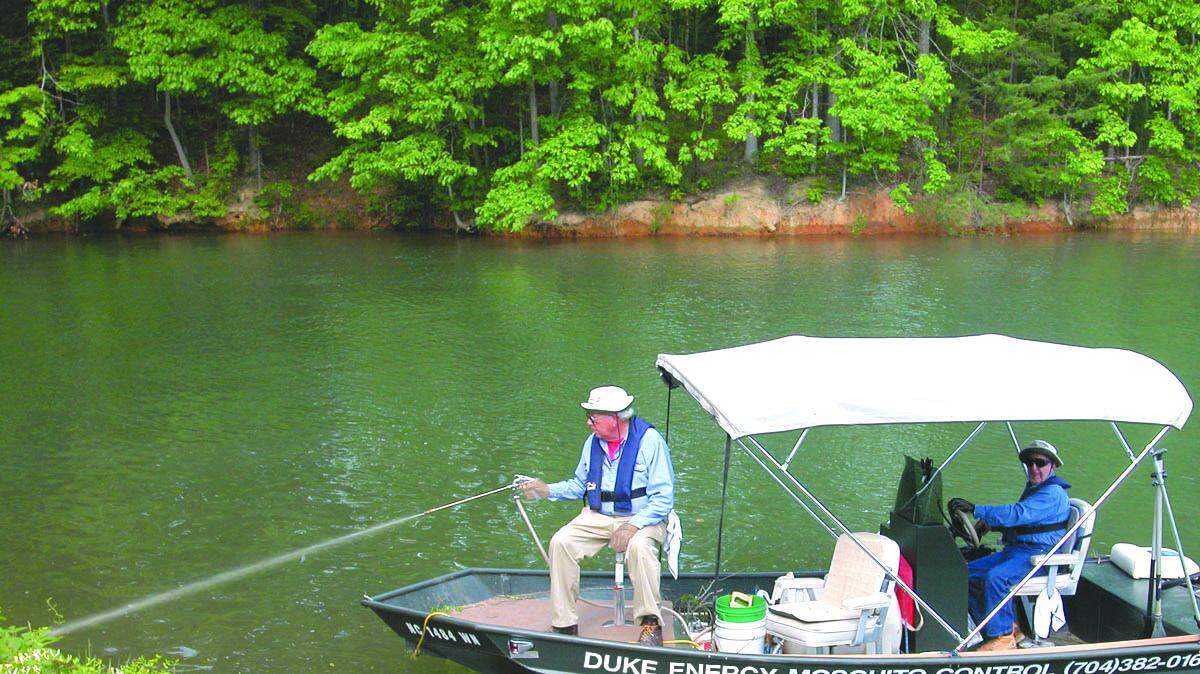
One of the oldest public health programs on Lake Wylie won’t continue into next year. Whether the move creates a buzz remains to be seen.
Duke Energy is reworking its mosquito prevention efforts. Since 1923, the company has been working to decrease mosquito populations on area lakes. In recent years and through October, crews sprayed larvaecide on potential mosquito-breeding areas of lakes Wylie, Wateree, Norman and James in the Catawba River basin, and Lake Keowee.
“That is a program we’re discontinuing,” said Kim Crawford, Duke spokesperson.
Instead, the company will focus on education in areas where mosquitoes can breed.
“More education to homeowners along the shorelines,” Crawford said. “The primary public health concern is really on the container breeders.”
The online description of Duke’s discontinued program explains multiple types of mosquitoes, offering detail on why the decision to reallocated attention from spraying to education was made.
“This program has proven very effective at controlling species of lake-breeding mosquitoes,” it states. “However, the backyard container breeders such as the small black Asian tiger mosquito continue to be a severe nuisance and public health threat to homeowners in all urban areas of North Carolina and South Carolina.”
Finances were part of the decision, too.
“Duke Energy regularly reviews its operations to ensure we are as efficient as possible and can continue to offer affordable rates and services to our customers,” Crawford said. “As part of this review, we have decided to change this historical program, which operated on only a few lakes.”
Lakefront resident Elke Hall first heard from neighbors, then from Duke, about the program ending. Hall questioned the timing of the decision.
“With the mosquito borne diseases arising in even greater numbers, it seems that mosquito control is even more needed now than 93 years ago, when the service was started by Duke,” Hall said.
Hall said seasonal workers have been doing an “extraordinary job” on the water, four days a week from spring to early fall. Often at temperatures of 100 degrees or more.
“They brought in bags and bags of trash every week,” Hall said. “Mosquitoes will breed in beer cans, cups, etc., which are floating in the lake and get washed up on the shore of the lake.”
Lake Wylie resident Connie Miller thinks there could be unintended consequences of taking mosquito control workers off the lake. Miller is involved with the Catawba Riverkeeper Foundation that annually puts on Riversweep, a volunteer clean-up event.
“They’ve helped Riversweep every year,” Miller said. “They can tell us where the trash is and where to send people. It was such a big help for us. Every year we use their information to map out where to pick up trash.”
Other groups like the Lake Wylie Marine Commission may benefit from having the mosquito folks on the water, too.
“There’s no one else that does that,” Miller said. “They know the area like no one else. They go to areas that no one goes to.”
Crawford said crews on the water spraying for mosquitoes could be used on a “case by case basis.” As for diseases like Zika, which Hall and Miller both mention, Crawford said it’s important to remember there are different types of mosquitoes.
The ones more commonly carrying disease, she said, are the “backyard container breeder” types the new, larger, system-wide education campaign is designed to prevent.
“The lake-breeding mosquitoes are more the nuisance breeders,” Crawford said.
John Marks: 803-831-8166, @JohnFMTimes
This story was originally published November 4, 2016 at 4:28 PM with the headline "They’ve been spraying for mosquitoes on Lake Wylie almost a century. But not anymore.."