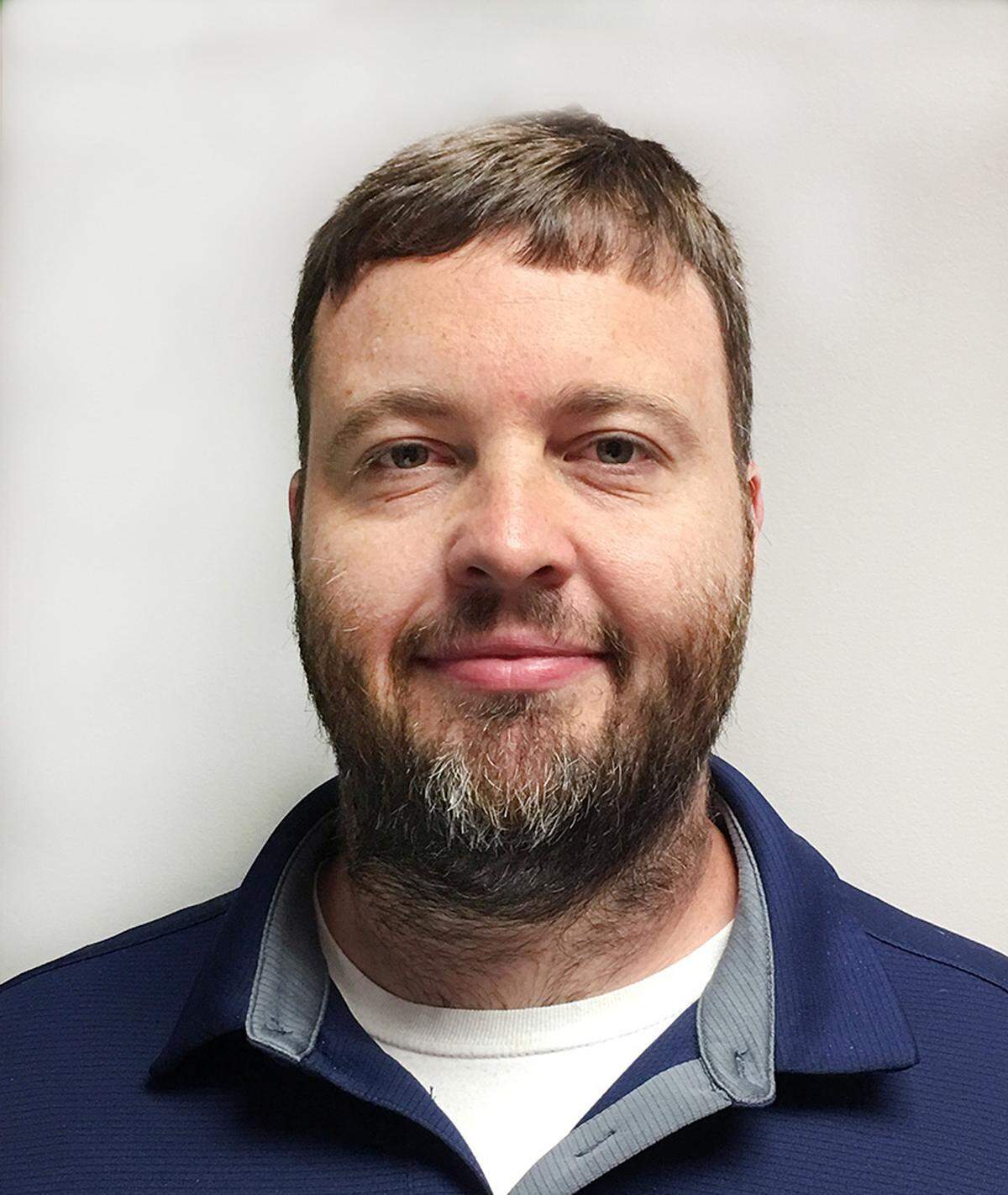
‘Choke holds are prohibited’: Rock Hill mayor, police chief hold public conversation
Rock Hill Police Chief Chris Watts doesn’t mince words on the event that sparked a national outcry and a flood of questions about how police do their jobs, or on what he says is the only good that could come of it.
“What happened to George Floyd was horrific,” Watts said. “Should’ve never happened, and I think everybody in the law enforcement community is somewhat devastated that something like that could occur -- and did occur. And we have to do everything possible to ensure that that never happens to anybody, anywhere.”
So, what’s being done in Rock Hill?
On Monday Watts joined Mayor John Gettys for a discussion on public trust.
Apostle Seth Crosby, a Rock Hill pastor and police department chaplain, moderated that discussion broadcast on various city outlets.
Gettys said he’s gotten calls and emails with questions about choke holds, de-escalation, excessive force and other sensitive topics since the May death of George Floyd in Minneapolis, Minn. while in police custody.
“It was evident that it would probably be the best that we have a conversation,” Gettys said.
Gettys said he believes everyone in Rock Hill has a stake in how the police department interacts with its community.
“A great police department, it’s not one that sees itself as controlling a community, but guarding a community,” he said. “Being a guardian of what we all want, and that’s opportunities to make a living for our family, to raise our children — all of our children — in a safe environment.”
Choke holds and de-escalation
Widespread video showed Floyd on the pavement with a police officer using his knee to pin Floyd’s neck. Gettys and Watts say choke holds are a common question.
“Choke holds are prohibited,” Watts said. “Prohibited means we can’t do it. The only time that an officer would be able to (use a choke hold), if it’s in a life-threatening situation where lethal force was authorized.”
Another common question involves how Rock Hill officers attempt to reduce the level of force needed.
“De-escalation is kind of one of the newer policies in the last five years or eight years that have come out,” Watts said. “That is a part of our policy. In the use of force it states that when we’re dealing with an individual, that we must use de-escalation techniques. And we want to use the lowest level of force possible to effect the arrest, or stop any violence that has happened to an officer or someone else.”
There is a force continuum or force pyramid. How much force officers use varies by encounter.
“It’s a graduated scale,” Watts said. “The officers follow that. It’s clearly defined.”
Only the force reasonably needed to overcome the force being used against an officer should be employed.
“We’re only responding to the actions of an individual, at the lowest level we can,” Watts said.
The chief said he often gets questions about excessive force. If force becomes excessive, he said, it’s by definition wrong.
“There is no level that is acceptable for excessive force,” Watts said.
Body cameras
Every Rock Hill officer wears a body camera. Every patrol car has an in-car camera. Since 2016, Watts said, it’s been protocol that those cameras are used in any police interaction.
Because officers can end up situations where they may not think to switch on a camera, the Rock Hill department uses cameras that automatically come on when blue lights are activated. They come on if an officer draws a weapon or turns on a taser. When an officer arrives for backup, his or her cameras will initiate.
“If there is a very loud noise, your body camera will automatically come on,” Watts said.
There may be perception that officers don’t want cameras on, but Watts disagrees.
Video aids officer safety if there’s a shooting, or helps the officer when writing reports or if a citizen complains to say something happened during an interaction. Video also is used for training purposes.
“That’s probably one of the better tools that we have ever gotten in Rock Hill Police Department,” Watts said. “All the officers, I think they would fuss a little bit if they didn’t have them. It’s something that tells the story.”
When turned on, cameras pick up 30 seconds of prior video. Officers can’t manipulate video, Watts said, and it is audited. Supervisors conduct random, monthly video checks. The only time police interactions aren’t videoed, he said, are sensitive situations like a criminal sexual conduct case, when a victim asks the officer not to use the camera. Then, officers can use their discretion.
Gettys said he believes the cameras and camera protocols are a major reason Rock Hill residents can trust their police force.
“We have policies and we have practices and we have training,” Gettys said, “but the body cameras prove the case.”
Diversity and hiring
Watts didn’t go into a demographic breakdown of his department, but did talk about hiring and safeguards against racial profiling and other concerns.
The department looks to hire local when possible. Officer candidates have to pass physical agility and written tests, then an interview and background investigation. That investigation goes beyond criminal history, references and driving history, Watts said.
“We actually go back and look into the lives of the individuals that we hire,” he said. “We want to know what that history is. How do you deal with people in your previous jobs? How have you dealt with people in high school, college or in the workforce?”
The aim is trustworthy candidates, who become trustworthy officers.
“So if there’s a racist type of mindset, or a dishonest or theft type of mindset, these are the people we do not want to hire,” Watts said.
Psychological and polygraph tests are administered before hiring.
There’s a routine physical. The state criminal justice academy trains and tracks officers statewide, Watts said, and departments are required to report issues with officers including causes for firing. Officers who encountered red flag issues elsewhere would thus have those same red flags revealed prior to hiring in Rock Hill.
Officer training
Officers have five week-long in-service training programs each year. A department training officer routinely seeks and sends out cases from across the country to get officer input on how a similar situation would be handled in Rock Hill.
“We’re usually looking at what has been trending of issues in other parts of the country,” Watts said. “De-escalation is part of our training each year, and reminding officers what the expectation is.”
The George Floyd death is a high-profile example of that type of case training.
“Many of these never make national attention, but with George Floyd this is one that we put out to make sure (officers know) how we don’t want to handle it, and how we should handle incidents,” Watts said. “We are always trying to stay on the front of problems or other situations that we see around the nation.”
Specific in-service training involves experts who come to talk about the deaf and blind community, or the people with mental health issues.
“That is another concern and another area that challenges us sometimes,” Watts said.
Rock Hill police routinely submit data to state law enforcement to check for bias-based profiling, implicit bias and diversity issues that also are part of local training.
“We have to submit data to the state, every time, every traffic stop so they can keep track of who we stop and are there any trends that they see that we may have some issues with,” Watts said.
The goal for Rock Hill police is to identify and correct blind spots the department may have in advance of a problem.
“We try not to wait on somebody tell us,” Watts said.
Police accreditation
Raised in Rock Hill, the chief of seven years has been with his department almost 32 years.
“This is where I grew up,” Watts said. “My family is still here. There’s just a passion for me as an individual and a police chief, just to have a community where everybody can thrive. Where everybody’s safe.”
Part of that effort involves accreditation. Of the roughly 18,000 law enforcement agencies nationwide, Watts said, less than 15% have Commission on Accreditation for Law Enforcement Agencies accreditation. Rock Hill was certified in 2001 and seven times since. The most recent four-year approval came in December.
“They were pleased and gave us a clean bill of health, so to speak, of how we do our business,” Watts said.
There are annual reviews. Every four years assessors come in and audit policies, ride along with officers and check best practices.
“The expectation from the command staff is we’re going to follow those policies,” Watts said.
The entire department policy manual is in almost constant state of review. Practices now aren’t what they were during that first accreditation in 2001.
“They look different because the community changes,” Watts said. “Technology changes. Best practices have changed. You look at use of force. You look at many of the other policies, they’re changing. Our society is changing and growing. We’re developing a better way of doing things.”
Policing and coronavirus
About two weeks ago, a large public gathering in Rock Hill drew attention to the George Floyd death, other national protests like the Black Lives Matter movement and police interaction with community. More than 1,000 people marched.
Watts said he got questions about why his department permitted that event given ongoing social distancing measures with the COVID-19 coronavirus.
Watts said the march used public sidewalks and there wasn’t any permit required or granted. Watts also expressed support for the event.
“This is a time that people need to express themselves,” he said. “So we’re sure not going to stand in the way of a peaceful event to bring attention to this.”
Watts said he understands why people gathered and protested.
“The event that started this with George (Floyd) was a horrific event,” he said. “It should have never happened. There was no reason for it.”
Organizers still tried, through use of masks and other measures, to keep as safe as possible given the pandemic virus.
“They tried to practice, with such a large group, social distancing,” Watts said. “The event was a wonderful event. Again, showed what Rock Hill is about because it was peaceful.”
Gettys agreed the march in Rock Hill was good for the community.
“The rally in the park...was just a wonderful opportunity for everyone to express and use their constitutional rights,” he said. “Any time people can act under the constitution it’s good for everybody, to share and challenge us as a community.”
Coronavirus has been difficult for police who try to interact with their community in as many positive settings as possible, Watts said. There haven’t been community events. There haven’t been social gatherings. Police presence in those settings is critical, he said, in developing community trust. Just as it is after something like the George Floyd death.
“Not everybody understands everybody else,” Watts said. “But if we can sit down and have honest, good conversation I think that’s where you start. And I’m sure open to that, and want that.”
Maintaining public trust
Gettys said the discussion Monday came because of, and down to, a single word.
“The word that kept coming to me was ‘trust’,” he said. “Should the public be introduced to things that the police chief and our city government tries to do all the time? Would that create more trust in our community? And I hope it has.”
Crosby said it’s important to address important issues even if they haven’t happened in Rock Hill.
“Even though we don’t have problems that we’ve had other places, we want to make sure that the community understands that we are here to help and whatever changes need to be made to make it better, we’ll do that,” he said.
Gettys said issues like use of force and trust aren’t just for police, or just for any one race of people. Neither, Gettys said, should solutions be.
“When a part of our community, a part of our family, is somehow worried and scared, then we all should be,” Gettys said. “What affects some of us that maybe not all of us can comprehend and feel and understand at that base root level, still should create empathy in all of us. Because we’re all in this together.”
The chief and mayor said conversations like the one broadcast Monday need to continue.
“It doesn’t stop here,” Watts said. “We’ll continue to have these conversations, and should have these conversations. Again, this is a start.”