Fired over politics? Charlotte workers say they were. Their bosses argue otherwise.
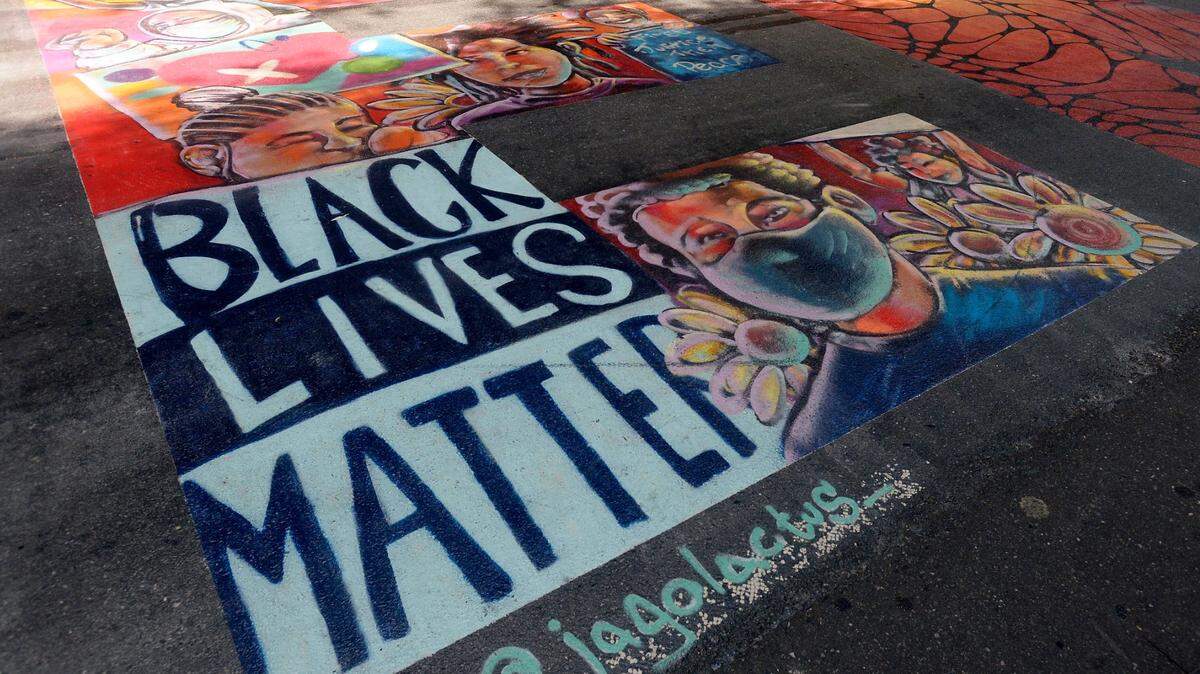
George Floyd’s killing in 2020 sparked waves of productive conversations about race among white and Black co-workers. But a series of Charlotte-area lawsuits reveal how cultural and social issues can cause upheaval at the office.
One of the plaintiffs is white. The two others are Black. All three said they lost their jobs as public outcry over the police killing of Floyd swept across the country.
Legal experts contacted by The Charlotte Observer say the country’s deep divisions along racial and political lines now regularly permeate the walls of the workplace.
“It happens all too often, that people have trouble finding common ground,” says UNC Chapel Hill law professor Michael Gerhardt. “In many workplaces, employers say, ‘Let’s just leave our politics at the door.’ That’s a understandable thing to want and a very hard thing to accomplish.”
In her June 7 complaint against Novant Health, Christina Ferguson says she was ostracized and harassed by her Black co-workers in 2020 after she criticized a Black Lives Matter protest in the company parking lot following Floyd’s death.
Ferguson, who is white and whose husband is a police officer, says she subsequently developed acute fear and anxiety about going to work, suffered panic attacks, and eventually was fired when her employer ruled that she had taken medical leave she had not earned, her lawsuit claims.
In a complaint filed in Charlotte federal court two days later, a Black employee of CPI Security claimed he was fired during the furor that followed company CEO Kenneth Gill’s emailed comments in May 2020 that Black Lives Matter protesters in Charlotte could spend their time “in more productive ways” by focusing on “black-on-black” crime instead of police violence. Gill later publicly apologized for his remarks.
However, Aamir Muhammad claimed CPI fired him after he confronted Gill at work over a series of employee demands to improve diversity and the company’s overall racial culture.
In a statement released through its attorneys last month, CPI denied Muhammad’s “baseless allegations,” and said he had been fired after multiple policy infractions, including the use of his personal cellphone in the company’s call center, which is prohibited to prevent the recording of a customer’s private information.
On Wednesday, Aug. 3, Muhammed and CPI agreed to jointly drop the complaint. No reasons for the dismissal were given. Muhammad’s lawyer, veteran discrimination attorney Geraldine Sumter of Charlotte, did not respond to an Observer email Friday seeking comment.
Muhammad was the second Black employee at CPI who claimed to have been terminated for speaking up critically about Gill and the company.
In November, Kelley Phelps, formerly the company’s highest-ranked Black employee, sued Gill and CPI, claiming racial discrimination, wrongful termination and retaliation. CPI denied the allegations.
Earlier this year, Gill and CPI filed a countersuit in federal court, accusing Phelps of libel and slander while rejecting her claims of a racially hostile workplace or racist policies established by Gill or his assistants.
In a joint filing on July 29, both sides agreed to drop their complaints. Again, no details were given other than a filing by a mediator in late June that the dispute had been “completely settled.”
As the Observer previously reported, Phelps claimed she lost her job after giving candid and critical statements during a confidential interview about what her lawsuit describes as the racist attitudes and policies of Gill and his 30-year-old company.
Together, the employee complaint against Novant and the two filed against CPI offer a detailed look at how outside events involving race and politics can rupture workplaces, as they have already divided classrooms, families and states.
Veteran Charlotte employment lawyer Meg Maloney says companies must take steps to prepare.
“It’s incumbent upon employers to educate employees on what is accepted in the workplace concerning political discussions — particularly ones that have a high potential for misunderstanding,” Maloney said. “That’s one reason why it’s so important to have diversity and inclusion training, and in a setting where those conversations can safely and constructively take place.”
Gerhardt, the UNC professor whose specialties include race and civil rights, says many Americans find themselves trapped in “dysfunctional environments” at home and work riven by debates over such triggers as police violence, gender and identity issues, as well as critical race theory.
With the recent Supreme Court’s ruling striking down federal abortion protections, a bruising November election looming and even the possible indictment of former President Donald Trump on the horizon, Gerhardt does not see an end to the potential workplace divides.
Walling off the workplace from the cultural and political land mines of the day is made even more difficult, Gerhardt said, given the “not so undercurrent element of society that believes what it wants to be, ignores what it wants to ignore and makes up what it wants to make up,” which can make consensus almost impossible to achieve.
Gerhardt has first-hand experience in “dysfunctional environments.” He was one of four U.S. law school professors who spoke before a House committee weighing the possible 2019 impeachment of Trump. Gerhardt testified that the then-president had committed an impeachable offense in holding up an arms shipment to pressure Ukraine to investigate political rival Joe Biden.
Afterward, Gerhardt says he was subjected to so many death threats — by his estimate up to 200 — that the UNC law school removed his office phone number from his web page, and Chapel Hill police patrolled his neighborhood for weeks.
‘Pig for lunch’
As with Trump’s two impeachments, Floyd’s murder on May 25, 2020, under the knee of a Minneapolis police officer first captured then divided the country.
In Charlotte, daily street protests about police treatment of Black Americans and other minority groups went on for weeks. They spilled over into business as well.
Ferguson, according to her lawsuit, began working for Novant on July 1, 2019.
On June 20, 2020, the employees of Novant Health Waxhaw and Sports Medicine in Union County staged a protest in support of the Black Lives Matter movement and to protest Floyd’s death. The rally, which took place during work hours, was staged in the parking lot that Novant office shares with the Waxhaw Police Department.
Told by her bosses that attendance at the BLM event was optional for employees, Ferguson expressed her opposition, citing her husband’s law enforcement career, the lawsuit claims.
The pushback from some of Ferguson’s Black co-workers was immediate, her lawsuit alleges, and she was accused of being a racist. In a separate incident just before the protest, another co-worker “stared directly at her and told her that he was ‘going to get pig for lunch,’’’ which Ferguson took as a clear reference to her police officer husband.
Ferguson says she reported the incidents to her bosses but nothing happened. She began fearing for her safety, eventually feeling such anxiety and stress that she suffered panic attacks and once became physically ill at work, her lawsuit claims.
An Atrium Health psychiatrist wrote her out of work until Aug. 1 and suggested a transfer to another Novant office might be advisable, according to the complaint.
Novant told her she was not eligible for time off under the federal Family and Medical Leave Act because she had not been with the company a year, even though her anniversary date had come and gone weeks before, the lawsuit alleges.
She was fired Aug. 19, 2020. Her claims include wrongful termination, violations of the Family and Medical Leave and Americans with Disabilities acts, among others.
A Novant spokeswoman said last month that the company could not comment on a pending legal matter, but added: ”We disagree with the allegations as outlined in the filing.”
The fallout at CPI
This story was originally published August 9, 2022 at 6:20 AM with the headline "Fired over politics? Charlotte workers say they were. Their bosses argue otherwise.."