
Winthrop is President Edward Serna’s ‘dream school’ — and it’s not hard to see why
When he arrived on Winthrop’s campus last month for the first time in a while, Edward Serna almost didn’t recognize it.
The DiGiorgio Campus Center was new to him. The campus greenway that stretches in front of Digs was too. Most of the campus, in the years before Serna graduated from Winthrop in 2002, faced Oakland Avenue, he remembered. And the small school grounds were nestled in a smaller, sleepier, less-developed city of Rock Hill.
“It has changed quite a bit,” Serna told The Herald in a recent phone interview, chuckling a bit at his understatement. He added, “And not just the campus, but my goodness Rock Hill has changed. It’s exciting.”
For as much as WU’s campus has changed since Serna first stepped foot in Rock Hill over two decades ago, Serna has changed more. His path reveals that.
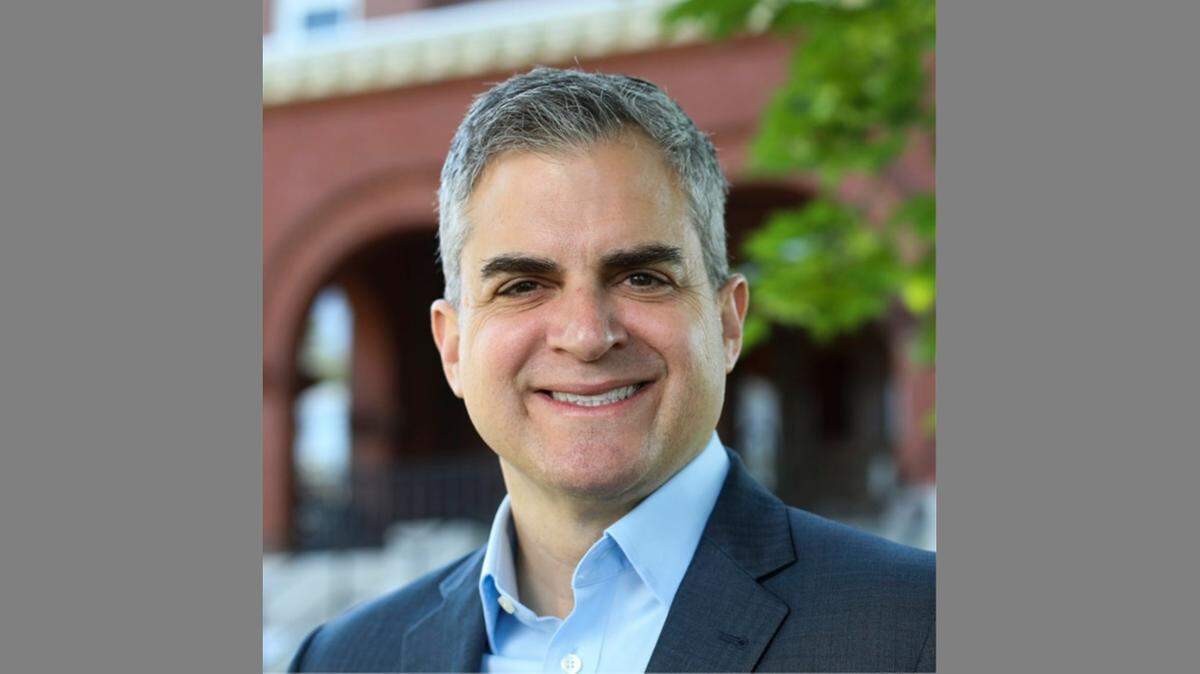
After all, he arrived at Winthrop as a non-traditional student, previously doing logistics work in a warehouse in Atlanta through his late 20s. And now, he’s a few months away from beginning his tenure as University President at that school. (Serna was named Winthrop’s 12th President in February. He’ll begin work on July 1.)
“I can’t say that I knew this was going to happen,” Serna said. “There’s no way I could’ve known that a degree would change (my life) like this. … Could I have anticipated the career path that I was going on? No. There is absolutely no way.”
How Serna got to Winthrop
Serna’s story — from his hometown, to Winthrop, out into the business and higher education worlds, and then back to Winthrop again — is undeniably unique.
It goes something like this:
Serna was born in Glendale, Calif. His father was a defense contractor, Serna said, and he and his family relocated a lot because of that, from Colorado to Connecticut to Georgia and other places. There weren’t a lot of people who went to college in his family, Serna said, and because of that a college degree wasn’t initially in his plans.
In Atlanta, though, Serna was 30 years old, doing logistics work with his father and “saw the road ahead of me and just knew that I needed to make a change.” After some research, he learned of Winthrop’s “New Start” program, one that helped adults and other non-traditional students achieve degrees.
He was sold. Serna’s life changed forever from there.
He earned a Bachelor’s degree from Winthrop. Then a Masters in Industrial Management at Clemson. He then worked as a senior business analyst at Aflac in Columbus, Ga., while simultaneously working on another Masters at Auburn.
He spent the next few years climbing the corporate ladder. At one of his stops, he found himself at Booz Allen Hamilton, one of the top consulting firms in the country, where one of his clients was NASA. (“Before I go to Winthrop, I’m working at a warehouse,” Serna said. “Two years after I leave Winthrop, I’ve got two Masters degrees and I’m a management consultant at NASA. You talk about the power of education, and that’s it.”)
Along the way, he began teaching at a local community college and once more fell in love with the power of education. In 2014-15, he left the private sector and joined the administration at the University of Arkansas at Fort Smith as a director, and over the course of the next few years, he rose through the ranks — eventually being named interim chancellor at Fort Smith before becoming the permanent President at University of Maine Farmington in 2019.
And then, once the Winthrop search for a permanent University President began a few years later, Serna was one of more than 150 applicants. He was named one of three finalists in early February and then President Feb. 18.
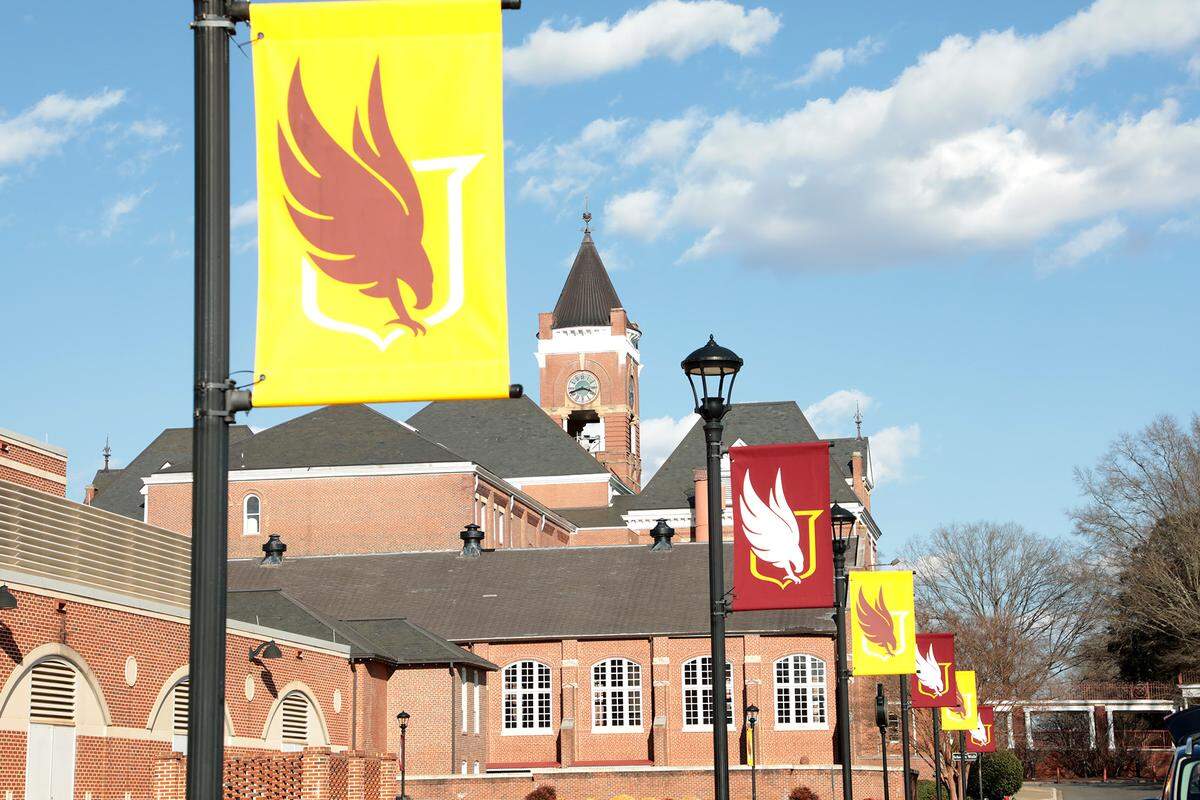
“Winthrop was the school that I described as being my dream school,” Serna said. “It really is. And I don’t think that’s a surprise because my experience at Winthrop shaped my beliefs as far as what higher education should be.
“I think that feeling I had when I was on that campus, the good advising I received, the support systems that were in place, the challenging intellectual conversations in the classroom — everything that I experienced there that really changed my life for me, I have been trying to replicate that in my journey through higher education.”
A Q&A with Edward Serna
Last month, a week after he was named as Winthrop’s 12th University President, Serna spoke at length with The Herald to not only discuss his path to Winthrop but also explain how he might approach some of the issues Winthrop immediately faces. Among those issues: a declining student enrollment, a pandemic-affected university budget, and an athletic department in need of a permanent athletic director.
Below is part of an interview conducted by The Herald’s Alex Zietlow. Questions and answers below have been lightly edited for brevity.
Why should prospective students want to go to Winthrop?’
Zietlow: Let’s talk about some issues you’ll tackle at Winthrop. The business model of any public university is attracting and retaining students and doing so in a cost-efficient way. And Winthrop’s enrollment has declined. What are some strategies that come to mind to boost enrollment?
Serna: I’m a firm believer in creating partnerships and pathways into higher education. And again, I think this was shaped by my own experience in a lot of ways. But everyone takes a different path to Winthrop, or to any public university like that. And the more partnerships and relationships that you build with community colleges and community organizations and K-12 schools, and the more that you’re out building upon those relationships and telling your story, I think that goes a long way.
Like, we should always be the first school they think of. And a lot of times — and this is just my experience in higher education — we don’t do a really good job of that. We think, ‘Oh we’ll build it, and students will just come.’ And we miss out on that relationship building, and that’s something I really want to focus on.
Zietlow: Having Winthrop be the first school prospective students think of is a worthy goal, but I imagine it isn’t easy. There are other really good public schools in South Carolina. Among them: USC and Clemson. What is, in your opinion, Winthrop’s niche? How are students going to think of Winthrop first when they consider going to a South Carolina public school?
Serna: I know what my Winthrop story is: I don’t know what Winthrop’s story needs to be for those markets yet. And one of the things you’re going to hear me say a lot is, ‘I want everything to be data-informed.’ And I don’t have that data yet to inform that decision. So I don’t know what that message is. But I think it’s critical, and you’re hitting on it, to ask: ‘What is Winthrop? Why should people care about Winthrop? Why should prospective students want to go to Winthrop?’ We have to be able to tell that story in a compelling way.
Now, I can tell you my story, and that’s part of my resume as a non-traditional student. But until I get down there and start having those conversations in the community, I don’t know if I can answer that yet.
‘I want everything to be data-informed’
Zietlow: You say ‘data-informed’ and that you make ‘data-driven’ decisions. And that sounds cool. But what does it mean? Can you give me an example where you’ve made a data-driven decision that has worked out well?
Serna: Sure. There are families up and down the east coast that go right through the middle of our campus on their way to Sugarloaf Mountain because we’re the only road in. So we were able to pull data on those families who are making that trip up. We targeted those demographics — they were from Philadelphia, New York, Connecticut — and we were able to target our marketing efforts around snow sports because we have competitive ski teams and snowboarding teams on our campus. And we were able to grow our out-of-state enrollment focusing on our snow sports programs.
So this year, for this little regional public university in western Maine, 25% of our entering class was from out-of-state. And I don’t think many regional public universities can say that. …
Zietlow: Kind of to your point about using the assets around you: Rock Hill is an interesting place with a lot of new investment going on, particularly in the sports tourism space. I could see how you could use that sports tourism data to your advantage.
Serna: I mean, a few weeks ago we were staying at the Cambria Hotel (near downtown). And that weekend, there was a volleyball tournament there, and it was packed. And you have a highly competitive volleyball program at Winthrop, and you just have this constant stream of students coming into that facility right next to campus. So you definitely have assets. It’s impressive.
Zietlow: How can you right-size Winthrop’s budget? I know you need to go in and learn exactly what the issues are. But surely at your previous stops — at Arkansas, in Maine — they had their budgetary issues. So how do you approach ‘fixing’ a public university budget?
Serna: To your point, they haven’t opened the books to me yet. So I don’t have my hands around the budget yet to be able to say, ‘If we do this, if we do that, etc.’ But I think there are some guiding principles: What are our values? And what is absolutely core to the institution that cannot be touched?
There are going to be areas in which you can improve efficiency. One thing that I have found coming in higher education, coming from business, is we tend to be a little inefficient. That might be controversial, but I think it’s the truth, at least for some of the stops I’ve been at along the way. So I think there are always opportunities to increase efficiencies. … So again, I don’t know. I have to get my hands around what is absolutely core to the institution. How efficient are we as an organization? And what are our values? What is going to guide our decision making if we do have to make cuts? And I won’t know until I get down there and the community says, ‘Here are our values, and this is core.’
Serna talks Winthrop athletics, what he wants in new AD
Zietlow: There are a few athletics-related questions that need a president’s guidance. I guess I should start with this: How do you see athletics fitting into your strategic plan as a president? How will Winthrop athletics work in harmony with Winthrop University?
Serna: I’m interested to hear how closely affiliated Winthrop athletics is to the Winthrop brand. And that’ll be a really interesting data point for me. I can speak generally in my experience. I think it is an incredible asset to the university. For the student-athletes, I think it gives them real-world leadership experience and team-building experience, all of those soft skills that we talk about in higher education. That is an opportunity to practice and exercise that. …
Athletics make the campus a campus. It is critical, in my opinion, to the campus and the brand and identity of the university — and the pride of the university — to have athletics.
Zietlow: Winthrop will need an athletic director (who’s not in an interim role). What do you want in the next AD? What qualities do you want him or her to have?
Serna: I really see them as a strategic partner, a member of my senior team. I want somebody with vision. I want somebody who wants to grow. I want somebody who’s a little bit of a risk-taker, who’s OK with ambiguity. And I want somebody who’s excited to be at Winthrop. … Honestly, I want somebody who’s going to challenge me and who is going to challenge Winthrop. And that’s good.
Zietlow: What are your thoughts on adding more sports?
Serna: That’s hard to say until I get down there. I need to get my hands around the current athletic portfolio, if you will, to understand how we’re doing there. If our current portfolio is not stable, I’m hesitant to add to it until we stabilize where we’re at.
Zietlow: Are you a basketball fan?
Serna: (Laughs.) Yes.
Zietlow: Nice. I know when you’re at UMF, you are a fan of UMF. And I’m sure when you arrive at Winthrop you will be an Eagle. But regardless of circumstance: Where do your loyalties fully lie?
Serna: I’m telling you right now, it’s the school I’m at —
Zietlow: (Laughs, as if to acknowledge the diplomatic nature of his answer.)
Serna: No, but Alex, you cannot beat being there in person. Like, watching it on TV is great, but you cannot beat that. Whether it’s U Maine Farmington playing Bowdoin — beating them for the first time in a very long time this year by the way (laughs) — or back at the University of Arkansas Fort Smith. Just being there, being a part of that, it’s such an experience being there in the arena. I love that.
Zietlow: Thank you so much for your time. Is there anything else I need to know?
Serna: You know, Alex, I’m just excited to get down there. I know that Lauren and the girls are, too. We’re just excited to be a part of that community.
This story was originally published February 28, 2022 at 2:00 AM.
.jpeg)