
Want to know what people in the Southeast are thinking? Recent Winthrop poll has answers
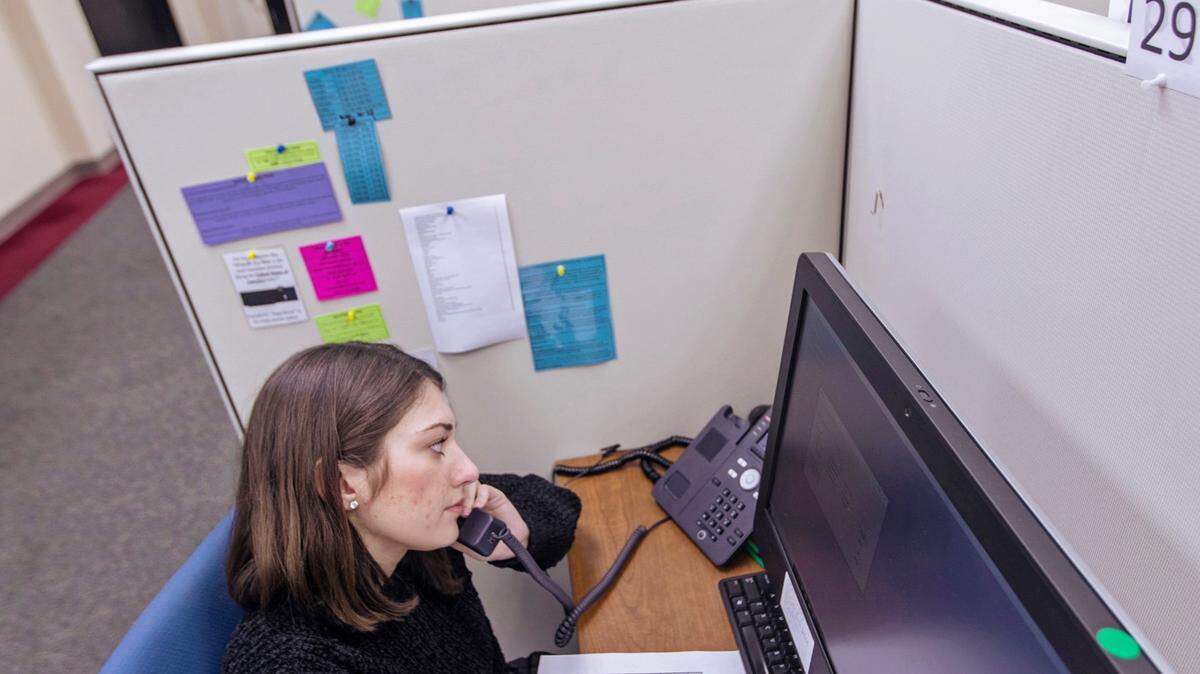
Three-fourths of residents in 11 Southern states believe a woman should be able to obtain a legal abortion if the pregnancy threatens the woman’s life or health, according to the most recent Southern Focus Survey, an initiative of the Winthrop University Poll.
The issue of abortion became a hot topic in June when the U.S. Supreme Court overturned Roe v. Wade, the federal case that allowed legal abortion.
With states left to decide how to proceed, most abortions are now banned in several Southern states.
In what is its first online survey, the Winthrop Poll Southern Focus Survey found respondents want to leave the decision to individuals if the pregnancy threatens the woman’s life or health: 77% said the woman should be able to obtain a legal abortion, while 71% of Republicans and 85% of Democrats agreed.
The survey included respondents from Alabama, Arkansas, Florida, Georgia, Louisiana, Mississippi, North Carolina, South Carolina, Tennessee, Texas, and Virginia.
If the pregnancy was the result of a rape, three-fourths of respondents also said the woman should be able to obtain a legal abortion. Republican support was 65%, while Democratic support was 85%.
Support dropped if the baby was likely to be born with severe disabilities or health problems but was still at least half among groups surveyed.
According to poll director, Dr. Scott Huffmon, “As more states across the South move to increase restrictions on abortion, if not eliminate it completely, they should keep in mind that the typical citizen definitely believes in some exceptions.”
In other Winthrop Poll results:
- 44% of respondents said former President Donald Trump should be charged with a crime for his involvement in the events at the U.S. Capitol on Jan. 6, 2020.
- Three-fourths of Republicans said Trump shouldn’t be charged, while more than three-fourths of Democrats said yes.
Huffmon said “Nearly 1 in 5 southerners are unsure about whether the former President should face charges. People’s opinions come down more to partisanship than anything else.”
About half of respondents have been following Congressional hearings concerning what happened on Jan. 6. Only half of the respondents said they believed the results of the 2020 presidential election were fair and accurate. Seventy percent of those who identified strongly as “MAGA Republicans” answered no to the question.
“While the solid majority of Republicans do not believe the election was fair or accurate, it is of note that those who more strongly identify as ‘Traditional Republicans’ were 7 points more likely to believe in the legitimacy of the election results than those who strongly identify as ‘MAGA Republicans,’” Huffmon said.
(Read more analysis on MAGA Republicans in the South from this survey in The Washington Post.)
Approval of Government Leaders
Meanwhile, approval ratings for President Joe Biden in the South are at 35%. Support typically falls along party lines with Republicans being very critical and Democrats much more supportive.
As for Trump, a little less than half of Southern respondents gave him a favorable rating, while almost an equal amount gave him an unfavorable rating. The former president remains popular with those who self-identify as Republicans, 84% of whom view him favorably.
Nearly 60% of respondents disapprove of the way Congress is handling its job. Republicans particularly don’t like the workings of the Democratic-controlled U.S. House and U.S. Senate with a 78% disapproval rate. Half of all respondents also disapprove of the way the U.S. Supreme Court handles its job.
Talking politics
Nearly half of respondents said they don’t feel comfortable talking about politics with someone they don’t know well. Nearly a third don’t want to talk race relations and a fourth don’t want to discuss religion.
“While whites and Blacks are about equally comfortable discussing religion, white Southerners are notably more uncomfortable discussing race with a stranger than Black southerners” Huffmon said.
About 45% of respondents agree that churches and other religious organizations focus too much on rules and are too involved with politics.
On the other hand, two-thirds agreed that churches and religious organizations bring people together and strengthen community ties. More than half agree that such groups protect and strengthen morality in society.
How much discrimination?
The Winthrop Poll also sought to find out how much discrimination there is against different groups.
Here are the findings:
- Black people: three-fourths of all respondents said there was some or a lot, 71% of white respondents said some or a lot, and 94% of Black respondents said some or a lot.
“Whites and Blacks see a very different landscape when looking at discrimination,” Huffmon said. “Black Southerners are two and a third times more likely to believe Blacks face ‘a lot’ of discrimination. They are also more likely than whites to believe Hispanics and Asians face ‘a lot’ of discrimination.”
Hispanics: three-fourths of all respondents said some or a lot, 70% of white respondents said some or a lot and 85% of Black respondents said some or a lot.
- White people: half of all respondents said some or a lot, 57% of white respondents said some or a lot and 38% of Black respondents said none at all.
- Asian people: 72% of all respondents said some or a lot, 69% of white respondents said some or a lot, and 77% of Black respondents said some or a lot.
- Gays and Lesbians: 77% of all said some or a lot, 68% of Republicans said some or a lot, and 86% of Democrats said some or a lot.
- Women: 69% of all said some or a lot, 61% of men said some or a lot, and a 75% of women said some or a lot.
- Men: 41% of all said some or a lot, half of men said some or a lot, and a third of women said some or a lot.
- Jews: two-thirds of all said some or a lot, 58% of Republicans said some or a lot, and three-fourths of Democrats said some or a lot.
- Muslims: 77% of all said some or a lot, 71% of Republicans said some or a lot, and more than 83% of Democrats said some or a lot.
- Christians: a little more than half said some or a lot, 66% of Republicans said some or a lot, and half of Democrats said some or a lot.
- Southerners: half of all respondents said some or a lot.
Two-thirds of white respondents said they have not been discriminated against in the past year based on their race, while 40% of Black respondents said they were.
Religion in government
Another area explored by the Winthrop Poll was religion’s role in government. Half of all respondents said the federal government should not declare the United States a Christian nation.
More than a third said the federal government shouldn’t advocate Christian values. Half agreed that the federal government should enforce strict separation of church and state. Yet half also agreed that the federal government should allow the display of religious symbols in public spaces.
The idea that the United States is a special nation figures into many Southerners’ thinking. About 43% agreed that the success of this country is part of God’s plan. Another 45% agreed that the federal government should allow prayer to be read over the intercom to all students in public schools.
This series of questions was based on previous studies of “Christian Nationalism” (see Whitehead and Perry 2020 or Gorski and Perry 2022 among others).
Confederate memorials
When the topic of Confederate memorials comes up, there are mixed opinions about whether to leave them in place.
Only a third of all respondents said to leave alone the memorials to Confederate soldiers. Around 30% of residents said to add a marker for context, while 18% said to move them to a museum.
A third of Black respondents said to move them to a museum.
“There is still a strong racial divide on how statues of the Confederacy should be treated,” Huffmon said. “Whites were two and a half times more likely than Black respondents to want to leave them just as they are.”
The Confederate battle flag brings up strong feelings among Southerners.
Half of white respondents said the flag is a symbol of Southern pride. Meanwhile, 43% of Black respondents felt the flag was a symbol of racial conflict and only 9% stated it represented Southern pride.
See full results: https://www.winthrop.edu/winthroppoll/current-findings.aspx
This story was originally published September 15, 2022 at 9:46 AM.