Clover officials got creative to build new school in Lake Wylie. What it’ll cost you
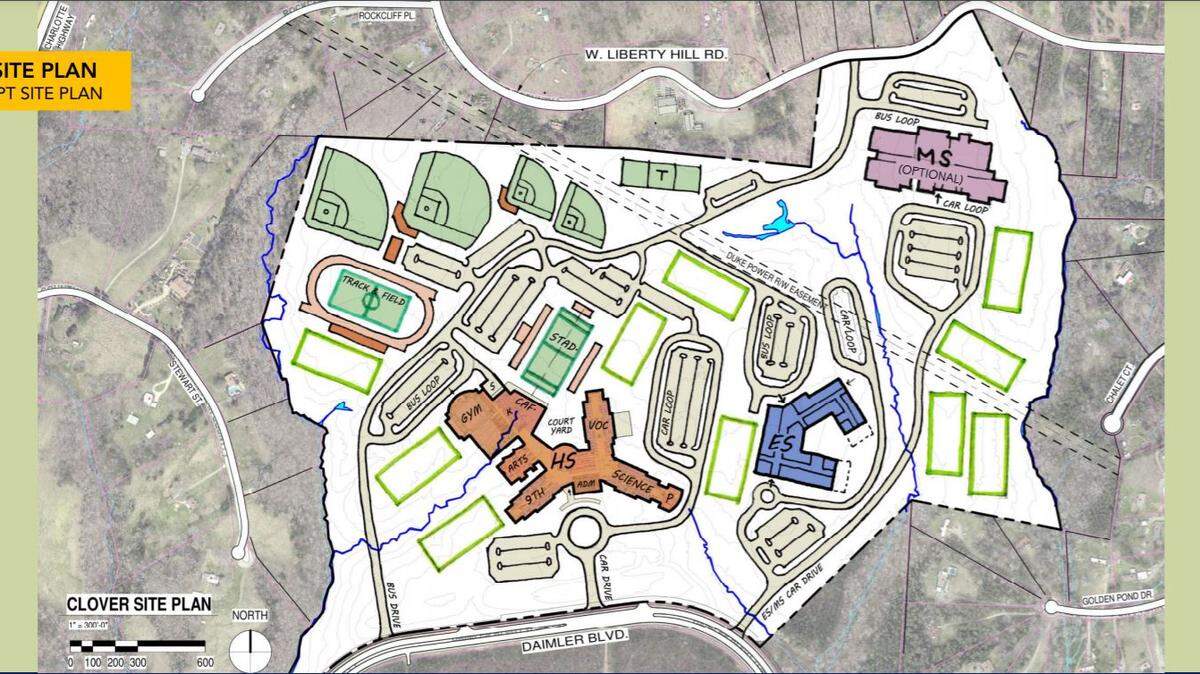
Clover and Lake Wylie voters turned down a bond to build a new high school and elementary school. Then, they passed a referendum that kept the high school but dropped the elementary.
Now the Clover School District will utilize that passed bond to build a new elementary school.
Here’s how.
In 2021, the district asked voters to approve a bond at $197 million that would build a new elementary, middle and high school. Almost 71% of voters decided against the bond.
Last year, after listening to and surveying the public, the district proposed a new $156 million bond aimed at the new Lake Wylie area high school. Voters narrowly passed that bond last fall.
In the campaign process for the bond that passed, the district set a threshold of 46 mills — millage rates determine how much property owners pay — to make the bond happen. The district has 20 mills of debt on old bonds now. The plan was to increase the amount in steps over two years.
This week, the school board voted instead to up the millage to the threshold amount from the start.
That first-year increase in millage would allow the district to generate revenue and borrow against what’s called 8% money. Or, an allotted amount of money districts can spend on capital improvements without a bond referendum based on tax revenue districts generate.
That plan will help generate more than $50 million in three years. An eighth elementary school will be build alongside the Daimler Boulevard area high school, with both set to open in 2026.
The increase in upfront bond millage would cost a typical homeowner $104 for every $100,000 in home value, according to the district. Rates for businesses and rental properties vary.
School board member Matt Burris offered both sides of what ultimately was a unanimous board decision. The taxpayer impact is a consideration.
“Obviously we hear those concerns too,” Burris said. “We pay the same taxes, so we get it. But I think it’s just a tremendous opportunity.”
Then, Burris said, there’s unprecedented community growth.
“That need did not go away,” Burris said. “If anything, it’s increased.”
Need for schools
District CFO Ken Love said the failed 2021 bond included a new high school and elementary school because district projections showed they were needed.
“We could identify the numbers of students coming from both categories,” Love said. “Well since that time, we have learned that there are over 2,000 more houses in process that are coming along.”
The most recent number, Love said this week, is more than 2,600 new homes. Impact fee and typical district forecasting studies show continued need for space. The approved bond last year took care of the high school. A new elementary school takes about three years to build, so having it in place when studies say it’s needed and in conjunction with the high school opening means creativity was needed.
“It’s time for us to begin finalizing the process,” Love told the board this week.
Borrowing more money up front on the bond that did pass, for the elementary school, could extend the bond payout period from 20 to 25 years, Love said.
Still, board member said students need schools and there are advantages to opening the elementary and high schools together. Plus, building sooner likely will reduce costs when large school projects typically escalate in cost with time.
“We’re growing at a rate, we can’t not build,” said board member Jessica Cody.
More capital projects
According to the district, the more than 2,600 new homes with building permits already issued would generate about 500 new elementary school students by 2027.
The new plan also involves the district issuing bond anticipation notes for the $156 million to build the new high school. That interest-only borrowing won’t impact taxpayers, according to the district. The elementary school debt paid back by 8% funds and the bond anticipation notes will combine in 2026 in the more traditional, long-term bond setup approved last fall.
According to the district, Clover will maintain the lowest millage rate among the four York County school districts even with the first-year millage increase. The district intends to break ground on the high school and elementary school off Daimler Boulevard in August.
Districts use 8% money for a variety of capital needs. Typically they are much smaller than a new elementary school. Mark Hopkins, district COO, outlined existing 8% jobs that are mostly done like HVAC work at Crowders Creek Elementary School, a fire alarm system at Kinard Elementary School and roof work at Clover High School.
Capital projects at Clover High School include construction of a field house, tennis courts, a revamped commons area and relocation of a traffic loop.
Other work at Clover High, Bethel Elementary School and elsewhere in the district is covered by federal pandemic funding.
Hopkins said planning for the new Lake Wylie high school continue. The district will resubmit design plans for a sewer pump station, and is still waiting on a site traffic design. Hopkins said main site work — beyond the August groundbreaking event — should begin in August or September.
“It’s more likely going to be September,” Hopkins said.
This story was originally published June 29, 2023 at 11:29 AM.