How Winthrop plans to tackle SC teacher shortage through a new $6M residency program
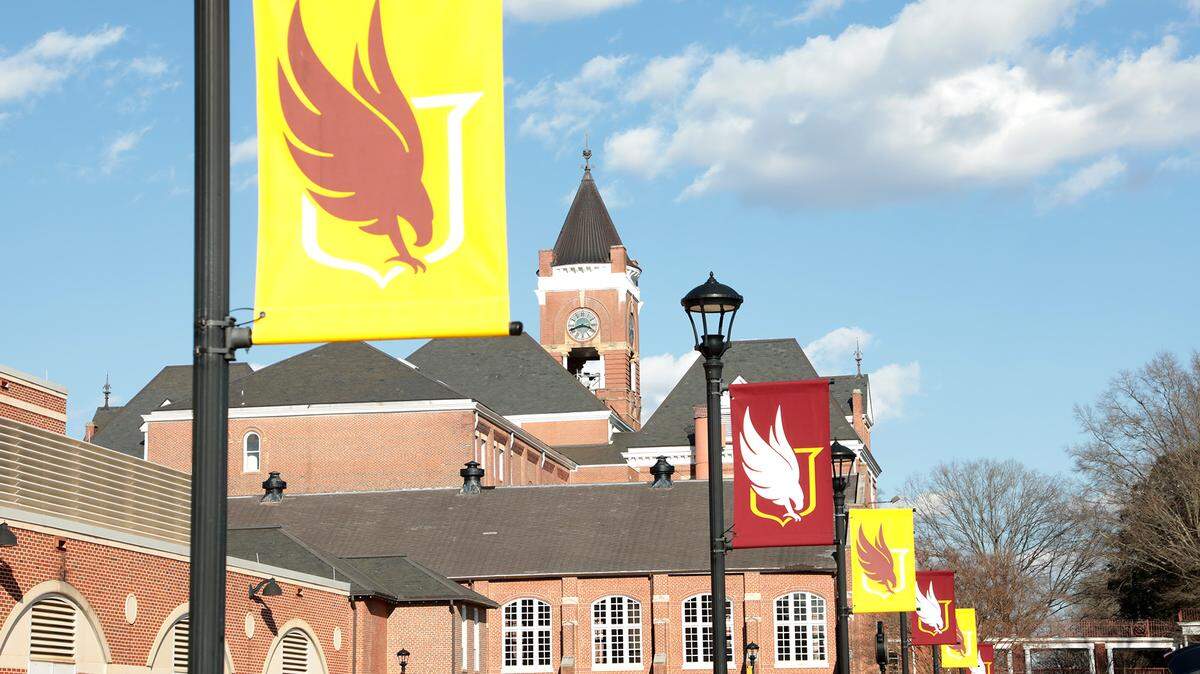
Winthrop University, backed by a $6 million federal education grant, will lead a new program to create a statewide model for year-long teacher residencies.
It’s aimed at recruiting and retaining teachers during an ongoing teacher shortage in South Carolina.
SC RISE is a five-year project funded by the federal Education Innovation and Research Program. Winthrop is the lead institution, and will partner with the University of South Carolina, Clemson University and Columbia College.
It also involves the state Center for Educator Recruitment, Retention, and Advancement that’s housed at Winthrop.
Paid residencies will be a focus of the new program.
Winthrop students working toward teaching degrees have to complete year-long internships. Paying students during those internships would put them on par with architects, engineers and pharmacists who also have required, but paid, internships to get a license in those fields.
The federal grant announcement doesn’t state how much teaching candidates would make during paid residencies.
The grant-funded program will start with middle schools that partner with the universities in their areas. Later phases would add grade levels and other areas of South Carolina.
Which SC schools need teachers?
Last fall, 71 of 75 public school districts in South Carolina reported teacher hires, vacancies and other data to the Center for Educator Recruitment, Retention, and Advancement. Those districts combined for 55,000 certified teaching positions.
Another 1,043 certified positions were vacant when the school year started.
Elementary schools had the most vacancies, with 340. Special education (108 vacancies), third through fifth grades (82) and pre-kindergarten through second grade (62) had the most vacancies at the elementary level.
Special education (62), math (40), science (30), social studies (28) and language arts (23) had the most vacancies among middle schools. High schools needed the most teachers for special education (70), math (49), language arts and science (25 each).
The South Carolina Department of Education lists subjects and geographic areas each year that face critical needs for more teachers. That information is used for a loan forgiveness program that applies to students who become certified and teach in those areas.
Geographic areas factor in poverty and other data, but subject listings rely on teacher hiring and vacancy figures.
Of 1,402 public schools listed by the education department, 895 schools qualify for the critical needs teacher loan program.
Parts of York County fare better than most areas of the state.
Only one of 10 Clover schools (Kinard Elementary School) qualifies for the loan program. Six of 20 Fort Mill schools qualify (Banks Trail Middle School plus Doby’s Bridge, Fort Mill, Orchard Park, Springfield and Tega Cay elementary schools).
In Rock Hill, 21 of 26 schools qualify for the loan program. Four out of nine York schools qualify for the state program. They are York Middle School and Harold C. Johnson, Hickory Grove Sharon and Jefferson elementary schools.
In Lancaster County, 16 of 23 schools qualify. Ones that don’t are Andrew Jackson middle and high schools, Buford elementary and high schools, Indian Land intermediate and high schools, and the district career center.
Nine of 14 schools in Chester County qualify. They include all schools in the Chester and Great Falls communities.
A history of helping
The new federal grant isn’t the first effort help attract new teachers at Winthrop. Founded as a teaching school nearly 140 years ago, Winthrop has a long history producing educators.
One of the largest grants the school received since President Edward Serna took that role three years ago was a $1.4 million program for scholarships to attract STEM majors for teaching careers.
A prior grant created the NetSERVE program that created teacher residencies. The new federal grant could expand on it, and lead to a statewide model.
The new grant can lay a foundation for sustainable and equitable practices statewide, Serna said in the grant announcement. Serna sees it as a transforming strategy to improve education.
“It speaks volumes to Winthrop’s commitment to teacher preparation, recruitment and retention,” Serna said.
Progress on SC teacher shortage
Despite the teacher vacancies statewide, districts reported 7,381 new hires last year compared to 6,532 teachers who didn’t return to districts from the prior year, according to the recruitment and retention center at Winthrop.
Of the teachers who left districts, 1,786 of them became new hires in another district in South Carolina.
The 1,043 statewide vacancies this school year is the lowest figure since 2020-21, and is down 570 vacancies from last school year.
Jennifer Garrett is coordinator of research and evaluation for the Winthrop center. This year is the first time since 2019-20 that districts across the state reported a decrease in teacher vacancies, Garrett said in the center’s annual report issued in December.
“The significant drop in these numbers indicates some level of improvement related to recruitment and retention efforts in our state,” Garrett said in the report.
This story was originally published January 17, 2025 at 6:00 AM.