
Sun-gobbling blue blobs are taking over Southern California shorelines. What to know
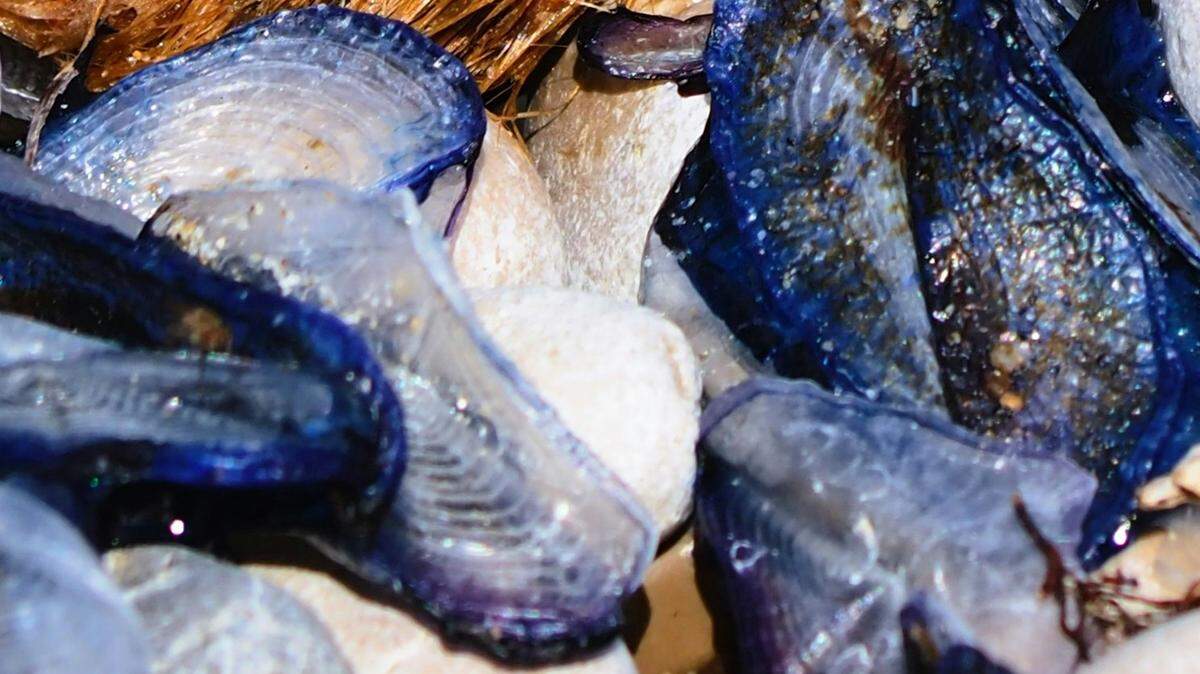
When the days got longer and the Pacific winds changed direction, a massive fleet set sail for the sunny coasts of Southern California.
The oncoming armada was not soldiers or pirates or kingsmen. They were blobs. Bright blue blobs.
Velella velella, or “by-the-wind sailors” as they are called, rode the tides en masse, berthing in a gelatinous congress on the Golden State’s southern beaches.
And there they sat in droves, much to the curiosity of beachgoers in recent weeks, news outlets reported.
“Thousands n Thousands of washed up Velella Velella Jellies,” DelanaCaliGirl wrote above a photo from Huntington Beach she posted on X on April 29.
KNSD on April 30 shared a photo of dozens washed up along Dog Beach in Del Mar, about a 75-mile drive southeast from Huntington Beach. They’ve also been spotted in San Diego, according to The Orange County Register.
Velella velella are wayfaring, surface-dwelling water creatures, completely reliant on the wind for locomotion, according to the Point Reyes National Seashore, which saw them appear in March. They appear as 3- to 4-inch-wide blue discs with an attached “sail” on top to catch the gusts.
“Sometimes, when the wind is blowing towards the shore, large numbers of velellas get washed ashore,” Anya Stajner told the Scripps Institution of Oceanography in May 2023.
In the spring and summer months, when winds pick up, mass strandings of velellas happen like what we’re seeing on Southern California’s shoreline.
To those unfamiliar with them, velellas’ viscid appearance makes them look like jellyfish. But they are a whole other animal, experts say.
Velellas live in colonies and feed on plankton and the sun, photosynthesizing like plants, according to Johns Hopkins University.
They have tentacles that sting, like jellyfish. But unlike their more painful comrades, velella stings are not considered harmful to humans, according to Point Reyes.
Regardless, experts recommend people refrain from touching them as their sting can still be painful, KNSD reported.
Sadly, mass strandings of velellas do not end well for them. After enough time on the sand, they dry out and begin to degrade, a process that makes them resemble plastic discs, according to the Oregon Coast Aquarium.
According to the aquarium, early in the stranding is the best time to go see them. In just a short while, this blobby blue extravaganza will become miles of crispy stench.
This story was originally published May 2, 2024 at 4:53 PM with the headline "Sun-gobbling blue blobs are taking over Southern California shorelines. What to know."