Two apex predators discovered in Washington waterway for first time, researchers say

Researchers discovered two apex predators in a Washington waterway for the first time.
Now, researchers are wondering how a critically endangered soupfin shark and several broadnose sevengill sharks ended up in the South Puget Sound near Olympia, experts from Oregon State University said in a July 29 news release.
Puget Sound is on the southern end of the Salish Sea, which extends from Olympia to the Campbell River in British Columbia, Canada.
In August 2021, researchers got word that soupfin sharks and broadnose sevengill sharks were caught in Hammersley Inlet, an east-west inlet that runs from Squaxin Island to Shelton in Mason County, according to a study published June 26 in the peer-reviewed journal Frontiers Media.
Fishermen had shared photos of their catches on social media, which caught the attention of researchers because the two shark species had never been documented in the area before then, one of the study’s authors, Ethan Personius, told McClatchy News by email.
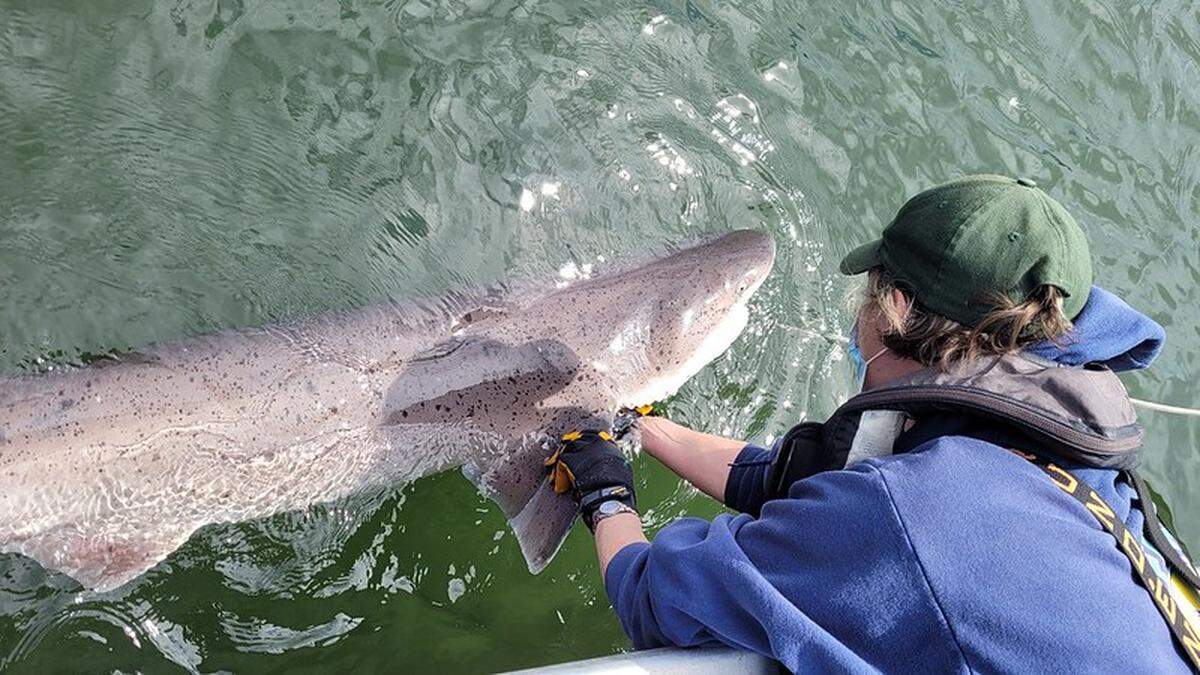
So researchers went out on a boat in Hammersley Inlet to see if they could find either of the sharks, according to the report.
They collected data over 10 days in 2022 and 2023. During that time, they captured nine broadnose sevengill sharks, researchers said.
The sharks were identified, measured and released, according to the study.
“This work represents the first evidence of a significant presence of these apex sharks within the Salish Sea,” researchers said in the article.
Endangered shark discovered
As researchers were reeling in broadnose sevengill sharks in Hammersley Inlet, they wanted to find a soupfin shark, too, Personius said.
“Finding a critically endangered species living in such an important but urbanized waterway would be quite significant,” he said in the email.
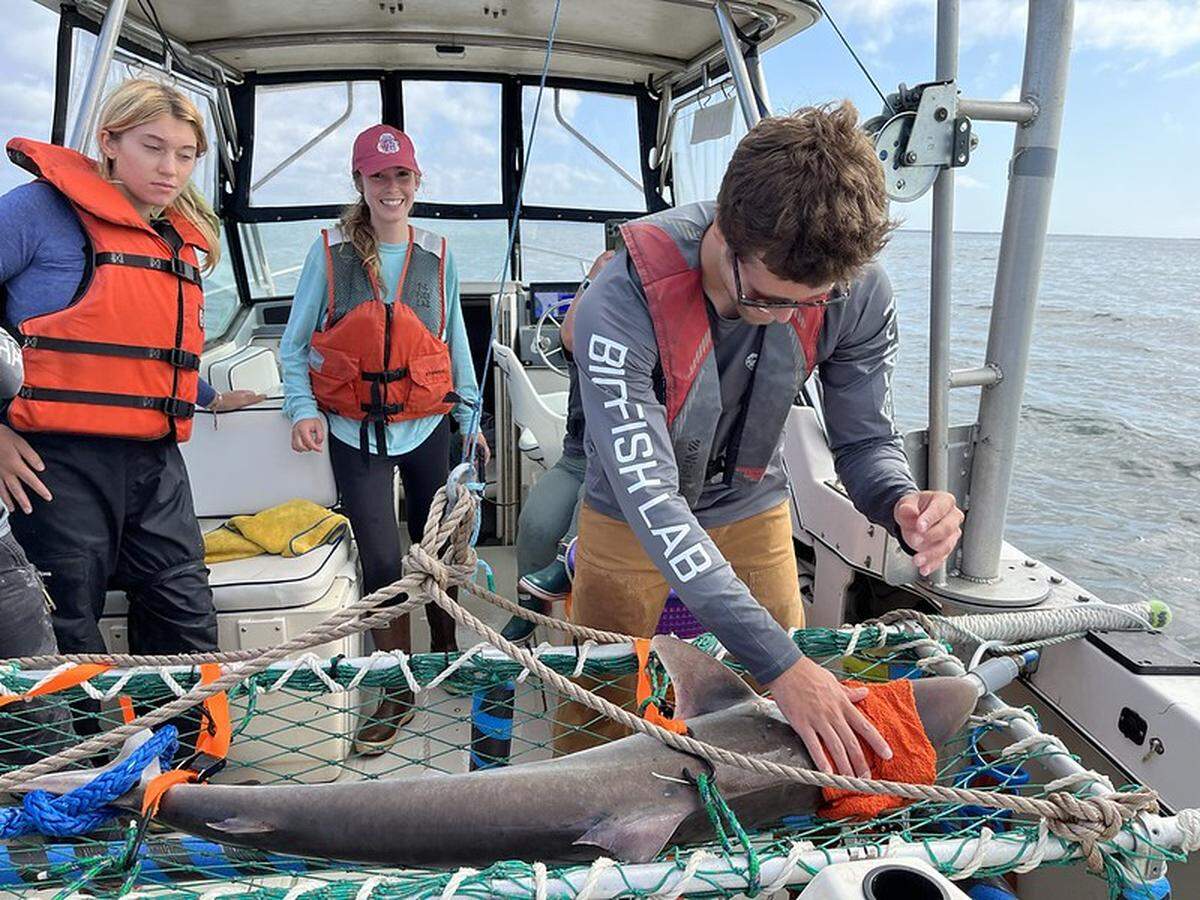
Eventually, they caught one soupfin shark, according to a study published July 17 in Frontiers Media.
The endangered shark had also never been documented in the area before.
Soupfin sharks are pickier eaters and more “aware of fishing gear,” Personius said, so researchers had to make some tweaks to the bait they used. And it worked.
“These findings suggest that soupfin sharks are likely more pervasive in the Salish Sea than previously considered,” researchers said in the study.
Soupfin sharks were overfished in the 1930s and the 1940s for their vitamin A-rich livers, Personius said in the university’s news release. The sea creature is a “key ingredient” in shark fin soup — hence its name.
Why weren’t these sharks found before?
Researchers have some guesses on why these sharks were just now identified in the South Puget Sound.
They said it’s possible the two sharks were missed during surveys and other fishing efforts, even though wildlife officials have conducted thousands of surveys over the decades.
It’s also possible the sharks moved to the South Puget Sound waters to find more food, researchers said.
Climate change and human-caused issues could be another reason, researchers said.
Overall, researchers said these discoveries can help the shark species by including it in resource management plans as well as help researchers understand its changing ecosystems.
“High populations of sharks are highly beneficial for the health of ecosystems,” Personius said. “They prevent populations of mid-level predators, such as seals and sea lions, from getting out of control and help maintain the balance of food webs.”
The research team for the broadnose sevengill sharks study included Jessica M. Schulte, Ethan M. Personius, Dayv Lowry, Lisa Hillier, Alexandra G McInturf and Taylor Chapple.
The research team for the soupfin shark study included Ethan M. Personius, Jessica M. Schulte, Lisa Hillier, Dayv Lowry, Maddie English and Taylor Chapple.
This story was originally published July 31, 2024 at 6:08 PM with the headline "Two apex predators discovered in Washington waterway for first time, researchers say."