
Judge blocks certification of Virginia redistricting referendum; Democrats plan appeal
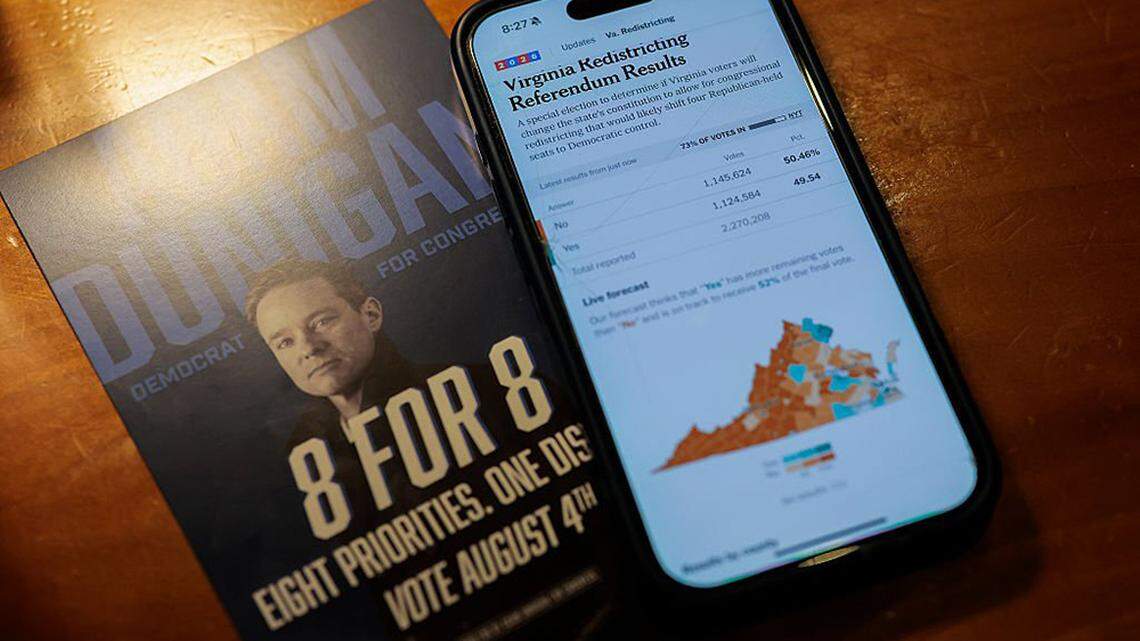
NORFOLK, Va. - A Virginia judge issued an order Wednesday that blocks the certification of Tuesday’s special election on congressional redistricting, where voters narrowly approved the redrawing of maps to give Democrats the advantage in the midterm elections.
Tazewell County Circuit Judge Jack Hurley ruled in favor of Republicans who filed the lawsuit. He found the referendum was illegal on several counts, declaring state lawmakers did not follow the required process to get the referendum on the ballot and taking issue with the language used for the ballot question.
The ruling can be seen as a victory for Republicans who had been holding out hope that the multiple legal challenges against the measure would prevail in their favor.
“This ruling is a major victory for Virginians,” said Republican National Committee Chairman Joe Gruters. “Democrats attempted to force an unconstitutional scheme to tilt congressional maps in their favor, but the court recognized it for what it is – a blatant power grab.”
Virginia Democrats, however, vowed to appeal the ruling shortly after it was issued. Attorney General Jay Jones said his office is filing an appeal immediately.
“As I said last night, Virginia voters have spoken, and an activist judge should not have veto power over the People’s vote,” Jones said in a statement. “We look forward to defending the outcome of last night’s election in court.”
Republicans have several pending lawsuits challenging the validity of the referendum process. Wednesday’s ruling was in the case of Republican National Committee v. Virginia Department of Elections Commissioner Steven Koski. In March, the Virginia Supreme Court rejected a temporary restraining order in the case, sending it back to Tazewell Circuit Court for the final order, which was issued Wednesday. But the Virginia Supreme Court is expected to have the final say.
The court order issued Wednesday effectively blocks any actions to implement the newly adopted maps, including updating and altering election districts and voter registration records, as well as using the maps in subsequent congressional and general elections.
Anthropic seeks to debunk Pentagon’s claims about its control over AI technology in military systems Anthropic seeks to debunk Pentagon’s claims about its control over AI technology in military systems.
The April 21 ballot referendum was for a constitutional amendment, which by law requires the General Assembly to pass the measure twice with a Virginia House of Delegates election in between. Democrats have argued they were following state code because they first approved the measure in the fall of 2025, followed by a Virginia House of Delegates election in November, and a second vote of approval in February.
Republicans dispute that, and have centered their legal challenges on the process used to get the redistricting referendum on the ballot. The ruling out of Tazewell Circuit Court said the initial vote of approval in October is void as it violates Virginia’s constitution. The judge also said the ballot language in the legislation adopted for the maps is a “flagrantly misleading question to the voters, and because the ballot language did not accurately describe the proposed amendment as it was passed by the General Assembly.”
“Any and all votes for or against the proposed constitutional amendment in the April 21, 2026 special election are ineffective,” the ruling states.
Hurley is the same judge who ruled in January against the referendum effort in another case brought by Republicans. The Supreme Court of Virginia also overturned that decision.
The congressional maps approved Tuesday that would favor Democrats in 10 out of Virginia’s 11 U.S. House districts. Democrats currently hold six seats in the state and Republicans hold five.
Copyright 2026 Tribune Content Agency. All Rights Reserved.