2-foot-long creature — with distinct ‘eyelashes’ — found hunting. It’s a new species

High up in the mountains of Colombia, a scaly creature balanced its 2-foot-long body on a branch. The predator had its red eyes on its next meal.
But other sets of eyes were watching it, too.
Nearby scientists observed the animal’s hunt — and discovered a new species.
Researchers wanted to study a type of snake known as an eyelash palm pit viper, according to a study published Feb. 8 in the peer-reviewed journal Evolutionary Systematics. These snakes have scales above their eyes that resemble “eyelashes” but vary greatly in coloring and habitat.
This variation led researchers to suspect that some species of pit viper were being misidentified, the study said.
They analyzed over 400 specimens from museum collections — and a pattern emerged.
Some snakes from Colombia had distinct “eyelashes” and speckled stomachs. Researchers soon realized they’d discovered a new species: Bothriechis klebbai, or Klebba’s eyelash pit viper.
Klebba’s eyelash pit vipers can reach up to 34 inches in length, the study said. They have several “low,” dull scales above their “rich dark reddish brown” eyes. Their tails, meanwhile, are capable of grasping.
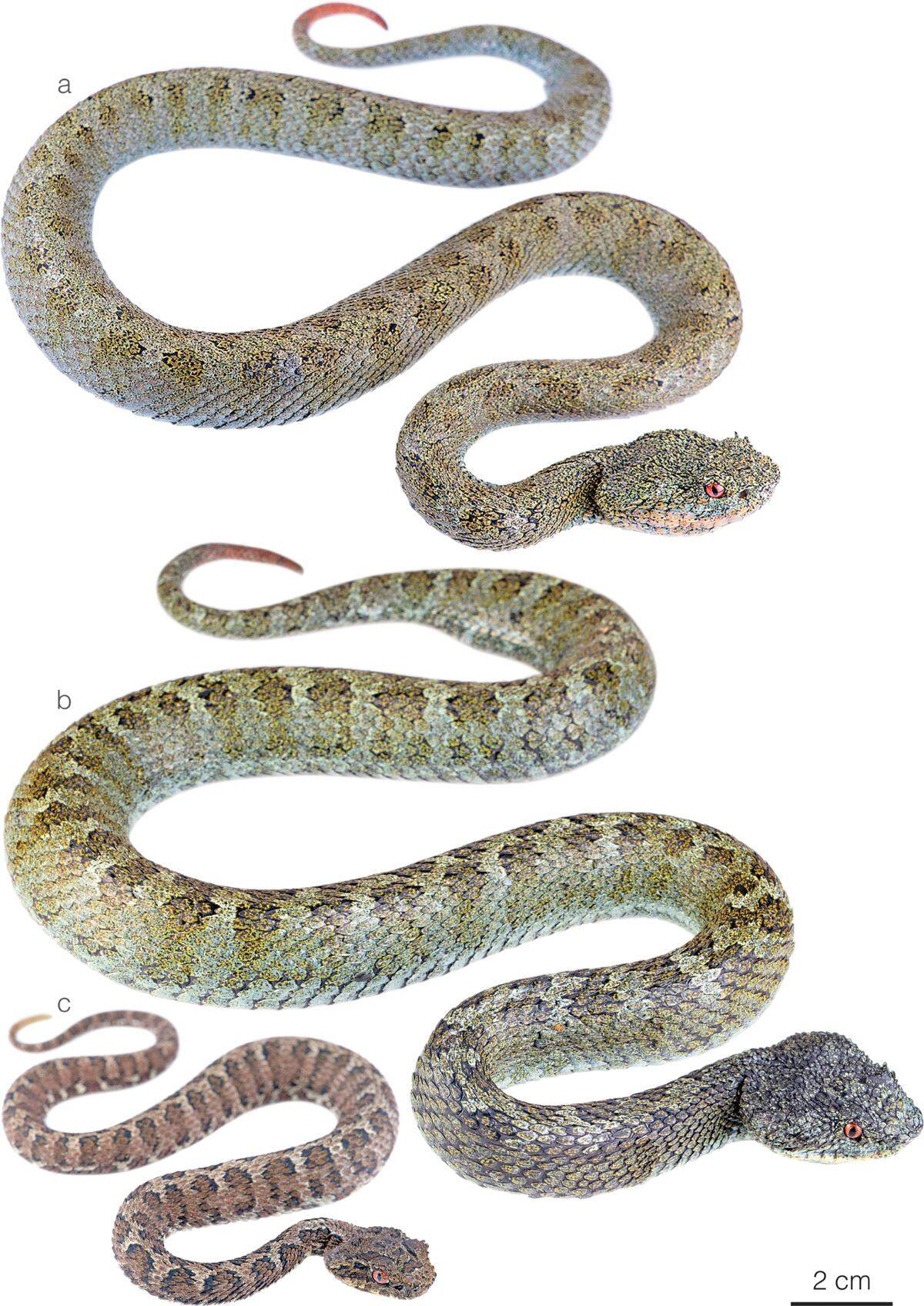
Photos show the color variation of Klebba’s eyelash pit vipers. Several snakes have a blueish gray coloring with brown band-like blotches. One is reddish-brown with darker black blotches. All have red eyes and orange-red tail tips.
Klebba’s eyelash pit vipers live in the trees of mountainous forests, the study said. They have been seen hunting lizards and are able to mate with other viper species to produce hybrid offspring.
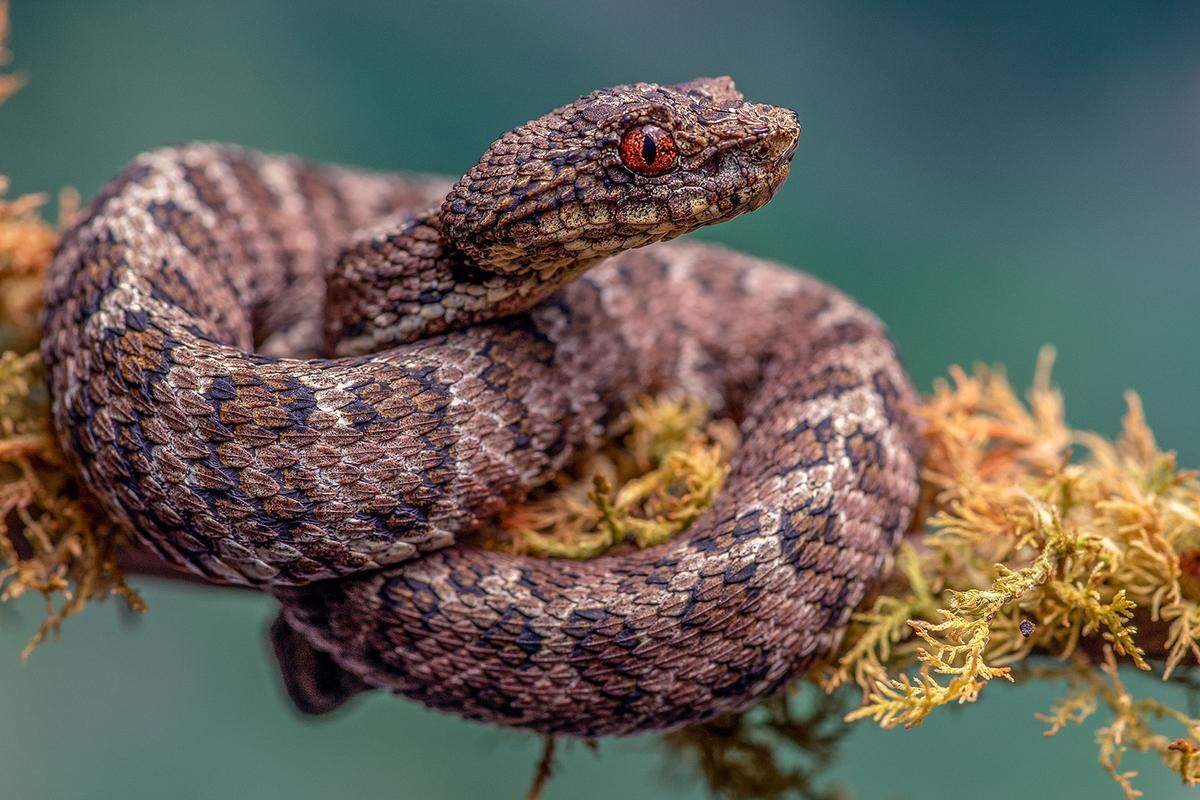
Pit vipers are generally venomous, but researchers have no data on the venom of the new species.
Researchers said they named the new species after Casey Klebba, a co-founder of minifund.org and “one of the most invaluable supporters of (Alejandro Arteaga)’s field expeditions to remote areas of Ecuador and Colombia.”
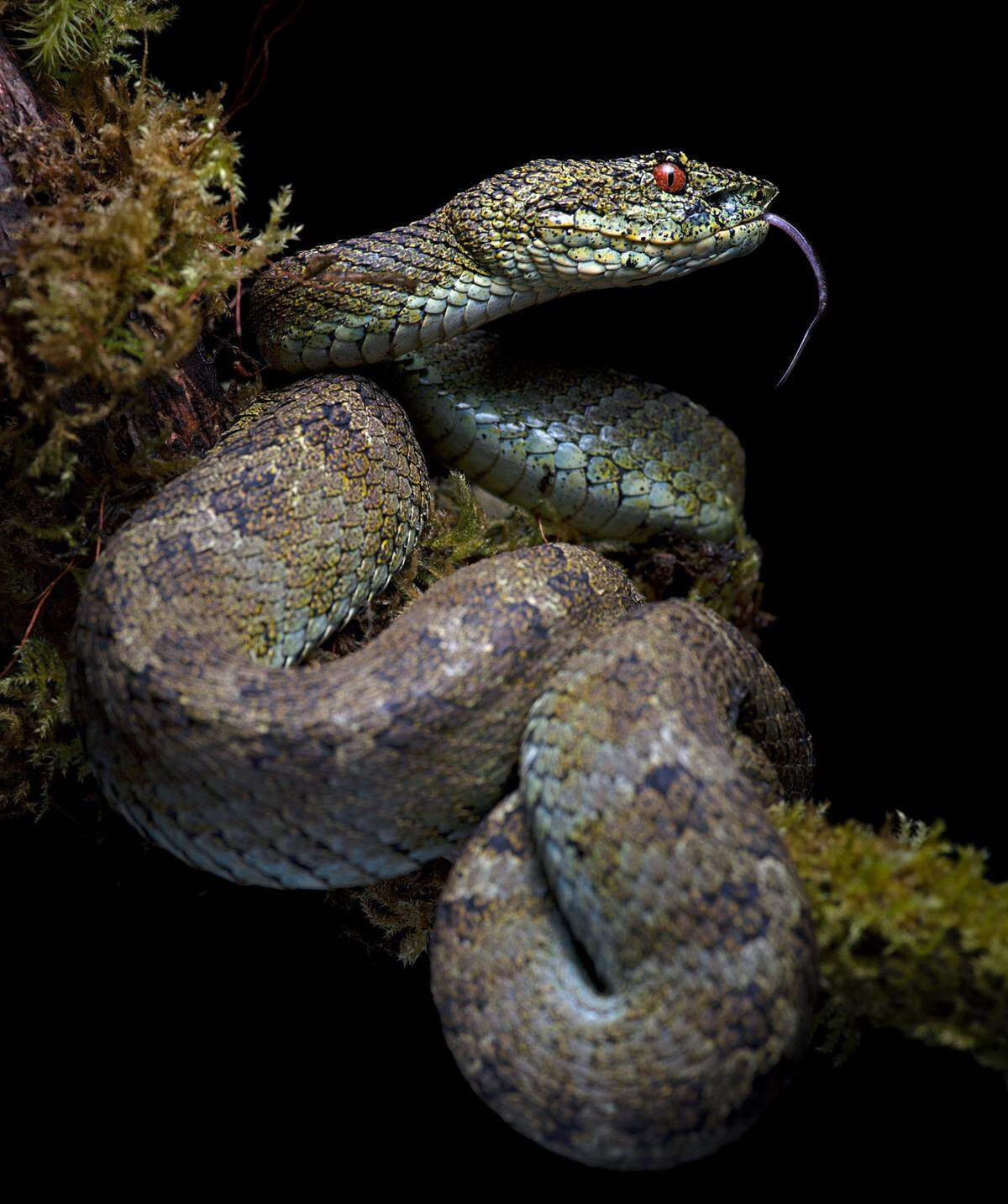
So far, Klebba’s eyelash pit vipers have been found at 23 sites in Colombia, the study said.
The new species was identified by its namesake “eyelashes,” coloring, scale pattern and genitalia, the study said. DNA analysis found the new species had between about 3% and about 11% genetic divergence from other eyelash pit vipers.
The research team included Alejandro Arteaga, R. Alexander Pyron, Abel Batista, Jose Vieira, Elson Meneses Pelayo, Eric Smith, César Barrio Amorós, Claudia Koch, Stefanie Agne, Jorge Valencia, Lucas Bustamante and Kyle Harris.
The team also discovered four more new species of pit viper: Khwarg’s eyelash pit viper, Shah’s eyelash pit viper, Rahim’s eyelash pit viper and Hussain’s eyelash pit viper.
This story was originally published February 14, 2024 at 3:40 PM with the headline "2-foot-long creature — with distinct ‘eyelashes’ — found hunting. It’s a new species."