Carvings discovered on rock walls in Brazil — then something prehistoric is revealed
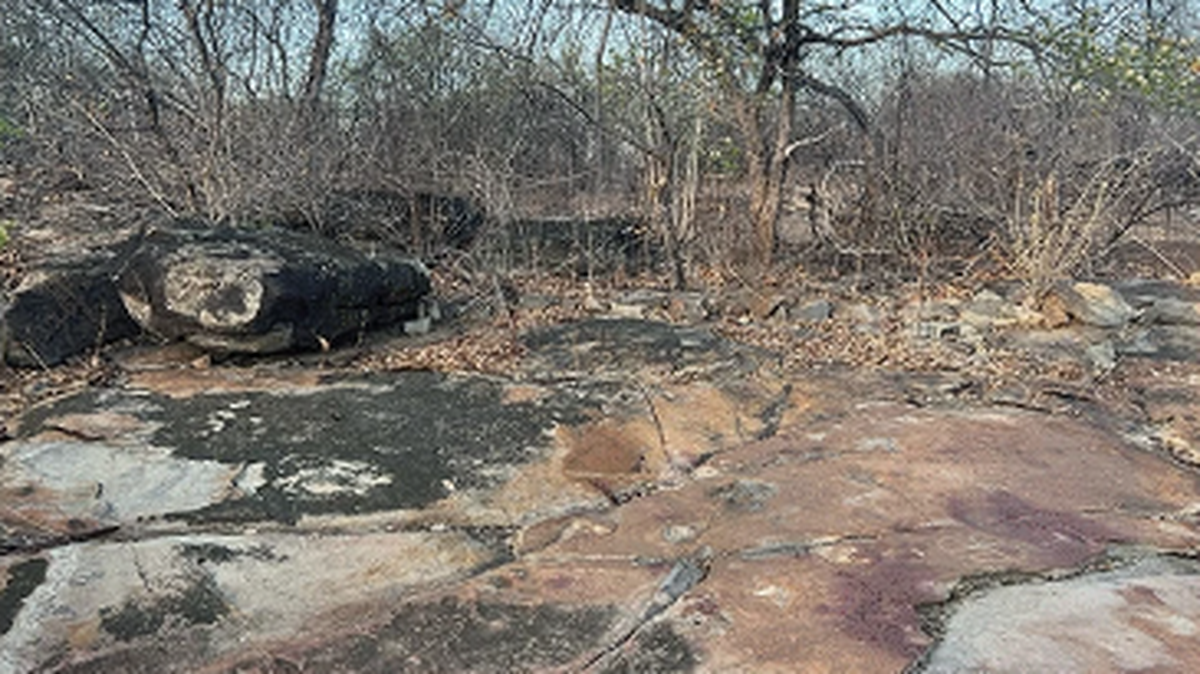
Miles outside an eastern Brazilian town, three large outcroppings of rocks stand out from the green landscape.
Scratched on the face of the rocks are circles, crossed by lines forming a sort of crosshair on the stone.
They aren’t the only ancient markings on the wall.
The site is called Serrote do Letreiro, situated in the Sousa Basin of Brazil in the Vale dos Dinossauros Natural Monument — Dinosaur Valley.
Archaeologists and paleontologists have been working in the site for the better part of a century, according to a March 19 study published in the journal Scientific Reports, but there is little to no mention of rock carvings in the paleontological record.
The drawings are called petroglyphs, images created by people thousands of years ago.
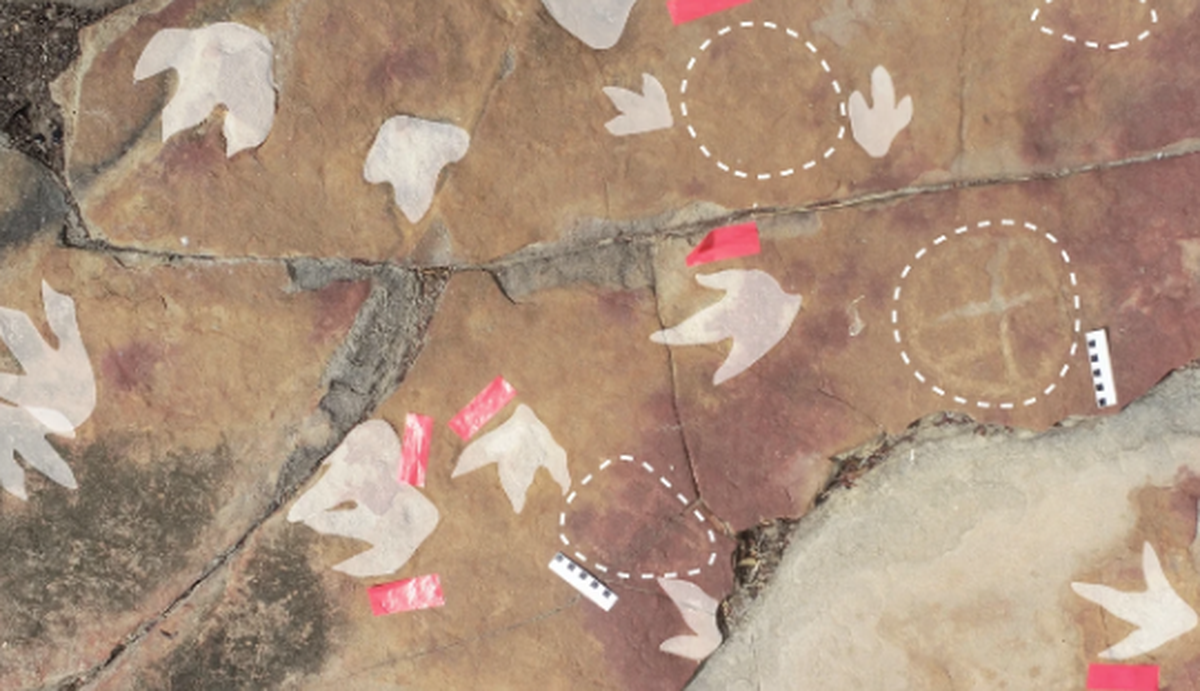
The drawings are carefully placed around multiple types of fossilized dinosaur footprints, according to the study, and the creators made special care to not harm the prehistoric impressions.
Petroglyphs and dinosaur footprints have been found next to one another in Australia, Poland and the United States, according to the study.
“Regardless, in none of these instances do the petroglyphs display such a close-knit relationship with the footprints as in Serrote do Letreiro, where it is unquestionable that the engravers acknowledged the footprints and intentionally executed the petroglyphs around them, establishing a symbolic connection between human graphic expression and the fossil record,” the researchers said.
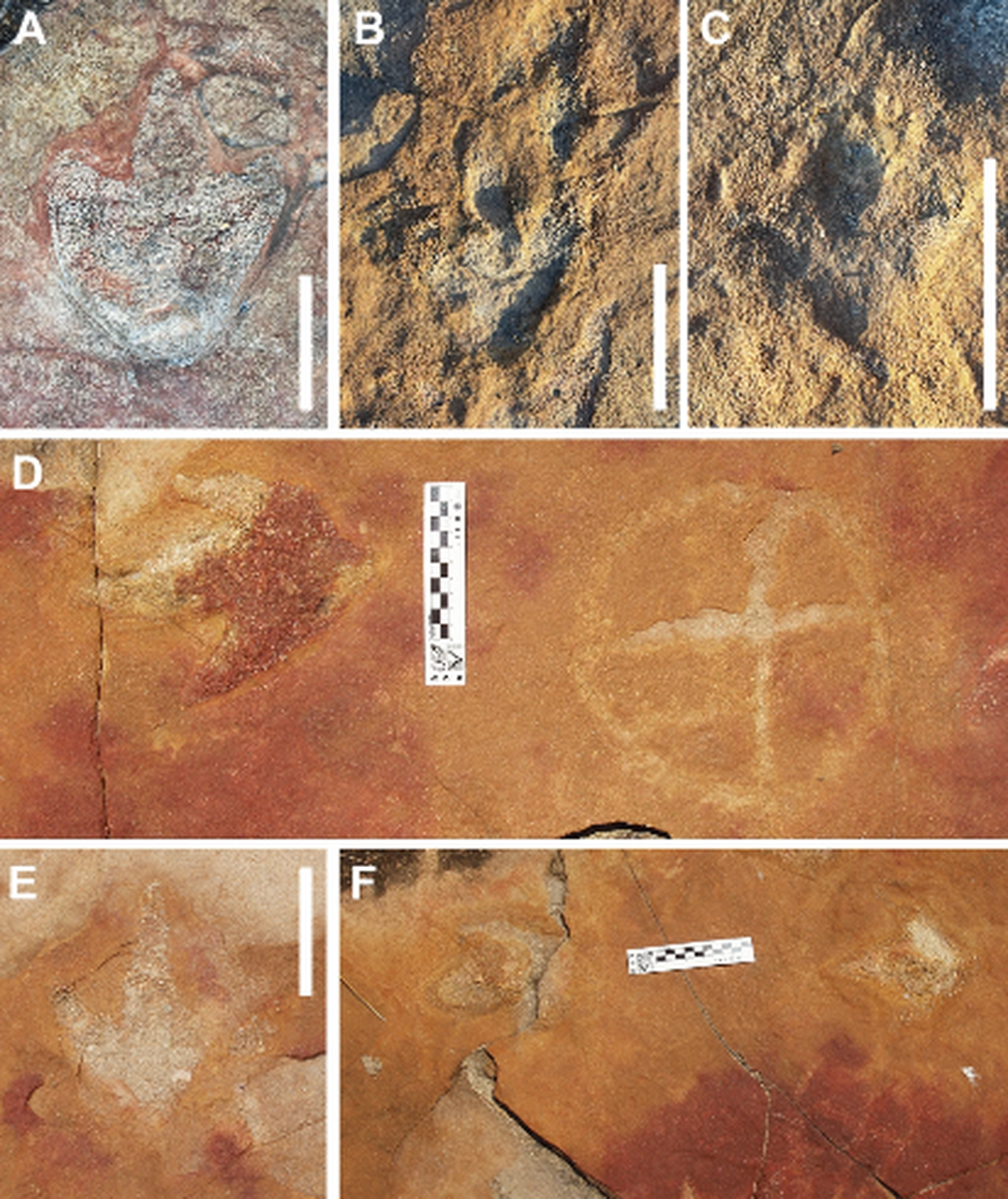
The carvings were made deliberately and with care, the researchers said, and the exact process and image can be used to determine the “authors” of the work.
“The petroglyphs were first carved by scraping with light contact between an abrasive instrument and the rock surface. Irregularities are observed on the inner edges of the rock grooves, a result of fast movement, causing friction between the instrument and the surface. Many of the petroglyphs underwent subsequent pecking so that the engraving line was refined by a series of continuous impacts using a sharp instrument,” the researchers said.
The style is similar to other petroglyphs found in the region, suggesting it was the same social group that came to Dinosaur Valley.
“Throughout this territory, this social group expressed itself graphically in a rather cohesive manner, employing a unique approach to producing petroglyphs and demonstrating a strong preference for specific rock surfaces near water sources for their execution,” the researchers said. “ We argue that these variations are better understood as manifestations of individual differences among authors belonging to the same social group. These individuals, while sharing a common graphic or visual identity, express themselves through distinct personal styles.”
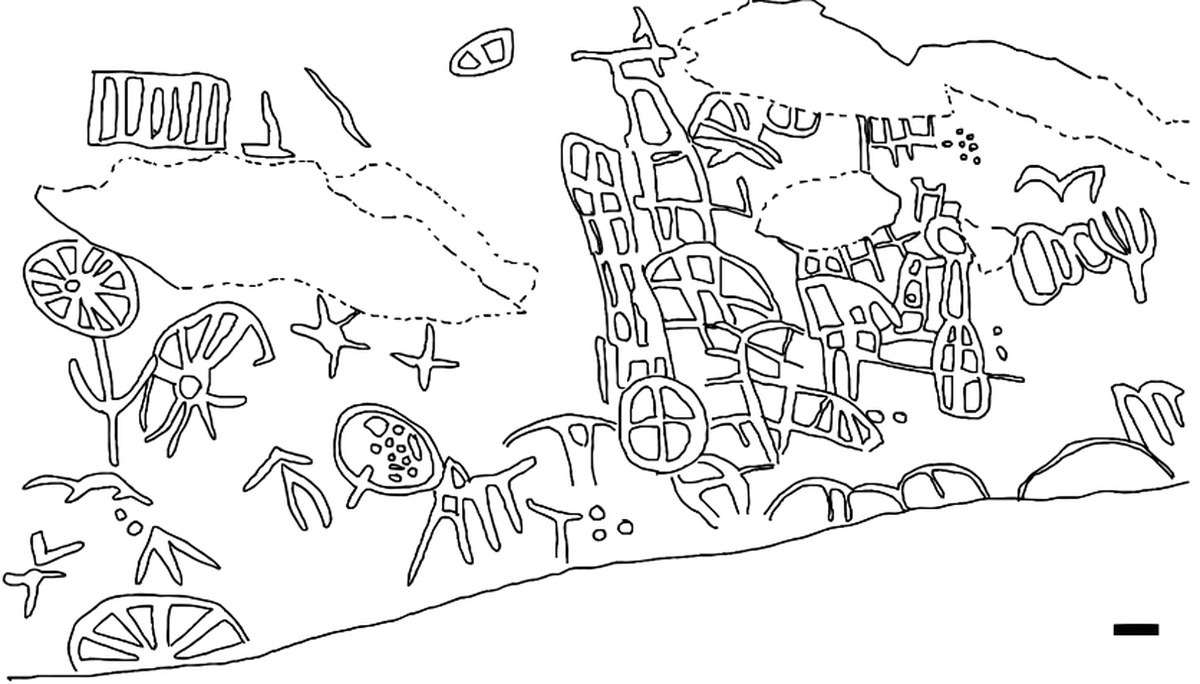
The age of the images were estimated from burials found nearby, ranging anywhere from 9400 to 2620 years ago, according to the study.
The footprints are much older.
There were impressions from theropods, sauropods and iguanodontian dinosaurs, all hailing from the Early Cretaceous period, the researchers said.
Some of the petroglyphs appear to mimic the footprints, according to the study, matching the round base of the sauropod foot or the three toes on a theropod.
“The identification of these engravings as tridigits that iconically replicate dinosaur footprints provides additional evidence of the possible cultural assimilation of the fossil record,” the researchers said.
The ancient people may have been just as fascinated by animals of the past as we are today, according to the study.
Sousa is in the state of Paraíba in Brazil, about a 1,600-mile drive northeast of São Paulo.
This story was originally published March 20, 2024 at 11:44 AM with the headline "Carvings discovered on rock walls in Brazil — then something prehistoric is revealed."