Skeleton of 6,800-year-old official discovered by busy road in Germany. See the find
As construction began on a new development project by a busy road near Eichendorf, Germany, the district’s archaeologist was called to the site.
The town’s mayor, Josef Beham, told the Passauer Neue Presse on May 15 they didn’t expect to find anything, but the archaeologist oversight of the dig was more of a formality, according to Stern magazine.
Then the archaeologist made a monumental discovery.
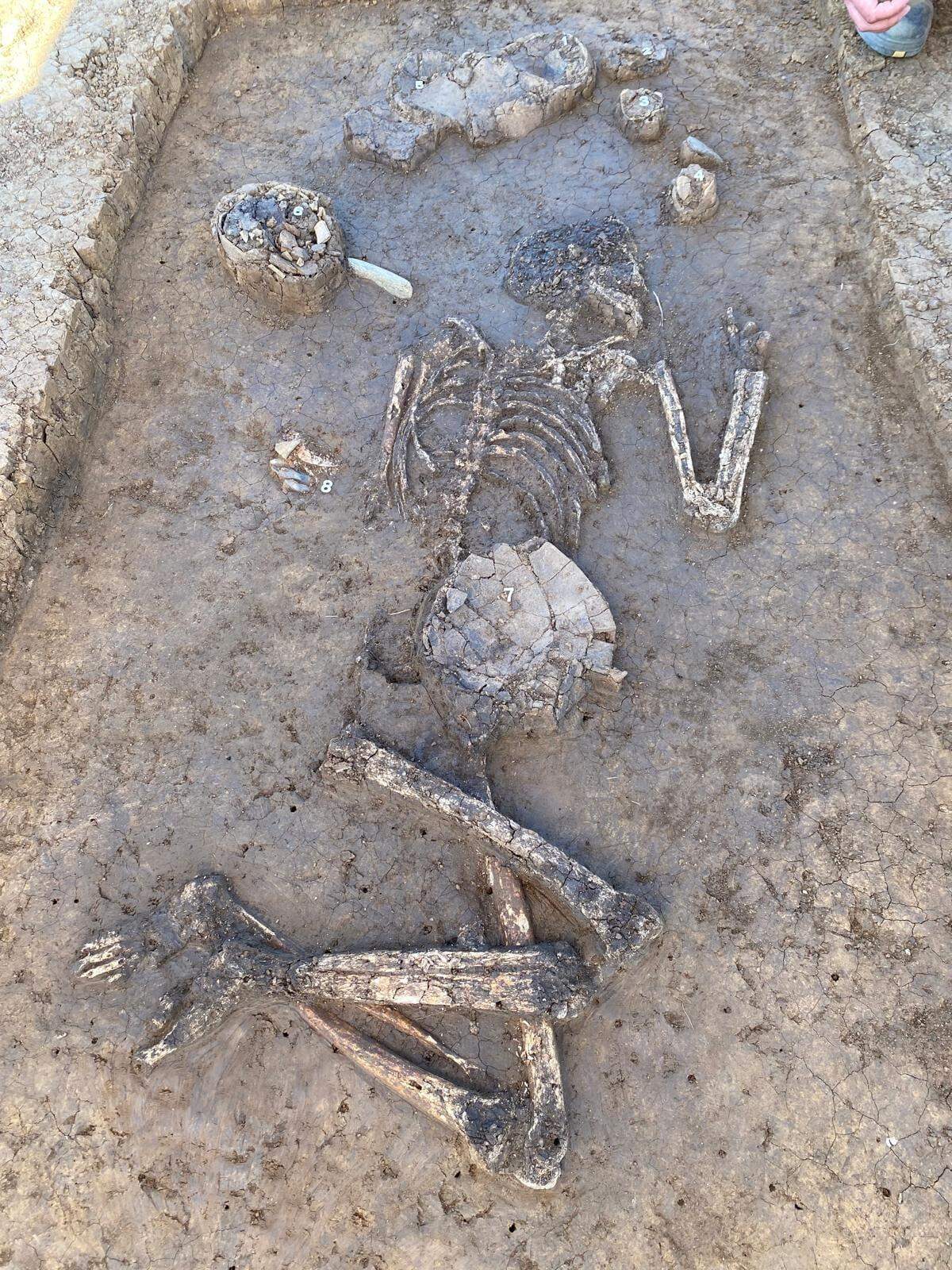
Buried in the ground was an ancient grave, and it contained shockingly well-preserved human remains, the city said in a news release after the discovery was announced at a news conference on May 14, BR24 reports.
The remains were dated to the Neolithic period, making them approximately 6,800 years old, officials said.
The body was named “Exinger,” from the Exing district where it was found, Stuttgarter Zeitung reported, and excavation of the remains began.
The area was likely a Neolithic settlement, which would have been active about 10,000 years ago until 2,000 B.C., district archaeologist Florian Eibl told the PNP, according to Stern.
During this time period, only high-ranking officials or members of the community were buried in graves, officials said in the release, meaning this person was likely the head of the village, akin to a modern-day mayor.
The remains were also found with grave goods, suggesting the body is male, officials said.
One item found with the body was a small bag that may have been filled with colored stones, pyrite and flint, which would have been used as a lighter, Eibl told BR24. The trimmings of the bag were made from split boar’s tooth, Eibl told the outlet, which was a badge of high rank during this age.
Near the skull, above where the body was buried in a crouched position, archaeologists also found a drinking vessel that may have been a personal cup and stone blades in front of and behind the body, Stuttgarter Zeitung reported.
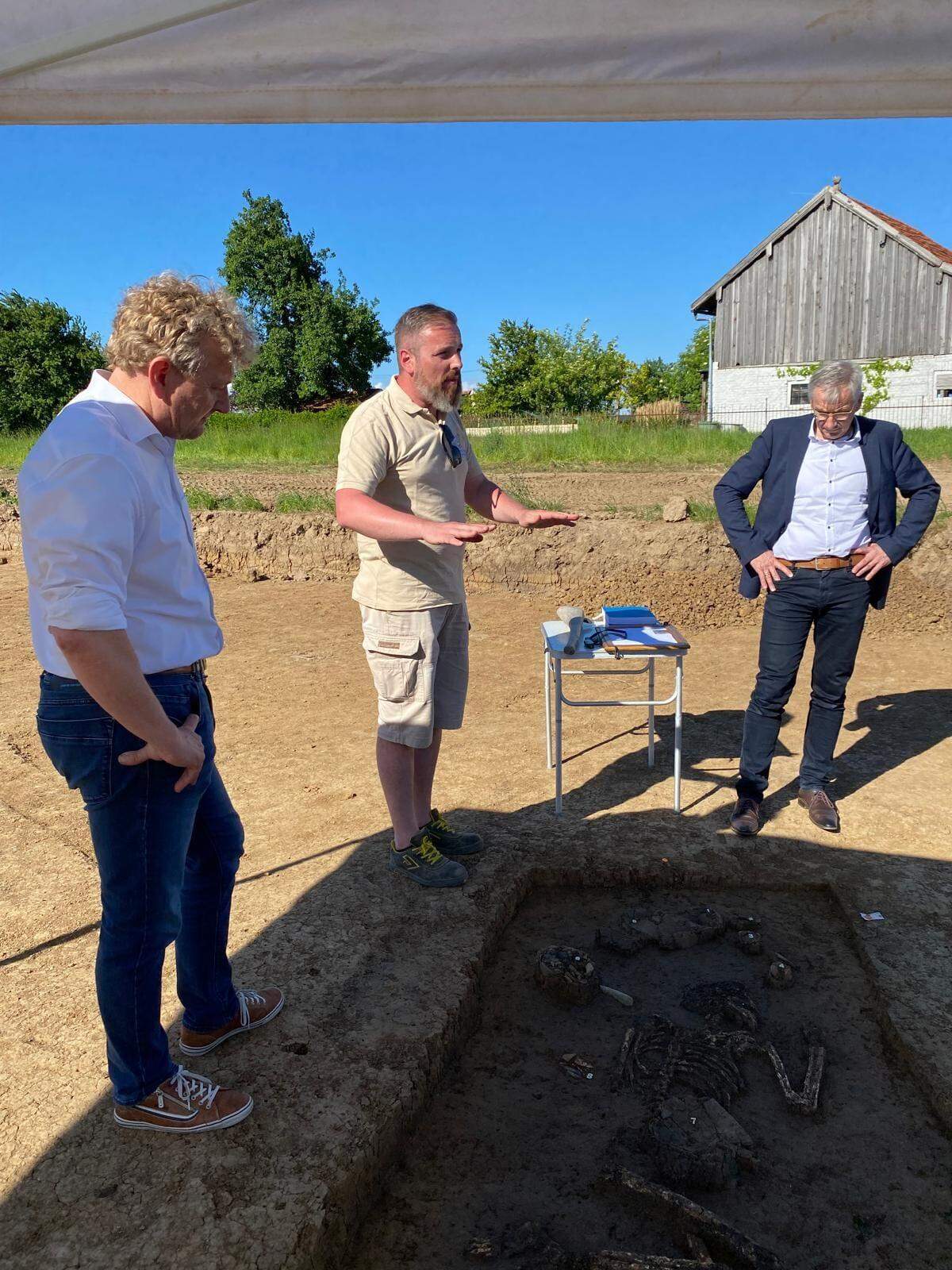
While the skeleton is well-preserved, it is not necessarily in good condition and remains fragile, news outlets reported. Further testing will be needed to confirm the body’s sex and determine an age.
Officials said the grave may be one of the best-preserved ever to be found in this region of Germany, Lower Bavaria, and only 10 other sets of remains have been discovered in the 28 other burial sites found so far.
Officials noted that the remains make this discovery about 1,500 years older than the famous Ötzi the Iceman, another neolithic body, Stern reported, citing PNP.
“Ötzi” is a wet mummy that was found preserved in glacier ice in the Ötztal Valley Alps on the border between northern Italy and western Austria, according to the South Tyrol Museum of Archaeology where Ötzi is kept.
Ötzi is one of the best studied bodies in the world, the museum said, because so much of his body was kept intact after his death 5,300 years ago.
Eichendorf, where the new body was found, is just a few hundred miles northeast of Ötzi’s final resting place, and may provide more insight into the life and culture of the Neolithic people.
Eichendorf is in southeastern Germany, about an 85-mile drive northeast of Munich.
Google Translate was used to translate the news release from the Marktgemeinde Eichendorf, and the news articles from Stern, BR24 and Stuttgarter Zeitung.
This story was originally published May 16, 2024 at 5:14 PM with the headline "Skeleton of 6,800-year-old official discovered by busy road in Germany. See the find."