Trail cameras capture rare ‘strawberry’ creature in Tanzania for first time. See it
Some animals are identifiable by just a quick glimpse of their fur, skin or scales.
A dash of orange and black stripes is easily identified as a tiger. A white dog covered in black spots is clearly a dalmatian.
But what happens when a creature has a mutation that changes their visual calling card?
In leopards, it is believed a genetic mutation called erythrism — or potentially a mutated protein gene — causes their famous black spots to instead be more red or brown, according to a study published July 8 in the journal Ecology and Evolution.
They are called strawberry, red, pink or golden leopards, according to the study, and they have only been observed “a handful of times.”
Now, another one has been spotted in Tanzania for the very first time.
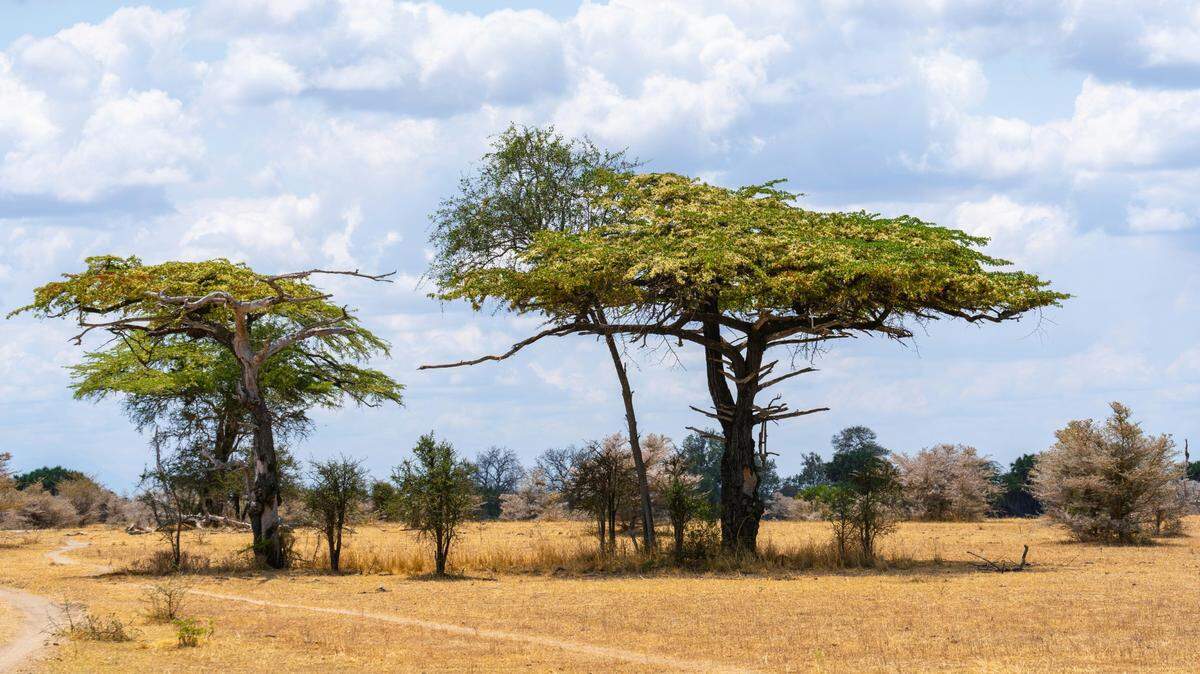
Researchers set up motion-activated cameras along the roadways in the Selous Game Reserve and Nyerere National Park, according to the study, hoping to capture the movements of wildlife through the protected area.
Leopards themselves are common and native to the area, and over the course of the study researchers identified 373 cats that crossed in front of the cameras, according to the study.
Most were adult leopards, researchers said, and 12 cubs accompanied their mothers during the course of the study.
But one big cat was different from all the others — a female strawberry leopard.
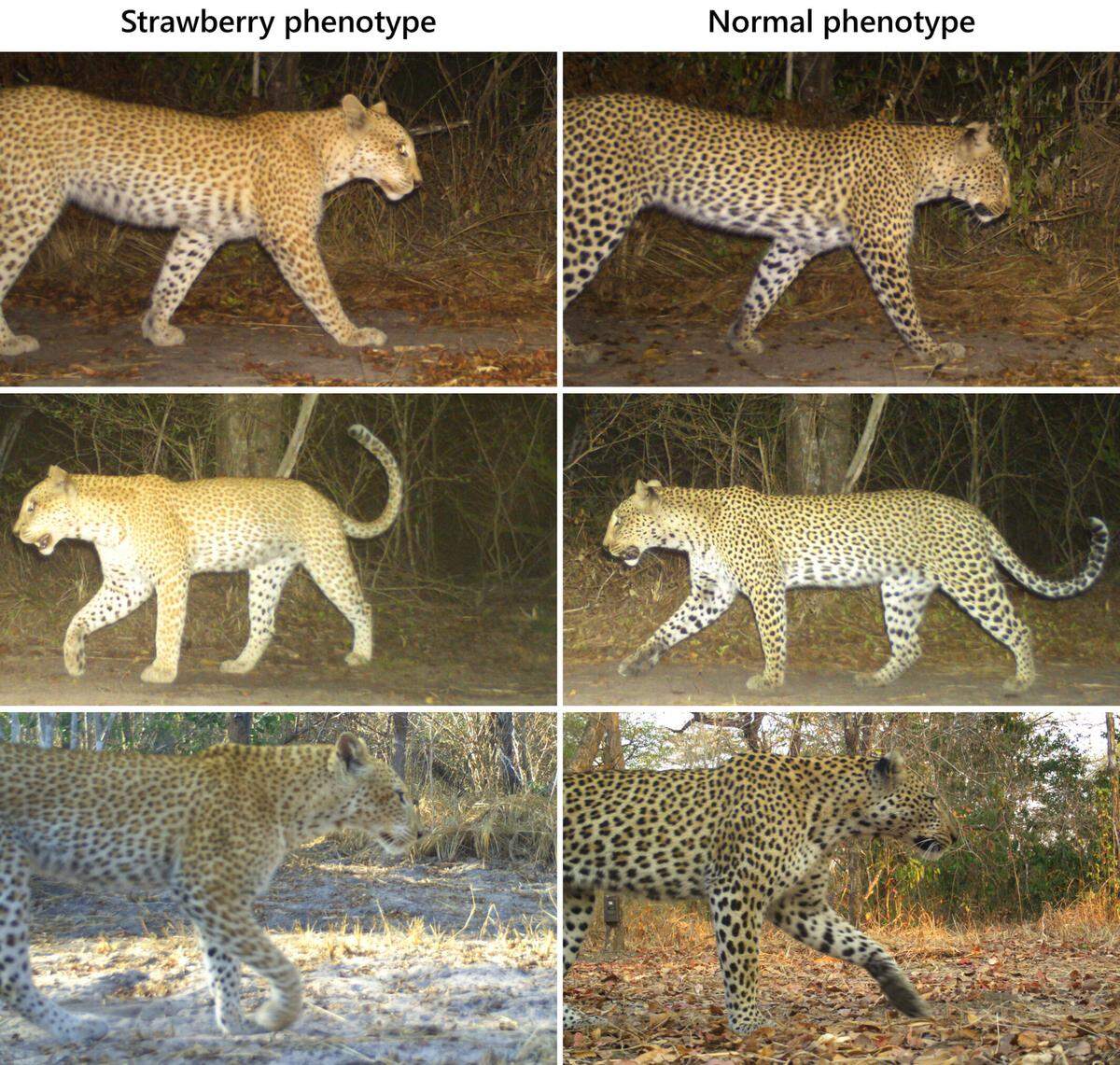
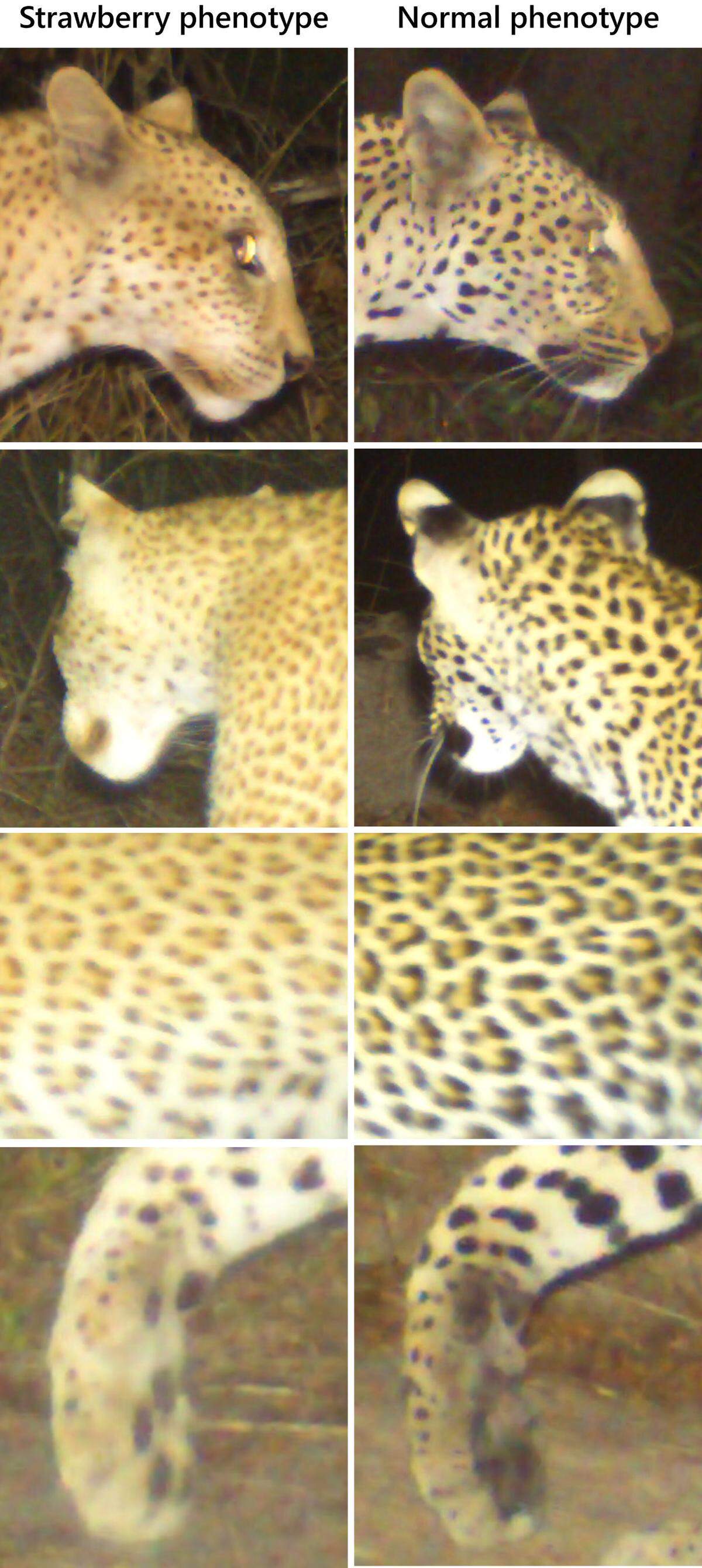
“A comparison of the strawberry leopards’ coloration with standard phenotype leopards photographed at a comparable distance during both the night and day highlights her lighter coloration,” researchers said. “Closer inspection also reveals a lack of black pigmentation around the mouth, on the backs of the ears, and in the fur on the underside of the paw.”
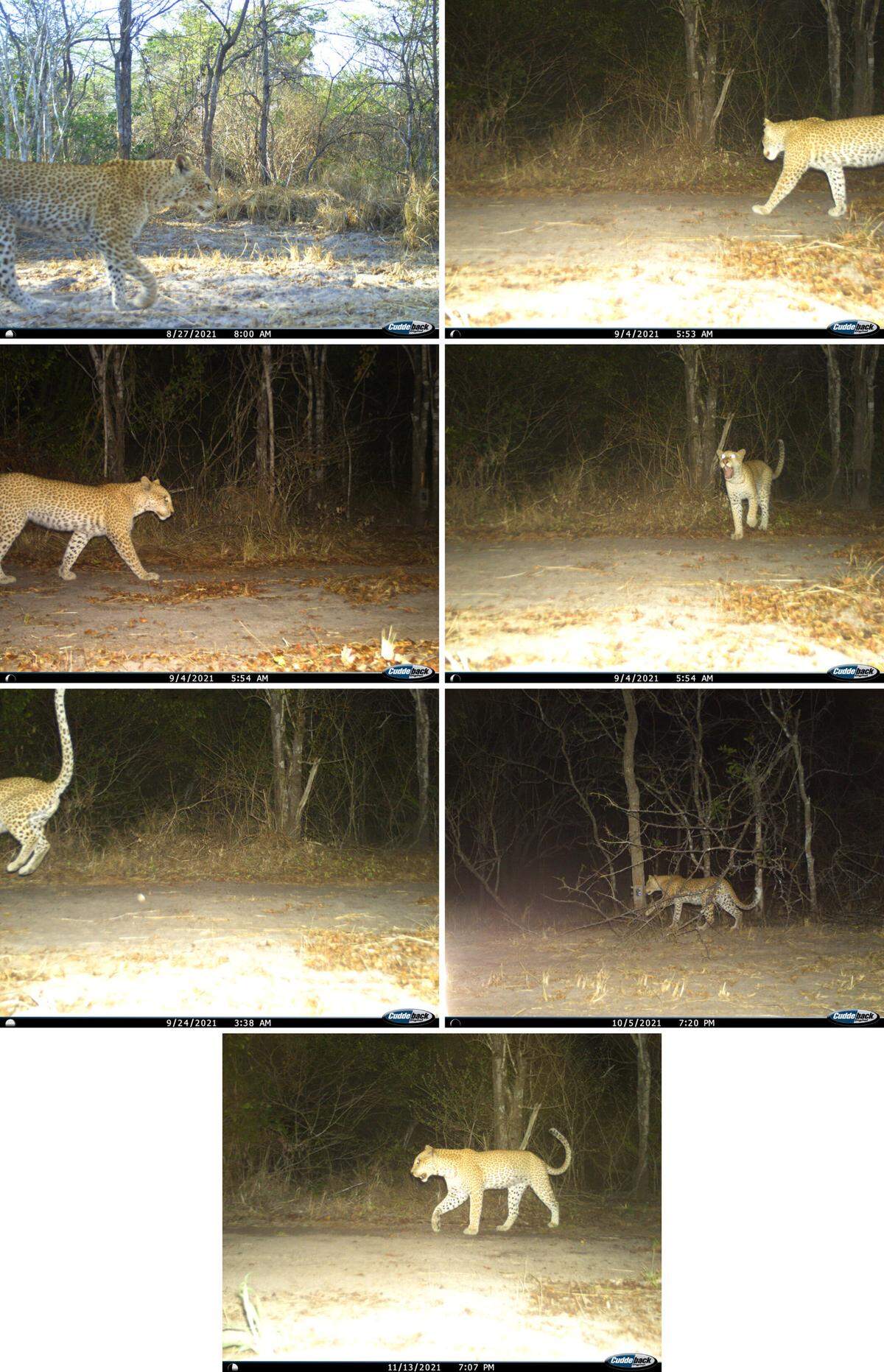
The animal was seen five times on the cameras during a four month period, according to the study, in multiple locations in the park.
The animal was not approached or trapped to conduct a DNA test, something the researchers say would be needed to confirm their suspicions of the strawberry variation.
“This is the first documented record of a suspected strawberry leopard on the African continent outside South Africa, at a distance of approximately (1,200 miles) from the closest existing record,” according to the study.
The single strawberry female represented just 0.3% of the leopard population in the game reserve, significantly lower and more rare than the 3.6% occurrence of strawberry leopards in South Africa, according to the study.
The significant physical distance between this case and other known animals, however, raises questions for the researchers on how the genetic mutation was passed on to leopards in Tanzania.
Some male leopards, who pass the mutation on to their offspring, have been recorded traveling as far as 200 miles, researchers said, but without genetic testing, it’s unclear if the animals in South Africa are related to the Tanzania female.
Researchers said one possibility is that the phenotype arose on its own due to inbreeding among the leopard population. In South Africa, many male leopards were killed for trophy hunting, causing young males to stay closer to their families, increasing chances of inbreeding, according to the study.
Two strawberry leopard cubs were spotted in a South African park in November, McClatchy News reported, and experts said their coloration is exceptionally rare in the wild. The cubs were photographed by a wildlife guide in the iSimangaliso Wetland Park.
Previously, the strawberry animals were photographed in 2012 and 2019, McClatchy News reported.
The Selous Game Reserve and Nyerere National Park are in southeastern Tanzania.
This story was originally published July 24, 2024 at 12:50 PM with the headline "Trail cameras capture rare ‘strawberry’ creature in Tanzania for first time. See it."