Five-armed sea creature — misidentified for 160 years — turns out to be new species

Along the western coast of Mexico, a patterned sea creature stretched its five arms across the sandy coral. Something about it caught the attention of passing scientists.
But identifying the “distinctive” new species would take over 160 years.
Researchers collected several sea creatures known as brittle stars from Mexico’s Pacific coast between 2011 and 2020, but when they looked through archives to try to identify their catch, they found a metaphorical mess, according to a study published Aug. 6 in the peer-reviewed European Journal of Taxonomy.
One important specimen was missing. Several more “distinct” specimens were inconsistently grouped together.
Looking at the muddled archives, researchers felt they had no choice but to try to straighten out the confusion. They analyzed over 250 brittle stars collected over a roughly 160-year span. They studied the animals’ coloring, body shape, internal anatomy and DNA, the study said.
Eventually, patterns began to emerge. Researchers noticed that some of the brittle stars from Mexico had a consistent and “distinctive” ring pattern. They soon realized they’d discovered a new species: Ophioderma aija, or the Aija brittle star.
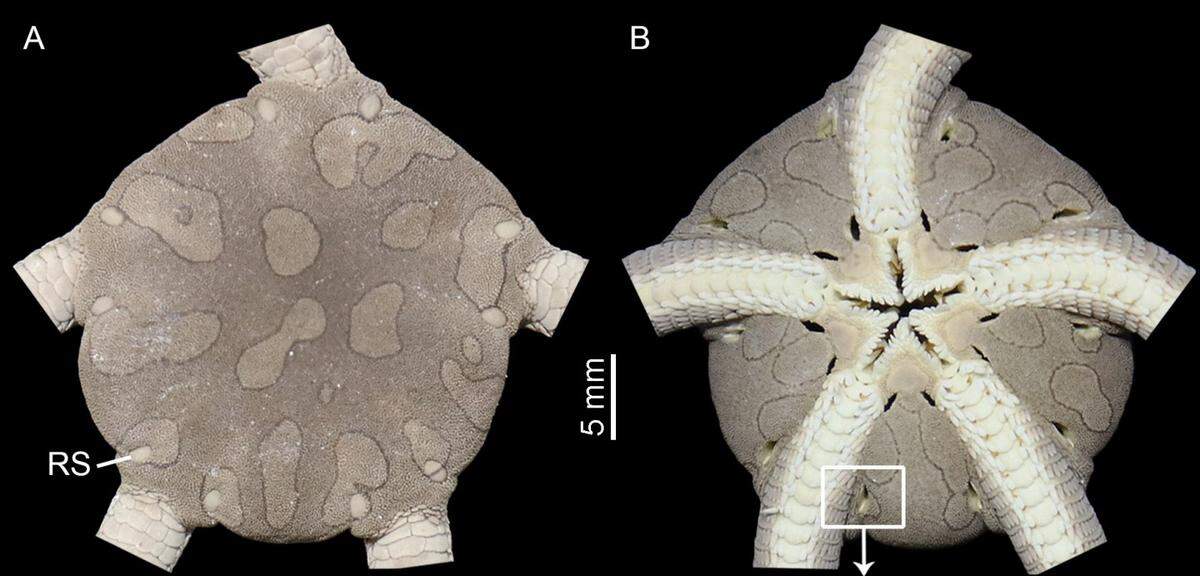
Aija brittle stars have a central disc-like body reaching about 1 inch in diameter and five spine-covered arms measuring up to about 3 inches in length, the study said. Most of its body is covered in “granules,” except for a few “naked” sections near the center.
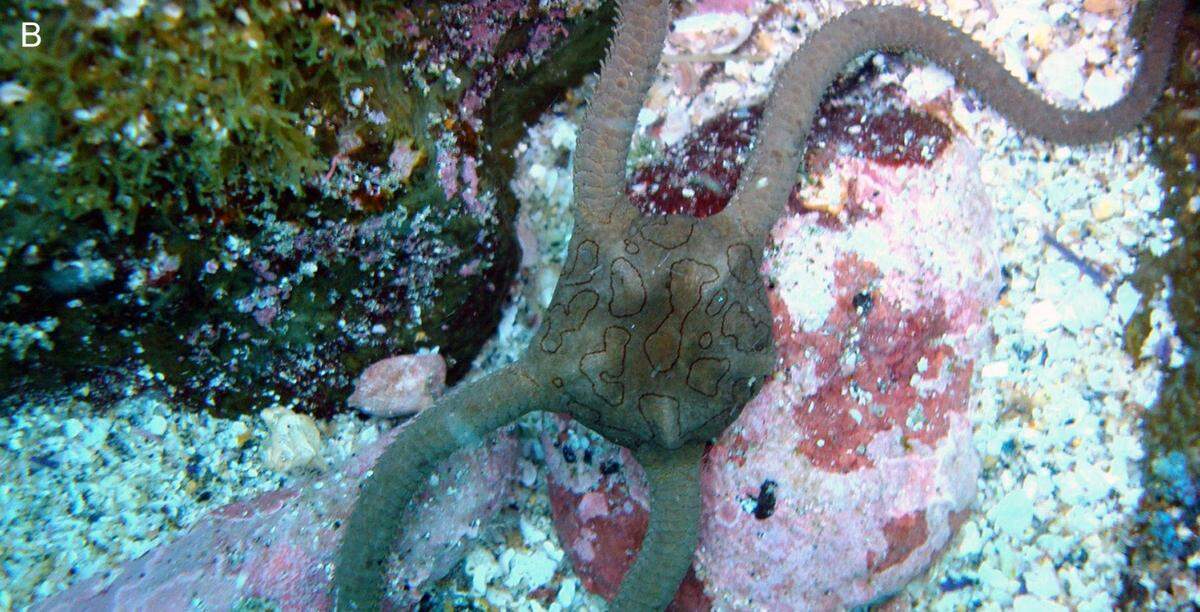
A photo shows the coloring of a live Aija brittle star. Overall, it appears “dark brown.” The center of its body has several irregular blotches that look almost like outlines. Researchers described these markings as “dark, sinuous rings.”
“The number and color intensity of these rings varied within and between specimens,” researchers said. Photos show this variation between the top and bottom of a brittle star.
Although similar in appearance to sea stars, brittle stars belong to a different class of animals, according to the National Marine Sanctuary Foundation. Brittle stars are recognizable by their longer, thinner arms.
Aija brittle stars live on rocks, coral and sand in the shallow intertidal zone at depths of up to about 90 feet, the study said.
Researchers said they named the new species “aija” after Aida Janet Gil-Rabadán, the mother of co-author Karla Humara-Gil. “Born under a lucky star, she deserves her own on Earth.”
So far, Aija brittle stars have been found as far north as Guaymas, Mexico, and as far south as Cardon Island, Nicaragua, but most records come from Mexico’s Pacific coast, the study said.
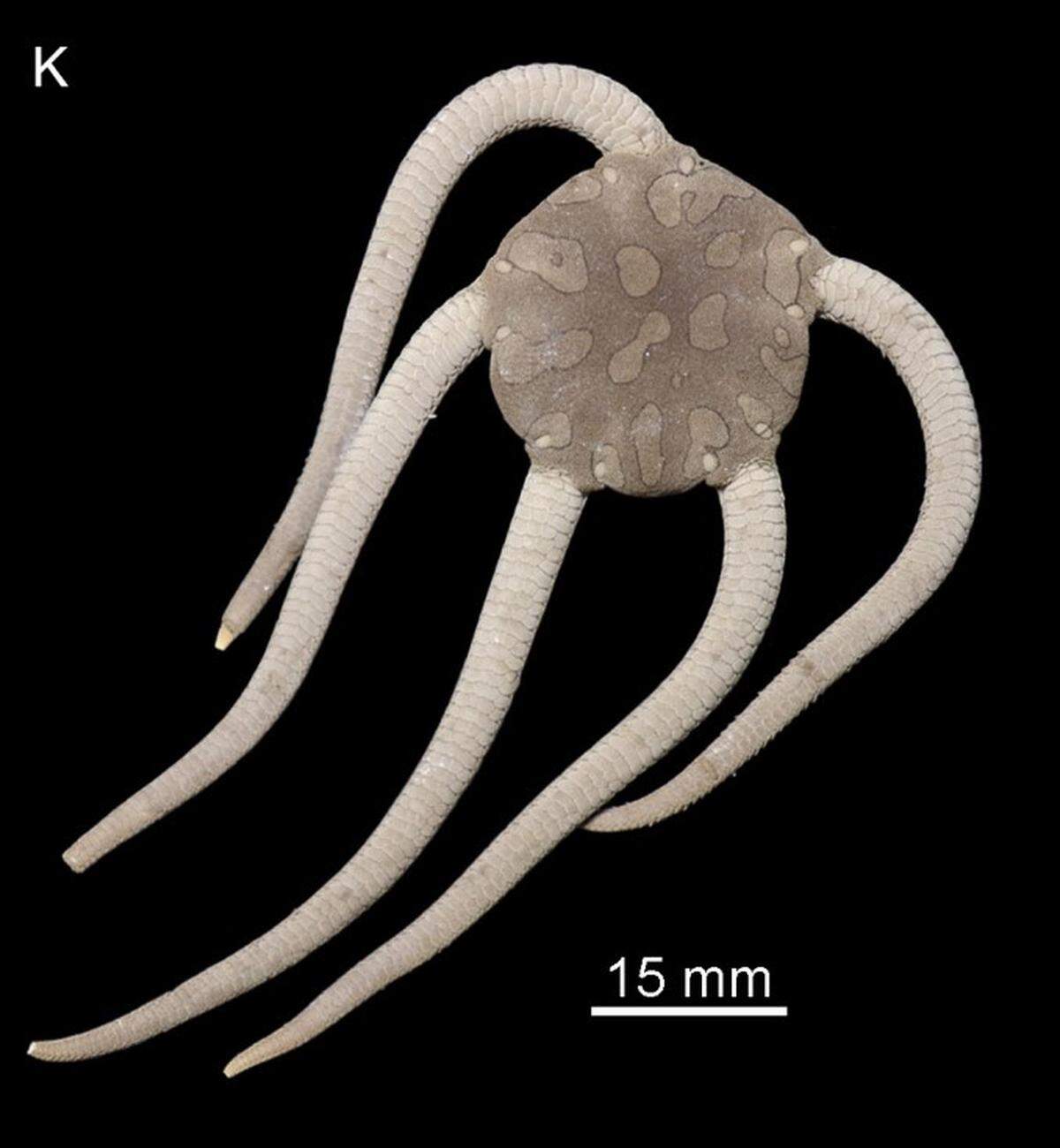
The new species was identified by its coloring, pattern, arm spines and other subtle physical features, the study said. DNA analysis found the new species had at least 3% genetic divergence from related brittle stars.
“Despite being recorded since 1860, (the new species) remained undescribed due to its misidentification,” the study said.
The research team included Karla Humara-Gil, Rebeca Granja-Fernández, Eric Bautista-Guerrero, Francisco Solís-Marín and Alma Rodríguez-Troncoso.
The team also discovered a second new species of brittle star.
This story was originally published August 6, 2024 at 4:37 PM with the headline "Five-armed sea creature — misidentified for 160 years — turns out to be new species."