Volunteers search images from space — and discover 1,000 ancient burials in Netherlands
When new archaeological sites are discovered, it can take years to fully excavate, analyze and understand their history.
Even with teams of archaeologists, the project is time-consuming and meticulous.
What if there was a way to speed up the process?
“The definition of citizen science is very broad and can encompass many differing degrees of public involvement,” researchers said in a study published Oct. 14 in the peer-reviewed journal Antiquity. “In recent years, the concept has often been applied to ‘crowd science,’ where large groups of volunteers participate in scientific research.”
Researchers in the Netherlands wanted to test how reliable citizen science would be in the field of archaeology, so they launched a project called Heritage Quest in 2018, according to an Oct. 13 news release from the journal.
What is Heritage Quest?
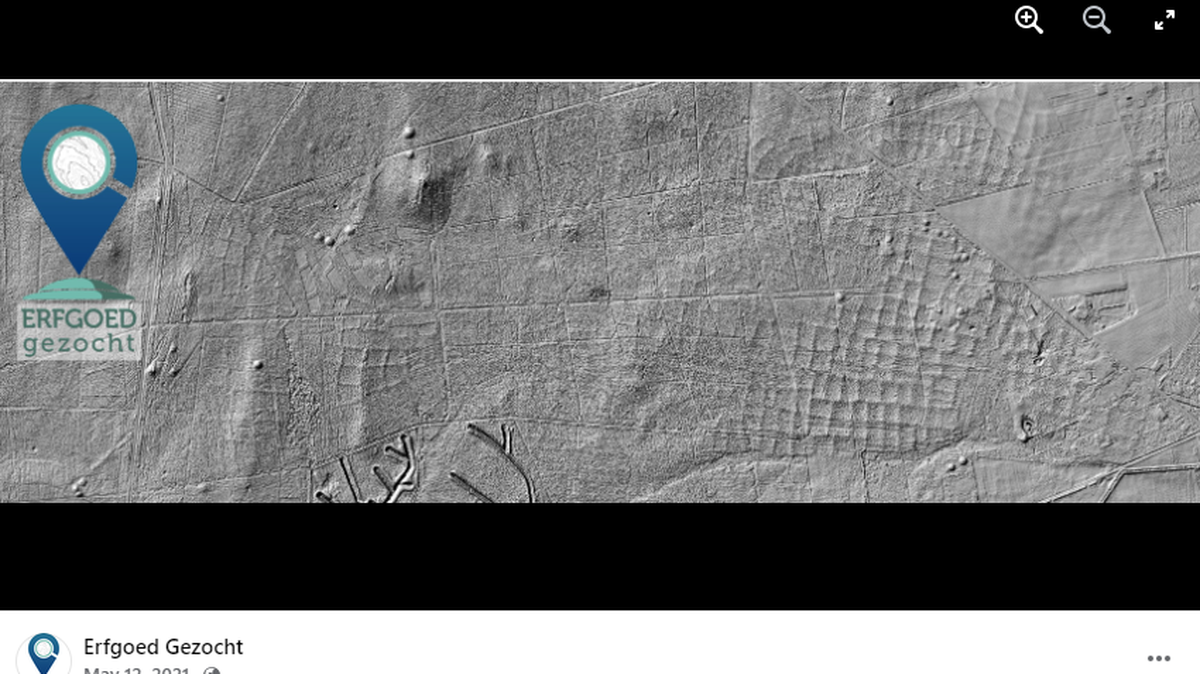
The project uses LiDAR — a radar-like system that uses lasers pulsed from satellites to create images of the Earth’s surface — to focus on two regions of central Netherlands, the Veluwe and the Utrechtse Heuvelrug, according to the study.
“Both study regions contain well-preserved archaeological remains located either in heathland (coarse grasses) or under forest cover. Prehistoric barrows, Celtic field systems, charcoal kilns, hollow roads and landweren (long distance land boundaries dating to the Middle Ages) are among the more common objects found in the area,” researchers said.
LiDAR images of the regions were put online, and volunteers were invited to search the images for potential archaeological sites that may have been hidden by the grassy and tree-covered environment, researchers said.
Then, thousands of people joined the project.
In a few months, more than 6,500 volunteers submitted possible sites, researchers said, more than they ever expected.
“While the volume of data exceeded our expectations, we faced a key challenge common to large citizen science projects: how reliable are the detections made by volunteers?” study author Quentin Bourgeois said in the release.
There were some easy fixes, researchers said. Some sites were identified over and over again but were all the same location, so those could be filtered out. Others were marked as errors when archaeologists went back and looked at the data.
This left researchers with more than 22,000 possible locations of archaeological sites that volunteers had identified, according to the study.
“To address this issue, we, together with students and volunteers, investigated 219 individual consensus locations in the field to establish whether they were prehistoric barrows,” researchers said.
‘Blown away’ by results
By looking at the sites in person, researchers could determine an accuracy percentage for volunteers identifying sites, and found that untrained volunteers looking at the images online had a greater than 50% chance of being right.
In total, about 1,000 prehistoric burial mounds in the two regions were positively identified in just four months, something that would have taken an archaeological team years if not decades to complete.
“I’m blown away by how many previously unknown burial mounds the volunteers helped uncover. I knew we were working in an important area with many traces of a prehistoric landscape still preserved, but I never expected to find so much so quickly,” Bourgeois said. “But for me the most amazing outcome is seeing the passion volunteers had for our research. They have now become vocal advocates for the preserved traces of prehistoric landscapes in their region.”
This story was originally published October 15, 2024 at 12:07 PM with the headline "Volunteers search images from space — and discover 1,000 ancient burials in Netherlands."