Scaly mountain creature with dozens of teeth found on muddy road. It’s a new species

High up in the Himalayan mountains, a scaly creature with dozens of teeth sat “motionless” along a muddy road. Something about the animal caught the attention of passing scientists — and for good reason.
It turned out to be a new species.
Researchers in northern India decided to search for some poorly known snake species as part of an ongoing project on the country’s reptiles, according to a study published Oct. 21 in the peer-reviewed journal Scientific Reports. Their search took them into the slopes of the western Himalayas in summer 2020.
During the visits, researchers encountered several brown snakes on a dirt road, the study said. They captured a few of the snakes, analyzed their DNA and compared them with other known species. A pattern began to emerge.
The snakes in the western Himalayas were subtly yet distinctly different. Researchers soon realized they’d discovered a new species: Anguiculus dicaprioi, or DiCaprio’s Himalayan snake.
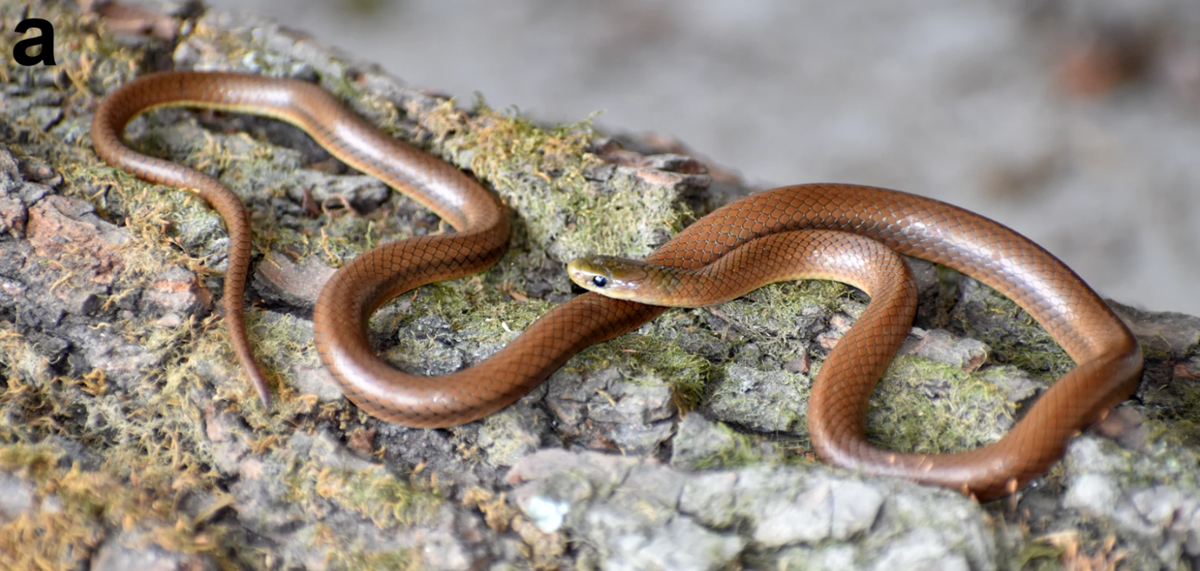
DiCaprio’s Himalayan snakes are considered “small-sized,” reaching up to 22 inches in length, the study said. They have “short” heads with “large” nostrils, dozens of teeth and a “steeply domed snout.”
Photos show the light brown coloring of the new species. A “faint” gray “collar”-like band runs around its neck.
Researchers said they named the new species after Leonardo DiCaprio, “an American actor, film producer, and environmentalist who has been actively involved in creating awareness about global climate change (and) increased biodiversity loss.”
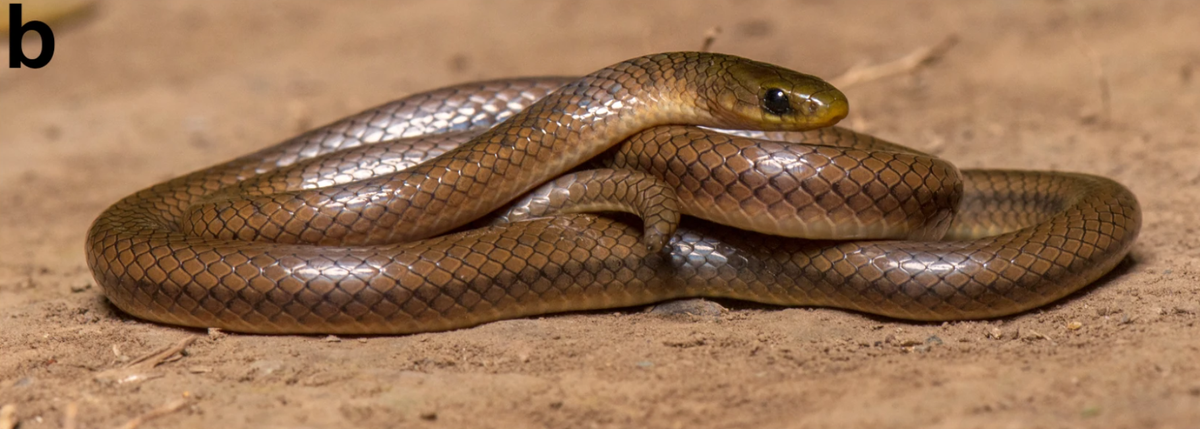
DiCaprio’s Himalayan snakes were found “basking” on muddy mountain roads, “remained motionless until caught and made no attempts to bite,” the study said. The snakes live at elevations of about 6,100 feet.
So far, DiCaprio’s Himalayan snakes have been found in Nepal and the neighboring Indian states of Himachal Pradesh and Uttarakhand, the study said. These states border Chinese-controlled Tibet and include multiple disputed borders between India, China and Nepal.
The new species was identified by its DNA, scale arrangement, teeth, skull shape, coloring and other subtle physical features, the study said. Researchers classified the new species within a new genus, named “Anguiculus” after the Latin words for “small snake.”
The research team included Zeeshan Mirza, Virender Bhardwaj, Saunak Pal, H. T. Lalremsanga, Gernot Vogel, Patrick Campbell and Harshil Patel.
This story was originally published October 21, 2024 at 5:06 PM with the headline "Scaly mountain creature with dozens of teeth found on muddy road. It’s a new species."